

Kirjahaku
Etsi kirjoja tekijän nimen, kirjan nimen tai ISBN:n perusteella.
1000 tulosta hakusanalla Mark R. Conte
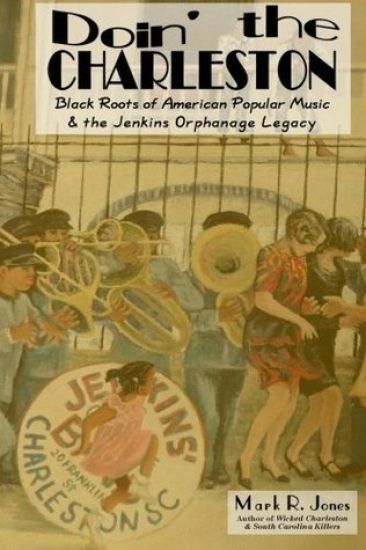
Doin' the Charleston: Black Roots of American Popular Music & the Jenkins Orphanage Legacy
Mark R. Jones
East Atlantic Publishing
2013
nidottu

Can one really turn challenges into opportunities? Absolutely - but you must submerge yourself in positive attitude, surround yourself with positive energy and embrace yourself with self thinking constructive people When challenges confront us, they arrive with a host of opportunities that are difficult to notice since the focal point is the hurdle one faces. Keeping one's 'Eyes Wide Open' during times of duress will help you to recognize these openings and achieve further heights than you would otherwise.This is the story of Mark Bannister whom at an early age was diagnosed as having a rare form of Spinal Muscular Atrophy - he had severely weak muscles and used a wheelchair to move about. His prognosis was not good, but despite his disability he has achieved more than most able bodied people in their lifetime because he tackled every challenge with the positive persona and a realistic belief that he could achieve all the goals he dreamed of.Follow Mark on his exciting, humorous and sometimes death defying adventures around the globe and how he adopted positive components of other cultures to help drive his own ambitions, how he used challenges of discrimination and negativity to empower himself even further in reaching his objectives.This book is both entertaining and informative and will make you smile, cry and be inspired. It will be enjoyed by all who read it, especially those working or living with disability, travel and development enthusiasts and those interested in real life adventures.If you have a challenge - address it head on and make it work to your advantage

Climate change is the most serious issue of our generation. It will likely bring sea-level rise displacing millions, lead to the loss of thousands of species, reduce food production and create geopolitical tensions - all by the end of this century. The fact that human-caused climate change is happening is now beyond dispute in the scientific community, yet despite the awful consequences, many people are apathetic.Low-Carbon and Loving It is an ordinary person's, easy-to-read guide to climate change. The book is divided into two sections. The problem of climate change includes sections on the causes of climate change, its consequences and reasons why we've done so little up to now. Then the solutions, looks at both 'big-picture' and 'small-picture' solutions, including concrete ways for the reader to lead a lower-carbon life.The images, cartoons, 'Science Geek' and 'Myth-busting' boxes make Low-Carbon and Loving It an enjoyable read. The book gives readers an excellent understanding of climate change and empowers them to start making a personal response.However, Low-carbon and Loving It is also the story of the Delaneys, an ordinary Australian family who have made some extraordinary choices. Mark and his wife have lived much of their working lives in the slums of India, befriending neighbours who struggle to survive day to day. The Delaneys have continued this lifestyle of voluntary simplicity for two decades. Their experience has given them a very different perspective on life.It is these unique perspectives which allow father Mark, and co-author son Tom, to see afresh the climate crisis to which many in the West are blind. From their lives, they know a lower-carbon life is possible and even fulfilling, not only in India, but also in middle class Australia.

A goodwill visit to Sudan, what could possibly go wrong? Nicholas Sharp is performing as part of a cultural group representing the US. Suddenly caught up in the middle of a political coup, the leader of the American contingent goes missing, his security detail murdered. Communication with the outside world is cut off. It falls to Sharp and Greatrex to track their missing leader down. But then, things get really complicated... Somewhere between Tom Clancy's Jack Ryan and Robert Crais' Elvis Cole, Nicholas Sharp may be a flawed hero, but you sure as hell want him on your side.
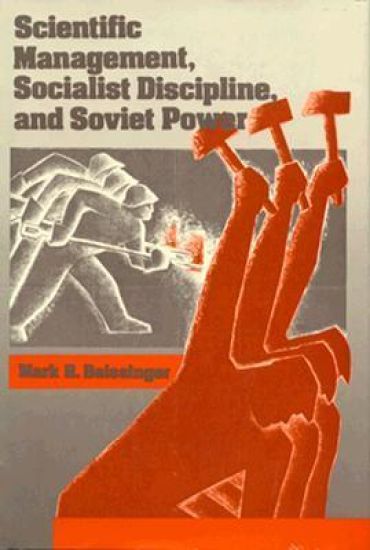
Scientific Management, Socialist Discipline, and Soviet Power
Mark R. Beissinger
HARVARD UNIVERSITY PRESS
1988
sidottu
How does the excessive bureaucratization of central planning affect politics in communist countries? Mark Beissinger suggests an answer through this history of the Soviet Scientific Management movement and its contemporary descendants, raising at the same time broader questions about the political consequences of economic systems. Beissinger traces the rise and decline of administrative strategies throughout Soviet history, focusing on the roles of managerial technique and disciplinary coercion. He argues that over-bureaucratization leads to a succession of national crises of effectiveness, which political leaders use to challenge the power of entrenched elites and to consolidate their rule. It also encourages leaders to resort to radical administrative strategies--technocratic utopias, mass mobilization, and discipline campaigns--and gives rise to a cycling syndrome, as similar problems and solutions reappear over time. Beissinger gives a new perspective and interpretation of Soviet history through the prism of organizational theory. He also provides a comprehensive history of the Soviet rationalization movement from Lenin to Gorbachev that describes the recurring attractions and tensions between politicians and management experts, as well as the reception accorded Western management techniques in the Soviet factory and management-training classroom. Beissinger uses a number of unusual sources: the personal archive of Aleksei Gastev, the foremost Soviet Taylorist of the 1920s; published Soviet archival documents; unpublished Soviet government documents and dissertations on management science and executive training; interviews with Soviet management scientists; and the author's personal observations of managers attending a three-month executive training program in the Soviet Union. Beissinger's skillful handling of this singular material will attract the attention of political scientists, historians, and economists, especially those working in Soviet studies.

Markets run on information. Buyers make decisions by relying on their knowledge of the products available, and sellers decide what to produce based on their understanding of what buyers want. But the distribution of market information has changed, as consumers increasingly turn to sources that act as intermediaries for information—companies like Yelp and Google. Antitrust Law in the New Economy considers a wide range of problems that arise around one aspect of information in the marketplace: its quality.Sellers now have the ability and motivation to distort the truth about their products when they make data available to intermediaries. And intermediaries, in turn, have their own incentives to skew the facts they provide to buyers, both to benefit advertisers and to gain advantages over their competition. Consumer protection law is poorly suited for these problems in the information economy. Antitrust law, designed to regulate powerful firms and prevent collusion among producers, is a better choice. But the current application of antitrust law pays little attention to information quality.Mark Patterson discusses a range of ways in which data can be manipulated for competitive advantage and exploitation of consumers (as happened in the LIBOR scandal), and he considers novel issues like “confusopoly” and sellers’ use of consumers’ personal information in direct selling. Antitrust law can and should be adapted for the information economy, Patterson argues, and he shows how courts can apply antitrust to address today’s problems.
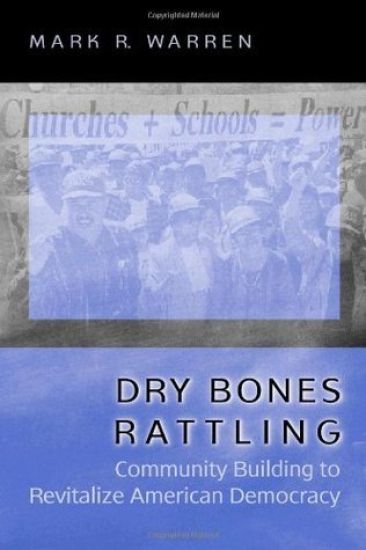
Dry Bones Rattling offers the first in-depth treatment of how to rebuild the social capital of America's communities while promoting racially inclusive, democratic participation. The Industrial Areas Foundation (IAF) network in Texas and the Southwest is gaining national attention as a model for reviving democratic life in the inner city--and beyond. This richly drawn study shows how the IAF network works with religious congregations and other community-based institutions to cultivate the participation and leadership of Americans most left out of our elite-centered politics. Interfaith leaders from poor communities of color collaborate with those from more affluent communities to build organizations with the power to construct affordable housing, create job-training programs, improve schools, expand public services, and increase neighborhood safety. In clear and accessible prose, Mark Warren argues that the key to revitalizing democracy lies in connecting politics to community institutions and the values that sustain them. By doing so, the IAF network builds an organized, multiracial constituency with the power to advance desperately needed social policies. While Americans are most aware of the religious right, Warren documents the growth of progressive faith-based politics in America. He offers a realistic yet hopeful account of how this rising trend can transform the lives of people in our most troubled neighborhoods. Drawing upon six years of original fieldwork, Dry Bones Rattling proposes new answers to the problems of American democracy, community life, race relations, and the urban crisis.
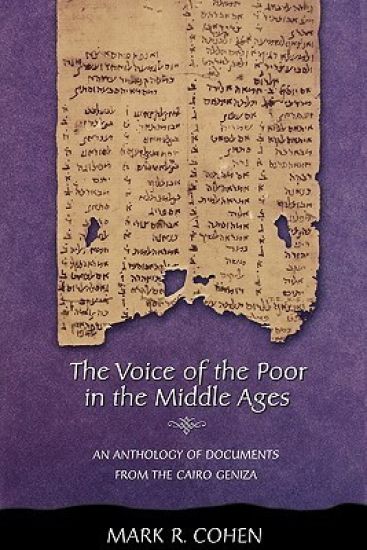
They are voices that have been silent for centuries: those of captives and refugees, widows and orphans, the blind and infirm, and the underclass of the "working poor." Now, for the first time, the voices of the poor in the Middle Ages come to life in this moving book by historian Mark Cohen. A companion to Cohen's other volume, Poverty and Charity in the Jewish Community of Medieval Egypt, the book presents more than ninety letters, alms lists, donor lists, and other related documents from the Geniza, a hidden chamber for discarded papers, situated inside a wall in a Cairo synagogue. Cohen has translated these documents, providing the historical context for each. In the past, most of what we knew of the poor in the Middle Ages came from records and observations compiled by their literate social superiors, from tax collectors to the inquisitor's clerk, from criminal judges to the benefactors of the helpless, from makers of Islamic waqf deeds to authors of Arabic chronicles, and in Judaism, from Rabbis who wrote responsa to compilers of Jewish-law codes. What distinguishes this book is that it contains the voices of the poor themselves, found in documents heretofore largely ignored. Because an ancient custom in Judaism prohibited the destruction of pages of sacred writing, the documents were preserved, largely unharmed, for as many as nine centuries. The Voice of the Poor in the Middle Ages provides access to the attitudes and philanthropic activities of the charitable, alongside the dramatic writings of the poor themselves, whether penned in their own hands or dictated to a scribe or family member. The book also allows a rare glimpse into the women of the Middle Ages, as well as into the world of private charity--an area long elusive to the medieval historian. For researchers and students alike, this book will be an invaluable social history source for years to come.
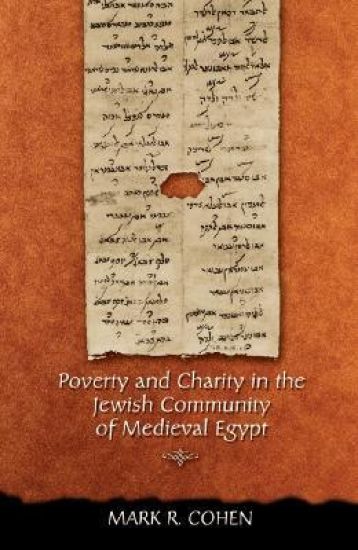
Poverty and Charity in the Jewish Community of Medieval Egypt
Mark R. Cohen
Princeton University Press
2005
sidottu
What was it like to be poor in the Middle Ages? In the past, the answer to this question came only from institutions and individuals who gave relief to the less fortunate. This book, by one of the top scholars in the field, is the first comprehensive book to study poverty in a premodern Jewish community--from the viewpoint of both the poor and those who provided for them. Mark Cohen mines the richest body of documents available on the matter: the papers of the Cairo Geniza. These documents, located in the Geniza, a hidden chamber for discarded papers situated in a medieval synagogue in Old Cairo, were preserved largely unharmed for more than nine centuries due to an ancient custom in Judaism that prohibited the destruction of pages of sacred writing. Based on these papers, the book provides abundant testimony about how one large and important medieval Jewish community dealt with the constant presence of poverty in its midst. Building on S. D. Goitein's Mediterranean Society and inspired also by research on poverty and charity in medieval and early modern Europe, it provides a clear window onto the daily lives of the poor. It also illuminates private charity, a subject that has long been elusive to the medieval historian. In addition, Cohen's work functions as a detailed case study of an important phenomenon in human history. Cohen concludes that the relatively narrow gap between the poor and rich, and the precariousness of wealth in general, combined to make charity "one of the major agglutinates of Jewish associational life" during the medieval period.
Did Muslims and Jews in the Middle Ages cohabit in a peaceful "interfaith utopia"? Or were Jews under Muslim rule persecuted, much as they were in Christian lands? Rejecting both polemically charged ideas as myths, Mark Cohen offers a systematic comparison of Jewish life in medieval Islam and Christendom--and the first in-depth explanation of why medieval Islamic-Jewish relations, though not utopic, were less confrontational and violent than those between Christians and Jews in the West. Under Crescent and Cross has been translated into Turkish, Hebrew, German, Arabic, French, and Spanish, and its historic message continues to be relevant across continents and time. This updated edition, which contains an important new introduction and afterword by the author, serves as a great companion to the original.
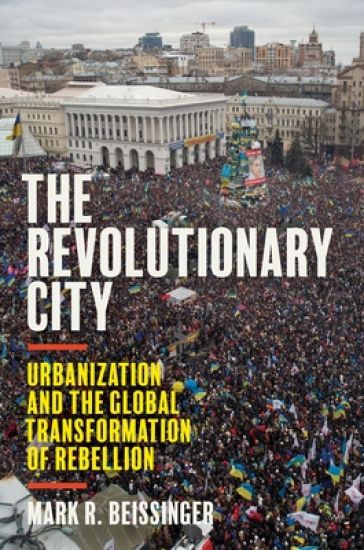
How and why cities have become the predominant sites for revolutionary upheavals in the contemporary worldExamining the changing character of revolution around the world, The Revolutionary City focuses on the impact that the concentration of people, power, and wealth in cities exercises on revolutionary processes and outcomes. Once predominantly an urban and armed affair, revolutions in the twentieth century migrated to the countryside, as revolutionaries searched for safety from government repression and discovered the peasantry as a revolutionary force. But at the end of the twentieth century, as urban centers grew, revolution returned to the city—accompanied by a new urban civic repertoire espousing the containment of predatory government and relying on visibility and the power of numbers rather than arms.Using original data on revolutionary episodes since 1900, public opinion surveys, and engaging examples from around the world, Mark Beissinger explores the causes and consequences of the urbanization of revolution in the late twentieth and early twenty-first centuries. Beissinger examines the compact nature of urban revolutions, as well as their rampant information problems and heightened uncertainty. He investigates the struggle for control over public space, why revolutionary contention has grown more pacified over time, and how revolutions involving the rapid assembly of hundreds of thousands in central urban spaces lead to diverse, ad hoc coalitions that have difficulty producing substantive change.The Revolutionary City provides a new understanding of how revolutions happen and what they might look like in the future.
How and why cities have become the predominant sites for revolutionary upheavals in the contemporary worldExamining the changing character of revolution around the world, The Revolutionary City focuses on the impact that the concentration of people, power, and wealth in cities exercises on revolutionary processes and outcomes. Once predominantly an urban and armed affair, revolutions in the twentieth century migrated to the countryside, as revolutionaries searched for safety from government repression and discovered the peasantry as a revolutionary force. But at the end of the twentieth century, as urban centers grew, revolution returned to the city—accompanied by a new urban civic repertoire espousing the containment of predatory government and relying on visibility and the power of numbers rather than arms.Using original data on revolutionary episodes since 1900, public opinion surveys, and engaging examples from around the world, Mark Beissinger explores the causes and consequences of the urbanization of revolution in the late twentieth and early twenty-first centuries. Beissinger examines the compact nature of urban revolutions, as well as their rampant information problems and heightened uncertainty. He investigates the struggle for control over public space, why revolutionary contention has grown more pacified over time, and how revolutions involving the rapid assembly of hundreds of thousands in central urban spaces lead to diverse, ad hoc coalitions that have difficulty producing substantive change.The Revolutionary City provides a new understanding of how revolutions happen and what they might look like in the future.

Authority, Autonomy, and Representation in American Literature, 1776-1865
Mark R. Patterson
Princeton University Press
2014
pokkari
From the Revolutionary War to the Civil War, a familiar scene appears and reappears in American literature: a speaker stands before a crowd of men and women, attempting to mitigate their natural suspicions in order to form a body of federated wills. In this important study of the relationship of literature and politics, Mark Patterson argues that this scene restates political issues in literary terms and embodies the essential problems of American democracy facing both politicians and writers: What is autonomy? How does representation work? Where does true authority lie? Beginning with the debate over ratification of the United States Constitution, Patterson follows out the complex literary consequences of these questions. A work of literary history and criticism, this study also offers valuable insights into matters of political and literary theory. In separate chapters on Benjamin Frankin, Hugh Henry Brackenridge, and Charles Brockden Brown in the post-Revolutionary period and on Fenimore Cooper, Emerson, and Melville in the antebellum period, Patterson provides a series of brilliant readings of major texts in order to describe how American writers have conflated political and literary concerns as a means to their own social authority. Originally published in 1988. The Princeton Legacy Library uses the latest print-on-demand technology to again make available previously out-of-print books from the distinguished backlist of Princeton University Press. These editions preserve the original texts of these important books while presenting them in durable paperback and hardcover editions. The goal of the Princeton Legacy Library is to vastly increase access to the rich scholarly heritage found in the thousands of books published by Princeton University Press since its founding in 1905.
Under three successive Islamic dynasties--the Fatimids, the Ayyubids, and the Mamluks--the Egyptian Office of the Head of the Jews (also known as the Nagid) became the most powerful representative of medieval Jewish autonomy in the Islamic world. To determine the origins of this institution, Mark Cohen concentrates on the complex web of internal and external circumstances during the latter part of the eleventh century. Originally published in 1981. The Princeton Legacy Library uses the latest print-on-demand technology to again make available previously out-of-print books from the distinguished backlist of Princeton University Press. These editions preserve the original texts of these important books while presenting them in durable paperback and hardcover editions. The goal of the Princeton Legacy Library is to vastly increase access to the rich scholarly heritage found in the thousands of books published by Princeton University Press since its founding in 1905.

Authority, Autonomy, and Representation in American Literature, 1776-1865
Mark R. Patterson
Princeton University Press
2016
sidottu
From the Revolutionary War to the Civil War, a familiar scene appears and reappears in American literature: a speaker stands before a crowd of men and women, attempting to mitigate their natural suspicions in order to form a body of federated wills. In this important study of the relationship of literature and politics, Mark Patterson argues that this scene restates political issues in literary terms and embodies the essential problems of American democracy facing both politicians and writers: What is autonomy? How does representation work? Where does true authority lie? Beginning with the debate over ratification of the United States Constitution, Patterson follows out the complex literary consequences of these questions. A work of literary history and criticism, this study also offers valuable insights into matters of political and literary theory. In separate chapters on Benjamin Frankin, Hugh Henry Brackenridge, and Charles Brockden Brown in the post-Revolutionary period and on Fenimore Cooper, Emerson, and Melville in the antebellum period, Patterson provides a series of brilliant readings of major texts in order to describe how American writers have conflated political and literary concerns as a means to their own social authority. Originally published in 1988. The Princeton Legacy Library uses the latest print-on-demand technology to again make available previously out-of-print books from the distinguished backlist of Princeton University Press. These editions preserve the original texts of these important books while presenting them in durable paperback and hardcover editions. The goal of the Princeton Legacy Library is to vastly increase access to the rich scholarly heritage found in the thousands of books published by Princeton University Press since its founding in 1905.
Under three successive Islamic dynasties--the Fatimids, the Ayyubids, and the Mamluks--the Egyptian Office of the Head of the Jews (also known as the Nagid) became the most powerful representative of medieval Jewish autonomy in the Islamic world. To determine the origins of this institution, Mark Cohen concentrates on the complex web of internal and external circumstances during the latter part of the eleventh century. Originally published in 1981. The Princeton Legacy Library uses the latest print-on-demand technology to again make available previously out-of-print books from the distinguished backlist of Princeton University Press. These editions preserve the original texts of these important books while presenting them in durable paperback and hardcover editions. The goal of the Princeton Legacy Library is to vastly increase access to the rich scholarly heritage found in the thousands of books published by Princeton University Press since its founding in 1905.


In Search of a Vivid Blue: How a Diagnosis of Schizoaffective Disorder Doesn't Mean the End of a Functional Life.
Mark R. Magnant
M, Mi Publishing
2015
nidottu
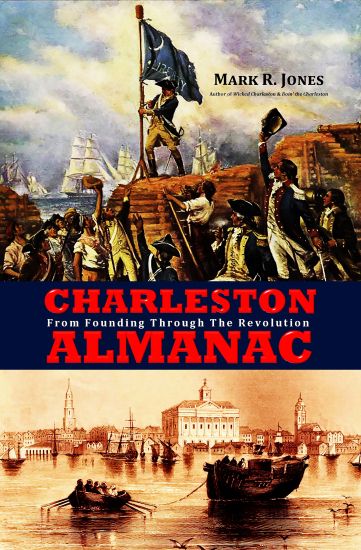
Charleston Almanac: From Founding Through the Revolution
Mark R. Jones
East Atlantic Publishing
2017
nidottu
For the first time, here is a comprehensive history of Charleston - day-by-day, week-by-week. Following events from the founding of Carolina through the American Revolution, the Charleston Almanac is a fast-paced and entertaining journey through wars disasters, slavery, and covering the city's triumphs and many tragedies.