Markus Guthier untersucht drei Entscheidungsmodelle, mit denen sich das Präferenz- und Entscheidungsverhalten von Kfz-Versicherungsnehmern abbilden lässt. Eine präferenzbasierte Segmentierung zeigt, dass unterschiedliche Kundensegmente existieren und sich daraus Implikationen für das Marketing ableiten.
Gebäudeöffnungen dienen der Belichtung, Belüftung und dem Klimaausgleich von Räumen. Gleichzeitig sind sie wesentliches Funktions- und Gestaltungselement der Fassade und übernehmen als transparente oder transluzente Bauteile Kommunikationsfunktionen zwischen Innen- und Außenraum.Analog zur gesamten Gebäudehülle unterliegen Fenster und Außentüren Anforderungen an Materialien, Konstruktionsarten und Einbausituationen ebenso wie an Brand-, Schall-, Wärmeschutz, Energieeffizienz, Luftdichtheit und Einbruchschutz. Der Atlas Gebäudeöffnungen setzt bei den historischen Entwicklungen an, liefert fundierte Fakten zum Umgang mit dem Bestand und bietet darüber hinaus tief gehende Fachinformationen rund um das Thema Fassadenöffnungen. Ein ausführlicher Beispielteil mit gelungenen Projekten aus der Praxis bietet jede Menge konstruktive Ideen für die eigene Arbeit.
Ein Musikarbeitsbuch, das die Grundlagen und Techniken des Arrangierens und Produzierens umfassend darstellt und mit den Beispielen auf der CD zielorientiert zum eigenen, professionellen Arrangement und zur standardgemäßen Produktion führt. Grundlagen/Stilistikkatalog/Satztechniken/Rhythmusgruppe/Backgr ound und Solist/Groovekatalog/Partitur/Studio- und Bühnenalltag/Das Produzieren eines Projektes.
Richtig oder falsch? „Bei der Akuttherapie des ischämischen Schlaganfalls sollte der Blutdruck erst ab Werten über 220/120 mmHg gesenkt werden.“ „Eine Migräneaura kann auch isoliert ohne Kopfschmerzen auftreten“. „Die okuläre Myasthenie, bei der nur die Augenmuskeln betroffen sind, macht 50% aller Myasthenien aus.“Wer hier sicher antworten und begründen kann, ist für die Facharztprüfung Neurologie gut aufgestellt. Testen Sie Ihr Wissen systematisch anhand von Fragen nach dem Multiple-Choice-Prinzip. Mit prägnanten Kommentaren zu allen Antworten und wesentlichen Fakten der Neurologie. Themen sind u.a. neuromuskuläre Erkrankungen, Kopfschmerzen, Schwindel, Epilepsien, zerebrovaskuläre Erkrankungen, entzündliche Erkrankungen und Bewegungsstörungen.Plus: Im Anhang des Buches finden sich Auszüge wichtiger klinischer Studien mit den dazugehörigen Kernaussagen. Ideal als solide Basis für eine effektive Prüfungsvorbereitung. Griffbereit für alle, die ihr neurologisches Know-how auffrischen wollen.
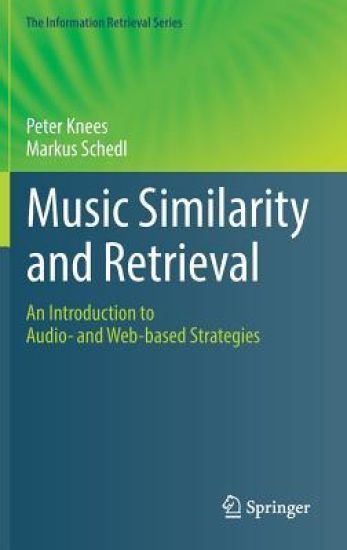
This book provides a summary of the manifold audio- and web-based approaches to music information retrieval (MIR) research. In contrast to other books dealing solely with music signal processing, it addresses additional cultural and listener-centric aspects and thus provides a more holistic view. Consequently, the text includes methods operating on features extracted directly from the audio signal, as well as methods operating on features extracted from contextual information, either the cultural context of music as represented on the web or the user and usage context of music. Following the prevalent document-centered paradigm of information retrieval, the book addresses models of music similarity that extract computational features to describe an entity that represents music on any level (e.g., song, album, or artist), and methods to calculate the similarity between them. While this perspective and the representations discussed cannot describe all musical dimensions, theyenable us to effectively find music of similar qualities by providing abstract summarizations of musical artifacts from different modalities. The text at hand provides a comprehensive and accessible introduction to the topics of music search, retrieval, and recommendation from an academic perspective. It will not only allow those new to the field to quickly access MIR from an information retrieval point of view but also raise awareness for the developments of the music domain within the greater IR community. In this regard, Part I deals with content-based MIR, in particular the extraction of features from the music signal and similarity calculation for content-based retrieval. Part II subsequently addresses MIR methods that make use of the digitally accessible cultural context of music. Part III addresses methods of collaborative filtering and user-aware and multi-modal retrieval, while Part IV explores current and future applications of music retrieval and recommendation.>
This book provides a summary of the manifold audio- and web-based approaches to music information retrieval (MIR) research. In contrast to other books dealing solely with music signal processing, it addresses additional cultural and listener-centric aspects and thus provides a more holistic view. Consequently, the text includes methods operating on features extracted directly from the audio signal, as well as methods operating on features extracted from contextual information, either the cultural context of music as represented on the web or the user and usage context of music. Following the prevalent document-centered paradigm of information retrieval, the book addresses models of music similarity that extract computational features to describe an entity that represents music on any level (e.g., song, album, or artist), and methods to calculate the similarity between them. While this perspective and the representations discussed cannot describe all musical dimensions, theyenable us to effectively find music of similar qualities by providing abstract summarizations of musical artifacts from different modalities. The text at hand provides a comprehensive and accessible introduction to the topics of music search, retrieval, and recommendation from an academic perspective. It will not only allow those new to the field to quickly access MIR from an information retrieval point of view but also raise awareness for the developments of the music domain within the greater IR community. In this regard, Part I deals with content-based MIR, in particular the extraction of features from the music signal and similarity calculation for content-based retrieval. Part II subsequently addresses MIR methods that make use of the digitally accessible cultural context of music. Part III addresses methods of collaborative filtering and user-aware and multi-modal retrieval, while Part IV explores current and future applications of music retrieval and recommendation.>