Kirjojen hintavertailu. Mukana 12 400 500 kirjaa ja 12 kauppaa.

Kirjahaku

Etsi kirjoja tekijän nimen, kirjan nimen tai ISBN:n perusteella.

1000 tulosta hakusanalla Marsha Gordon

Parke County

Parke County

Marsha Williamson Mohr; Rachel Berenson Perry; Gary Moore; Mike Lunsford; Jon Kay

Indiana University Press
2015
pokkari
With its beautiful meadows and countless meandering streams, picturesque Parke County, Indiana, is home to 31 historic covered bridges, ranging from 43 to 315 feet long. Every October, the county hosts the Covered Bridge Festival, which draws more than two million people nationwide to the courthouse lawn in Rockville. From there, tourists set off to visit the bridges and to seek out the arts and crafts fairs located in each of the festival's nine communities. Photographer Marsha Williamson Mohr has spent years in the area, capturing spellbinding images of the bridges and nearby farms and the natural beauty of the area, season by season. The warmth and vitality of Parke County brings her back time and time again, and this gorgeous photographic collection will call you back as well.
Quilts and Health

Quilts and Health

Marsha Macdowell; Clare Luz; Beth Donaldson

Indiana University Press
2018
sidottu
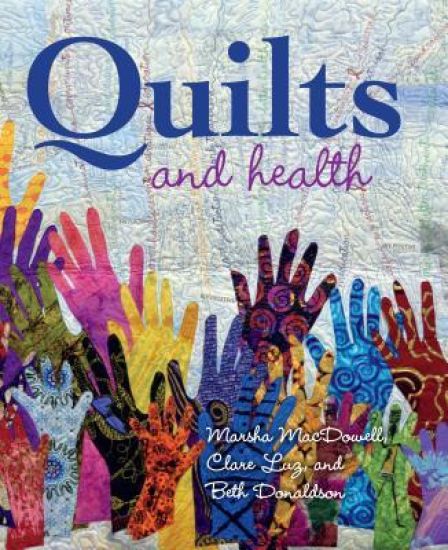
Name an illness, medical condition, or disease and you will find quiltmaking associated with it. From Alzheimer's to Irritable Bowel Syndrome, Lou Gehrig's Disease to Crigler-Najjar Syndrome, and for nearly every form of cancer, millions of quilts have been made in support of personal well-being, health education, patient advocacy, memorialization of victims, and fundraising. In Quilts and Health, Marsha MacDowell, Clare Luz, and Beth Donaldson explore the long historical connection between textiles and health and its continued and ever growing importance in contemporary society. This lavishly illustrated book brings together hundreds of health-related quilts—with imagery from abstract patterns to depictions of fibromyalgia to an ovarian cancer diary—and the stories behind the art, as told by makers, recipients, healthcare professionals, and many others. This incredible book speaks to the healing power of quilts and quiltmaking and to the deep connections between art and health.
Social and Economic Networks in Early Massachusetts

Social and Economic Networks in Early Massachusetts

Marsha L. Hamilton

Pennsylvania State University Press
2009
sidottu
The seventeenth century saw an influx of immigrants to the heavily Puritan Massachusetts Bay Colony. This book redefines the role that non-Puritans and non-English immigrants played in the social and economic development of Massachusetts. Marsha Hamilton shows how non-Puritan English, Scots, and Irish immigrants, along with Channel Islanders, Huguenots, and others, changed the social and economic dynamic of the colony. A chronic labor shortage in early Massachusetts allowed many non-Puritans to establish themselves in the colony, providing a foundation upon which later immigrants built transatlantic economic networks. Scholars of the era have concluded that these “strangers” assimilated into the Puritan structure and had little influence on colonial development; however, through an in-depth examination of each group’s activity in local affairs, Marsha Hamilton asserts a much different conclusion.By mining court, town, and company records, letters, and public documents, Hamilton uncovers the impact that these immigrants had on the colony, not only by adding to the diversity and complexity of society but also by developing strong economic networks that helped bring the Bay Colony into the wider Atlantic world. These groups opened up important mercantile networks between their own homelands and allies, and by creating their own communities within larger Puritan networks, they helped create the provincial identity that led the colony into the eighteenth century.
When Nature Strikes

When Nature Strikes

Marsha L. Baum

Praeger Publishers Inc
2007
sidottu
Both law and weather affect us every day of our modern lives, yet most people do not know how the weather has affected developments in the law, nor are they aware of how the law has attempted to develop ways to affect the weather. When Nature Strikes is the first book to examine the various areas in which law and weather meet and affect each other. This one-of-a-kind work describes the law related to weather in the United States in the context of specific cases, legislation, and administrative legal action.For example, weather can be the means to commit a crime or the factor that turns an event from a terrible accident into a criminal act. Weather can be a defense against liability in both civil and criminal cases. People seek relief in court from the harm caused by weather events, whether a slip on the ice or the horrible devastation wrought by a deadly hurricane. Courts and the criminal justice system can be affected by weather events that prevent physical access to the courthouse or that destroy evidence. Through laws passed by Congress, U.S. weather services have evolved from simply weather recording into weather forecasting and warning systems. Federal patent law offers monopolies over inventions to encourage inventors to develop new devices that increase human safety in extreme weather or to improve methods such as cloud seeding or wind energy.
The Casting Couch and Other Front Row Seats

The Casting Couch and Other Front Row Seats

Marsha McCreadie

Praeger Publishers Inc
1990
sidottu
This collection of film reviews and essays focuses on the role of women in films during the 1970s and 1980s. The author, a widely published film critic, examines the shifting portrayals of women from the almost anti-progressive treatment of women in the early 1970s through the integration of more progressive professional women in the films of the late 1980s. She shows that most of the important movies of the period were about women and that these films seemed to reflect the momentous changes that women were going through in the society at large. McCreadie's in-depth analysis of women in cinema is augmented with personal interviews with leading female actresses of the period including Jane Fonda, Kathleen Turner, Jessica Lange, Sissy Spacek, Sally Field, Anjelica Huston, and others.Taking a chronological approach to her subject, McCreadie shows that the late 1970s saw some radical breakthroughs in roles for women in such movies as Annie Hall and Coming Home--perhaps reflecting the outcries earlier in the decade that women were not being treated progressively in current cinema. These more progressive and sometimes shattering images of women were in some cases even more advanced than the society the films were attempting to characterize. Throughout the early 1980s there was a sharp retreat from this position as movies like Ghostbusters and The River showed a definite backlash against feminism and gains made by women. Finally, in the late 1980s, the focus has turned toward more progressive and accomplished women in cinema although, even here, McCreadie argues, there is sometimes a conservative or reactionary hue to even the most advanced role models offered by film. Students of film, women's studies, and popular culture will find McCreadie's analysis fascinating and illuminating reading.
Women Screenwriters Today

Women Screenwriters Today

Marsha Mccreadie

Praeger Publishers Inc
2005
sidottu
The question of whether women write from a unique perspective has been debated since the silent era. McCreadie examines how this female sensibility has been defined and whether, in fact, it exists at all. Such films as Lost in Translation and Monster suggest that women screenwriters are moving in a new direction, heading away from the big-budget action movies that dominate Hollywood today. But action-driven genre films, like the thrillers of Alexandra Seros, seem to belie the perception that women write films that are more dialogue- and character-driven than those of male screenwriters. Whether or not women actually write differently from men and about different topics, the author's unique approach—working with and through the words and lives of the women screenwriters themselves—allows both readers and writers an otherwise unattainable look into the ever-growing and ever more essential world of women in Hollywood. Over the course of cinematic history, women screenwriters have played an essential role in the creation of the films we watch. The question of whether women write from a unique perspective has been debated since the silent era. Marsha McCreadie examines how this female sensibility has been defined and questions whether, in fact, it exists at all. The emergence of such films as Lost in Translation and Monster would seem to suggest that women screenwriters are moving in a new direction, heading away from the big-budget action movies that dominate Hollywood today. But there can always be found an Alexandra Seros, for instance, whose thrillers would seem to prove the opposite case. Working through these contradictions, Marsha McCreadie takes a captivating look at the words and lives of women screenwriters, allowing readers an otherwise unattainable look into the ever-growing and ever more essential world of women in film. Readers interested in film and women's studies will especially enjoy reading Marsha McCreadie's discussions of such films as Little Women, The Thomas Crown Affair, The Piano, Pollock, and Under the Tuscan Sun. Interviews with major women players in the movie business, including Sofia Coppola (Lost in Translation) and Emma Thompson (Sense and Sensibility), allow readers a unique chance to learn firsthand how women are trying to enter the business, how they pursue and approach the topics they love, and how they have managed to survive and prosper in the unforgiving world of modern cinema. By talking with writers working in Hollywood, Australia, New Zealand, and Europe, Marsha McCreadie provides film fans with an international perspective on the increasingly global film industry.
What Women Watched

What Women Watched

Marsha F. Cassidy

University of Texas Press
2005
pokkari
In this pathfinding book, based on original archival research, Marsha F. Cassidy offers the first thorough analysis of daytime television's earliest and most significant women's genres, appraising from a feminist perspective what women watched before soap opera rose to prominence.After providing a comprehensive history of the early days of women's programming across the nation, Cassidy offers a critical discussion of the formats, programs, and celebrities that launched daytime TV in America-Kate Smith's variety show and the famed singer's unsuccessful transition from patriotic radio star to 1950s TV idol; the "charm boys" Garry Moore, Arthur Godfrey, and Art Linkletter, whose programs honored women's participation but in the process established the dominance of male hosts on TV; and the "misery shows" Strike It Rich and Glamour Girl and the controversy, both critical and legal, they stirred up.Cassidy then turns to NBC's Home show, starring the urbane Arlene Francis, who infused the homemaking format with Manhattan sophistication, and the ambitious daily anthology drama Matinee Theater, which strove to differentiate itself from soap opera and become a national theater of the air. She concludes with an analysis of four popular audience participation shows of the era-the runaway hit Queen for a Day; Ralph Edwards's daytime show of surprises, It Could Be You; Who Do You Trust?, starring a youthful Johnny Carson; and The Big Payoff, featuring Bess Myerson, the country's first Jewish Miss America. Cassidy's close feminist reading of these shows clearly demonstrates how daytime TV mirrored the cultural pressures, inconsistencies, and ambiguities of the postwar era.
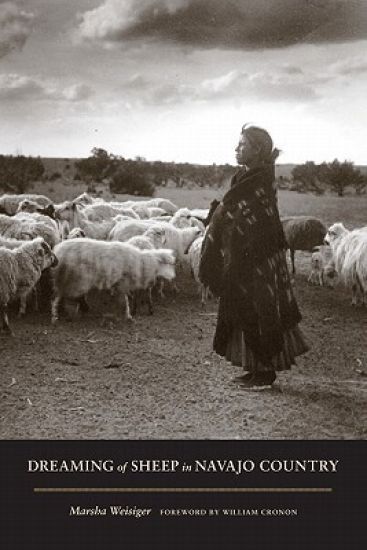
Dreaming of Sheep in Navajo Country

Dreaming of Sheep in Navajo Country

Marsha Weisiger; William Cronon

University of Washington Press
2009
sidottu
2011 Winner of the Hal K. Rothman Award for the Best Book on Western Environmental History 2010 Winner of the Norris and Carol Hundley Prize and the Caroline Bancroft Honor Prize 2009 Winner of the Gaspar Perez de Villagra Award sponsored by the Historical Society of New MexicoDreaming of Sheep in Navajo Country offers a fresh interpretation of the history of Navajo (Diné) pastoralism. The dramatic reduction of livestock on the Navajo Reservation in the 1930s -- when hundreds of thousands of sheep, goats, and horses were killed -- was an ambitious attempt by the federal government to eliminate overgrazing on an arid landscape and to better the lives of the people who lived there. Instead, the policy was a disaster, resulting in the loss of livelihood for Navajos -- especially women, the primary owners and tenders of the animals -- without significant improvement of the grazing lands.Livestock on the reservation increased exponentially after the late 1860s as more and more people and animals, hemmed in on all sides by Anglo and Hispanic ranchers, tried to feed themselves on an increasingly barren landscape. At the beginning of the twentieth century, grazing lands were showing signs of distress. As soil conditions worsened, weeds unpalatable for livestock pushed out nutritious native grasses, until by the 1930s federal officials believed conditions had reached a critical point. Well-intentioned New Dealers made serious errors in anticipating the human and environmental consequences of removing or killing tens of thousands of animals.Environmental historian Marsha Weisiger examines the factors that led to the poor condition of the range and explains how the Bureau of Indian Affairs, the Navajos, and climate change contributed to it. Using archival sources and oral accounts, she describes the importance of land and stock animals in Navajo culture. By positioning women at the center of the story, she demonstrates the place they hold as significant actors in Native American and environmental history.Dreaming of Sheep in Navajo Country is a compelling and important story that looks at the people and conditions that contributed to a botched policy whose legacy is still felt by the Navajos and their lands today.
HIV Interventions

HIV Interventions

Marsha Rosengarten

University of Washington Press
2009
pokkari
Winner of the Sociology of Health and Illness Book PrizeHIV has changed in the presence of recent biomedical technologies. In particular, the development of anti-retroviral therapies (ARVs) for the treatment of HIV was a significant landmark in the history of the disease. Treatment with ARV drug regimens, which began in 1996, has enabled many thousands to live with the human immunodeficiency virus without progressing to AIDS. Yet ARVs have also been fraught with problems of regimen compliance, viral resistance, and iatrogenic disease. Besides intensifying the technological and ethical complexities of medicine, the drugs have also affected conceptions of risk and risk practices, in turn presenting new challenges for prevention.In order to devise safer, more effective forms of treatment, prevention, and possibly cure, Marsha Rosengarten asserts, it is essential to understand the relationship between HIV, medical technologies, and ideas about the body. HIV is an entity that constitutes and is constituted by complex material and informational environments. Recognition of this two-way traffic between the medical science of HIV and the expression of HIV in individuals and societies provides a novel basis for devising new or supplementary modes of thinking about and intervening in the epidemic.Through such diverse materials as drug advertisements, pill formulations, scientific articles, clinical trials, diagnostic test results, and viral imaging as well as interviews with those living and working with HIV, Rosengarten provides numerous demonstrations of how the entities comprising the HIV epidemic - bodies, viral resistance, diagnostic results, safe sex - are forged through dynamic relations.These various phenomena challenge existing prevention models and raise social and ethical concerns about the impact of additional technologies such as HIV pre- and post-exposure prophylaxis and the promise of vaccines and microbicides.HIV Interventions is relevant to those engaged in questions of the social and ethical dimensions of biomedicine, biotechnology, and genomics. Further, the specific focus of the project offers HIV practitioners - in the sciences and social sciences, in clinical research, clinical practice, social research, policy development and prevention education - new perspectives and analytic tools for intercepting a virus that continues to endure and, most critically, to change in the course of doing so.
HIV Interventions

HIV Interventions

Marsha Rosengarten

University of Washington Press
2009
sidottu
Winner of the Sociology of Health and Illness Book PrizeHIV has changed in the presence of recent biomedical technologies. In particular, the development of anti-retroviral therapies (ARVs) for the treatment of HIV was a significant landmark in the history of the disease. Treatment with ARV drug regimens, which began in 1996, has enabled many thousands to live with the human immunodeficiency virus without progressing to AIDS. Yet ARVs have also been fraught with problems of regimen compliance, viral resistance, and iatrogenic disease. Besides intensifying the technological and ethical complexities of medicine, the drugs have also affected conceptions of risk and risk practices, in turn presenting new challenges for prevention.In order to devise safer, more effective forms of treatment, prevention, and possibly cure, Marsha Rosengarten asserts, it is essential to understand the relationship between HIV, medical technologies, and ideas about the body. HIV is an entity that constitutes and is constituted by complex material and informational environments. Recognition of this two-way traffic between the medical science of HIV and the expression of HIV in individuals and societies provides a novel basis for devising new or supplementary modes of thinking about and intervening in the epidemic.Through such diverse materials as drug advertisements, pill formulations, scientific articles, clinical trials, diagnostic test results, and viral imaging as well as interviews with those living and working with HIV, Rosengarten provides numerous demonstrations of how the entities comprising the HIV epidemic - bodies, viral resistance, diagnostic results, safe sex - are forged through dynamic relations.These various phenomena challenge existing prevention models and raise social and ethical concerns about the impact of additional technologies such as HIV pre- and post-exposure prophylaxis and the promise of vaccines and microbicides.HIV Interventions is relevant to those engaged in questions of the social and ethical dimensions of biomedicine, biotechnology, and genomics. Further, the specific focus of the project offers HIV practitioners - in the sciences and social sciences, in clinical research, clinical practice, social research, policy development and prevention education - new perspectives and analytic tools for intercepting a virus that continues to endure and, most critically, to change in the course of doing so.
Dreaming of Sheep in Navajo Country

Dreaming of Sheep in Navajo Country

Marsha Weisiger; William Cronon

University of Washington Press
2011
pokkari
2011 Winner of the Hal K. Rothman Award for the Best Book on Western Environmental History2010 Winner of the Norris and Carol Hundley Prize and the Caroline Bancroft Honor Prize2009 Winner of the Gaspar Perez de Villagra Award sponsored by the Historical Society of New MexicoDreaming of Sheep in Navajo Country offers a fresh interpretation of the history of Navajo (Diné) pastoralism. The dramatic reduction of livestock on the Navajo Reservation in the 1930s -- when hundreds of thousands of sheep, goats, and horses were killed -- was an ambitious attempt by the federal government to eliminate overgrazing on an arid landscape and to better the lives of the people who lived there. Instead, the policy was a disaster, resulting in the loss of livelihood for Navajos -- especially women, the primary owners and tenders of the animals -- without significant improvement of the grazing lands.Livestock on the reservation increased exponentially after the late 1860s as more and more people and animals, hemmed in on all sides by Anglo and Hispanic ranchers, tried to feed themselves on an increasingly barren landscape. At the beginning of the twentieth century, grazing lands were showing signs of distress. As soil conditions worsened, weeds unpalatable for livestock pushed out nutritious native grasses, until by the 1930s federal officials believed conditions had reached a critical point. Well-intentioned New Dealers made serious errors in anticipating the human and environmental consequences of removing or killing tens of thousands of animals.Environmental historian Marsha Weisiger examines the factors that led to the poor condition of the range and explains how the Bureau of Indian Affairs, the Navajos, and climate change contributed to it. Using archival sources and oral accounts, she describes the importance of land and stock animals in Navajo culture. By positioning women at the center of the story, she demonstrates the place they hold as significant actors in Native American and environmental history.Dreaming of Sheep in Navajo Country is a compelling and important story that looks at the people and conditions that contributed to a botched policy whose legacy is still felt by the Navajos and their lands today.
Whispering Hope

Whispering Hope

Marsha Hubler

ZonderKidz
2010
nidottu
In the seventh book of the Keystone Stables series, perfect for girls who love horses and horse fiction, foster child Skye gets more than she bargained for when the two newest arrivals to the ranch are a half-wild Mustang and a former gang member who may be just as uncontrollable.While at a major horse show, Skye gets the biggest shock of her life: a surprise encounter with a switchblade-wielding teenager named Wanda. Before long, Skye’s foster parents decide to bring Wanda to Keystone Stables as a foster child—and when they also purchase an out-of-control Mustang named Rebel, she can only wonder if they’ve lost their minds. But as Skye practices the gentle art of horse whispering with Rebel, she discovers a key that just might open up Wanda’s fearful, lonely heart to the healing power of God’s love.Whispering Hope:is written by an author who has firsthand experience with horses and foster careis a contemporary and realistic plot, with an inspirational Christian messagefeatures diverse characters and experiencescontains extensive back matter on different horse breeds, how to care for them, and horsemanship, as well as facts, diagrams, and a glossary of horse terms so girls can better know their favorite animal
The Long Ride Home

The Long Ride Home

Marsha Hubler

ZonderKidz
2010
nidottu
In the eighth and final book of the Keystone Stables series, perfect for girls who love horses and horse fiction, foster child Skye must confront her past and decide her future when she has the opportunity to find her birth parents and possibly reunite.On a trip to South Carolina with her foster family, Skye gets the shock of her life when the waitress at a local diner seems to recognize her. The woman proves to be Skye’s long-lost Aunt Millie—the first blood relative Skye has ever met. As Skye and Mom and Dad Chambers attempt to track down Skye’s birth parents with Millie’s help, Skye’s foster sister and best friend, Morgan, struggles with her own family regrets. As the secrets of both Skye’s and Morgan’s lives are revealed, it becomes clear more is at stake than anyone can imagine—and both girls have a big decision to make. The Long Ride Home:is written by an author who has firsthand experience with horses and foster careis a contemporary and realistic plot, with an inspirational Christian messagefeatures a character with special needscontains extensive back matter on different horse breeds, how to care for them, and horsemanship, as well as facts, diagrams, and a glossary of horse terms so girls can better know their favorite animal
A Horse to Love

A Horse to Love

Marsha Hubler

ZonderKidz
2009
nidottu
For horse-loving young readers comes the first book in the Keystone Stables series, where a tough foster child named Skye learns about love and forgiveness through a beautiful quarter horse named Champ. Thirteen-year-old Skye Nicholson has become an expert at making sure no one will ever hurt her again. After her cold and angry behavior and numerous offenses remove her from more foster home placements than she cares to count, she’s headed toward juvenile detention. But then she’s given one last chance—an opportunity to live at Keystone Stables, a foster home and therapy camp where she meets a beautiful sorrel horse named Champ. As hard as she tries, she can’t deny she loves Champ—but her refusal to accept her new foster parents and their Christian faith might mean losing Champ forever.A Horse to Love:is written by an author who has firsthand experience with horses and foster careis a contemporary and realistic plot, with an inspirational Christian messagefeatures a character with special needscontains extensive back matter on different horse breeds, how to care for them, and horsemanship, as well as facts, diagrams, and a glossary of horse terms so girls can better know their favorite animal
On the Victory Trail

On the Victory Trail

Marsha Hubler

ZonderKidz
2009
nidottu
In the second book of the Keystone Stables series, perfect for girls who love horses and horse fiction, foster child Skye must face a new challenge with a friend from her past stays at the ranch Skye now calls home, threatening her new life and the horses she holds dear.Skye Nicholson used to be a lot like her past friend Sooze: loud, angry, and willing to do anything to prove she didn’t need anyone. But after coming to Keystone Stables and realizing she is worth being loved, Skye’s life has changed. Now she would do anything to stay at the stables and around her beloved horses. But while the girls start training for an upcoming horse show, Sooze decides to sneak off with a hard-to-control Tennessee walking horse named Stormy, and disaster strikes—soon, Skye is questioning everything she’s started to believe about herself, including her newfound faith.On the Victory Trail:is written by an author who has firsthand experience with horses and foster careexplores the effects of cancer on friends and familyis a contemporary and realistic plot, with an inspirational Christian messagecontains extensive back matter on different horse breeds, how to care for them, and horsemanship, as well as facts, diagrams, and a glossary of horse terms so girls can better know their favorite animal
Southern Belle's Special Gift

Southern Belle's Special Gift

Marsha Hubler

ZonderKidz
2009
nidottu
In the third book of the Keystone Stables series, perfect for girls who love horses and horse fiction, Skye faces a new challenge when a runaway girl becomes the newest foster child at the ranch—and soon becomes Skye’s nemesis as well. Tanya Bell seems intent on making Skye’s life miserable. Even though Skye’s foster parents agreed to take Tanya in after she got caught shoplifting and ran away from home, the new girl seems more focused on causing fights and wreaking havoc in the barns than facing the reality of her situation. When one of the stable’s new mares arrives with a complicated pregnancy, Skye thinks she may have found a way to keep Tanya focused on something other than herself. But as the mare’s and foal’s lives become endangered, both Tanya and Skye face the test of their lives as they need to work together to overcome the challenges and surprises ahead.Southern Belle’s Gift:is written by an author who has firsthand experience with horses and foster careis a contemporary and realistic plot, with an inspirational Christian messagefeatures multicultural characters and those with special needscontains extensive back matter on different horse breeds, how to care for them, and horsemanship, as well as facts, diagrams, and a glossary of horse terms so girls can better know their favorite animal