
Kirjahaku
Etsi kirjoja tekijän nimen, kirjan nimen tai ISBN:n perusteella.
1000 tulosta hakusanalla Mary Kay Carson

Hans Maggard's Other Son: A History and Genealogy of the David Maggard Family
Mary Kay Hushman-Lavezzari
Winghaven Publishing
2014
nidottu
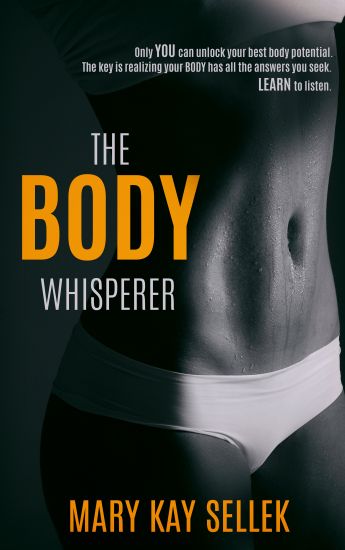
The Body Whisperer: Using the Principles of Integrative Body Conditioning to Create a Strong Body for Life
Mary Kay Sellek
Mary Kay Tam
2016
nidottu
My story is a familiar one. I was a high school athlete, but sometime during my adult life I started to decline physically. It started with hypothyroidism, allergies and depression in my 20s and 30s. By my 40s, my allergies progressed to asthma. I frequently got colds, had trouble sleeping and gained 15 pounds I couldn't get rid of. Quite frankly, I felt like my body was falling into a downward spiral that I feared would end badly. Experts told me what to eat and how to exercise, but no matter what I did, my body seemed to break down more. That's when I set out to find new ways to improve my health. I took classes, studied my own body, and experimented with elimination diets and exercise. Eventually, I recognized the subtle ways my body was telling me what it needed that I was ignoring. The smarter and more diligent I became about responding to my body's cues, the better the results...the bigger the transformation. Now in my 50s, I'm in the best health and shape of my life Family and friends who hadn't seen me in a while immediately noticed a difference and wanted to know what I was doing. That's when I formalized my method which I call Integrative Body Conditioning...with an emphasis of finding what works for you This book is presented in four sections, each focusing on one aspect of Integrative Body Conditioning, and one short section at the end that ties all the information together. -The first section (Irritant Elimination) addresses the primary reasons the body weakens and gets sick. Consisting of four chapters, it covers the environmental, biological, physical and psychological factors that cause inflammation in the body and explains how, if left untreated, they can sabotage your health and fitness efforts. -The second section (Nutrient Replacement) is also made up of four chapters. It describes the importance of figuring out which foods rejuvenate and rebuild your body (while fixing any nutrient deficiencies) and how to create a meal plan that ensures you're getting enough of the "good stuff" every day. -The third section (Weightlifting and Conditioning) covers the importance of continually leveling up and individualizing your strength training plan. The key is targeting exercises that build and maintain whole body muscle strength in the shortest amount of time. Starting lists of exercises and conditioning workouts are provided. -The fourth and final section (Becoming a Body Whisperer) describes how to take the concepts learned from the first three sections to achieve your best body potential. It includes a brief explanation on how I practice the method on a daily basis, as well as the single most important habit you need to embrace to build and maintain a strong body for life. I've also included homework at the end of each section to help readers make the most of the material. Don't skip the homework. If you really want to "get it," you're going to need to witness and experience everything that's happening in your body. Hence, I strongly recommend you start a health journal. Not only will it help you keep track of the homework, it will help illuminate the subtle ways your body reacts to different food, exercise and lifestyle choices, as well as the cues its providing to help re-balance it. Finally, if you're looking for a "quick fix," this book probably isn't for you. This method is all about finding out how your body works and what it needs Each person's journey is different, but by practicing this method, you won't just learn how your body works, you'll have the key that unlocks your ability to create a slender, healthy, strong and glowing body for the rest of your life
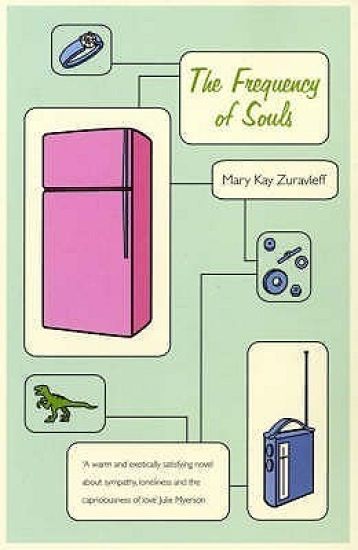
At almost forty, George Mahoney has been designing Coldpoint fridges for as long as he can remember. At this point, enters Niagara, tall, clumsy and myopic, the polar opposite of George's demure wife Judy. As they sit working together each day, Niagara, with her quest for electrical evidence of life after death, begins to seep into his consciousness. The protective shell that George has so carefully constructed to guard against love and spontaneity begins to crumble as he rediscovers himself in this gentle and charming love story.
Promise Whittaker is the diminutive, cartoon-voiced acting director of the National Museum of Asian Art. Her mentor, the previous director, is now lost in the Taklamakan desert. Her favourite curator has dropped their newest, most precious, treasure - at the ceremony to celebrate its acquisition. Another colleague is embezzling museum funds to pay for fertility treatments. And Promise, perspicacious about everything but what's going on under her nose, is the last to realise that the museum is in danger of being turned into a cafe and that she's pregnant - again. In "Promise", juggling crises at home and at work, Mary Kay Zuravleff has created one of the most loveable and offbeat heroines in recent fiction.
Madame Queen: The Life and Crimes of Harlem's Underground Racketeer, Stephanie St. Clair
Mary Kay McBrayer
Park Row
2025
sidottu
The astonishing little-known history of Harlem racketeer Madame Stephanie St. Clair, one of the only female crime bosses and a Black, self-made businesswoman in early twentieth-century New York. In her heyday, Stephanie St. Clair went by many names, but one was best known by all: Madame Queen. The undeniable queen of the Harlem numbers game, St. Clair redefined what it meant to be a woman of means. After immigrating to America from the West Indies, St. Clair would go on to manage one of the largest policy banks in all of Harlem by 1923. She knew the power of reputation, and even though her business was illegal gambling, she ran it like any other respectable entrepreneur. Because first and foremost, Madame Queen was a lady. But that didn't stop her from doing what needed to be done to survive. St. Clair learned how to navigate the complex male-dominated world of crime syndicates, all at a time when Tammany Hall and mafia groups like the Combination were trying to rule New York. With her tenacity and intellectual prowess, she never backed down. Madame Queen was a complicated figure, but she prioritized the people of Harlem above all else, investing her wealth back into the neighborhood and speaking out against police corruption and racial discrimination. St. Clair was a trailblazer, unafraid to challenge societal norms. But for far too long she's been a footnote in more infamous characters' stories, like Bumpy Johnson, Dutch Schultz and Lucky Luciano. Now, in this masterful portrayal of a woman who defied the odds at all costs, she finally gets her due.
While there are many books on psychoanalysis, few address what it is like to live one's life as a psychoanalyst. The Unsung Psychoanalyst focuses on the challenges, tragedies, and rewards of a psychoanalytic life using as an example the pioneering and prescient Canadian analyst Ruth Easser (1922–1975). Gifted as a clinician and teacher, Easser had a formative influence in New York and Toronto on a generation of psychoanalysts, many of whom are today's leaders in the field. Based on interviews with more than thirty of Easser's teachers, colleagues, students, analysands, family and friends, and a review of her papers, Mary Kay O'Neil builds a portrait of life as a psychoanalyst. The author traces as well some of the developments of psychoanalytic thought during the past fifty years. The Unsung Psychoanalyst touches on the founding and growth of New York's Columbia University Center for Psychoanalytic Training and Research, and on the development of the Toronto Psychoanalytic Society and Institute where Easser taught during the last five years of her life.

Implementing Standards-based Mathematics Instruction
Mary Kay Stein; Margaret Schwan Smith; Marjorie A. Henningsen; Edward A. Silver
Teachers' College Press
2009
nidottu
Now in its second edition, this essential textbook and professional development resource offers a new foreword by James Hiebert and two important new chapters that focus on the ways in which the book can be used to support the learning of teachers and administrators, drawing on the authors' work over the past decade. Chapter 11 illustrates the various ways in which teacher educators or professional developers might use the materials in the book to aid in the professional growth of teachers, including how to directly improve teachers' instruction practices. Chapter 12 discusses ways in which principals and school leaders can use the book to become better instructional leaders of teachers who are attempting to teach with cognitively demanding tasks.
Curriculum Planning and Teaching Using the School Library Media Center
Mary Kay Urbanik
Scarecrow Press
1989
nidottu
This book stresses the integration of the school library media center with the work of the classroom. She explores the general principles and dynamics of the curriculum planning process and examines the role the school library media center plays in that process, with a historical review of the field of curriculum planning and of the development of the school library to its present media center concept. The book examines a number of curriculum design patterns, discusses various ways of integrating the use of the school library media center with classroom instruction, and addresses the appropriate use of media for the improvement of instruction, with a section on the importance of acquiring skills in information access.
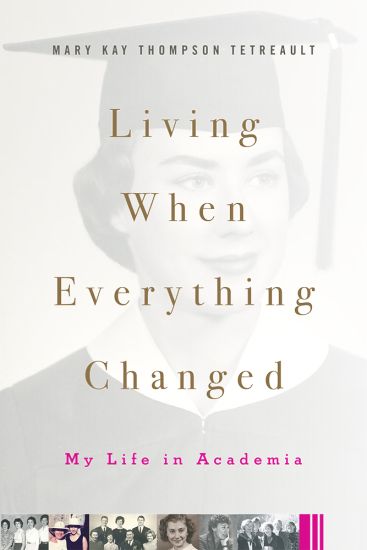
Entering the academy at the dawn of the women’s rights movement in the late 1960s and early 1970s, the first generation of feminist academics had a difficult journey. With few female role models, they had to forge their own path and prove that feminist scholarship was a legitimate enterprise. Later, when many of these scholars moved into administrative positions, hoping to reform the university system from within, they encountered entrenched hierarchies, bureaucracies, and old boys’ networks that made it difficult to put their feminist principles into practice. In this compelling memoir, Mary Kay Thompson Tetreault describes how a Catholic girl from small-town Nebraska discovered her callings as a feminist, as an academic, and as a university administrator. She recounts her experiences at three very different schools: the small progressive Lewis & Clark College, the massive regional university of Cal State Fullerton, and the rapidly expanding Portland State University. Reflecting on both her accomplishments and challenges, she considers just how much second-wave feminism has transformed academia and how much reform is still needed. With remarkable candor and compassion, Thompson Tetreault provides an intimate personal look at an era when both women’s lives and university culture changed for good.The Acknowledgments were inadvertently left out of the first printing of this book. We apologize for the oversight, and offer them here instead. Future printings will include this information. (https://d3tto5i5w9ogdd.cloudfront.net/wp-content/uploads/2019/08/29185420/Thompson-Tetreault-Acknowledgments.pdf)
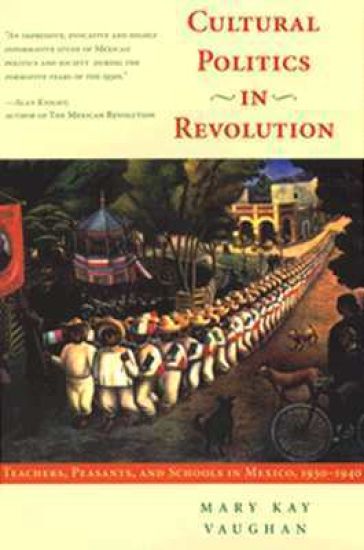
When Indian communities of Chiapas, Mexico, rose in armed rebellion in 1994, they spoke boldly of values, rights, identities, and expectations. Their language struck a chord for most Mexicans, for it was the cultural legacy of the Revolution of 1910. Of all the accomplishments of the Mexican Revolution, its cultural achievements were among its most important. The Revolution's cultural politics accounts in part for the relative political stability Mexico enjoyed from 1940 through 1993 and underlies much of the discourse accompanying the tumultuous transitions in that country today. To show the significance of this facet of the Revolution, Mary Kay Vaughan here analyzes the educational effort of the state during the 1930s, locating it within the broader sweep of Mexican history to illustrate how the government sought to nationalize and modernize rural society. Vaughan focuses on activities in rural schools, where central state policy makers, teachers, and people of the countryside came together to forge a national culture. She examines the cultural politics of schooling in four rural societies in the states of Sonora and Puebla that are representative of the peasant societies in revolutionary Mexico, and she shows how the state's program of socialist education became an arena for intense negotiations over power, culture, knowledge, rights, and gender practices. The real cultural revolution, Vaughan observes, lay not in the state's efforts at socialist education but in the dialogue between state and society that took place around this program. In the 1930s, rural communities carved out a space to preserve their local identities while the state succeeded in nurturing a multi-ethnic nationalism based on its promise of social justice and development. Vaughan brings to her analysis a comparative understanding of peasant politics and educational history, extensive interviews, and a detailed examination of national, regional, and local archives to create an evocative and informative study of Mexican politics and society during modern Mexico's formative years. Cultural Politics in Revolution clearly shows that only by expanding the social arena in which culture was constructed and contested can we understand the Mexican Revolution's real achievements.
More than twenty-five years after Vatican II, religious congregations of North America continue to struggle with their lifestyle and with their formation programs. What is the most appropriate formation for those who are entering religious life? Spurred on by the need to examine this question in the light of her own experience as a novice director, Mary Kay Kinberger explores the importance of grounding religious formation in a theological foundation and proposes Bernard Lonergan's theology of conversion as one possible foundation. This text is essential reading for those who are involved in the challenge of living as religious today and committed to preparing the religious to move into the future.
This book looks at the constructs of gender, genre, and colonialism as they intersect in the works of Senegalese writers Mariama Ba and Aminata Sow Fall and French writer Marguerite Duras. Though these authors form an unlikely trio at first glance, we hear surprising echoes in their texts as they reveal the construction and narration of a feminine "I" over and against a variety of colonizing forces. The authors' experimentation with autobiographical writing, experiences with colonialism, and exploration of the metaphor of infanticide create a rich, multicultural dialogue about the politics of women's writing.
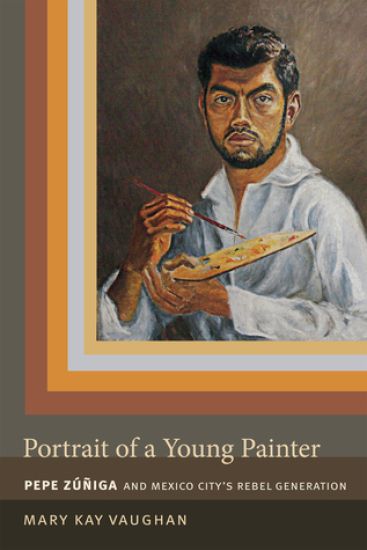
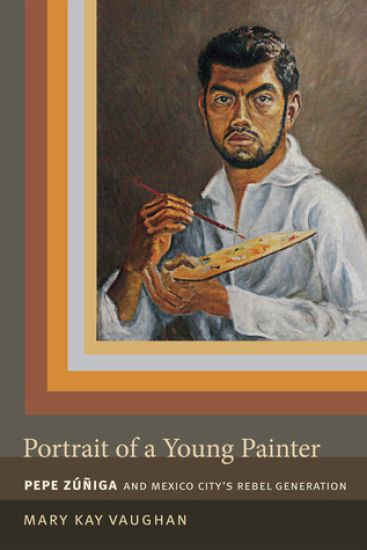
In Portrait of a Young Painter, the distinguished historian Mary Kay Vaughan adopts a biographical approach to understanding the culture surrounding the Mexico City youth rebellion of the 1960s. Her chronicle of the life of painter Pepe Zúñiga counters a literature that portrays post-1940 Mexican history as a series of uprisings against state repression, injustice, and social neglect that culminated in the student protests of 1968. Rendering Zúñiga's coming of age on the margins of formal politics, Vaughan depicts midcentury Mexico City as a culture of growing prosperity, state largesse, and a vibrant, transnationally-informed public life that produced a multifaceted youth movement brimming with creativity and criticism of convention. In an analysis encompassing the mass media, schools, politics, family, sexuality, neighborhoods, and friendships, she subtly invokes theories of discourse, phenomenology, and affect to examine the formation of Zúñiga's persona in the decades leading up to 1968. By discussing the influences that shaped his worldview, she historicizes the process of subject formation and shows how doing so offers new perspectives on the events of 1968.
In Portrait of a Young Painter, the distinguished historian Mary Kay Vaughan adopts a biographical approach to understanding the culture surrounding the Mexico City youth rebellion of the 1960s. Her chronicle of the life of painter Pepe Zúñiga counters a literature that portrays post-1940 Mexican history as a series of uprisings against state repression, injustice, and social neglect that culminated in the student protests of 1968. Rendering Zúñiga's coming of age on the margins of formal politics, Vaughan depicts midcentury Mexico City as a culture of growing prosperity, state largesse, and a vibrant, transnationally-informed public life that produced a multifaceted youth movement brimming with creativity and criticism of convention. In an analysis encompassing the mass media, schools, politics, family, sexuality, neighborhoods, and friendships, she subtly invokes theories of discourse, phenomenology, and affect to examine the formation of Zúñiga's persona in the decades leading up to 1968. By discussing the influences that shaped his worldview, she historicizes the process of subject formation and shows how doing so offers new perspectives on the events of 1968.
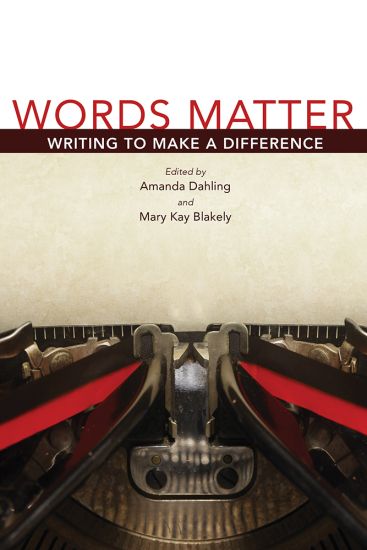
Newspapers and magazines have been steadily shrinking, and more and more former subscribers have gone to digital and internet sources for the news. Yet it has become increasingly clear that “short takes” don’t satisfy many readers, who still long for nuanced, long form journalism. By providing examples of classic magazine articles by professional writers, all of whom are graduates of the Missouri School of Journalism, this book fulfills the need for more sophisticated, thought-provoking essays that will resonate with both the general reader and students.The book is divided into three broad categories: profiles, first person journalism, and personal memoirs, and includes the original articles as well as a “postscript” by the writers in which they discuss what they’ve learned about writing, journalism, and the business of getting published. Useful for students and instructors in writing programs, the book also appeals to writers interested in both the art and the craft of successful writing.
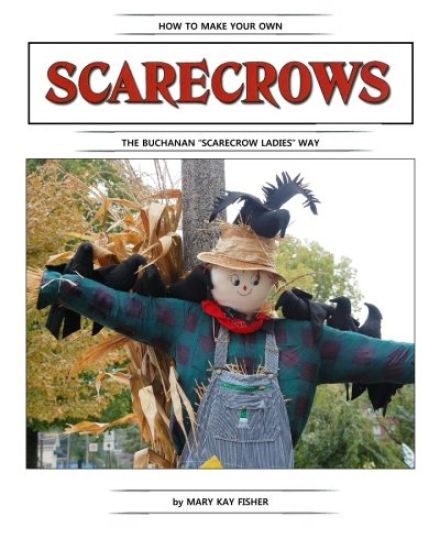
How to Make Your Own Scarecrow the Buchanan Scarecrow Ladies Way
Mary Kay Fisher
Mary Kay Fisher
2016
nidottu

Rising media star and lifestyle blogger Grace Stanton's own life gets torpedoed after she drives her cheating husband's pricey sports car straight into the family swimming pool in a fit of anger. Soon she's locked out of her own palatial home, checking account, and blog, forced to move in with her widowed mother who lives above, and owns, The Sandbar, a rundown beach bar. Attending court-mandated weekly "divorce recovery" therapy sessions with a group of three other women, marital misfits whose only common denominator is betrayal, Grace and the women soon ditch their therapist and move their Wednesday "Ladies Night" sessions to The Sandbox. They begin to help each other, walking a fine line between revenge and justice, as each one finds closure in ways previously unimagined. Can Grace figure out a new way home and how strong she needs to be to get there? Told with Mary Kay Andrews' unique blend of humor, heart, and unpredictable plot twists, Ladies' Night will have you raising a glass and cheering these characters on.