Kirjojen hintavertailu. Mukana 12 390 323 kirjaa ja 12 kauppaa.

Kirjahaku

Etsi kirjoja tekijän nimen, kirjan nimen tai ISBN:n perusteella.

1000 tulosta hakusanalla Maximus F. Isla

Maximus the Confessor and the Latin West
In 1941, when Hans Urs von Balthasar published his monograph on Maximus's Cosmic Liturgy, few theologians in the West had more than a passing familiarity with the thought of Maximus the Confessor (580-662). Nearly a century later, scholarship on Maximus is thriving, with new monographs and articles being published every year. If you believed that Maximus' thought was only relevant for the understanding of Eastern Christian theology, this volume will show that, in fact, Maximus' vision had a major impact on the whole arc of Western thought, from the Latin Middle Ages to the present. Far from a marginal, late-antique thinker, Maximus is key figure in the development of Christian theology, straddling the divide between East and West.
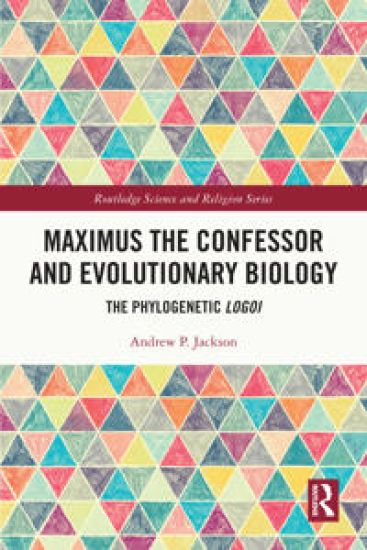
Maximus the Confessor and Evolutionary Biology

Maximus the Confessor and Evolutionary Biology

Andrew P. Jackson

TAYLOR FRANCIS LTD
2026
nidottu
This book brings Maximus the Confessor’s logoi doctrine into dialogue with modern-day evolutionary biology. It explores the extent to which the logoi, as described by Maximus, exhibit features that are concordant with evolution before going on to consider more discordant aspects that cannot be ignored. The author addresses the curious resonance between the logoi and evolution in a systematic way through a close reading of primary textual material allied with a deep understanding of both the classical Darwinian and ‘extended’ evolutionary syntheses. The study joins with other Maximian interpreters in attesting to the incarnational and theophanic nature of the logoi, but seeks to extend this distinctively Eastern Christo-cosmology into the problematic territory of biological evolution, a territory historically dominated by Western scholarship. The book will be of interest to scholars of religion and science, as well as Patristics and the Eastern Orthodox theological traditions.
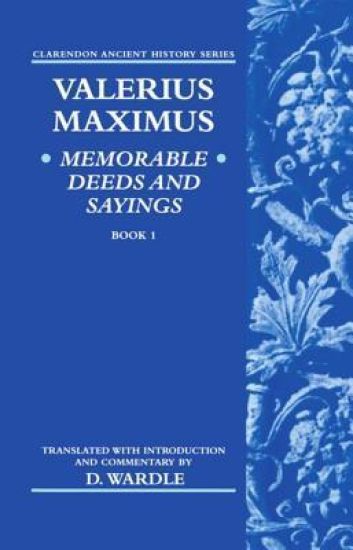
Valerius Maximus' Memorable Deeds and Sayings Book 1
Valerius Maximus stands alone as an extant prose author of the early principate who devoted specific interest to the Romans' attitude to religion. In eight chapters he presents a variety of material selected from earlier authors, such as Cicero, Livy, and Varro, to illustrate central areas of Roman religious thought and practice: augury, omens, dreams, and miracles. Valerius has not been translated into English since 1678 and there has never been a detailed commentary on his work in any language. With the growing interest in the non-Judaeo-Christian religions of the Mediterranean world and scholars recognizing that Roman religion should not be approached with Judaeo-Christian presuppositions or through the filter of the Christian Fathers, Valerius Maximus gives us an opportunity to see an unexceptional pagan speaking about his religion.
The Maximus Poems

The Maximus Poems

Charles Olson

University of California Press
1985
pokkari
Praised by his contemporaries and emulated by his successors, Charles Olson (1910-1970) was declared by William Carlos Williams to be "a major poet with a sweep of understanding of the world, a feeling for other men that staggers me." This complete edition brings together the three volumes of Olson's long poem (originally published in 1960, 1968, and 1975) in an authoritative version.
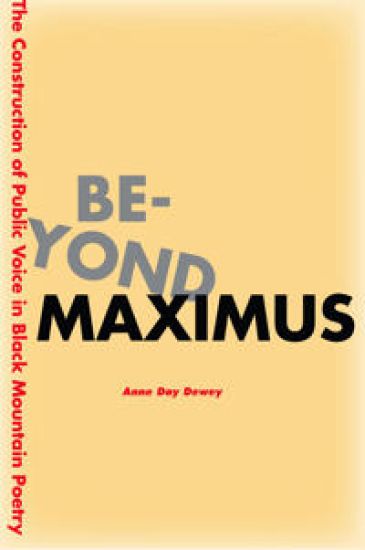
Beyond Maximus

Beyond Maximus

Anne Day Dewey

Stanford University Press
2007
sidottu
Beyond Maximus: The Construction of Public Voice in Black Mountain Poetry is the only study of Black Mountain poets (Charles Olson, Robert Creeley, Robert Duncan, Denise Levertov, and Ed Dorn) to explain their association from the 1950s to their break-up after the Vietnam War. Dewey uses the poets' correspondence and other archival materials to illuminate their mutual influence and the crucial significance of "field poetics" to their careers. While previous criticism has focused on the poetics of the force field as a model of nature, Dewey understands the force field as a model of social force that all five poets articulate and incorporate into poetry in ways that compete with artistic craft. Their different conceptions of social force explain their divergent careers. The development of "field poetics" also sheds light on these poets' attempts to create an alliance between experimental poetics and public voice, a difficult agenda that speaks to Black Mountain poetry's crucial contribution to the artistic and political struggles of New American poetry.
Valerius Maximus and the Rhetoric of the New Nobility

Valerius Maximus and the Rhetoric of the New Nobility

Bloomer W. Martin

The University of North Carolina Press
2011
nidottu
Throughout the Middle Ages and the Renaissance, Valerius Maximus's Memorable Deeds and Sayings was the most widely read prose after the Bible. Bloomer revives this classic text to examine how, why, and for whom Valerius composed this collection of rhetorical examples. He argues that the work expresses the concerns and anxieties of literate first-century Romans and shows that it creates paradigms for a new culture.A UNC Press Enduring Edition -- UNC Press Enduring Editions use the latest in digital technology to make available again books from our distinguished backlist that were previously out of print. These editions are published unaltered from the original, and are presented in affordable paperback formats, bringing readers both historical and cultural value.
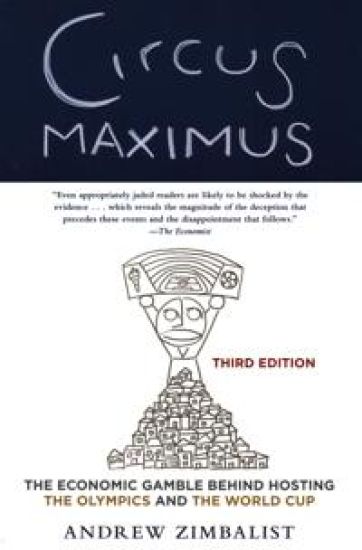
Circus Maximus

Circus Maximus

Andrew Zimbalist

Brookings Institution
2020
nidottu
Beyond the headlines of the world's most beloved sporting eventsBrazil hosted the 2016 men's World Cup at a cost of $15 billion to $20 billion, building large, new stadiums in cities that have little use for them anymore. The projected cost of Tokyo's 2020 Summer Olympic Games is estimated to be as high as $30 billion, much of it coming from the public trough. In the updated and expanded edition of his bestselling book, Circus Maximus: The Economic Gamble Behind Hosting the Olympics and the World Cup, Andrew Zimbalist tackles the claim that cities chosen to host these high-profile sporting events experience an economic windfall. In this new edition he looks at upcoming summer and winter Olympic games, discusses the recent Women's World Cup, and the upcoming men's tournament in Qatar.Circus Maximus focuses on major cities, like London, Rio, and Barcelona, that have previously hosted these sporting events, to provide context for future host cities that will bear the weight of exploding expenses, corruption, and protests. Zimbalist offers a sobering and candid look at the Olympics and the World Cup from outside the echo chamber.
St. Maximus the Confessor's "Questions and Doubts"

St. Maximus the Confessor's "Questions and Doubts"

Saint Maximus the Confessor

Northern Illinois University Press
2009
sidottu
Despina D. Prassas's translation of the Quaestiones et Dubia presents for the first time in English one of the Confessor's most significant contributions to early Christian biblical interpretation. Maximus the Confessor (580–662) was a monk whose writings focused on ascetical interpretations of biblical and patristic works. For his refusal to accept the Monothelite position supported by Emperor Constans II, he was tried as a heretic, his right hand was cut off, and his tongue was cut out. In his work, Maximus the Confessor brings together the patristic exegetical aporiai tradition and the spiritual-pedagogical tradition of monastic questions and responses. The overarching theme is the importance of the ascetical life. For Maximus, askesis is a lifelong endeavor that consists of the struggle and discipline to maintain control over the passions. One engages in the ascetical life by taking part in both theoria (contemplation) and praxis (action). To convey this teaching, Maximus uses a number of pedagogical tools including allegory, etymology, number symbolism, and military terminology. Prassas provides a rich historical and contextual background in her introduction to help ground and familiarize the reader with this work.