Kirjojen hintavertailu. Mukana 12 390 323 kirjaa ja 12 kauppaa.

Kirjahaku

Etsi kirjoja tekijän nimen, kirjan nimen tai ISBN:n perusteella.

1000 tulosta hakusanalla Maya Sarah

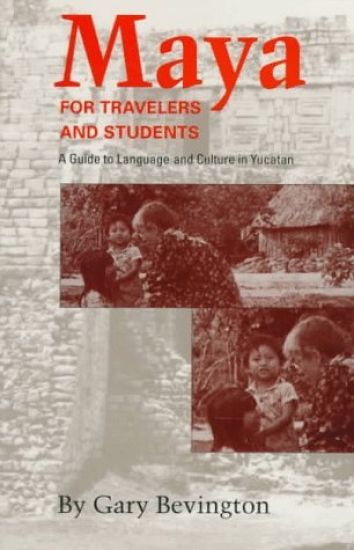
Maya for Travelers and Students

Maya for Travelers and Students

Gary Bevington

University of Texas Press
1995
pokkari
The Yucatan Peninsula draws many North American and European travelers each year to view the ruins of the pre-Columbian Classical Maya civilization and the abundant native flora and fauna. For these travelers, as well as armchair travelers and students, Gary Bevington has prepared the first general English-language introduction to Yucatec Maya, the native language of the people indigenous to the region. Written in nontechnical terms for learners who have a basic knowledge of simple Mexican Spanish, the book presents easily understood, practical information for anyone who would like to communicate with the Maya in their native language. In addition to covering the pronunciation and grammar of Maya, Bevington includes invaluable tips on learning indigenous languages "in the field." Most helpful are his discussions of the cultural and material worlds of the Maya, accompanied by essential words and expressions for common objects and experiences. A Maya-English-Spanish glossary with extensive usage examples and an English-Maya glossary conclude the book. Note: The supplemental audiocasette, Spoken Maya for Travelers and Students, is now available as a free download through the book's page on the University of Texas Press's website.
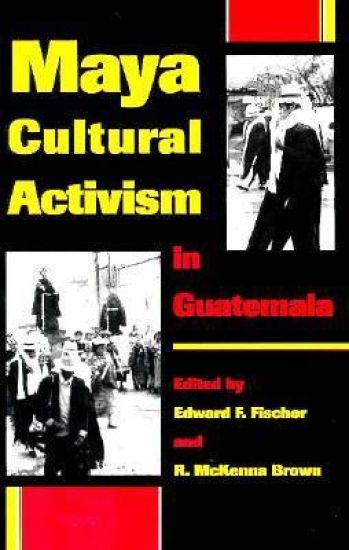
Maya Cultural Activism in Guatemala

Maya Cultural Activism in Guatemala

University of Texas Press
1996
pokkari
Maya Cultural Activism in Guatemala marks a new era in Guatemalan studies by offering an up-to-the-minute look at the pan-Maya movement and the future of the Maya people as they struggle to regain control over their cultural destiny. The successful emergence of what is in some senses a nationalism grounded in ethnicity and language has challenged scholars to reconsider their concepts of nationalism, community, and identity.Editors Edward F. Fischer and R. McKenna Brown have brought together essays by virtually all the leading U.S. experts on contemporary Maya communities and the top Maya scholars working in Guatemala today. Supplementing scholarly analysis of Mayan cultural activism is a position statement originating within the movement and more wide-ranging and personal reflections by anthropologists and linguists who have worked with the Maya over the years. Among the broader issues that come in for examination are the complex relations between U.S. Mayanists and the Mayan cultural movement, efforts to promote literacy in Mayan languages, the significance of woven textiles and native dress, the relations between language and national identity, and the cultural meanings that the present-day Maya have encountered in ancient Mayan texts and hieroglyphic writing.
Maya Intellectual Renaissance

Maya Intellectual Renaissance

Victor D. Montejo

University of Texas Press
2005
pokkari
When Mayan leaders protested the celebration of the Quincentenary of the "discovery" of America and joined with other indigenous groups in the Americas to proclaim an alternate celebration of 500 years of resistance, they rose to national prominence in Guatemala. This was possible in part because of the cultural, political, economic, and religious revitalization that occurred in Mayan communities in the later half of the twentieth century. Another result of the revitalization was Mayan students' enrollment in graduate programs in order to reclaim the intellectual history of the brilliant Mayan past. Victor Montejo was one of those students.This is the first book to be published outside of Guatemala where a Mayan writer other than Rigoberta Menchu discusses the history and problems of the country. It collects essays Montejo has written over the past ten years that address three critical issues facing Mayan peoples today: identity, representation, and Mayan leadership. Montejo is deeply invested in furthering the discussion of the effectiveness of Mayan leadership because he believes that self-evaluation is necessary for the movement to advance. He also criticizes the racist treatment that Mayans experience, and advocates for the construction of a more pluralistic Guatemala that recognizes cultural diversity and abandons assimilation. This volume maps a new political alternative for the future of the movement that promotes inter-ethnic collaboration alongside a reverence for Mayan culture.
Maya Calendar Origins

Maya Calendar Origins

Prudence M. Rice

University of Texas Press
2007
pokkari
In Maya Political Science: Time, Astronomy, and the Cosmos, Prudence M. Rice proposed a new model of Maya political organization in which geopolitical seats of power rotated according to a 256-year calendar cycle known as the May. This fundamental connection between timekeeping and Maya political organization sparked Rice's interest in the origins of the two major calendars used by the ancient lowland Maya, one 260 days long, and the other having 365 days. In Maya Calendar Origins, she presents a provocative new thesis about the origins and development of the calendrical system.Integrating data from anthropology, archaeology, art history, astronomy, ethnohistory, myth, and linguistics, Rice argues that the Maya calendars developed about a millennium earlier than commonly thought, around 1200 BC, as an outgrowth of observations of the natural phenomena that scheduled the movements of late Archaic hunter-gatherer-collectors throughout what became Mesoamerica. She asserts that an understanding of the cycles of weather and celestial movements became the basis of power for early rulers, who could thereby claim "control" over supernatural cosmic forces. Rice shows how time became materialized-transformed into status objects such as monuments that encoded calendrical or temporal concerns-as well as politicized, becoming the foundation for societal order, political legitimization, and wealth. Rice's research also sheds new light on the origins of the Popol Vuh, which, Rice believes, encodes the history of the development of the Mesoamerican calendars. She also explores the connections between the Maya and early Olmec and Izapan cultures in the Isthmian region, who shared with the Maya the cosmovision and ideology incorporated into the calendrical systems.
Maya Palaces and Elite Residences

Maya Palaces and Elite Residences

University of Texas Press
2003
nidottu
Maya "palaces" have intrigued students of this ancient Mesoamerican culture since the early twentieth century, when scholars first applied the term "palace" to multi-room, gallery-like buildings set on low platforms in the centers of Maya cities. Who lived in these palaces? What types of ceremonial and residential activities took place there? How do the physical forms and spatial arrangement of the buildings embody Maya concepts of social organization and cosmology?This book brings together state-of-the-art data and analysis regarding the occupants, ritual and residential uses, and social and cosmological meanings of Maya palaces and elite residences. A multidisciplinary team of senior researchers reports on sites in Belize (Blue Creek), Western Honduras (Copan), the Peten (Tikal, Dos Pilas, Aguateca), and the Yucatan (Uxmal, Chichen-Itza, Dzibilchaltun, Yaxuna). Archaeologist contributors discuss the form of palace buildings and associated artifacts, their location within the city, and how some palaces related to landscape features. Their approach is complemented by art historical analyses of architectural sculpture, epigraphy, and ethnography. Jessica Joyce Christie concludes the volume by identifying patterns and commonalties that apply not only to the cited examples, but also to Maya architecture in general.
Maya Archaeology and Ethnohistory

Maya Archaeology and Ethnohistory

University of Texas Press
1979
nidottu
Embracing a wide range of research, this book offers various views on the intellectual history of Maya archaeology and ethnohistory and the processes operating in the rise and fall of Maya civilization. The fourteen studies were selected from those presented at the Second Cambridge Symposium on Recent Research in Mesoamerican Archaeology and are presented in three major sections. The first of these deals with the application of theory, both anthropological and historical, to the great civilization of the Classic Maya, which flourished in the Yucatan, Guatemala, and Belize during the first millennium A.D. The structural remains of the Classic Period have impressed travelers and archaeologists for over a century, and aspects of the development and decline of this strange and brilliant tropical forest culture are examined here in the light of archaeological research. The second section presents the results of field research ranging from the Highlands of Mexico east to Honduras and north into the Lowland heart of Maya civilization, and iconographic study of excavated material. The third section covers the ethnohistoric approach to archaeology, the conjunction of material and documentary evidence. Early European documents are used to illuminate historic Maya culture. This section includes transcriptions of previously unpublished archival material. Although not formally linked beyond their common field of inquiry, the essays here offer a conspectus of late-twentieth century Maya research and a series of case histories of the work of some of the leading scholars in the field.
Maya Glyphs

Maya Glyphs

Linda Schele

University of Texas Press
1982
nidottu
The key to the study of the language and history of the Classic Maya (A.D. 293–900) is the verb. Maya Glyphs: The Verbs is a comprehensive study of the verb morphology and syntax of the Maya writing system. Linda Schele's summary of methodology makes available in a single place many important discoveries and approaches to the Maya language. Hers is the first sourcebook to include so broad a range of dates and to identify for the first time so many Maya rulers and events. The admirably lucid text provides an excellent introduction to Maya hieroglyphics for the beginner, and, for the experienced Mayanist, it offers a fascinating explanation of methodology, including paraphrasing, and important information about syntactical structures, special verbal constructions, and literary conventions. Schele's extensive catalog of known verbal phrases is useful for a variety of purposes. Because it is organized according to verbal affix patterns, it provides the only available source for the distribution of such patterns in the writing system. At the same time it registers the date of each event, its agent and patient (if recorded), the dedication date of the monument on which the glyphs occur, and a pictorial illustration, rather than a T-number transcription, of each example. Extensive notes treating problems of dating, interpretation, and dynastic information contain theories about the meaning and function of the events recorded in the Maya inscriptions.
Maya Ideologies of the Sacred

Maya Ideologies of the Sacred

Amara Solari

University of Texas Press
2013
sidottu
As Spaniards built colonies in the New World, men of the cloth saw within ancient ruins and inhabited native towns great potential for easing the colonization effort. In the Yucatan, which is the locus of this study, Franciscan friars seized upon the opportunity to “conquer” Maya places for Christianity. Their practice of remaking a Maya town into a Christian town-often building their church on the very foundations of an ancient sacred site-represented the absolute triumph of their religion, the ultimate defeat of the pagan demonic forces by the true faith.This book addresses the Franciscan evangelical campaign of sixteenth-century Yucatan and investigates how Maya conceptions of space, landscape, and history influenced the conversion strategies adopted by the friars. Amara Solari analyzes colonial manuscripts written in Yucatec Mayan to discern how Maya communities conceived of land (and more abstractly, space) and how they encoded space with cultural significance. She demonstrates how these indigenous understandings of space and its history, a locale’s “spatial biography,” made the transference of sacrality possible. Using the Maya city of Itzmal as a case study, Solari examines the process of transferring sacrality and healing abilities from the Maya deity Itzamnaaj to a numinous statue of the Virgin Mary. She also reveals how the hybrid religious ideology that evolved allowed the native Maya population to subvert colonial political and religious programs and maintain community identity in the early years of the colonial period.
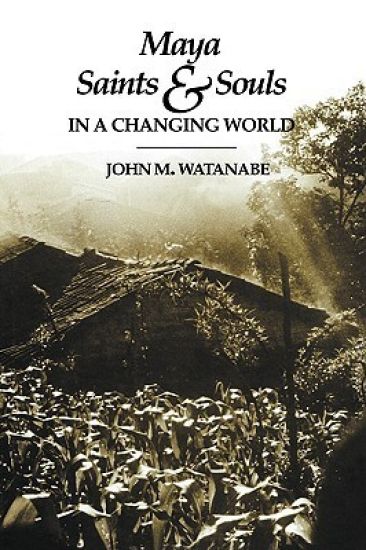
Maya Saints and Souls in a Changing World

Maya Saints and Souls in a Changing World

John M. Watanabe

University of Texas Press
1992
pokkari
The Maya of Santiago Chimaltenango have experienced increasingly rapid, even violent, integration into Guatemalan society in the last fifty years, yet they still distinguish themselves ethnically from Spanish-speaking Guatemalans and other Maya. Why this sense of ethnic identity persists-and also changes-over time is the focus of Maya Saints and Souls in a Changing World, a beautifully written ethnography of a Mam-speaking Maya town in the western highlands of Guatemala.John Watanabe uniquely explores how Chimaltecos themselves define their local distinctiveness. This approach uncovers significant continuities in lifeways and world view that might otherwise remain imperceptible to an outsider.Another important feature of the study is that it updates Charles Wagley's pioneering research in the community during the 1930s. Watanabe identifies both the external, historical factors that have prompted change in the community since Wagley's time and the people's responses to these changes.
Maya after War

Maya after War

Jennifer L. Burrell

University of Texas Press
2013
nidottu
Guatemala’s thirty-six-year civil war culminated in peace accords in 1996, but the postwar transition has been marked by continued violence, including lynchings and the rise of gangs, as well as massive wage-labor exodus to the United States. For the Mam Maya municipality of Todos Santos Cuchumatán, inhabited by a predominantly indigenous peasant population, the aftermath of war and genocide resonates with a long-standing tension between state techniques of governance and ancient community-level power structures that incorporated concepts of kinship, gender, and generation. Showing the ways in which these complex histories are interlinked with wartime and enduring family/class conflicts, Maya after War provides a nuanced account of a unique transitional postwar situation, including the complex influence of neoliberal intervention.Drawing on ethnographic field research over a twenty-year period, Jennifer L. Burrell explores the after-war period in a locale where community struggles span culture, identity, and history. Investigating a range of tensions from the local to the international, Burrell employs unique methodologies, including mapmaking, history workshops, and an informal translation of a historic ethnography, to analyze the role of conflict in animating what matters to Todosanteros in their everyday lives and how the residents negotiate power. Examining the community-based divisions alongside national postwar contexts, Maya after War considers the aura of hope that surrounded the signing of the peace accords, and the subsequent doubt and waiting that have fueled unrest, encompassing generational conflicts. This study is a rich analysis of the multifaceted forces at work in the quest for peace, in Guatemala and beyond.
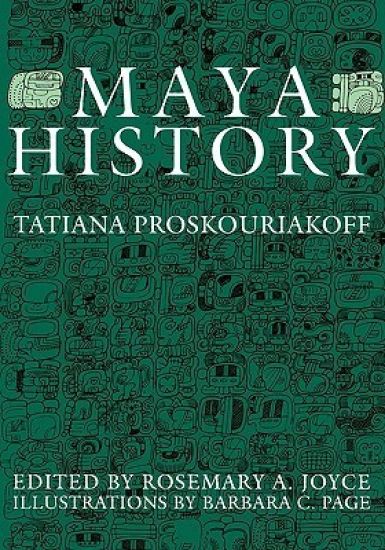
Maya History

Maya History

Tatiana Proskouriakoff

University of Texas Press
1993
pokkari
Tatiana Proskouriakoff, a preeminent student of the Maya, made many breakthroughs in deciphering Maya writing, particularly in demonstrating that the glyphs record the deeds of actual human beings, not gods or priests. This discovery opened the way for a history of the Maya, a monumental task that Proskouriakoff was engaged in before her death in 1985. Her work, Maya History, has been made ready for press by the able editorship of Rosemary Joyce.Maya History reconstructs the Classic Maya period (roughly A.D. 250-900) from the glyphic record on stelae at numerous sites, including Altar de Sacrificios, Copan, Dos Pilas, Naranjo, Piedras Negras, Quirigua, Tikal, and Yaxchilan. Proskouriakoff traces the spread of governmental institutions from the central Peten, especially from Tikal, to other city-states by conquest and intermarriage. Thirteen line drawings of monuments and over three hundred original drawings of glyphs amplify the text.
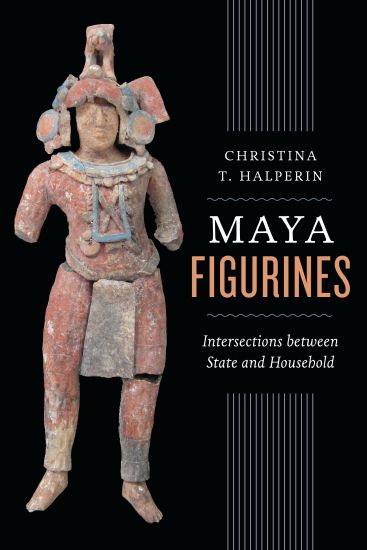
Maya Figurines

Maya Figurines

Christina T. Halperin

University of Texas Press
2014
sidottu
Rather than view the contours of Late Classic Maya social life solely from towering temple pyramids or elite sculptural forms, this book considers a suite of small anthropomorphic, zoomorphic, and supernatural figurative remains excavated from household refuse deposits. Maya Figurines examines these often neglected objects and uses them to draw out relationships between the Maya state and its subjects.These figurines provide a unique perspective for understanding Maya social and political relations; Christina T. Halperin argues that state politics work on the microscale of everyday routines, localized rituals, and small-scale representations. Her comprehensive study brings together archeology, anthropology, and art history with theories of material culture, performance, political economy, ritual humor, and mimesis to make a fascinating case for the role politics plays in daily life. What she finds is that, by comparing small-scale figurines with state-sponsored, often large-scale iconography and elite material culture, one can understand how different social realms relate to and represent one another. In Maya Figurines, Halperin compares objects from diverse households, archeological sites, and regions, focusing especially on figurines from Petén, Guatemala, and comparing them to material culture from Belize, the northern highlands of Guatemala, the Usumacinta River, the Campeche coastal area, and Mesoamerican sites outside the Maya zone. Ultimately, she argues, ordinary objects are not simply passive backdrops for important social and political phenomena. Instead, they function as significant mechanisms through which power and social life are intertwined.
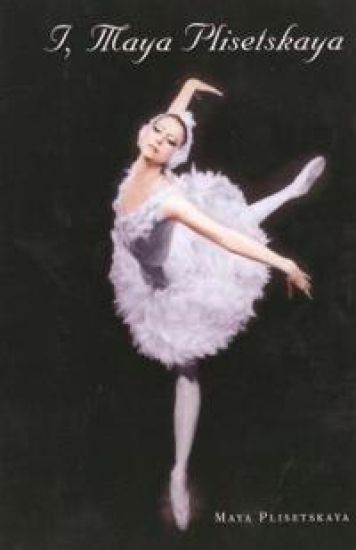
I, Maya Plisetskaya

I, Maya Plisetskaya

Maya Plisetskaya

Yale University Press
2010
pokkari
Maya Plisetskaya, one of the world’s foremost dancers, rose to become a prima ballerina of Moscow’s Bolshoi Ballet after an early life filled with tragedy and loss. In this spirited memoir, Plisetskaya reflects on her personal and professional odyssey, presenting a unique view of the life of a Soviet artist during the troubled period from the late 1930s to the 1990s. Plisetskaya recounts the execution of her father in the Great Terror and her mother’s exile to the Gulag. She describes her admission to the Bolshoi in 1943, the roles she performed there, and the endless petty harassments she endured, from both envious colleagues and Party officials. Refused permission for six years to tour with the company, Plisetskaya eventually performed all over the world, working with such noted choreographers as Roland Petit and Maurice Béjart. She recounts the tumultuous events she lived through and the fascinating people she met—among them the legendary ballet teacher Agrippina Vaganova, George Balanchine, Frank Sinatra, Rudolf Nureyev, and Dmitri Shostakovich. And she provides fascinating details about testy cocktail-party encounters with Khrushchev, tours abroad when her meager per diem allowance brought her close to starvation, and KGB plots to capitalize on her friendship with Robert Kennedy. Gifted, courageous, and brutally honest, Plisetskaya brilliantly illuminates the world of Soviet ballet during an era that encompasses both repression and cultural détente.
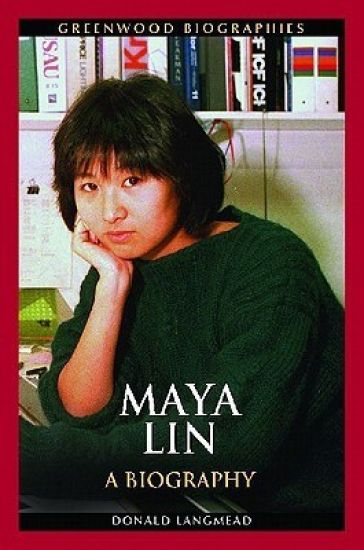
Maya Lin

Maya Lin

Donald Langmead

Greenwood Press
2011
sidottu
This book provides an informal biography of the wunderkind who became one of America's greatest living artists and most well-known architects.Many are familiar with the art and architectural design work of Maya Lin, but the compelling details of her personal background are less well known. This book not only focuses upon Lin's substantial achievements throughout her life, but also presents Maya Lin's "prehistory," describing family events in China that led to her parents' flight to the United States.Author Donald Langmead guides readers through Lin's ancestry and family connections in precommunist China; her childhood and youth in Athens, Ohio; the story behind the Vietnam Veterans Memorial in Washington, DC; her career after 1982 (by decades); and emphasis on environmental conservation. Written for a young adult and general readership, Maya Lin: A Biography provides an up-to-date description of how she became one of the most famous and respected artists in America.
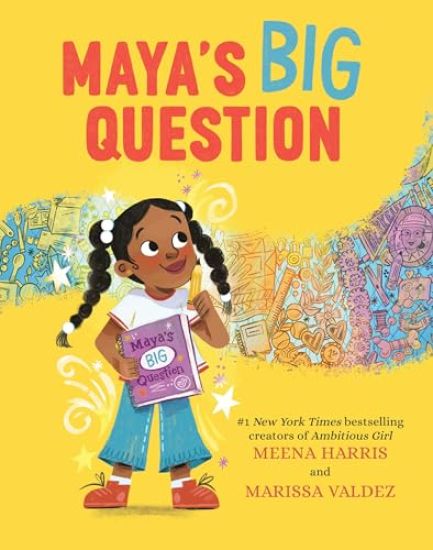
Maya's Big Question

Maya's Big Question

Meena Harris

Little, Brown Books for Young Readers
2026
sidottu
A young girl is determined to celebrate the women in her community and beyond in this inspiring book by #1 New York Times bestselling author of Ambitious Girl Meena Harris. Maya is proud of who she is: a curious kid who loves to ask questions. When her class takes a trip to Washington, DC, and only visits monuments dedicated to men, Maya asks: "Where are all the women?" With help from a park ranger who knows that asking questions is one of the most powerful things you can do, Maya decides to celebrate the women in her community with a monument of their own. But how can a kid build something so big? It takes creativity, community, and ambition--and Maya is the right person for the job Inspired by real-life park ranger Betty Reid Soskin, this latest book from #1 New York Times bestselling author Meena Harris encourages kids to question the status quo, and to embrace their part in writing the next chapter of history. Don't miss the other Ambitious Girl books: Ambitious Girl A Is for Ambitious
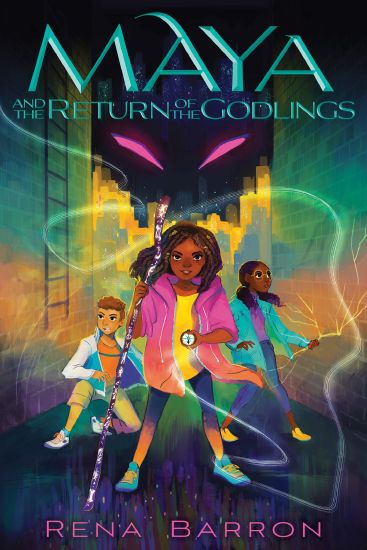
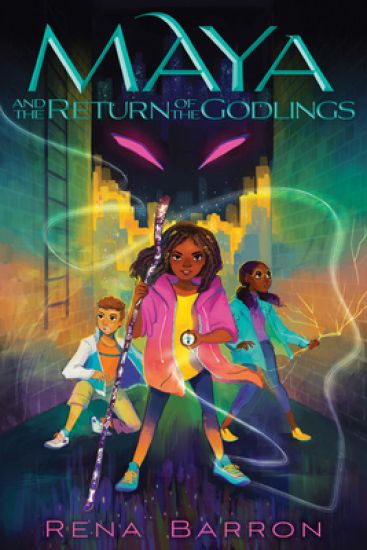
Maya and the Return of the Godlings

Maya and the Return of the Godlings

Rena Barron

Houghton Mifflin Books for Children
2021
sidottu
In this highly anticipated sequel, Maya and the godlings must return to the sinister world of The Dark to retrieve the one thing keeping the veil between the worlds from crumbling: her father’s soul. Perfect for fans of Tristan Strong Punches a Hole in the Sky and Willa of the Wood. The threat from The Dark is far from over. Twelve-year-old Maya knows this. After crossing the veil between the two worlds, saving her father, and narrowly escaping the sinister clutches of the Lord of Shadows, tensions between the human world and The Dark are higher than ever. And even worse, Maya’s orisha powers as a godling are out of control.Now a guardian in training, Maya spends her days patching up veils with her father and cleaning up near-disasters like baby wormholes that her erratic powers create. But when Maya and her friends discover that something went terribly wrong during their journey to bring her father back to the human world, they are forced to return to The Dark and restore what they left behind, the one thing keeping the veil from falling: her father’s soul.The Lord of Shadows is mobilizing his forces for an all-out war against the human world. And this time, Maya and her friends will need all the help they can get. Even if that means teaming up with their greatest enemies, the darkbringers.
Maya and the Lord of Shadows

Maya and the Lord of Shadows

Rena Barron

HARPERCOLLINS PUBLISHERS INC
2022
sidottu
In the thrilling third and final book in the acclaimed Maya and the Rising Dark trilogy that Kirkus calls "truly #BlackGirlMagic," Maya must face off with the Lord of Shadows to save the human world from impending war with the Dark.War is coming. Despite everything Maya and her father have done, the veil that protects the human world is failing. The Lord of Shadows has raised an army powerful enough to challenge the orishas. And it’s only a matter of time before he breaks through the veil and destroys Maya’s neighborhood and the rest of the world.Maya and her friends aren’t going down without a fight. She’s honing her guardian powers, with the help of two new allies—her long lost guardian sister and a mysterious darkbringer (who might be a double agent). But when an attack hits close to home, Maya doesn’t have any more time to prepare. She must face the Lord of Shadows or risk losing everything. With her friends—Eli, Frankie, Zeran, and Eleni—by her side, Maya leads the charge in an epic showdown that takes her across worlds and to the edge of the universe.Will she succeed or will Darkness prevail, once and for all?
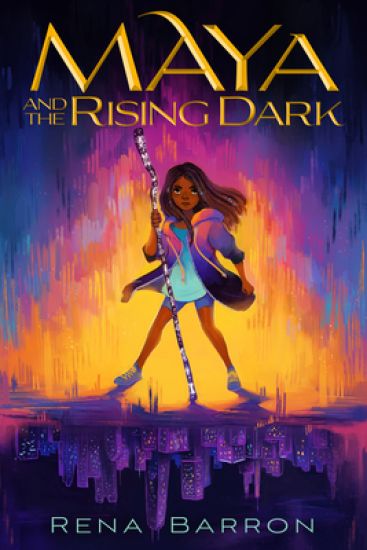
Maya and the Rising Dark

Maya and the Rising Dark

Rena Barron

Houghton Mifflin Books for Children
2021
nidottu
In this highly anticipated contemporary fantasy, twelve-year-old Maya’s search for her missing father puts her at the center of a battle between our world, the Orishas, and the mysterious and sinister Dark world. Perfect for fans of Aru Shah and the End of Time and The Serpent’s Secret.Twelve-year-old Maya is the only one in her South Side Chicago neighborhood who witnesses weird occurrences like werehyenas stalking the streets at night and a scary man made of shadows plaguing her dreams. Her friends try to find an explanation—perhaps a ghost uprising or a lunchroom experiment gone awry. But to Maya, it sounds like something from one of Papa’s stories or her favorite comics.When Papa goes missing, Maya is thrust into a world both strange and familiar as she uncovers the truth. Her father is the guardian of the veil between our world and the Dark—where an army led by the Lord of Shadows, the man from Maya’s nightmares, awaits. Maya herself is a godling, half orisha and half human, and her neighborhood is a safe haven. But now that the veil is failing, the Lord of Shadows is determined to destroy the human world and it’s up to Maya to stop him. She just hopes she can do it in time to attend Comic-Con before summer’s over.
Maya and the Return of the Godlings

Maya and the Return of the Godlings

Rena Barron

HARPERCOLLINS PUBLISHERS INC
2022
nidottu
In this highly anticipated sequel, Maya and the godlings must return to the sinister world of The Dark to retrieve the one thing keeping the veil between the worlds from crumbling: her father’s soul. Perfect for fans of Tristan Strong Punches a Hole in the Sky and Willa of the Wood. The threat from The Dark is far from over. Twelve-year-old Maya knows this. After crossing the veil between the two worlds, saving her father, and narrowly escaping the sinister clutches of the Lord of Shadows, tensions between the human world and The Dark are higher than ever. And even worse, Maya’s orisha powers as a godling are out of control.Now a guardian in training, Maya spends her days patching up veils with her father and cleaning up near-disasters like baby wormholes that her erratic powers create. But when Maya and her friends discover that something went terribly wrong during their journey to bring her father back to the human world, they are forced to return to The Dark and restore what they left behind, the one thing keeping the veil from falling: her father’s soul.The Lord of Shadows is mobilizing his forces for an all-out war against the human world. And this time, Maya and her friends will need all the help they can get. Even if that means teaming up with their greatest enemies, the darkbringers.