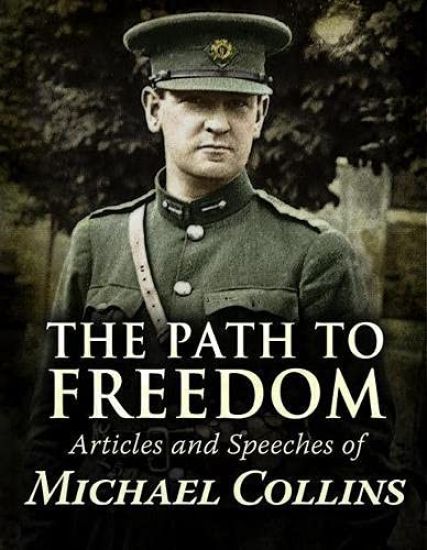
In these essays and speeches Michael Collins spellled out his vision for the future of Ireland, as well as his analysis of its past. Some of them are written in the anguish of a civil war which he struggled so hard to avoid, and in which he saw his country torn apart while seeking to establish and defend democracy, liberty and stability. Michael Collins’ overall vision is still inspiring, he sees the necessity for open trade with overseas markets, for investment and management, and for putting the “national economy on a sound footing” as a priority. Noted historian Tim Pat Coogan provides an introduction to the man and his times, giving an insight into the times that prompted him to write his articles and speeches.
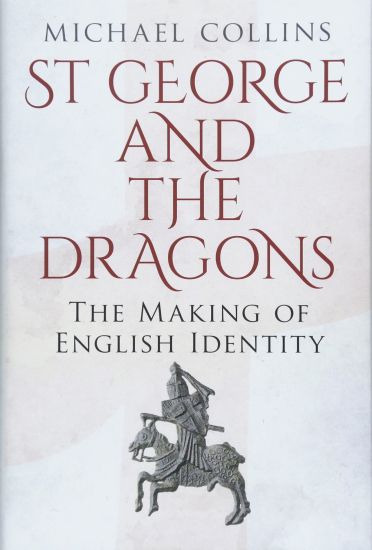
St George's Day has become a topic of debate as more and more organizations promote celebrations on 23 April and more people wave the flag of St George to proclaim their allegiance and identity. But who was St George? How did this Near Eastern martyr become England's patron saint and an icon of English culture? And what is his relevance for today's secular, multicultural England? New research reveals that from the third century St George was revered as a healer, protector of women and the poor and patron of agriculture and metal-working more than a military dragon-slayer. Discover the origin of the cross of St George and the roles of Richard I, Edward III and Henry VIII in making St George the patron saint of England. With a foreword by Professor Emeritus Dan Brown, this richly-illustrated celebration of English culture shows how St George can be reinterpreted for our times while remaining true to our English heritage. St George can be enlisted in the cause of ecology, the campaign against FGM, and the fight to end modern slavery and resettle refugees. English yet international, revered both by Christians and Muslims, St George is a multicultural figure who symbolizes universal values.
John Henry Newman was an important and controversial figure in the religious history of England in the 19th century. An esteemed academic, prolific author and convert from the Church of England to Catholicism, Newman was a complex and conflicted individual. Intensely loyal to his friends, highly-strung, kind-hearted and tenacious, Newman combined the best of both the Anglican and Catholic traditions. His volume of lectures entitled The Idea of a University, explained his philosophy of education. During the four years he spent in Dublin he was was instrumental in the founding of the Catholic University of Ireland in 1854; this later evolved into University College Dublin, now the largest university in Ireland. John Henry Newman was declared a saint on 13th October 2019.
Michael Collins explores different aspects of the Irish character, and neatly satirises his country's current preoccupations. Feminism, alcohol, emigration and the Church - none escape the author's caustic and unforgiving eye. As always with Collins, there are humour and horror in equal measure, love and betrayal mingled with defiance and laughter. 'Michael Collins's vision is breathtakingly black and his writing so sharp you could cut yourself on it' IRISH TIMES
The debut collection of essays from one of Britain's most celebrated photographers. For many years, photographer Michael Collins had wondered what exactly it was that he found so mysterious and compelling about photography. In this series of linked pieces, Collins offers a reappraisal of photographic genres – including the humble and ubiquitous – that he believes are worthy of greater understanding. From restoring abandoned photos, whose subjects are lost to time, to a quotidian history of the studio portrait; from tracing the origins of the photographic survey within the wider field of the history of art to an experiment in portraiture using gorillas, Collins reveals what it is about photography that is so enduringly fascinating.
Hailed by his contemporaries as “the divine painter,” Raphael Sanzio of Urbino ( 1483-15200 was one of the greatest artists of the Italian Renaissance. A contemporary of Michelangelo and Leonardo Da Vinci, Raphael was sought out by popes, kings and aristocrats to decorate their residences. Michael Collins’ new biography, Raphael’s World, portrays the era in which the divine painter lived. Born thirty years after the invention of the printing press and nine years before the discovery of the New World, Raphael harnessed the new techniques of printing and the riches which flowed from the Americas into Europe in the early 16th century. The political map of Europe was changing as Raphael painted for his wealthy patrons. Pope Julius II commissioned him to decorated his apartments at the Vatican while Pope Leo X appointed him architect of the new St. Peter’s which replaced the 1000 year old Constaintinian basilica. While Raphael painted the Apostolic Palace and designed tapestries to be hung in the Sistine Chapel, a German friar, Martin Luther was about to rend Christendom apart. Raphael’s World brings the reader into the ducal court of Urbino, and follows the young Raphael to Perugia where he studied in the studio of Perugino, to Florence where he saw Michaelangelo and Da Vinci at work, to Rome where he painted for popes and cardinals, as well as Agostino Chigi, one of the wealthiest patrons of the day. Based on contemporary documentation, Raphael’s World explores the complex era in which the artist flourished and introduces the reader to the fascinating panoply of patrons. The 500th anniversary of the death of Raphael occurs on 6 April 2020. There will be a number of events to celebrate the event, including the rare display of his Sistine tapestries and a symposium at the Vatican and other galleries around the world.
In the decades before 1914, the City of London was the premier international financial centre. However, this position was not long maintained, other industrial nations quickly and effectively challenged the influence of Britain, and following the disruption of the world markets caused by World War I and the Great Depression of the 1930s, international hegemony slipped away for ever. The relationship of bankers and industrialists has often been cited as a key factor in this decline. Critics of the banks claim that, even before World War I, there were serious deficiencies in the financial provision provided by banks to the domestic industrial sector, and that these deficiencies handicapped Britain's competitive advantage in world markets, leading to the decline of their influence and power. This book examines these claims, and bringing to bear important new data that presents the debate in a novel and revealing framework, expounds an economic rationale for historical bank behaviour. Using a rich source of contemporary records, it presents a series of micro-economic studies into commercial bank assets and liabilities, financial crises, bank mergers, the professionalization of banking, the organization and conduct of the industrial loan business, and the nature of bank support given to industrial clients. The result is a new, authoritative interpretation of bank-industry relations in the half-century before World War I.
How did Christianity get shared around the world? And how has Christian belief changed over the last 50 years? Providing some of the answers to these and many other questions, this overview charts the 2,000-year-long history of the world's largest religion.A History of Christianity covers everything from the world of the Old Testament to Christianity in the 21st century, including topics such as the early martyrs, the birth of the monasteries, the Crusades, the Reformation, and the rise of the Church in the Americas and Africa.Explore the wide-ranging beliefs and doctrines found within the Church and the role Christianity plays in people's lives. Discover the key events, figures, and movements that helped shape the Church, with a fresh and highly visual approach.In this Christianity book, you can find: - An accessible illustrated guide to the key events and thinkers of the last 2,000 years of Christianity- Detailed contextual illustrations, maps, and annotated works of art- Insightful quotes from Christian thinkers and the Bible- Chapters outlining different elements of Christianity and important moments that shaped beliefs including: The Roots of Christianity, Challenges to the Early Church, The Renaissance, Social Issues & Activism, and moreBeautifully illustrated, clearly presented, and written in an accessible style, this guide is the ideal companion for those who want to know about the history of the Church. This is a great guide for readers looking for a clear and accessible introduction to Christianity.
Reissued with a new preface by the author on the fiftieth anniversary of the Apollo 11 journey to the moonThe years that have passed since Neil Armstrong, Buzz Aldrin, and Michael Collins piloted the Apollo 11 spacecraft to the moon in July 1969 have done nothing to alter the fundamental wonder of the event: man reaching the moon remains one of the great events--technical and spiritual--of our lifetime. In Carrying the Fire, Collins conveys, in a very personal way, the drama, beauty, and humor of that adventure. He also traces his development from his first flight experiences in the air force, through his days as a test pilot, to his Apollo 11 voyage, presenting an evocative picture of the joys of flight as well as a new perspective on time, light, and movement from someone who has seen the fragile earth from the other side of the moon.