Kirjojen hintavertailu. Mukana 11 342 296 kirjaa ja 12 kauppaa.

Kirjahaku

Etsi kirjoja tekijän nimen, kirjan nimen tai ISBN:n perusteella.

1000 tulosta hakusanalla Michael Coren

Un'analisi della coerenza logica nell'applicazione delle tecniche Lean.
Il libro stato pubblicato sulla base dei risultati della ricerca sull'uso del concetto di Centro Servizi nell'attuazione della Strategia Globale di Supporto sul Campo delle Nazioni Unite. Il libro fornisce una visione delle sfide legate alle riforme delle Nazioni Unite. Offre prescrizioni utili per progettare un sistema logistico e di distribuzione fisica che faccia leva sull'uso del concetto di Centro Servizi.
Uma análise da coerência lógica na aplicação das técnicas Lean

Uma análise da coerência lógica na aplicação das técnicas Lean

Michael Boima Kemokai

Edicoes Nosso Conhecimento
2024
pokkari
O livro publicado com base nos resultados de uma investiga o sobre a utiliza o do conceito de Centro de Servi os na implementa o da Estrat gia Global de Apoio no Terreno das Na es Unidas. O livro fornece uma vis o sobre os desafios ligados s reformas nas Na es Unidas. Oferece receitas que s o teis para a conce o de um sistema de log stica e de distribui o f sica que potencie a utiliza o do conceito de Centro de Servi os.
The Taxonomy and Phylogenetics of the Coenosus Group of Hister Linnaeus

The Taxonomy and Phylogenetics of the Coenosus Group of Hister Linnaeus

Michael S. Caterino

University of California Press
1999
pokkari
The coenosus group, containing 34 species, is the most speciose clade of Histerini in the Americas. The author provides the first comprehensive revision of these species, including keys for identification, complete distributional data, illustrations of diagnostic characters, and a detailed phylogenetic analysis. He uses the phylogeny to examine the evolution of several biological characteristics, with particular emphasis on myrmecophily.
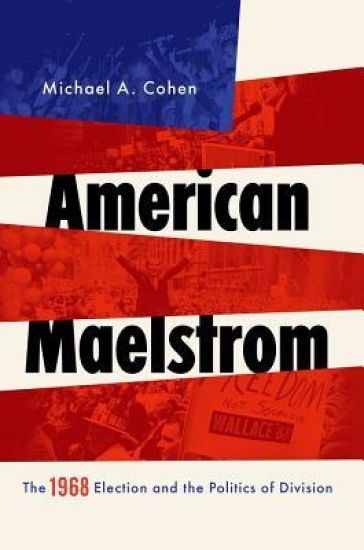
American Maelstrom

American Maelstrom

Michael A. Cohen

Oxford University Press Inc
2018
nidottu
In his presidential inaugural address of January 1965, Lyndon B. Johnson offered an uplifting vision for America, one that would end poverty and racial injustice. Elected in a landslide over the conservative Republican Barry Goldwater and bolstered by the so-called liberal consensus, economic prosperity, and a strong wave of nostalgia for his martyred predecessor, John F. Kennedy, Johnson announced the most ambitious government agenda in decades. Three years later, everything had changed. Johnson's approval ratings had plummeted; the liberal consensus was shattered; the war in Vietnam splintered the nation; and the politics of civil rights had created a fierce white backlash. A report from the National Committee for an Effective Congress warned of a "national nervous breakdown." The election of 1968 was immediately caught up in a swirl of powerful forces, and the nine men who sought the nation's highest office that year attempted to ride them to victory-or merely survive them. On the Democratic side, Eugene McCarthy energized the anti-war movement; George Wallace spoke to the working-class white backlash; Robert Kennedy took on the mantle of his slain brother. Entangled in Vietnam, Johnson, stunningly, opted not to run again, scrambling the odds. On the Republican side, 1968 saw the vindication of Richard Nixon, who outhustled Nelson Rockefeller, Ronald Reagan, and George Romney by navigating between the conservative and moderate wings of the Republican Party. The assassinations of the first Martin Luther King, Jr., and then Kennedy, seemed to push the country to the brink of chaos, a chaos reflected in the Democratic Convention in Chicago, a televised horror show. Vice President Hubert Humphrey emerged as the nominee, and, finally liberating himself from Johnson's grip, nearly overcame the lead long enjoyed by Nixon, who, by exploiting division and channeling the national yearning for order, would be the last man standing. In American Maelstrom, Michael A. Cohen captures the full drama of this watershed election, establishing 1968 as the hinge between the decline of political liberalism, the ascendancy of conservative populism, and the rise of anti-governmental attitudes that continue to dominate the nation's political discourse. In this sweeping and immersive book, equal parts compelling analysis and thrilling narrative, Cohen takes us to the very source of our modern politics of division.
Strategy and Politics in the Middle East, 1954-1960
The period covered by this book witnessed a significant change in Allied strategy for the Middle East. Its focus switched from Egypt to the states of the so-called northern tier of the Middle East: Turkey, Iraq, Iran and Pakistan. This book reveals the extent to which the UK clung on to great-power pretensions and used bluff, even deception, in order to give the impression that it disposed of greater military resources than was in fact the case. It describes not only Anglo-American tensions in the Middle East, but also the Americans' reluctance to take over Britain's former hegemony in the region. Finally, it reveals the extent to which the Allies' relationship with Israel was a constant restraint upon their freedom of action in the area, and their ability to forge military alliances with Arab states.
Truman and Israel

Truman and Israel

Michael J. Cohen

University of California Press
2022
pokkari
This title is part of UC Press's Voices Revived program, which commemorates University of California Press’s mission to seek out and cultivate the brightest minds and give them voice, reach, and impact. Drawing on a backlist dating to 1893, Voices Revived makes high-quality, peer-reviewed scholarship accessible once again using print-on-demand technology. This title was originally published in 1990.
Truman and Israel

Truman and Israel

Michael J. Cohen

University of California Press
2022
sidottu
This title is part of UC Press's Voices Revived program, which commemorates University of California Press’s mission to seek out and cultivate the brightest minds and give them voice, reach, and impact. Drawing on a backlist dating to 1893, Voices Revived makes high-quality, peer-reviewed scholarship accessible once again using print-on-demand technology. This title was originally published in 1990.
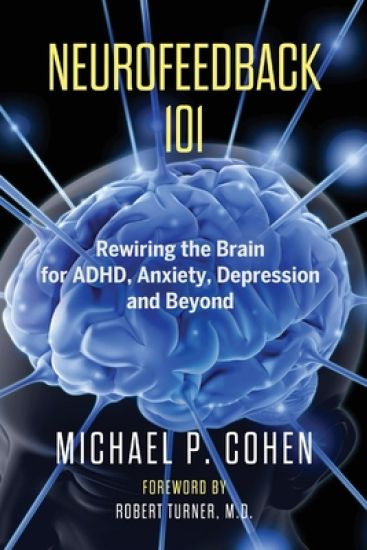
Neurofeedback 101: Rewiring the Brain for ADHD, Anxiety, Depression and Beyond (without medication)
You really CAN change your brain without medication.Maybe you've struggled for years with anxiety, depression, ADHD, migraines, PTSD, obsessive thinking, sleep issues or other unwanted conditions. You've tried medication, psychotherapy, breathing techniques, yoga, exercise or dietary changes-with no permanent relief.Neurofeedback is an emerging technology that's helped thousands of people feel better-without medication. It allows you to gently nudge your brain along through training until it learns to operate in a healthier manner.Neurofeedback is a form of biofeedback that's like a gym for your brain. The training improves your brain's timing which, in turn, improves its functioning. When your brain works better, you feel better. It's like heavy-duty weight training for the brain, even though you do it while relaxing in a chair.Once you've done sufficient training, these improvements are often long-term.Neurofeedback 101 explains how you change your brain--in clear, simple terms. It's full of real cases of how training has helped children and adults with their symptoms. There's a section that offers a thorough discussion of important questions and issues about neurofeedback - designed both for professionals and consumers.Author Michael P. Cohen is Director and Chief of Neurotechnology at the Center for Brain Training in Jupiter, Florida, one of the largest neurofeedback practices in South Florida. He's specialized in neurofeedback and helping individuals improve their brain function since 1996. He's taught more than 2,500 health professionals how to utilize neurofeedback in a clinical practice. If you want to explore how the brain can rewire and retrain itself, Neurofeedback 101 will give you the answers and resources you need. Please note: This book is NOT a manual or textbook on how to conduct neurofeedback. It provides general information on what neurofeedback is, how it works, and what neurofeedback can do. Those wishing to learn how to do neurofeedback should seek out books designed for that purpose.
Palestine and the Great Powers, 1945-1948

Palestine and the Great Powers, 1945-1948

Michael J. Cohen

Princeton University Press
2014
pokkari
Cohen examines the struggle leading to the creation of the state of Israel, placing British evacuation of Palestine in the context of Britain's postwar weakness. The author describes the policies and character of each of the major actors in his story--Bevin. Truman. Ben-Gurion, and the Mufti of Jerusalem. Originally published in 1982. The Princeton Legacy Library uses the latest print-on-demand technology to again make available previously out-of-print books from the distinguished backlist of Princeton University Press. These editions preserve the original texts of these important books while presenting them in durable paperback and hardcover editions. The goal of the Princeton Legacy Library is to vastly increase access to the rich scholarly heritage found in the thousands of books published by Princeton University Press since its founding in 1905.
Palestine and the Great Powers, 1945-1948

Palestine and the Great Powers, 1945-1948

Michael J. Cohen

Princeton University Press
2016
sidottu
Cohen examines the struggle leading to the creation of the state of Israel, placing British evacuation of Palestine in the context of Britain's postwar weakness. The author describes the policies and character of each of the major actors in his story--Bevin. Truman. Ben-Gurion, and the Mufti of Jerusalem. Originally published in 1982. The Princeton Legacy Library uses the latest print-on-demand technology to again make available previously out-of-print books from the distinguished backlist of Princeton University Press. These editions preserve the original texts of these important books while presenting them in durable paperback and hardcover editions. The goal of the Princeton Legacy Library is to vastly increase access to the rich scholarly heritage found in the thousands of books published by Princeton University Press since its founding in 1905.
Palestine to Israel

Palestine to Israel

Michael J. Cohen

Routledge
1988
nidottu
This collection of articles analyzes the underlying motivation, strategy and interests which lay behind "Great Power" (British and post-World War II American) involvement in Palestine and the Middle East, from 1917 to 1948.
Fighting World War Three from the Middle East
This description of Allied contingency plans for military operations in the Middle East - in the event of conflict with the Soviet Union - argues that diplomatic events and crises in the Middle East in 1945-55 are understandable only in the context of assets sought by the Allies in that region.
Strategy and Politics in the Middle East, 1954-1960
The period covered by this book witnessed a significant change in Allied strategy for the Middle East. Its focus switched from Egypt to the states of the so-called northern tier of the Middle East: Turkey, Iraq, Iran and Pakistan. This book reveals the extent to which the UK clung on to great-power pretensions and used bluff, even deception, in order to give the impression that it disposed of greater military resources than was in fact the case. It describes not only Anglo-American tensions in the Middle East, but also the Americans' reluctance to take over Britain's former hegemony in the region. Finally, it reveals the extent to which the Allies' relationship with Israel was a constant restraint upon their freedom of action in the area, and their ability to forge military alliances with Arab states.
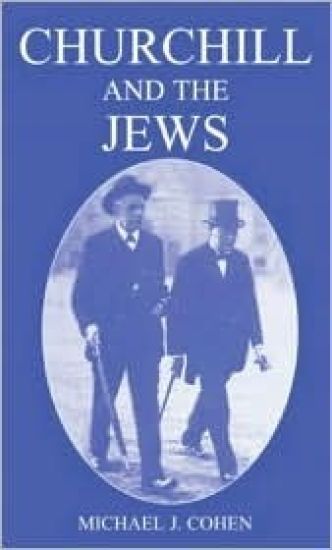
Churchill and the Jews, 1900-1948

Churchill and the Jews, 1900-1948

Michael J. Cohen

Routledge
2003
nidottu
Churchill's exalted position in the pantheon of Jewish and Zionist heroes has been almost taken for granted. This book looks beyond the myth and makes a sober reappraisal of the British statesman's attitudes and policies towards the Jews and to Zionism.
Complementary and Alternative Medicine

Complementary and Alternative Medicine

Michael H. Cohen

Johns Hopkins University Press
1998
nidottu
A third of all Americans use complementary and alternative medicine-including chiropractic, acupuncture, homeopathy, naturopathy, nutritional and herbal treatments, and massage therapy-even when their insurance does not cover it and they have to pay for such treatments themselves. Nearly a third of U.S. medical schools offer courses on complementary and alternative therapies. Congress has created an Office of Alternative Medicine within the National Institutes of Health, and federal and state lawmakers have introduced legislation authorizing widespread use of such therapies. These institutional and legislative developments, argues Michael H. Cohen, express a paradigm shift to a broader, more inclusive vision of health care than conventional medicine admits. Cohen explores the legal issues that health care providers (both conventional and alternative), institutions, and regulators confront as they contemplate integrating complementary and alternative medicine into mainstream U.S. health care.Challenging traditional ways of thinking about health, disease, and the role of law in regulating health, Cohen begins by defining complementary and alternative medicine and then places the regulation of orthodox and alternative health care in historical context. He next examines the legal ramifications of complementary and alternative medicine, including state medical licensing laws, legislative limitations on authorized practice, malpractice liability, food and drug laws, professional disciplinary issues, and third-party reimbursement. The final chapter provides a framework for thinking about the possible evolution of the regulatory structure. This book is the first to set forth the emerging moral and legal authority on which the safe and effective practice of alternative health care can rest. It further suggests how regulatory structures might develop to support a comprehensive, holistic, and balanced approach to health, one that permits integration of orthodox medicine with complementary and alternative medicine, while continuing to protect patients from fraudulent and dangerous treatments.
The Social Lives of Poems in Nineteenth-Century America

The Social Lives of Poems in Nineteenth-Century America

Michael C. Cohen

University of Pennsylvania Press
2015
sidottu
Poetry occupied a complex position in the social life of nineteenth-century America. While some readers found in poems a resource for aesthetic pleasure and the enjoyment of linguistic complexity, many others turned to poems for spiritual and psychic wellbeing, adapted popular musical settings of poems to spread scandal and satire, or used poems as a medium for asserting personal and family memories as well as local and national affiliations. Poetry was not only read but memorized and quoted, rewritten and parodied, collected, anthologized, edited, and exchanged. Michael C. Cohen here explores the multiplicity of imaginative relationships forged between poems and those who made use of them from the post-Revolutionary era to the turn of the twentieth century. Organized along a careful genealogy of ballads in the Atlantic world, The Social Lives of Poems in Nineteenth-Century America demonstrates how the circulation of texts in songs, broadsides, letters, and newsprint as well as in books, anthologies, and critical essays enabled poetry to perform its many different tasks. Considering the media and modes of reading through which people encountered and made sense of poems, Cohen traces the lines of critical interpretations and tracks the emergence and disappearance of poetic genres in American literary culture. Examining well-known works by John Greenleaf Whittier and Walt Whitman as well as popular ballads, minstrel songs, and spirituals, Cohen shows how discourses on poetry served as sites for debates over history, literary culture, citizenship, and racial identity.
Infrastructure Policy and Inequality

Infrastructure Policy and Inequality

Michael A. Cohen

TAYLOR FRANCIS LTD
2024
sidottu
This book reframes the purpose of infrastructure from being an input to economic growth to becoming a major instrument in reducing socio-economic inequalities in both industrialized and developing countries.Drawing on global and national lessons of COVID-19 and extensive working experience in 55 countries, this book reviews infrastructure policies and performance over several decades and suggests that the “underperformance” of infrastructure could be improved by more attention to users and the demand side, and thereby contribute to overcoming many obstacles facing low-income communities around the world. This book argues that growth is not a necessary condition for sustainability or social justice, and that both are undermined by structural inequalities which reduce the income and opportunities of urban households. More focus on user needs can substantially change the distribution of benefits and the quality of living conditions of low-income people. It provides a unique theoretical and on-the-ground critique of conventional infrastructure practices while illustrating to readers the many positive experiences around the world. More infrastructure is not enough; different and better is needed. This book reviews World Bank experience in launching a 30-year program to alleviate urban poverty through some 7,000 projects, showing that many significant policy changes have led to a big improvement in global urban policies adopted by national and local governments, yet have failed to significantly address and reduce intra-urban inequalities.The audience for this book includes academics, both faculty and advanced graduate students, while also a wider public interested in the prospects for international development.