This volume explores what phenomenology adds to the enterprise of anthropology, drawing on and contributing to a burgeoning field of social science research inspired by the phenomenological tradition in philosophy. Essays by leading scholars ground their discussions of theory and method in richly detailed ethnographic case studies. The contributors broaden the application of phenomenology in anthropology beyond the areas in which it has been most influential—studies of sensory perception, emotion, bodiliness, and intersubjectivity—into new areas of inquiry such as martial arts, sports, dance, music, and political discourse.
Truman and MacArthur offers an objective and comprehensive account of the very public confrontation between a sitting president and a well-known general over the military's role in the conduct of foreign policy. In November 1950, with the army of the Democratic Peoples Republic of Korea mostly destroyed, Chinese military forces crossed the Yalu River. They routed the combined United Nations forces and pushed them on a long retreat down the Korean peninsula. Hoping to strike a decisive blow that would collapse the Chinese communist regime in Beijing, General Douglas MacArthur, the commander of the Far East Theater, pressed the administration of President Harry S. Truman for authorization to launch an invasion of China across the Taiwan straits. Truman refused; MacArthur began to argue his case in the press, a challenge to the tradition of civilian control of the military. He moved his protest into the partisan political arena by supporting the Republican opposition to Truman in Congress. This violated the President's fundamental tenet that war and warriors should be kept separate from politicians and electioneering. On April 11, 1951 he finally removed MacArthur from command. Viewing these events through the eyes of the participants, this book explores partisan politics in Washington and addresses the issues of the political power of military officers in an administration too weak to carry national policy on its own accord. It also discusses America's relations with European allies and its position toward Formosa (Taiwan), the long-standing root of the dispute between Truman and MacArthur.
Why we should prepare for climate change now by taking anticipatory action in vulnerable regions.Global momentum is building to reduce greenhouse gas emissions. So far, so good. The less happy news is that Earth's temperatures will continue to rise for decades. And evidence shows that climbing temperatures are already having serious consequences for vulnerable people and regions through droughts, extreme weather, and melting glaciers. In this book, climate experts Michael Mastrandrea and Stephen Schneider argue that we need to start adapting to climate change, now. They write that these efforts should focus primarily on identifying the places and people most at risk and taking anticipatory action-from developing drought-resistant crops to building sea walls. The authors roundly reject the idea that reactive, unplanned adaptation will solve our problems-that species will migrate northward as climates warm, and farmers will shift to new crops and more hospitable locations. And they are highly critical of "geoengineering" schemes that are designed to cool the planet by such methods as injecting iron into oceans or exploding volcanoes. Mastrandrea and Schneider insist that smart adaptation will require a series of local and regional projects, many of them in the countries least able to pay for them and least responsible for the problem itself. Ensuring that we address the needs of these countries, while we work globally to reduce emissions over the long term, is our best chance to avert global disaster and to reduce the terrible, unfair burdens that are likely to accompany global warming.
Why our current system of higher education is financially and morally unsustainable and how to address the crisis with the creative implementation of digital technologies. For too long, our system of higher education has been defined by scarcity: scarcity in enrollment, scarcity in instruction, and scarcity in credentials. In addition to failing students professionally, we have seen how this system has exacerbated social injustice and socioeconomic stratification across the globe. In The Abundant University, Michael D. Smith argues that the only way to create a financially and morally sustainable higher education system is by embracing digital technologies for enrolling, instructing, and credentialing students--the same technologies that we have seen create abundance in access to resources in industry after industry. The Abundant University explains how we got our current system, why it's such an expensive, inefficient mess, and how a system based on exclusivity necessarily cannot foster inclusivity. Further, Smith challenges the resistance to digital technologies that we have already seen among numerous institutions, citing the examples of faculty resistance toward digital learning platforms. While acknowledging the understandable self-preservation instinct for our current system of residential education, Smith makes a case for how technology can engender greater educational opportunity and create changes that will benefit students, employers, and society as a whole.
How big data is transforming the creative industries, and how those industries can use lessons from Netflix, Amazon, and Apple to fight back."[The authors explain] gently yet firmly exactly how the internet threatens established ways and what can and cannot be done about it. Their book should be required for anyone who wishes to believe that nothing much has changed."-The Wall Street Journal"Packed with examples, from the nimble-footed who reacted quickly to adapt their businesses, to laggards who lost empires."-Financial TimesTraditional network television programming has always followed the same script: executives approve a pilot, order a trial number of episodes, and broadcast them, expecting viewers to watch a given show on their television sets at the same time every week. But then came Netflix's House of Cards. Netflix gauged the show's potential from data it had gathered about subscribers' preferences, ordered two seasons without seeing a pilot, and uploaded the first thirteen episodes all at once for viewers to watch whenever they wanted on the devices of their choice. In this book, Michael Smith and Rahul Telang, experts on entertainment analytics, show how the success of House of Cards upended the film and TV industries-and how companies like Amazon and Apple are changing the rules in other entertainment industries, notably publishing and music. We're living through a period of unprecedented technological disruption in the entertainment industries. Just about everything is affected: pricing, production, distribution, piracy. Smith and Telang discuss niche products and the long tail, product differentiation, price discrimination, and incentives for users not to steal content. To survive and succeed, businesses have to adapt rapidly and creatively. Smith and Telang explain how.How can companies discover who their customers are, what they want, and how much they are willing to pay for it? Data. The entertainment industries, must learn to play a little "moneyball." The bottom line: follow the data.
A defense of scientific realism based on the role of idealization in the cognitive sciences. We study nature, including the mind and brain, by building scientific models. In The Idealized Mind, Michael Kirchhoff brings together ideas from the philosophy of cognitive science and the philosophy of science to reconcile scientific realism with model-based science. His defense of scientific realism--the view that one reasonable aim of science is to provide true (or approximately true) descriptions of reality--is based on the role of idealization in the cognitive sciences. Idealization, he claims, is inevitable in cognitive science; at the same time, any understanding of the mind and brain must show how it is possible for scientific models to be reliably used to make truth-conditional assertions about their target phenomena. A central error in most theorizing about the mind, Kirchhoff claims, is to confuse the properties of scientific models with those of the system being modeled. But scientific models are, almost exclusively and unavoidably, idealizations of the world we seek to understand. They are descriptions of hypothetical systems, things that do not actually exist in nature. Specifically, Kirchhoff uses insights on idealization in science to assess the status and standing of three foundational issues in cognitive science: neural representation, neural computation, and the prospects for explanatory unification. He also explains why it is a mistake to approach neural representation and neural computation through the metaphysical stances of realism, fictionalism, or eliminativism.
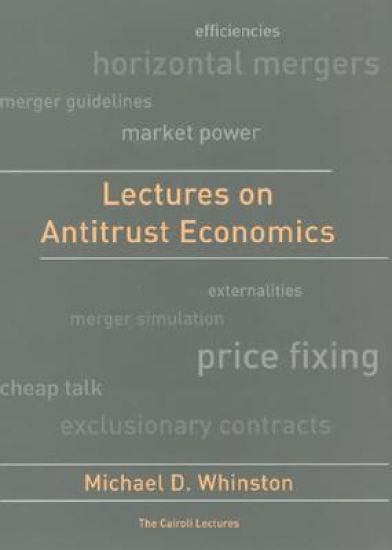
Antitrust law regulates economic activity but differs in its operation from what is traditionally considered "regulation." Where regulation is often industry-specific and involves the direct setting of prices, product characteristics, or entry, antitrust law focuses more broadly on maintaining certain basic rules of competition. In these lectures Michael Whinston offers an accessible and lucid account of the economics behind antitrust law, looking at some of the most recent developments in antitrust economics and highlighting areas that require further research. He focuses on three areas: price fixing, in which competitors agree to restrict output or raise price; horizontal mergers, in which competitors agree to merge their operations; and exclusionary vertical contracts, in which a competitor seeks to exclude a rival.Antitrust commentators widely regard the prohibition on price fixing as the most settled and economically sound area of antitrust. Whinston's discussion seeks to unsettle this view, suggesting that some fundamental issues in this area are, in fact, not well understood. In his discussion of horizontal mergers, Whinston describes the substantial advances in recent theoretical and empirical work and suggests fruitful directions for further research. The complex area of exclusionary vertical contracts is perhaps the most controversial in antitrust. The influential "Chicago School" cast doubt on arguments that vertical contracts could be profitably used to exclude rivals. Recent theoretical work, to which Whinston has made important contributions, instead shows that such contracts can be profitable tools for exclusion. Whinston's discussion sheds light on the controversy in this area and the nature of those recent theoretical contributions.Sponsored by the Universidad Torcuato Di Tella
The fifteenth century is more than any other the century of the persecution of witches. So wrote Johan Huizinga more than eighty years ago in his classic Autumn of the Middle Ages. Although Huizinga was correct in his observation, modern readers have tended to focus on the more spectacular witch-hunts of the sixteenth and seventeenth centuries. Nevertheless, it was during the late Middle Ages that the full stereotype of demonic witchcraft developed in Europe, and this is the subject of Battling Demons.At the heart of the story is Johannes Nider (d. 1438), a Dominican theologian and reformer who alternately persecuted heretics and negotiated with them—a man who was by far the most important church authority to write on witchcraft in the early fifteenth century. Nider was a major source for the infamous Malleus maleficarum, or Hammer of Witches (1486), the manual of choice for witch-hunters in late medieval Europe. Today Nider's reputation rests squarely on his witchcraft writings, but in his own day he was better known as a leader of the reform movement within the Dominican order and as a writer of important tracts on numerous other aspects of late medieval religiosity, including heresy and lay piety. Battling Demons places Nider in this wider context, showing that for late medieval thinkers, witchcraft was one facet of a much larger crisis plaguing Christian society. As the only English-language study to focus exclusively on the rise of witchcraft in the early fifteenth century, Battling Demons will be important to students and scholars of the history of magic and witchcraft and medieval religious history.
Avodah: Ancient Poems for Yom Kippur is the first major translation of one of the most important genres of the lost literature of the ancient synagogue. Known as the Avodah piyyutim, this liturgical poetry was composed by the synagogue poets of fifth- to ninth-century Palestine and sung in the synagogues on Yom Kippur, the Day of Atonement. Although it was suppressed by generations of rabbis, its ornamental beauty and deep exploration of sacred stories ensured its popularity for centuries. Piyyut literature can teach us much about how ancient Jews understood sacrifice, sacred space, and sin. The poems are also a rich source for retrieving myths and symbols not found in the conventional Rabbinic sources, such as the Talmuds and Midrash. Moreover, these compositions rise to the level of fine literature. They are the products of great literary effort, continue and extend the tradition of biblical parallelism, and reveal the aesthetic sensibilities of the Mediterranean in Late Antiquity.
Avodah: Ancient Poems for Yom Kippur is the first major translation of one of the most important genres of the lost literature of the ancient synagogue. Known as the Avodah piyyutim, this liturgical poetry was composed by the synagogue poets of fifth- to ninth-century Palestine and sung in the synagogues on Yom Kippur, the Day of Atonement. Although it was suppressed by generations of rabbis, its ornamental beauty and deep exploration of sacred stories ensured its popularity for centuries. Piyyut literature can teach us much about how ancient Jews understood sacrifice, sacred space, and sin. The poems are also a rich source for retrieving myths and symbols not found in the conventional Rabbinic sources, such as the Talmuds and Midrash. Moreover, these compositions rise to the level of fine literature. They are the products of great literary effort, continue and extend the tradition of biblical parallelism, and reveal the aesthetic sensibilities of the Mediterranean in Late Antiquity.
While the perception of magic as harmful is age-old, the notion of witches gathering together in large numbers, overtly worshiping demons, and receiving instruction in how to work harmful magic as part of a conspiratorial plot against Christian society was an innovation of the early fifteenth century. The sources collected in this book reveal this concept in its formative stages.The idea that witches were members of organized heretical sects or part of a vast diabolical conspiracy crystalized most clearly in a handful of texts written in the 1430s and clustered geographically around the arc of the western Alps. Michael D. Bailey presents accessible English translations of the five oldest surviving texts describing the witches’ sabbath and of two witch trials from the period. These sources, some of which were previously unavailable in English or available only in incomplete or out-of-date translations, show how perceptions of witchcraft shifted from a general belief in harmful magic practiced by individuals to a conspiratorial and organized threat that led to the witch hunts that shook northern Europe and went on to influence conceptions of diabolical witchcraft for centuries to come.Origins of the Witches’ Sabbath makes freshly available a profoundly important group of texts that are key to understanding the cultural context of this dark chapter in Europe’s history. It will be especially valuable to those studying the history of witchcraft, medieval and early modern legal history, religion and theology, magic, and esotericism.
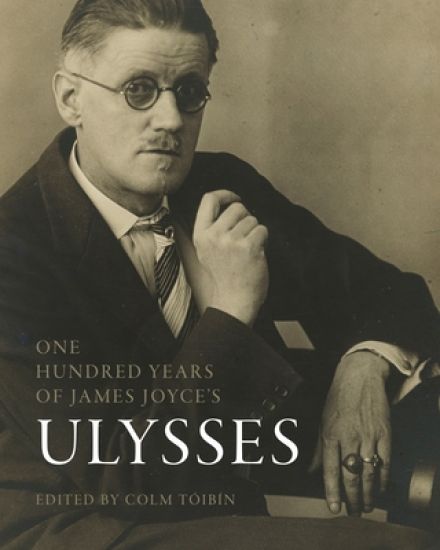
Ulysses is widely regarded as the greatest novel of the twentieth century. Commemorating the 1922 publication of this modernist masterwork, One Hundred Years of James Joyce’s “Ulysses” tells the story of the writing, revising, printing, and censorship of the novel.Edited by world-renowned Irish novelist and literary critic Colm Tóibín, this book presents ten essays by preeminent Joyce scholars and by curators of his manuscripts and early editions, as well as an interview with Sean Kelly, the New York gallery owner who donated his extensive Joyce collection to The Morgan Library & Museum. Beginning with Tóibín’s expert interpretation of the Dublin context for Ulysses, the volume follows Joyce in Trieste, Zurich, and Paris from 1914 up through the novel’s publication—and the international scandal and fame that ensues. It draws on Joyce’s notebooks and letters, as well as extant manuscripts and proofs, to provide new insights into Joyce’s life, the narrative and place of Ulysses, and the printed book.Rich and illuminating, this volume is essential for scholars, fans, and readers of the novel. Along with the editor, contributors include Ronan Crowley, Maria DiBattista, Derick Dreher, Catherine Flynn, Anne Fogarty, Rick Gekoski, Joseph M. Hassett, James Maynard, and John McCourt.
Michael Grimes looks at the voluminous scholarly literature published by American social scientists in the twentieth century and provides an overview and critique of the major theories, conceptualizations, and measurements of class inequality. No book published since the late fifties has had such scope. This volume assembles a framework for interpreting and understanding the changing character of the theories and methodologies used by scholars to study class inequality based on two schools of social theory--order and conflict--each with different assumptions about human nature and society, and about the unique role(s) that class plays in society. Grimes contends that theoretical perspectives result from the interaction of the unique biographies of theorists with the sociohistorical, ideological, and disciplinary settings within which they work, and that the relative popularity of perspectives on the subject within the discipline has varied over time as the setting has changed.Part I of the book assesses the diverse perspectives on class inequality of early American sociologists. Part II examines the rise of functionalism within American sociology and its subsequent application to the issue of class inequality. Two conflict perspectives on inequality--labeled neo-Weberian and neo-Marxist theories--are discussed in Part III, while Part IV provides a summary and concludes that there is evidence of a convergence of sorts among contemporary perspectives on class inequality within the discipline. The colume is organized to facilitate use by graduate students and advanced undergraduate students as well as by professional social scientists--particularly sociologists.
New Arenas for Violence examines the history, nature, and causal factors of occupational homicide—murder in the workplace—with a view to the development of a comprehensive understanding of the issue and the introduction of prevention measures designed to establish a safer work environment for the American worker. Through the analysis of a number of actual incidents of homicide, the author constructs a new framework for understanding occupational homicide and its perpetrators. Kelleher develops a new method of categorizing and evaluating crimes of this sort and offers an invaluable profile of the potentially violent worker or client. The book concludes with a compendium of prevention methodologies that are both practical and applicable to a wide variety of workplace environments.
When individuals from working-class backgrounds seek entry into the upper-middle-class world of academia, they often encounter difficulties. Examining the professional and personal lives of a group of sociologists from working class backgrounds, this extensive study finds that despite their successes as Ph.D. recipients, these scholars have suffered structural, interpersonal, and personal consequences that are linked to that class background. Many are uncomfortable with the academic role and the authority structure of the university, and see themselves as outsiders both within the academy and its larger cultural environment. The authors' conclusion, is that upward social mobility is never complete and that these upwardly mobile professionals appear to be caught in the middle between the world of their childhoods and the very different world that they must confront daily as members of the academy.
In this exploration of new possibilities for the reduction of workplace violence and occupational homicide within a variety of work environments, Kelleher examines the crimes of the lethal employee or ex-employee and develops a profile of characteristics and behaviors often associated with workplace violence or murder. This profile, in turn, can be used to recognize potential violence before it occurs, allowing employers to devise early and effective intervention strategies. The author develops the profile of the potentially lethal employee through behavioral science models and an analysis of case histories of incidents of occupational homicide.
The crime of mass murder is surrounded by myth, false assumptions, and misinformation. It is frequently sensationalized in the press, while the complex motivations of the perpetrator are ignored or soon forgotten. The mass murderer is rarely a crazed killer who lashes out against his victims in a mindless frenzy of violence. This book examines not only the crime of mass murder, but also the complex motivations of the mass murderer, presenting a completely new method of categorizing and analyzing the crime and its perpetrator. The evolving nature of the crime is examined in the context of actual case histories of mass murder in America. Kelleher's insights will be of interest to criminologists and anyone interested in the sociology of crime.
During the Cold War era, the United States faced the prospect of expanding its power in Central America. But we miscalculated—grievously. After 1945, Central America teemed with leaders willing to alter the region's quasi-colonial status. Some, like Fidel Castro, sought out revolution to shatter the status quo. Others, like Anastasio Somoza Garcia, attempted to seek out new directions along more subtle paths. Nicaragua subsequently challenged American hegemony in a manner at once more deliberate and more dangerous than any other effort in the hemisphere. The Somoza regime, unlike its contemporaries, chose to utilize American institutions and American preferences to subvert the latter's power rather than reinforce it. American arrogance, combined with a complacent approach to policy in its global backyard, offered a myriad of political, military, and economic opportunities to a leader willing to take risks. In the years after 1945, Somoza was thus able to peel away layers of clientage until, at certain moments, he could act as a partner of his northern neighbor.
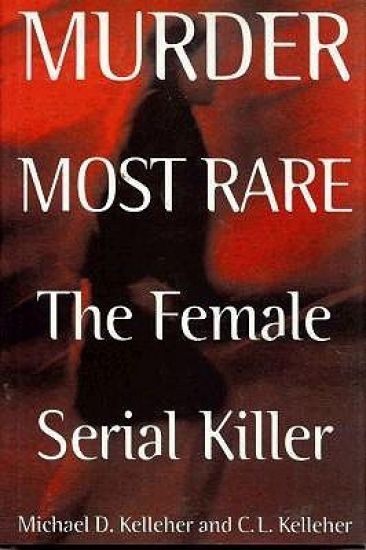
While the short, lethal careers of serial killers such as Jeffrey Dahmer and Andrew Cunanan terrorize the public and provide morbid inspiration for the entertainment industry, few people realize that it is the female serial killer, seldom heard of, who deserves most to be feared. Murder Most Rare provides startling information about the female serial murderer, who is shown to be far more deadly and determined, difficult to apprehend, and complexly motivated than her male counterpart. While serial murder by women is relatively rare, a surprising number of female serial killers are identified by the authors, nearly 100 in this century, with half of them having committed their crimes in America. By examining these women's backgrounds, motives and methods of killing, the book sheds new light on dozens of overlooked cases of murder and uncovers callous crimes and passions gone awry. After a thought-provoking exploration of the cultural biases that have caused us historically to dismiss and ignore the criminal potential of women, Murder Most Rare divides female serial murders for the first time into seven categories: Black Widow, Angel of Death, Sexual Predator, Revenge, Profit or Crime, Team Killer and Question of Sanity. These seven types vary widely in motivation, choice of victims, weapons and methods. The authors reveal patterns that occur within the types, but stress that the complicated nature of these women's crimes makes personality profiling almost impossible—a fact that causes the jobs of homicide investigators to be difficult, indeed, sometimes impossible. This is a uniquely personal look into a dark, shocking world.