Kirjojen hintavertailu. Mukana 11 342 296 kirjaa ja 12 kauppaa.

Kirjahaku

Etsi kirjoja tekijän nimen, kirjan nimen tai ISBN:n perusteella.

1000 tulosta hakusanalla Michael J. Perry

Caught in the Cultural Preference Net

Caught in the Cultural Preference Net

Michael J. Camasso; Radha Jagannathan

Oxford University Press Inc
2021
sidottu
How big of a role have national cultures--the collection of values, beliefs, attitudes and preferences--played in the formation of social and economic identities? If substantial, can these identities impact work related attitudes and impact personal decision as specific as the preferred type of job or even the choice of seeking employment at all? At a time when Millennials and Generation Z'ers are facing prodigious employment challenges, it is more timely than ever to examine the ways culture, especially cultural transmission from older to younger generations facilitate (hinder) influence labor force attachment and even the work ethic itself. Caught in the Cultural Preference Net examines work-related beliefs, attitudes and preferences that characterize the value orientations of three generational families in Germany, Sweden, Spain, Italy, India and the United States. These six countries have developed significantly different forms of capitalism ranging from the social democratic form in Sweden to the relatively unfettered, free market capitalism in the United States. Michael J. Camasso and Radha Jagannathan investigate whether these cultural and economic contexts have resulted in enduring attitude and preference structures or if these values and preferences have been changing as economic conditions in a nation have changed. These two experts focus a great deal of their attention on the roles that parents and grandparents have in socializing Millennials into the world of work and if this influence trumps the often competing influences of education, labor market and peers. The book is organized around three lines of inquiry: (1) Do some national cultures possess value orientations that are more successful than others in promoting economic opportunity? (2) Does the transmission of these value orientations demonstrate a persistence irrespective of economic conditions or are they simply the results of these conditions? (3) If a nation's value orientation does indeed impact economic opportunity, does it do so by influencing an individual's preferences? To answer this third question, Camasso and Jagannathan conduct a cross-national, multi-generational stated preference experiment--one of the very few ever attempted. The resulting book reveals substantial cultural stability across generations in some of the six capitalist democracies and substantial intergenerational change in others. The implications of this differential impact for national employment strategies are explored as are the implications for a global economy distinguished by abundant, well-paying service jobs for youth.
The Framers' Coup

The Framers' Coup

Michael J. Klarman

Oxford University Press Inc
2018
nidottu
Americans revere their Constitution. However, most of us are unaware how tumultuous and improbable the drafting and ratification processes were. As Benjamin Franklin keenly observed, any assembly of men bring with them "all their prejudices, their passions, their errors of opinion, their local interests, and their selfish views." One need not deny that the Framers had good intentions in order to believe that they also had interests. Based on prodigious research and told largely through the voices of the participants, Michael Klarman's The Framers' Coup narrates how the Framers' clashing interests shaped the Constitution--and American history itself. The Philadelphia convention could easily have been a failure, and the risk of collapse was always present. Had the convention dissolved, any number of adverse outcomes could have resulted, including civil war or a reversion to monarchy. Not only does Klarman capture the knife's-edge atmosphere of the convention, he populates his narrative with riveting and colorful stories: the rebellion of debtor farmers in Massachusetts; George Washington's uncertainty about whether to attend; Gunning Bedford's threat to turn to a European prince if the small states were denied equal representation in the Senate; slave staters' threats to take their marbles and go home if denied representation for their slaves; Hamilton's quasi-monarchist speech to the convention; and Patrick Henry's herculean efforts to defeat the Constitution in Virginia through demagoguery and conspiracy theories. The Framers' Coup is more than a compendium of great stories, however, and the powerful arguments that feature throughout will reshape our understanding of the nation's founding. Simply put, the Constitutional Convention almost didn't happen, and once it happened, it almost failed. Even after the convention succeeded, the Constitution it produced almost failed to be ratified. Just as importantly, the Constitution was hardly the product of philosophical reflections by brilliant, disinterested statesmen, but rather ordinary interest group politics. Multiple conflicting interests had a say, from creditors and debtors to city dwellers and backwoodsmen. The upper class overwhelmingly supported the Constitution; many working class colonists were more dubious. Slave states and nonslave states had different perspectives on how well the Constitution served their interests. Ultimately, both the Constitution's content and its ratification process raise troubling questions about democratic legitimacy. The Federalists were eager to avoid full-fledged democratic deliberation over the Constitution, and the document that was ratified was stacked in favor of their preferences. In terms of substance, the Constitution was a significant departure from the more democratic state constitutions of the 1770s. Definitive and authoritative, The Framers' Coup explains why the Framers preferred such a constitution and how they managed to persuade the country to adopt it. We have lived with the consequences, both positive and negative, ever since.
We Are Not One People

We Are Not One People

Michael J. Lee; R. Jarrod Atchison

OXFORD UNIVERSITY PRESS INC
2022
nidottu
E pluribus unum was suggested for the national seal in 1776, but national oneness has been haunted by its opposite ever since. We Are Not One People demonstrates how the persistence of separatist movements in American history reveals as much about the nation's politics as it does the would-be separatists. Each chapter explores how great swaths of Americans of every ideological stripe, in good times and bad, in and beyond the South, have disputed the nation's oneness and stressed its divisibility. Trumpeted in American myths, mottos, movies, and songs, separatism is omnipresent in American political culture. Separatist rhetoric has shaped Americans' experience of what it means to be an American, and we can learn much about the durable appeal and enduring fragility of the United States from those who tried to leave it. As one Vermont separatist quips, leaving is as American "as apple pie." We Are Not One People is a bold, pathbreaking, and far-reaching account of disunionists from 1776 to the present who wanted, as phrased in the Declaration of Independence, "to dissolve the political bands" connecting them to other Americans.
Impeachment

Impeachment

Michael J. Gerhardt

Oxford University Press Inc
2018
nidottu
Impeachment: What Everyone Needs to Know® is the step back and deep reflection on the law of impeachment that everyone needs now. Written in an accessible and lively question-and-answer format, it offers a timely explanation of the impeachment process from its very meaning to its role in politics today. The book defines the scope of impeachable offenses, and how the Constitution provides alternative procedures and sanctions for addressing misconduct in office. It explains why the only two presidential impeachments, those of Andrew Johnson and Bill Clinton, failed to lead to conviction, and how the impeachments of federal judges illuminate the law and politics of the process. As a legal expert and the only joint witness in the impeachment proceedings against President Clinton, author Michael J. Gerhardt also explores a question frequently asked-will Donald Trump be impeached? This book does not take a side in the debate over the possible impeachment of the president; instead, it is a primer for anyone eager to learn about impeachment's origins, practices, limitations, and alternatives.
Impeachment

Impeachment

Michael J. Gerhardt

Oxford University Press Inc
2018
sidottu
Impeachment: What Everyone Needs to Know® is the step back and deep reflection on the law of impeachment that everyone needs now. Written in an accessible and lively question-and-answer format, it offers a timely explanation of the impeachment process from its very meaning to its role in politics today. The book defines the scope of impeachable offenses, and how the Constitution provides alternative procedures and sanctions for addressing misconduct in office. It explains why the only two presidential impeachments, those of Andrew Johnson and Bill Clinton, failed to lead to conviction, and how the impeachments of federal judges illuminate the law and politics of the process. As a legal expert and the only joint witness in the impeachment proceedings against President Clinton, author Michael J. Gerhardt also explores a question frequently asked-will Donald Trump be impeached? This book does not take a side in the debate over the possible impeachment of the president; instead, it is a primer for anyone eager to learn about impeachment's origins, practices, limitations, and alternatives.
Earned Citizenship

Earned Citizenship

Michael J. Sullivan

Oxford University Press Inc
2019
sidottu
The migration and settlement of 11 million unauthorized immigrants is among the leading political challenges facing the United States today. The majority of unauthorized immigrants in the U.S. have been here for more than five years, and are settling into American communities, working, forming families, and serving in the military, even though they may be detained and deported if they are discovered. An open question remains as to what to do about unauthorized immigrants who are already living in the United States. On one hand it is important that the government sends a message that future violations of immigration law will not be tolerated. On the other sits a deeper ethical dilemma that is the focus of this book: what do the state and citizens owe to unauthorized immigrants who have served their adopted country? Earned Citizenship argues that long-term unauthorized immigrant residents should be able to earn legalization and a pathway to citizenship through service in their adopted communities. Their service would act as restitution for immigration law violations. Military service in particular would merit naturalization in countries with a strong citizen-soldier tradition, including the United States. The book also considers the civic value of caregiving as a service to citizens and the country, contending that family immigration policies should be expanded to recognize the importance of caregiving duties for dependents. This argument is part of a broader project in political theory and public policy aimed at reconciling civic republicanism with a feminist ethic of care, and its emphasis on dependency work. As a whole, Earned Citizenship provides a non-humanitarian justification for legalizing unauthorized immigrants based on their contributions to citizens and institutions in their adopted nation.
Searching for Justice After the Holocaust

Searching for Justice After the Holocaust

Michael J. Bazyler; Kathryn Lee Boyd; Kristen L. Nelson; Rajika L. Shah

Oxford University Press Inc
2019
sidottu
The Nazis and their state-sponsored cohorts stole mercilessly from the Jews of Europe. In the aftermath of the Holocaust, returning survivors had to navigate a frequently unclear path to recover their property from governments and neighbors who had failed to protect them and who often had been complicit in their persecution. While the return of Nazi-looted art has garnered the most media attention, and there have been well-publicized settlements involving stolen Swiss bank deposits and unpaid insurance policies, there is a larger piece of Holocaust injustice that has not been adequately dealt with: stolen land and buildings, much of which today still remain unrestituted. This book is about the less publicized area of post-Holocaust restitution involving immovable (real) property confiscated from European Jews and others during World War II. In 2009, 47 countries convened in Prague to deal with the lingering problem of restitution of pre-war private, communal and heirless property stolen in the Holocaust. The outcome was the issuance by 47 states of the Terezin Declaration on Holocaust Era Assets and Related Issues, which aimed, among other things, to "rectify the consequences" of the wrongful property seizures. This book sets forth the legal history of Holocaust immovable property restitution in each of the Terezin Declaration signatory states. It also analyses how each of the 47 countries has fulfilled the standards of the Guidelines and Best Practices of the Terezin Declaration, issued in 2010 in conjunction with the establishment of the European Shoah Legacy Institute (ESLI) to monitor compliance. The book is based on the Holocaust (Shoah) Immovable Property Restitution Study commissioned by ESLI, written by the authors and issued in Brussels in 2017 before the European Parliament.
Ignorance and Moral Responsibility

Ignorance and Moral Responsibility

Michael J. Zimmerman

Oxford University Press
2022
sidottu
Michael J. Zimmerman investigates the relation between ignorance and moral responsibility. He begins with the presentation of a case in which a tragedy occurs, one to which many people have unwittingly contributed, and addresses the question of whether their ignorance absolves them of blame for what happened. Inspection of the case issues in the Argument from Ignorance, whose conclusion is that, to be blameworthy for one's behaviour and its consequences, one must at some time in the history of that behaviour have known that one was engaged in wrongdoing-a thesis that threatens to undermine many everyday ascriptions of responsibility. This argument is examined and refined in ensuing chapters by way of, first, a detailed inquiry into the nature of moral responsibility, ignorance, and control, all of which play a crucial role in the argument, and then an application of the fruits of this investigation to the question of whether and how someone might be to blame for behaviour that stems from either culpable ignorance, negligence, recklessness, or the kind of fundamental moral ignorance that often characterizes evildoers. The Argument from Ignorance implies that in a great many such cases the agent has an excuse for the wrongdoing in question. This is a disturbing verdict, and in the final chapter challenges to the argument are entertained. Despite the merits of some of these challenges, it is held that the argument, revised one last time, survives them.
Suffering and Happiness in England 1550-1850: Narratives and Representations

Suffering and Happiness in England 1550-1850: Narratives and Representations

Michael J. Braddick; Joanna Innes

Oxford University Press
2022
nidottu
Suffering and Happiness in England 1550-1850 pays tribute to one of the leading historians working on early modern England, Paul Slack, and his work as a historian, and enters into discussion with the rapidly growing body of work on the 'history of emotions'. The themes of suffering and happiness run through Paul Slack's publications; the first being more prominent in his early work on plague and poverty, the second in his more recent work on conceptual frameworks for social thought and action. Though he has not himself engaged directly with the history of emotions, assembling essays on these themes provides an opportunity to do that. The chapters explore in turn shifting discourses of happiness and suffering over time; the deployment of these discourses for particular purposes at specific moments; and their relationship to subjective experience. In their introduction, the editors note the very diverse approaches that can be taken to the topic; they suggest that it is best treated not as a discrete field of enquiry but as terrain in which many paths may fruitfully cross. The history of emotions has much to offer as a site of encounter between historians with diverse knowledge, interests, and skills.
Group Interests, Individual Attitudes

Group Interests, Individual Attitudes

Michael J Donnelly

Oxford University Press
2021
sidottu
What drives support for or opposition to redistributive taxation and spending? Why is ethnic diversity associated with inequality and a lack of redistribution? This book argues that many individuals, recognizing that they live in a world of uncertainty, use the groups of which they are a member as a heuristic to understand how welfare states are likely to impact them. This leads to reduced support for redistribution among the wealthy, whose disproportionate influence over policy in turn leads to less redistribution. Group Interests, Individual Attitudes develops the argument with a series of empirical implications, which are then tested using data from a variety of sources. It examines regional and ethnic politics in the United Kingdom, Germany, Slovakia, Canada, and Italy, using a combination of qualitative and quantitative evidence, existing and new surveys, and observational and experimental methods. The evidence is largely consistent with a heuristic theory, allowing us to see group politics in a new light.
Encounters with God

Encounters with God

Michael J. McClymond

Oxford University Press Inc
1998
sidottu
This book offers a broad-based study of Jonathan Edwards as a religious thinker. Much attention has been given to Edwards in relation to his Puritan and Calvinist forebears. McClymond, however, examines Edwards in relation to his eighteenth-century intellectual context. Among the topics considered are spiritual perception, metaphysics, contemplation, ethics and morality, and apologetics.
The Power of Precedent

The Power of Precedent

Michael J. Gerhardt

Oxford University Press Inc
2008
sidottu
The role that precedent plays in constitutional decisionmaking is a perennially divisive subject among scholars of law and American politics. The debate rages over both empirical and normative aspects of the issue: To what extent are the Supreme Court, Congress, and the executive branch constrained by precedent? To what extent should they be? Taking up a topic long overdue for comprehensive treatment, Michael Gerhardt connects the vast social science data and legal scholarship to provide the most wide-ranging assessment of precedent in several decades. The Power of Precedent clearly outlines the major issues in the continuing debates on the significance of precedent and evenly considers all sides. For the Supreme Court, precedents take many forms, including not only the Court's past opinions, but also norms, historical practices, and traditions that the justices have deliberately chosen to follow. In these forms, precedent exerts more force than is commonly acknowledged. This force is encapsulated in the implementation and recognition of what Gerhardt calls the "golden rule of precedent," a major dynamic in constitutional law. The rule calls upon justices and other public authorities to recognize that since they expect others to respect their own precedents, they must provide the same respect to others' precedents. Gerhardt's extensive exploration of precedent leads him to formulate a more expansive definition of it, one that encompasses not only the prior constitutional decisions of courts but also the constitutional judgments of other public authorities. Gerhardt concludes his study by looking at what the future holds for the concept, as he examines the decisions and attitudes toward precedent exhibited by the shift from the Rehnquist to the Roberts Court. Authoritative and incisive, Gerhardt presents an in-depth look at this central yet understudied phenomenon at the core of all constitutional conflicts and one of undeniable importance to American law and politics. Ultimately, The Power of Precedent vividly illustrates how constitutional law is made and evolves both in and outside of the courts.
Handbook of Program Evaluation for Social Work and Health Professionals
Evaluation is crucial for determining the effectiveness of social programs and interventions. In this nuts and bolts handbook, social work and health care professionals are shown how evaluations should be done, taking the intimidation and guesswork out of this essential task. Current perspectives in social work and health practice, such as the strengths perspective, consumer empowerment, empowerment evaluation, and evidence-based practice, are linked to evaluation concepts throughout the book to emphasize their importance. This book makes evaluation come alive with comprehensive examples of each different type of evaluation, such as a strengths-based needs assessment in a local community, a needs assessment for Child Health Plus programs, comprehensive program descriptions of HIV services and community services for the aged, a model for goals and objectives in programs for people with mental illness, a monitoring study of private practice social work, and process evaluations of a Medicare advocacy program and a health advocacy program to explain advance directives. Equal emphasis is given to both quantitative and qualitative data analysis with real examples that make statistics and concepts in qualitative analysis un-intimidating. By integrating both evaluation and research methods and assuming no previous knowledge of research, this book makes an excellent reference for professionals working in social work and health settings who are now being called upon to conduct or supervise program evaluation and may need a refresher on research methods. With a pragmatic approach that includes survey design, data collection methods, sampling, analysis, and report writing, it is also an excellent text or classroom resource for students new to the field of program evaluation.
Managing Business Complexity

Managing Business Complexity

Michael J. North; Charles M. Macal

Oxford University Press Inc
2007
sidottu
Agent-based modeling and simulation (ABMS), a way to simulate a large number of choices by individual actors, is one of the most exciting practical developments in business modeling since the invention of relational databases. It represents a new way to understand data and generate information that has never been available before--a way for businesses to view the future and to understand and anticipate the likely effects of their decisions on their markets and industries. It thus promises to have far-reaching effects on the way that businesses in many areas use computers to support practical decision-making. Managing Business Complexity is the first complete business-oriented agent-based modeling and simulation resource. It has three purposes: first, to teach readers how to think about ABMS, that is, about agents and their interactions; second, to teach readers how to explain the features and advantages of ABMS to other people and third, to teach readers how to actually implement ABMS by building agent-based simulations. It is intended to be a complete ABMS resource, accessible to readers who haven't had any previous experience in building agent-based simulations, or any other kinds of models, for that matter. It is also a collection of ABMS business applications resources, all assembled in one place for the first time. In short, Managing Business Complexity addresses who needs ABMS and why, where and when ABMS can be applied to the everyday business problems that surround us, and how specifically to build these powerful agent-based models.
Unfinished Business: Racial Equality in American History

Unfinished Business: Racial Equality in American History

Michael J. Klarman

Oxford University Press
2007
sidottu
Michael J. Klarman, author of From Jim Crow to Civil Rights, which won the prestigious Bancroft Prize in American History, is one of the leading authorities on the history of civil rights law in the United States. In Unfinished Business, he illuminates the course of racial equality in America, revealing that we have made less progress than we like to think. Indeed, African Americans have had to fight for everything they have achieved. Klarman highlights a variety of social and political factors that have influenced the path of racial progress--wars, migrations, urbanization, shifting political coalitions--and he looks in particular at the contributions of law and of court decisions to American equality. The author argues that court decisions tend to reflect the racial mores of the times, which is why the Supreme Court has not been a heroic defender of the rights of racial minorities. And even when the Court has promoted progressive racial change, its decisions have often been unenforced, in part because severely oppressed groups rarely have the resources necessary to force the issue. Klarman also sheds light on the North/South dynamic and how it has influenced racial progress, arguing that as southerners have become more anxious about outside challenges to their system of white supremacy, they have acted in ways that eventually undermined that system. For example, as southern slave owners demanded greater guarantees for slavery from the federal government, they alienated northerners, who came to fear a slave power conspiracy that would interfere with their liberties. The newest volume in Oxford's Inalienable Rights series, Unfinished Business offers an invaluable, succinct account of racial equality and civil rights throughout American history. Features
Brown v. Board of Education and the Civil Rights Movement

Brown v. Board of Education and the Civil Rights Movement

Michael J. Klarman

Oxford University Press Inc
2007
sidottu
A splendid account of the Supreme Court's rulings on race in the first half of the twentieth century, From Jim Crow To Civil Rights earned rave reviews and won the Bancroft Prize for History in 2005. Now, in this marvelously abridged, paperback edition, Michael J. Klarman has compressed his acclaimed study into tight focus around one major case--Brown v. Board of Education--making the path-breaking arguments of his original work accessible to a broader audience of general readers and students. In this revised and condensed edition, Klarman illuminates the impact of the momentous Brown v. Board of Education ruling. He offers a richer, more complex understanding of this pivotal decision, going behind the scenes to examine the justices' deliberations and reconstruct why they found the case so difficult to decide. He recaps his famous backlash thesis, arguing that Brown was more important for mobilizing southern white opposition to change than for encouraging civil rights protest, and that it was only the resulting violence that transformed northern opinion and led to the landmark legislation of the 1960s. Klarman also sheds light on broader questions such as how judges decide cases; how much they are influenced by legal, political, and personal considerations; the relationship between Supreme Court decisions and social change; and finally, how much Court decisions simply reflect societal values and how much they shape those values. Brown v. Board of Education was one of the most important decisions in the history of the U.S. Supreme Court. Klarman's brilliant analysis of this landmark case illuminates the course of American race relations as it highlights the relationship between law and social reform. Acclaim for From Jim Crow to Civil Rights: "A major achievement. It bestows upon its fortunate readers prodigious research, nuanced judgment, and intellectual independence." --Randall Kennedy, The New Republic "Magisterial." --The New York Review of Books "A sweeping, erudite, and powerfully argued book...unfailingly interesting." --Wilson Quarterly
Brown v. Board of Education and the Civil Rights Movement

Brown v. Board of Education and the Civil Rights Movement

Michael J. Klarman

Oxford University Press Inc
2007
nidottu
A splendid account of the Supreme Court's rulings on race in the first half of the twentieth century, From Jim Crow To Civil Rights earned rave reviews and won the Bancroft Prize for History in 2005. Now, in this marvelously abridged, paperback edition, Michael J. Klarman has compressed his acclaimed study into tight focus around one major case--Brown v. Board of Education--making the path-breaking arguments of his original work accessible to a broader audience of general readers and students. In this revised and condensed edition, Klarman illuminates the impact of the momentous Brown v. Board of Education ruling. He offers a richer, more complex understanding of this pivotal decision, going behind the scenes to examine the justices' deliberations and reconstruct why they found the case so difficult to decide. He recaps his famous backlash thesis, arguing that Brown was more important for mobilizing southern white opposition to change than for encouraging civil rights protest, and that it was only the resulting violence that transformed northern opinion and led to the landmark legislation of the 1960s. Klarman also sheds light on broader questions such as how judges decide cases; how much they are influenced by legal, political, and personal considerations; the relationship between Supreme Court decisions and social change; and finally, how much Court decisions simply reflect societal values and how much they shape those values. Brown v. Board of Education was one of the most important decisions in the history of the U.S. Supreme Court. Klarman's brilliant analysis of this landmark case illuminates the course of American race relations as it highlights the relationship between law and social reform. Acclaim for From Jim Crow to Civil Rights: "A major achievement. It bestows upon its fortunate readers prodigious research, nuanced judgment, and intellectual independence." --Randall Kennedy, The New Republic "Magisterial." --The New York Review of Books "A sweeping, erudite, and powerfully argued book...unfailingly interesting." --Wilson Quarterly
Practice Research in the Human Services

Practice Research in the Human Services

Michael J. Austin; Sarah Carnochan

Oxford University Press Inc
2020
nidottu
This book offers a practical approach to conducting practice research in the field of human services. This evolving form of applied research seeks to understand practice in the context of the relationships between service providers and service users, between service providers and their managers, between agency-based service providers and community advocacy and support groups, and between agency managers and policy makers. Practice research represents a form of evidence-informed practice that involves a wide array of research designs and methods, in contrast to the narrower emphasis on experimental designs that characterizes evidence-based practice. The emerging principles and practices associated with practice research highlight: 1) including multiple, diverse stakeholders, 2) maximizing and negotiating participation, 3) promoting practitioner engagement in all phases of the research process, and 4) developing new identities for participants as research-minded practitioners and practice-minded researchers. The book is designed for researchers, practitioners, service users and students, and focuses on concrete experiences that illustrate the processes and activities involved in a specific, locally negotiated model of practice research. The book describes multiple practice research studies across an array of fields of practice in the human services, focusing on the research questions, designs, roles and relationships that have been developed in the context of a university-agency practice research partnership. These descriptions and stories are used to construct a comprehensive, detailed picture of the research process. Based upon these descriptions, the book synthesizes a set of broader principles and guidelines for practice researchers.
Spirituality and Religion Within the Culture of Medicine

Spirituality and Religion Within the Culture of Medicine

Michael J. Balboni; John R. Peteet

Oxford University Press Inc
2021
nidottu
Spirituality and Religion Within the Culture of Medicine provides a comprehensive evaluation of the relationship between spirituality, religion, and medical practice. The authors, all leading clinician-researchers in their fields, assess the strengths and weaknesses of the most recent empirical research of religion and spirituality within many distinct fields of medicine. Recognizing the interdisciplinary aspects of spirituality, religion, and health, the book also turns to scholarship throughout a multitude of academic fields-including psychology, sociology, anthropology, law, history, philosophy, and theology-to consider cultural dimensions of clinical practice. This is the first time in a single volume that readers can reflect on these multi-dimensional, complex issues with contributions from leading scholars, as well as the first collection that assesses how the medical context interacts with patient spirituality recognizing crucial differences between contexts from obstetrics and family medicine, to nursing, to gerontology and the ICU. The book concludes with a synthesis, identifying the best studies in the field of religion and health, ongoing weaknesses in research, and highlighting what can be confidently believed based on prior studies. The synthesis also considers relations between the empirical literature on religion and health and the theological and religious traditions, discussing places of convergence and tension, as well as remaining open questions for further reflection and research. Spirituality and Religion within the Culture of Medicine provides trainees and clinicians introductory information for newcomers to the field of spirituality, religion, and medicine, and provides researchers and scholars familiar with field critical and up-to-date analysis from a multi-disciplinary approach.
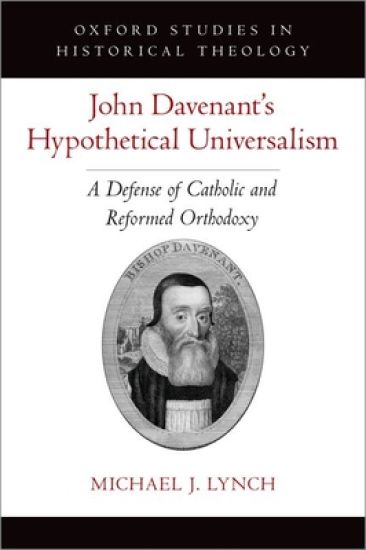
John Davenant's Hypothetical Universalism

John Davenant's Hypothetical Universalism

Michael J. Lynch

Oxford University Press Inc
2021
sidottu
Recently there has been a revival of interest in the views held by Reformed theologians within the parameters of confessional orthodoxy. For example, the doctrine known as 'hypothetical universalism'--the idea that although Christ died in some sense for every person, his death was intended to bring about the salvation only for those who were predestined for salvation. Michael Lynch focuses on the hypothetical universalism of the English theologian and bishop John Davenant (1572-1641), arguing that it has consistently been misinterpreted and misrepresented as a via media between Arminian and Reformed theology. A close examination of Davenent's De Morte Christi, is the central core of the study. Lynch offers a detailed exposition of Davenant's doctrine of universal redemption in dialogue with his understanding of closely related doctrines such as God's will, predestination, providence, and covenant theology. He defends the thesis that Davenant's version of hypothetical universalism represents a significant strand of the Augustinian tradition, including the early modern Reformed tradition. The book examines the patristic and medieval periods as they provided the background for the Lutheran, Remonstrant, and Reformed reactions to the so-called Lombardian formula ('Christ died sufficiently for all, effectually for the elect'). It traces how Davenant and his fellow British delegates at the Synod of Dordt shaped the Canons of Dordt in such a way as to allow for their English hypothetical universalism.