

Kirjahaku
Etsi kirjoja tekijän nimen, kirjan nimen tai ISBN:n perusteella.
1000 tulosta hakusanalla Michael Part

This book, now in its third edition, is still the most uniquely comprehensive resource for finding word parts needed to express a concept. Along with aiding vocabulary expansion, this dictionary provides guidance to those who may be interested in inventing or deciphering words bearing an established and embedded meaning. This work is split into three parts. Part I, the dictionary proper, provides an alphabetical listing of over 5,100 word parts. Each entry includes a brief definition, examples of use and etymology. Part II, the Finder, is a reverse dictionary that allows users to start with a meaning or concept to then find word parts that express the meaning. The only reverse dictionary of its kind,this section is updated with over 4,600 search terms in total. The expanded Part III organizes word parts under 20 convenient categories--like The Body, Fear or Dislike of, Experts and Shapes.

Political Parties and American Political Development from the Age of Jackson to the Age of Lincoln
Michael F. Holt
Louisiana State University Press
1992
nidottu
For more than twenty years Michael F. Holt has been considered one of the leading specialists in the political history of the United States. Political Parties and American Political Development from the Age of Jackson to the Age of Lincoln is a collection of some of his more important shorter studies on the politics of nineteenth-century America.The collection focuses on the mass political parties that emerged in the 1820s and their role in broader political developments from that decade to 1865. Holt includes essays on the Democratic, Antimasonic, Whig, and Know Nothing parties, as well as one on Abraham Lincoln's relationship with the congressional wing of the Republican party during the Civil War. Almost all essays touch on the broad question of the role of partisan politics in explaining the outbreak of the war. Individual essays address the following questions as well: What explains the birth and death of powerful third parties? What was the relationship among economic conditions, party performance in office (especially legislative performance), and the mobilization of an unprecedented number of voters between 1836 and 1840? Why did the Whigs find it necessary to nominate military hero Zachary Taylor as their presidential candidate in 1848? What explains the death of the Whig party? What role did ethnoreligious issues and the Know Nothing party play in the realignment of the 1850s and the ultimate triumph of the Republican party? In what ways did the continuation of two-party competition after 1860 help the North win the Civil War? Most of the essays have been published previously over a twenty-year span, but there are also two new pieces. ""The Mysterious Disappearance of the American Whig party,"" originally delivered as the Commonwealth Fund Lecture at University College London in February, 1990, seeks to explain why the Whig party died in the 1850s. This essay contrasts the fate of the Whig party with the fates of the Republican party in the 1930s and 1970s and the British Conservative party in the 1840s and 1850s - parties that survived similar, indeed graver, challenges than those to which the Whigs succumbed. In addition, Holt has written and excellent introduction in which he explains how he came to write the essays and reflects upon them in light of the current state of political history as a discipline. Political Parties and American Political Development from the Age of Jackson to the Age of Lincoln offers provocative insights into both the history of nineteenth-century politics and the way it is studied.
Beginning with a confrontation in 1929 in Switzerland, Michael Friedman examines how the work of three pivotal philosophers evolved and intertwined over several years, ultimately giving rise to two very different schools of thought - analytic philosophy and continental. The author explores the clashes that set them apart as they developed their own radical new ideas.
Reserve Participation and Cost Under a New Approach to Reserve Compensation
Michael G. Mattock; James Hosek; Beth J. Asch
RAND
2012
pokkari

Political Parties and the Constitution
Michael Les Benedict
American Historical Association
2015
nidottu
In his essay, Michael Les Benedict surveys the impact of the Constitution on the creation, development, and organization of political parties. Drawing examples from the time of the Founding Fathers, Benedict also explores the impact of political parties on the shaping of the Constitution to the present day.

The rights of the employee and the themes of employee ownership and participation have been central, recurring themes as the body of Catholic Social Thought has developed. There is now a unified corpus of official Catholic teaching that focuses the resources of moral theology and natural law theory on the important social issues of the day such as this. The description and explanation of the essential elements of Catholic Social Thought and its relationship to these themes helps the reader think about the place of the corporation in the economy and whether British and European corporate governance and labour law do what they should to put the employee at the centre of corporate governance.
First published in 1975, Workers’ Participation in Industry provides a fresh perspective on a highly significant issue. Its principal argument is that developments in workers’ participation and control cannot be satisfactorily understood except by reference to broader questions concerning the exercise of power in industry and in society at large. The book’s approach is sociological and explanatory, and it is written for the general reader as well as for students and specialists on both sides of industry.
First published in 1975, Workers’ Participation in Industry provides a fresh perspective on a highly significant issue. Its principal argument is that developments in workers’ participation and control cannot be satisfactorily understood except by reference to broader questions concerning the exercise of power in industry and in society at large. The book’s approach is sociological and explanatory, and it is written for the general reader as well as for students and specialists on both sides of industry.
Published in 1997, This book offers an up-to-date guide to the Green parties of Western Europe as the optimism of the 1980s confronts the ‘Green fatigue’ of the 1990s. The approach is both thematic and comparative. Green politics in Europe is located in its historical and cultural context. There is a comparative analysis of the principal ideological questions , policy issues and strategic dilemmas that have confronted the European Greens. There are national profiles of Green politics throughout the European Union. The conclusion addresses the critical issue of political change in post industrial societies. It discusses the contribution of Green parties to the ‘New Politics’ and assesses their likely impact on post-modern politics
Published in 1997, This book offers an up-to-date guide to the Green parties of Western Europe as the optimism of the 1980s confronts the ‘Green fatigue’ of the 1990s. The approach is both thematic and comparative. Green politics in Europe is located in its historical and cultural context. There is a comparative analysis of the principal ideological questions , policy issues and strategic dilemmas that have confronted the European Greens. There are national profiles of Green politics throughout the European Union. The conclusion addresses the critical issue of political change in post industrial societies. It discusses the contribution of Green parties to the ‘New Politics’ and assesses their likely impact on post-modern politics

The astonishing biography of Nigel Farage, arguably the most influential British politician of the 21st century

The astonishing biography of Nigel Farage, arguably the most influential British politician of the 21st century

The appointment of a new Chief Prosecuting Solicitor has caused outrage and gossip, but no one could have imagined that murder would ensue. Nor that an arrogant and stubborn policeman would make a premature arrest and then set about gathering the evidence to substantiate his arrest. Then a second murder throws the case into even more confusion.Meanwhile, Rosa Epton has appeared on the scene to defend the accused, and she is soon locked in battle with the police and increasingly determined to get to the truth.
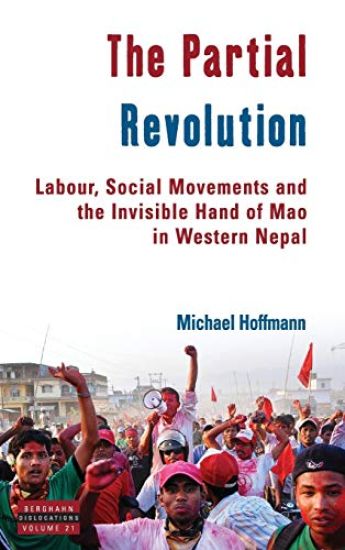
Located in the far-western Tarai region of Nepal, Kailali has been the site of dynamic social and political change in recent history. The Partial Revolution examines Kailali in the aftermath of Nepal’s Maoist insurgency, critically examining the ways in which revolutionary political mobilization changes social relations—often unexpectedly clashing with the movement’s ideological goals. Focusing primarily on the end of Kailali’s feudal system of bonded labor, Hoffmann explores the connection between politics, labor, and Mao’s legacy, documenting the impact of changing political contexts on labor relations among former debt-bonded laborers.
Partner compensation and how partners share profits is central to the cohesive fabric of any professional partnership. While one adage says that “there are as many profit-sharing systems as there are partnerships”, there has recently been the emergence of a global practice about what “merit” means and how risk and reward are shared among partners in professional service firms. In The Partner Remuneration Handbook, Michael Roch and Ray D’Cruz provide guidance for senior partners, managing partners, partnership boards, remuneration committees and others involved in the partner compensation process (department heads, CFOs, HRDs), on designing effective profit-sharing systems, reaching fair reward decisions efficiently and implementing motivating contribution management processes. Filled with practical insights, this book draws on principles of partnership, motivation and incentives in human capital management, and executive compensation in closely held businesses. Looking beyond the numbers, the authors balance the big picture with a detailed how-to for any professional partnership irrespective of geography, size and maturity. This title encompasses three core elements: Exploring the different partner reward systems found in most professional firms. Showing how partnerships define and discuss partner contribution commitments that further the firm’s overall strategic, operational and financial objectives. Providing decision-making guidance about marrying reward to performance and on Remuneration Committee governance. It also addresses a myriad of special topics, such as rewarding partners in management roles, and provides a proven approach for how firm leaders can take partners with them on the journey of evolving their partner compensation system.