Kirjahaku
Etsi kirjoja tekijän nimen, kirjan nimen tai ISBN:n perusteella.
1000 tulosta hakusanalla Michael Perry
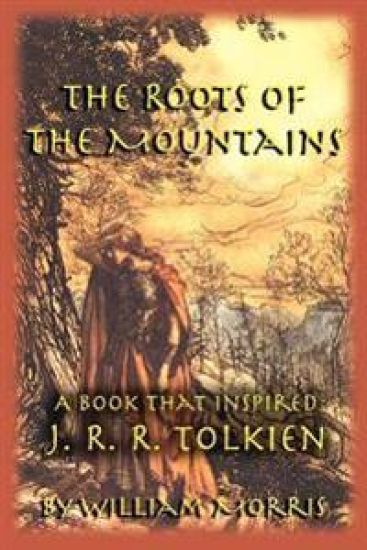
J. R. R. Tolkien said that his writing was inspired by William Morris. This book includes two of William Morris' most popular tales in one inexpensive, wide-format, two-column edition.
J. R. R. Tolkien was inspired in the writing of The Lord of the Rings by this tale of a magical coat of mail and the temptation to use its protection in a war between the Rohan-like Wolfings and the enslaving armies of Rome.
J. R. R. Tolkien's The Lord of the Rings was influenced by this tale of a romance that unites two long-ago peoples and of the battle to defend their freedom against invading Huns.
Tolkien Warriors-The House of the Wolfings
William Morris; Michael W Perry
Inkling Books
2013
pokkari
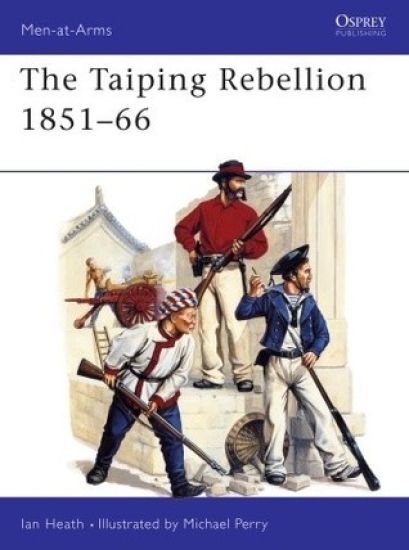
The Taiping movement began as the Pai Shang-ti Hui (the Society of God-Worshippers), founded in Kwangsi province in 1846 by Hung Hsiu-ch'uan. A sickly individual of questionable sanity. Hung had become subject to visions which interpreted as demonstrating that he was Jesus Christ's 'Divine Younger Brother', with God's mandate to govern China. This fascinating work by Ian Heath examines the organisation, dress and weapons of forces on both sides of the Taiping Rebellion - a conflict which saw the involvement of around 10 million troops during 15 years of conflict; as many as 600 cities change hands time and time again; and 20-30 million deaths.
The School of Journalism in Columbia University
Joseph Pulitzer; Horace White; Michael W Perry
Inkling Books
2006
pokkari
Sondra Perry: A Terrible Thing
Museum of Contemporary Art Cleveland; Will Brown; Michael Aberman
Hatje Cantz
2022
nidottu
What turns a random space into a place? What inscribes history into it, or lends it significance? These questions occupy the installation artist Sondra Perry in her current piece, A Terrible Thing, for the Museum of Contemporary Art in Cleveland. On Euclid Street in the heart of Cleveland, Perry carries out a kind of archaeological study of the street’s history using video, pictures found online, and digital methods of representation. In doing so, she relates the changing infrastructure of race representation on the street and its gender-political effect in everyday use to each other in order to negotiate issues of identity—of a city, a society, and of individuals. This work became a prism of times and perspectives that can now be imagined with the help of this publication.
Black History Leaders: Volume 2: Nelson Mandela, Michelle Obama, Kamala Harris and Tyler Perry
Michael Frizell; Juan Burgos; Steven Wilcox
TidalWave Productions
2021
nidottu
St. Michael's Charleston, 1751-1951
George Walton Williams; Dewolf Perry
Literary Licensing, LLC
2012
sidottu
St. Michael's Charleston, 1751-1951 is a historical book written by George Walton Williams. The book provides a comprehensive account of the history of St. Michael's Episcopal Church in Charleston, South Carolina, from its founding in 1751 to its bicentennial celebration in 1951. The author traces the development of the church through the colonial period, the American Revolution, the Civil War, and the Reconstruction era. The book also covers the significant events that occurred in the church, including the construction of the present-day church building, the role of St. Michael's in the Charleston community, and the contributions of its members to the city's history. The author also includes biographical sketches of notable figures associated with St. Michael's, including Bishop Robert Smith, the first rector of the church, and John Rutledge, a signer of the United States Constitution. The book is a valuable resource for anyone interested in the history of Charleston, South Carolina, and the Episcopal Church in America.A Bicentennial Account Of St. Michael's, Its History And People, Its Design, Furniture, Churchyard, Rectory, Music, Organ, Bells, And Clock.This scarce antiquarian book is a facsimile reprint of the old original and may contain some imperfections such as library marks and notations. Because we believe this work is culturally important, we have made it available as part of our commitment for protecting, preserving, and promoting the world's literature in affordable, high quality, modern editions, that are true to their original work.
St. Michael's Charleston, 1751-1951
George Walton Williams; Dewolf Perry
Literary Licensing, LLC
2012
nidottu
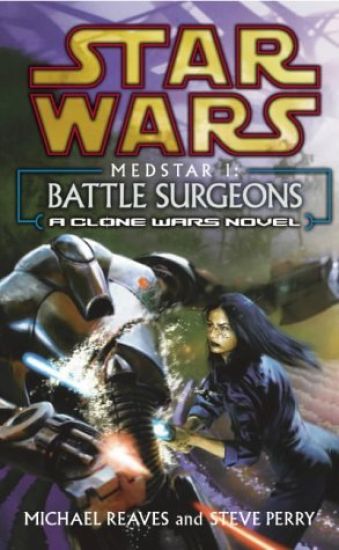
A novel of healers in wartime, in which a unit of medics struggles against the worst possible circumstances to save lives as the Clone Wars rage around them. A little of M*A*S*H, a little of ER, a lot of Star Wars! A must-read for everyone who saw STAR WARS: ATTACK OF THE CLONES and looks forward to seeing STAR WARS: EPISODE III!
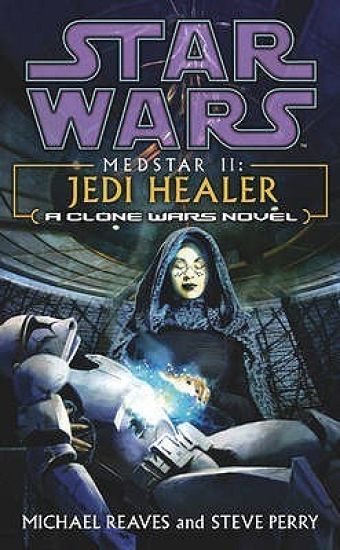
The second of a mass-market original Star Wars duology in which M*A*S*H meets the Clone Wars, as a small group of medics, including Jedi Bariss Offee, struggles to save lives amidst impossible circumstances.
The Death Star is one of the great icons of the science fiction genre. Now veteran Star Wars authors Michael Reaves and Steve Perry join forces to tell the story of the Death Star, from the start of its construction to its final destruction at the hands of Luke Skywalker and the Rebel Alliance.
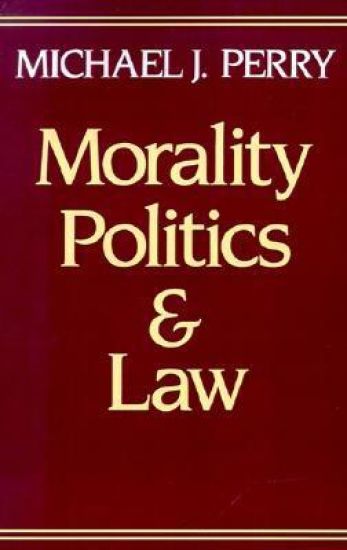
`What is the proper relation of moral and religious beliefs to politics and law, especially in a society that, like the United States, is morally and religiously pluralistic?' In Morality, Politics, and Law, noted constitutional theorist Michael Perry answers this fundamental question, criticizing the vision of constitutional adjudication and defending a more liberal philosophy of constitutional interpretation.
Of all the influential--indeed, formative--moral ideas to occupy centre stage in the twentieth century, the notion of human rights is for many the most difficult. Inspired by a 1988 trip to El Salvador, Michael Perry's new book explores this idea in full. His typically lucid exposition of this complex issue (one so rich in social, political, and philosophical implications, especially at the international level) is rooted in the recognition that every human being is sacred, "inviolable," has "inherent dignity" and worth, and is an end to himself. Therefore, in Perry's view, the concept of human rights is inescapably religious. But are human rights universal? And are they absolute? The latest thinking from one of our nation's leading authorities on morality, politics, and religion, The Idea of Human Rights: Four Inquiries addresses these questions adroitly. The legal and moral dimensions of "rights" rhetoric itself--such as its meanings and functions--are also carefully considered.
Inspired by a 1988 trip to El Salvador, Michael J. Perry's new book is a personal and scholarly exploration of the idea of human rights. Perry is one of our nation's leading authorities on the relation of morality, including religious morality, to politics and law. He seeks, in this book, to disentangle the complex idea of human rights by way of four probing and interrelated essays. * The initial essay, which is animated by Perry's skepticism about the capacity of any secular morality to offer a coherent account of the idea of human rights, suggests that the first part of the idea of human rights--the premise that every human being is "sacred" or "inviolable"--is inescapably religious. * Responding to recent criticism of "rights talk", Perry explicates, in his second essay, the meaning and value of talk about human rights. * In his third essay, Perry asks a fundamental question about human rights: Are they universal? In addressing this question, he disaggregates and criticizes several different varieties of "moral relativism" and then considers the implications of these different relativist positions for claims about human rights. * Perry turns to another fundamental question about human rights in his final essay: Are they absolute? He concludes that even if no human rights, understood as moral rights, are absolute or unconditional, some human rights, understood as international legal rights, are--and indeed, should be--absolute. In the introduction, Perry writes: "Of all the influential--indeed, formative--moral ideas to take center stage in the twentieth century, like democracy and socialism, the idea of human rights (which, again, in one form or another, is an old idea) is, for many, the most difficult. It is the most difficult in the sense that it is, for many, the hardest of the great moral ideas to integrate, the hardest to square, with the reigning intellectual assumptions of the age, especially what Bernard Williams has called 'Nietzsche's thought': 'There is not only no God, but no metaphysical order of any kind....' For those who accept 'Nietzsche's thought', can the idea of human rights possibly be more than a kind of aesthetic preference? In a culture in which it was widely believed that there is no God or metaphysical order of any kind, on what basis, if any, could the idea of human rights long survive?" The Idea of Human Rights: Four Inquiries will appeal to students of many disciplines, including (but not limited to) law, philosophy, religion, and politics. Of all the influential--indeed, formative--moral ideas to occupy centre stage in the twentieth century, the notion of human rights is for many the most difficult.