Kirjojen hintavertailu. Mukana 12 406 691 kirjaa ja 12 kauppaa.

Kirjahaku

Etsi kirjoja tekijän nimen, kirjan nimen tai ISBN:n perusteella.

1000 tulosta hakusanalla Michael Terry

Terra Mortis: The Death of the Earth - A Jungian and Indigenous View
Terra Mortis: Part II continues Michael Owen's reflections on the mortality of the Earth. Much has been written about the threat to civilisation from climate change. However, the collective recoils from thinking the unthinkable-that this planet may be dying. But to think the unthinkable allows what does not have a home to find a home. It in habits it with human consciousness. Then it may not happen the same way as it might have done. Perhaps. We have run out of planet-a never-before-seen thing. A whole 1.7 planet's worth. Her bones have been mined. The rocks can no longer breathe. Her waters can no longer dream. Her skin is scabrous with parking lots. And the Great Barrier Reef is dying. The trees have nearly given up. The animals have done what they can. The Titanic, 9/11, the GFC and Covid have tried their best to warn us of our grandiosity. Monotheism has abandoned the earth for heavenly rewards. Pathological optimism keeps us in an ecological coma. Indigenous peoples are now only 5% of the world's population. Half of the world lives in cities. And our relationship with indigenous beauty has been lost. Part 1. Shadow: Monotheism has abandoned the earth for heavenly rewards. God's shadow is the narcissistic aberration that is the contrary to indigenous consciousness. The god of monotheism (God, Allah and Yahweh) in all its forms, origins and offspring, is directly and indirectly responsible for the destruction of the Earth. Part 2. Matter: All matter has consciousness. Vernon Masayesva, Hopi elder, said "We believe that water has memory. It responds to human behaviour." Part 3. Body: The health of the Earth and the health of our bodies are one. When the memory of the rocks and the trees and the animals is lost then human memory is also lost. Part 4. Disorder: Pre-traumatic Stress Disorder (yes, you read that right), depression, despair, and the pathology of hope. It is what will happen in the future that is traumatic. There will be flash-forwards as well as flash-backs. Part 5. Science: The rise of scientism and our planetary illness. So what's my beef with CBT? Because behaviourism and its cuzzie-bros are the psychological version of colonisation. Part 6. Earth and Self: The mirrors of the Earth (the original Self) and Jung's "God-image within". The suggestion that the Earth is dying is felt as an attack on the Self and disturbs the relationship with whatever external object the Self is projected onto (religion, atheism, motherhood, the First Amendment, sports hero, or saving the planet). Part 7. Apocalypse anytime: Some far-fetched but aspirational remedies. Ask the Earth for help. What if as many people said prayers to the Earth as they do to God-Allah-Yahweh? What if Sunday morning services at the church, Friday evening prayers at shul, and Friday midday prayers at the mosque, were just for the Earth. Not to God for the Earth--but to the Earth. All with the help of C G Jung and indigenous wisdom.
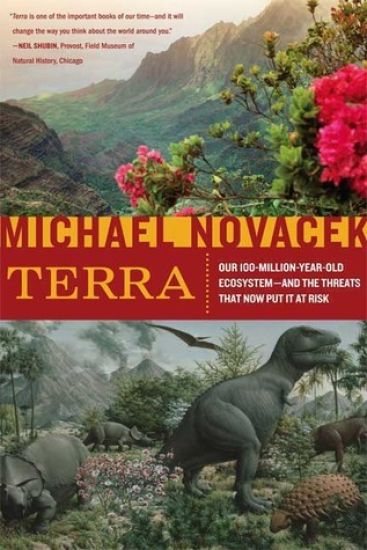
Terra

Terra

Novacek Michael J.

Farrar, Straus Giroux Inc
2009
nidottu
The natural world as humans have always known it evolved close to 100 million years ago, with the appearance of flowering plants and pollinating insects during the age of the dinosaurs. Its tremendous history is now in danger of profound, catastrophic disruption. In this brilliant synthesis of evolutionary biology, palaeontology, and modern environmental science, Michael Novacek shows how we can understand and prevent what he and others call today's 'mass extinction event.'
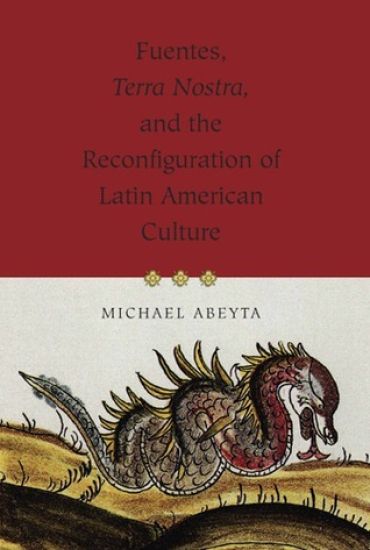
Fuentes, ""Terra Nostra"", and the Reconfiguration of Latin American Culture
Widely acknowledged as Carlos Fuentes's most ambitious novel, ""Terra Nostra"" is a paradigm-shifting work that has generated a virtual cottage industry of scholarly analysis. Michael Abeyta has now taken a new approach to this celebrated novel by considering how giving a gift is like telling a story. Grounding his study on the work of Derrida and Bataille, Abeyta focuses on the theme of the gift in ""Terra Nostra"", analyzing how gift giving, excess, expenditure, sacrifice, and exchange give shape to the novel. The question of giving leads him into contemplations of such parallel issues as money and exchange economies, the gift's role in art and narration, and the Baroque in Latin American culture. Blending literary theory with economic anthropology, philosophy, and Latin American studies, Abeyta analyzes the deconstructive functions of rhetorical figures and tropes in ""Terra Nostra"" to show how the novel's revival of Baroque style integrates European and Nahuatl figural strategies. In the process, he reveals the novel's relevance to current discussions about the relationship between art and the question of the gift. He then goes on to examine Fuentes's Baroque in relation to ""Terra Nostra""'s reconfiguration of Latin American cultural history. Abeyta shows how Fuentes's rereading of Latin American history confronted important changes during the initial encounter between Europe and the Americas, which coincided with the spread of the European market and the shift from a gift to an exchange economy - from a culture in which economic relations were based on sacrifices, tributes, or gifts to one in which market forces predominated. He also engages in the recent scholarly debate on the potlatch and its implications in New World culture.
Soldiers in Cities: Military Operations on Urban Terrain

Soldiers in Cities: Military Operations on Urban Terrain

Strategic Studies Institute; Michael C. Desch

Lulu.com
2014
nidottu
This compendium is the result of a conference on "Military Operations in an Urban Environment" cosponsored by the Patterson School of Diplomacy and International Commerce in conjunction with the Kentucky Commission on Military Affairs, the U.S. Army War College, and the Association of the United States Army. At the time of the conference, the concept of homeland defense was emerging as an increasingly important mission for the U.S. military. Now this mission has catapulted to prominence with the attacks of September 11 and the appointment of a Director of Homeland Defense-a Cabinet-level position. The authors of the chapters examine the ongoing doctrinal thinking, draw historical comparisons, and discuss the thoughts of those attending the conference-experts from the military, government civilian agencies, academia, think tanks, and the defense industry-regarding unconventional warfare. Collectively, they provide a comprehensive report on critical factors that the U.S. military soon may face.
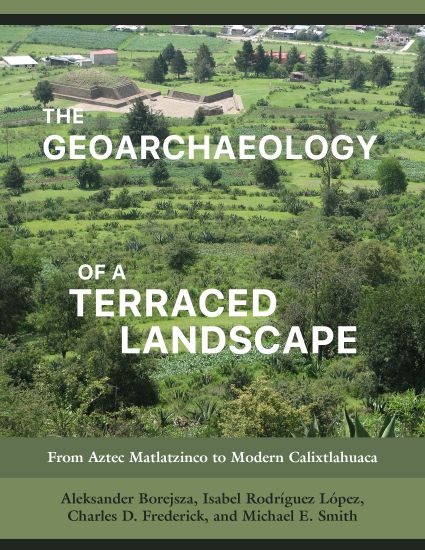
The Geoarchaeology of a Terraced Landscape

The Geoarchaeology of a Terraced Landscape

Aleksander Borejsza; Isabel Rodríguez López; Charles D Frederick; Michael E Smith

University of Utah Press,U.S.
2021
sidottu
The toil of several million peasant farmers in Aztec Mexico transformed lakebeds and mountainsides into a checkerboard of highly productive fields. This book charts the changing fortunes of one Aztec settlement and its terraced landscapes from the twelfth to the twenty-first century. It also follows the progress and missteps of a team of archaeologists as they pieced together this story. Working at a settlement in the Toluca Valley of central Mexico, the authors used fieldwalking, excavation, soil and artifact analyses, maps, aerial photos, land deeds, and litigation records to reconstruct the changing landscape through time. Exploiting the methodologies and techniques of several disciplines, they bring context to eight centuries of the region's agrarian history, exploring the effects of the Aztec and Spanish Empires, reform, and revolution on the physical shape of the Mexican countryside and the livelihoods of its people. Accessible to specialists and nonspecialists alike, this well-illustrated and well-organized volume provides a step-by-step guide that can be applied to the study of terraced landscapes anywhere in the world. The four authors share an interest in terraced landscapes and have worked together and on their own on a variety of archaeological projects in Mesoamerica, the Mediterranean, Poland, and the United Kingdom.