Kirjojen hintavertailu. Mukana 12 390 323 kirjaa ja 12 kauppaa.

Kirjahaku

Etsi kirjoja tekijän nimen, kirjan nimen tai ISBN:n perusteella.

911 tulosta hakusanalla Millicent

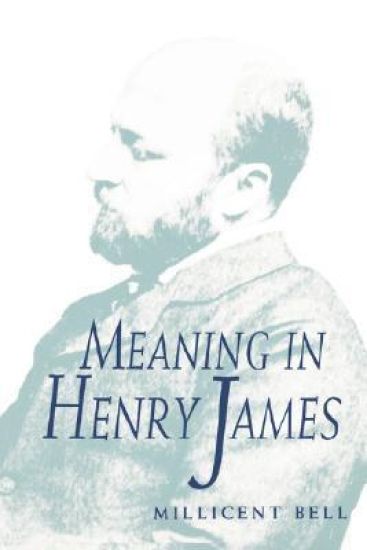
Meaning in Henry James

Meaning in Henry James

Millicent Bell

Harvard University Press
1993
nidottu
Henry James rebelled intuitively against the tyranny and banality of plots. Believing a life to have many potential paths and a self to hold many destinies, he hung the evocative shadow of "what might have been" over much of what he wrote. Yet James also realized that no life can be lived--and no story written--except by submission to some outcome. The limiting conventions of society and literature are, he found, almost inescapable. In a major, comprehensive new study of James's work, Millicent Bell explores this oscillation between hope and fatalism, indeterminacy and form, and uncertainty and meaning. In the process Bell provides fresh insight into how we read and interpret fiction.Bell demonstrates how James's texts steadfastly, almost perversely at times, preserve a sense of alternative possibilities. James involves his characters in overlapping scenarios drawn from folklore, drama, literature, or naturalist formula. The reader engages, with the hero or heroine, in imagining many plots other than the one that finally--and often ambiguously--emerges. The story arouses expectations, proposes courses, then cancels them successively. In complicity with author and character, the reader crafts the story in an adventure of constant revision and anticipation. Literary meaning becomes an experience as well as a goal. In the end, revelations and resolutions, even if unclear or partial, assume an altered significance in light of the earlier imaginings.Not surprisingly, James's deepest sympathies lay with those characters who resisted entrapment by cultural expectations--his idealistic free spirits like Isabel, his marriage renouncers like Fleda Vetch, his largely silent and detached witnesses to life like Strether and the generous Maisie. They are frequently the victims of callous manipulators who box them into oppressive roles or who literally "plot against" them. By looking closely at James's critiques of the "clever" categorical mind and at his loving and complex portraits of characters of unfulfilled potentiality, Bell celebrates the paradoxes of James's story-denying fiction.In extended analyses of "Daisy Miller," Washington Square, The Portrait of a Lady; The Bostonians, The Princess Casamassima, "The Aspern Papers," The Spoils of Poynton, "The Turn of the Screw," What Maisie Knew, "The Beast in the Jungle," "The Jolly Corner," The Wings of the Dove, and The Ambassadors, Bell relates James's work to influential movements of the day, notably impressionism and naturalism. She examines the influence of Hawthorne, Emerson, Flaubert, Balzac, and Zola on James at various periods throughout his career. Drawing on rich traditions of criticism and on stimulating recent theories, Bell forges a critical approach both accessible and profound for this elegant reading of one of the greatest writers of this or any time.
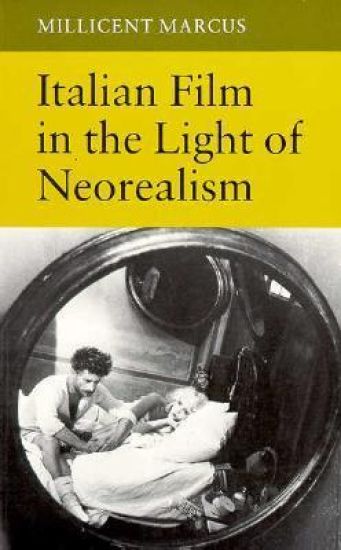
Italian Film in the Light of Neorealism

Italian Film in the Light of Neorealism

Millicent Marcus

Princeton University Press
1987
pokkari
The movement known as neorealism lasted seven years, generated only twenty-one films, failed at the box office, and fell short of its didactic and aesthetic aspirations. Yet it exerted such a profound influence on Italian cinema that all the best postwar directors had to come to terms with it, whether in seeming imitation (the early Olmi), in commercial exploitation (the middle Comencini) or in ostensible rejection (the recent Tavianis). Despite the reactionary pressures of the marketplace and the highly personalized visions of Fellini, Antonioni. And Visconti, Italian cinema has maintained its moral commitment to use the medium in socially responsible ways--if not to change the world, as the first neorealists hoped, then at least to move filmgoers to face the pressing economic, political, and human problems in their midst. From Rossellini's Open City (1945) to the Taviani brothers' Night of the Shooting Stars (1982). The author does close readings of seventeen films that tell the story of neorealism's evolving influence on Italian postwar cinematic expression. Other films discussed are De Sica's Bicycle Thief and Umberto D. De Santis's Bitter Rice, Comencini's Bread, Love, and Fantasy, Fellini's La strada, Visconti's Senso, Antonioni's Red Desert, Olmi's Il Posto, Germi's Seduced and Abandoned, Pasolini's Teorema, Petri's Investigation of a Citizen above Suspicion, Bertolucci's The Conformist, Rosi's Christ Stopped at Eboli, and Wertmuller's Love and Anarchy, Scola's We All Loved Each Other So Much provides the occasion for the author's own retrospective consideration of how Italian cinema has fulfilled, or disappointed, the promise of neorealism.
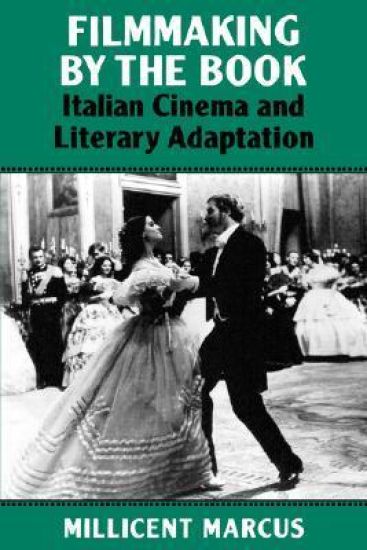
Filmmaking by the Book

Filmmaking by the Book

Millicent Marcus

Johns Hopkins University Press
1993
pokkari
What is the impulse to transform literary narrative into cinematic discourse, and what are the factors that determine that transformation? In Filmmaking by the Book, Millicent Marcus considers the adaptive process as the sum total of a series of encounters: the institutional encounter between literary and film cultures, the semiotic encounter between two very different signifying systems, and the personal encounter between author and filmmaker-sometimes involving an overt Oedipal struggle for selfhood. Marcus explores that process by looking at key works by such major postwar Italian filmmakers as Visconti, De Sica, Pasolini, Fellini, and the Taviani brothers. Drawing on the methodologies of semiotics, psychoanalysis, feminism, and ideological criticism, she finds that cinematic imaginations typically employ literary texts self-consciously to resolve specific artistic problems. Each of the filmmakers studied here define their own authorial task in relation to that of the literary precursor, and insert "umbilical" scenes or "allegories of adaptation" to teach viewers how to read their cinematic rewriting of literary sources.
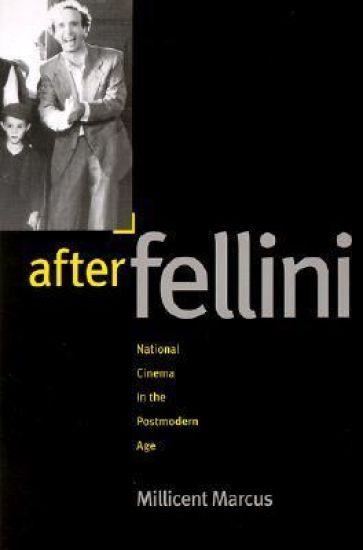
After Fellini

After Fellini

Millicent Marcus

Johns Hopkins University Press
2002
pokkari
Over the past twenty-five years, Italy's film industry has produced a remarkable number of award-winning international art-house hits, among them Cinema Paradiso and Life Is Beautiful. Despite these successes, Italian cinema is in a state of crisis: ticket sales for domestic films, which plummeted in the l980's, are only now beginning to recover; television deregulation has engendered a popular culture largely dependent on American programming; and the passing of an entire generation of brilliant auteurs-Rossellini, Viscounti, Pasolini, Antonioni, and Fellini-extinguished the revolutionary impulse which had characterized Italian filmmaking since the Second World War. In After Fellini, Millicent Marcus contends that in the late 1980s and 1990s, a new wave of Italian filmmakers has transcended these obstacles and reasserted Italy's importance in world cinema. Through in-depth critiques of such acclaimed films as The Last Emperor, Caro Diario, and Stolen Children, as well as the immensely popular Cinema Paradiso and Life Is Beautiful, Marcus details how today's auteurs have both reflected and resisted Italy's shifting social, political, and cultural identity, and created a body of work that signals a new beginning for Italian cinema.
Italian Film in the Shadow of Auschwitz

Italian Film in the Shadow of Auschwitz

Millicent Marcus

University of Toronto Press
2007
sidottu
The last decade has witnessed an outpouring of Italian films that deal with Fascism, anti-Semitism and the Holocaust. This would appear to mark a distinct change from the postwar reluctance to represent such an infamous history. Roberto Benigni's popular Life is Beautiful (1997) is an obvious example, but there have been a number of other works that have not been exported that also attest to a distinct tendency within Italian domestic production to address the issue. Millicent Marcus's Italian Film in the Shadow of Auschwitz looks at this development, attributing the new acceptance not only to an international film sensation, but to a domestic cultural climate at once receptive to Holocaust representation, and ready to produce its own forms of historical testimony.Throughout the book, Marcus brings a variety of perspectives - psychoanalytical, ideological, mass cultural - to bear on the question of how Italian filmmakers are confronting the Holocaust, and why now given the sparse output of Holocaust films produced in Italy from 1945 to the early 1990s. What emerges is a fascinating look at how film is being used to confront a particularly damning aspect of cultural history.Marcus's study features in-depth analyses of five recent Italian films: Ricky Tognazzi's Canone inverso, Ettore Scola's Concorrenza sleale, Andrea and Antonio Frazzi's Il cielo cade, Alberto Negrin's Perlasca, and Ferzan Ozpetek's La finestra di fronte. As an added feature, the book includes a DVD of Scola's short film '43-'97, which has been unavailable outside of Italy until now.
Italian Film in the Shadow of Auschwitz

Italian Film in the Shadow of Auschwitz

Millicent Marcus

University of Toronto Press
2009
pokkari
The last decade has witnessed an outpouring of Italian films that deal with Fascism, anti-Semitism and the Holocaust. This would appear to mark a distinct change from the postwar reluctance to represent such an infamous history. Roberto Benigni's popular Life is Beautiful (1997) is an obvious example, but there have been a number of other works that have not been exported that also attest to a distinct tendency within Italian domestic production to address the issue. Millicent Marcus's Italian Film in the Shadow of Auschwitz looks at this development, attributing the new acceptance not only to an international film sensation, but to a domestic cultural climate at once receptive to Holocaust representation, and ready to produce its own forms of historical testimony.Throughout the book, Marcus brings a variety of perspectives - psychoanalytical, ideological, mass cultural - to bear on the question of how Italian filmmakers are confronting the Holocaust, and why now given the sparse output of Holocaust films produced in Italy from 1945 to the early 1990s. What emerges is a fascinating look at how film is being used to confront a particularly damning aspect of cultural history.Marcus's study features in-depth analyses of five recent Italian films: Ricky Tognazzi's Canone inverso, Ettore Scola's Concorrenza sleale, Andrea and Antonio Frazzi's Il cielo cade, Alberto Negrin's Perlasca, and Ferzan Ozpetek's La finestra di fronte. As an added feature, the book includes a DVD of Scola's short film '43-'97, which has been unavailable outside of Italy until now.
The Dragon and the Snake

The Dragon and the Snake

Millicent Anne Gates; E. Bruce Geelhoed

University of Pennsylvania Press
1986
sidottu
The United States Liaison Office (USLO) served as the diplomatic contact for Sino-American relations between the time of the Nixon-Kissinger opening of China in 1971-1972 and the achievement of full normalization in 1979. This book presents the importance of the USLO to American foreign policy in the 1970s.
Hawthorne and the Real

Hawthorne and the Real

Millicent Bell

Ohio State University Press
2021
pokkari
In this edited collection commemorating the bicentennial of Hawthorne's birth in 1804, Millicent Bell gathers essays by distinguished scholars and critics that examine the ways in which Hawthorne related himself to the "real" in his own world and expressed that relation in his writing. Radically revising the older view that he was detached from conditions of actual life in 19th-century American society, the authors undertake to show how current social conditions, current events, and political movements taking place at a crucial point in American history were an evident part of Hawthorne's consciousness. The essays situate his imaginative writings in a contemporary context of common experience and rediscover a Hawthorne alert to pressing problems of his day, especially slavery, feminism, and reform in general-the very issues that motivated his contemporaries on the eve of the Civil War. Hawthorne was, with his own complicity, long described as a writer of unreal romances (as he preferred to call his novels) or "allegories of the heart" as he termed some of his short stories. But the literary mode of his fiction has long needed to be redefined. The essays in this collection contribute to the turn in recent Hawthorne criticism which shows how deeply implicated in realism his writing was. This volume should long continue to provide new starting points for changing views of a great writer. Contributors: Millicent Bell Nina Baym Michael T. Gilmore Leland S. Person David Leverenz Larry J. Reynolds Lawrence Buell Rita K. Gollin John Carlos Row Brenda Wineapple
Madame Campan

Madame Campan

Millicent S. Mali

University Press of America
1978
nidottu
A biography of Henriette Genet Campan, premiere femme of Marie Antoinette who established the internationally famous school for girls (L'Institut National des Jeunes Filles) at St. Germain-en-Laye and later became Directrice of La Maison Imperiale Napoleon at Ecouen.
Starting a Flower and Gift Shop

Starting a Flower and Gift Shop

Millicent Gray Lownes-Jackson

Business of Your Own (TN)
2004
nidottu
Starting a Flower and Gift Shop is a practical, comprehensive, and motivational entrepreneurial guide. Starting a Flower and Gift Shop utilizes a uniquely designed step-by-step, hands-on approach to business formulation. Worksheets are included for the purpose of providing assistance in preparing a business plan. Crucial business development and management information is provided in an easy-to-understand format. Upon completion of the book, the entrepreneur will have a detailed business plan for starting a flower and gift shop and will be inspired to take the entrepreneurial challenge.
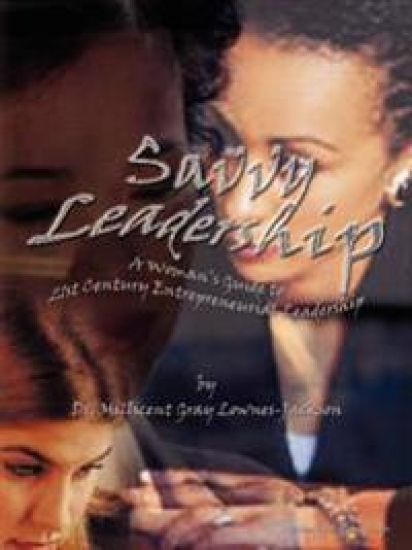
Savvy Leadership

Savvy Leadership

Millicent L. Lownes-Jackson

Business of Your Own (TN)
2005
nidottu
Savvy Leadership is designed for the entrepreneurial leader who has the vision and guts to start a business as well as the entrepreneurial leader who has a passion to address societal issues and has established a social entrepreneurial, or non-profit, organization. The publication will also equip individuals who are the glue and guiding force of any type of entrepreneurial organization with the business knowledge and information necessary to lead successfully an entrepreneurial venture through the 21st Century. Savvy Leadership consists of a compilation of articles from the author s business column that highlight crucial business knowledge, success tips, business resources, wisdom, and inspiration for savvy business development and business operations. Information is presented topically, in a quick read format, that guides the reader in formulating a personal leadership plan of action.
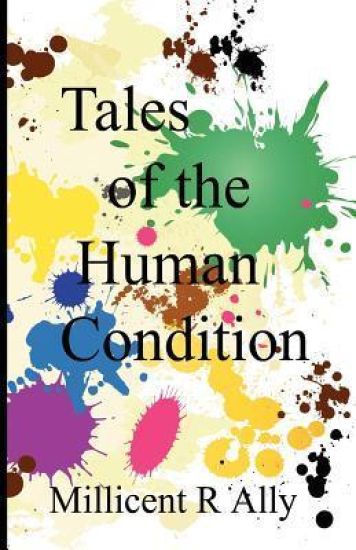
Tales of the Human Condition

Tales of the Human Condition

Millicent R. Ally

Crown Clover
2012
nidottu
In this, her debut collection, Millicent Ally sets out to interpret her wide and sometimes painful experience of "this earthly animation . . . in the four sections she] categorize s] as 'Life, ' 'Love, ' 'Introspection, ' and 'God'." A Los Angeles native who was reared in Georgia, Ally shares, in the fourteen poems that comprise each of the four sections of her book, intimate details of betrayal and triumph: love gone almost right--and love gone inexplicably wrong; faith--and the crisis of its utter lack; the loving light of family--and the dark shadow it can cast. Reading, we find ourselves understanding loneliness, friendship, isolation, and despair until, ultimately, Ally brings us to the truth of the spirit that allows her to transcend all the pain of her deep humanity. "Spirit is the cradle from which we are born," she writes, and, having lived, ". . . we yield to the paradoxical Omega to which we must return." For Ally, all that occurs in between birth and death occurs solely for our deepest learning, nothing more--nor less--than "experiences which help us to gather information for our souls' collective evolution." For her reader, there is comfort to be found in Ally's conclusi