
Kirjahaku
Etsi kirjoja tekijän nimen, kirjan nimen tai ISBN:n perusteella.
630 tulosta hakusanalla Millicent E. Selsam
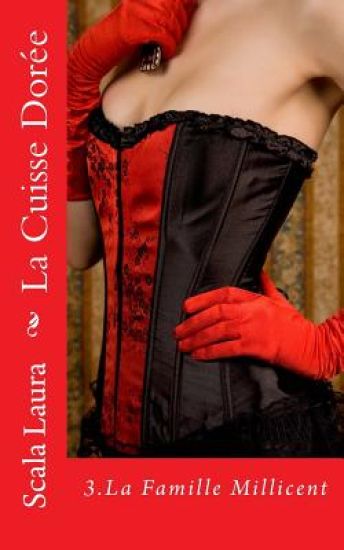
La Cuisse Dorée: 3.La Famille Millicent
Scala Laura
Createspace Independent Publishing Platform
2016
nidottu
Florentin de Millicent a une exigence: tre la hauteur pour le mariage de sa soeur ain e. Malheureusement, suite des repr sailles inattendues de la part d'un oncle d moniaque, ce n'est pas le cas. Aussi d cide-t-il de trouver le rem de son probl me de r duction de taille. La seule personne pouvoir l'aider ? Un sorcier particuli rement dou . Sa localisation ? Un bordel nomm La Cuisse Dor e...
Poems of the Love and Pride of England. Edited by Frederick and Millicent Wedmore.
Frederick Wedmore; Millicent Wedmore
British Library, Historical Print Editions
2011
pokkari
Title: Poems of the Love and Pride of England. Edited by Frederick and Millicent Wedmore.Publisher: British Library, Historical Print EditionsThe British Library is the national library of the United Kingdom. It is one of the world's largest research libraries holding over 150 million items in all known languages and formats: books, journals, newspapers, sound recordings, patents, maps, stamps, prints and much more. Its collections include around 14 million books, along with substantial additional collections of manuscripts and historical items dating back as far as 300 BC.The POETRY & DRAMA collection includes books from the British Library digitised by Microsoft. The books reflect the complex and changing role of literature in society, ranging from Bardic poetry to Victorian verse. Containing many classic works from important dramatists and poets, this collection has something for every lover of the stage and verse. ++++The below data was compiled from various identification fields in the bibliographic record of this title. This data is provided as an additional tool in helping to insure edition identification: ++++ British Library Wedmore, Frederick; Wedmore, Millicent; 1897. xvi. 291 p.; 8 . 11601.dd.35.
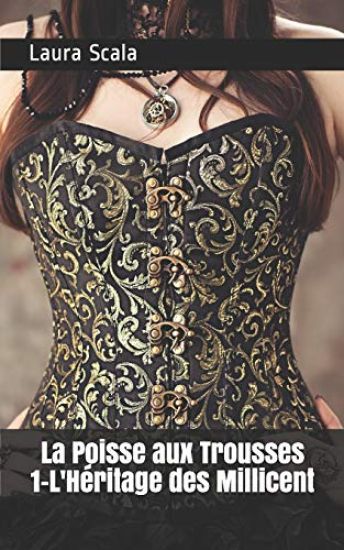
La Poisse aux Trousses: 1-L'Héritage des Millicent
Scala Laura; Laura Scala
Independently Published
2018
nidottu
Preneuse de son pour la Chaine Paranormale, Elisa Klervi s'efforce de mener une vie discr te. Malheureusement pour elle, trois choses sont contre elle: les vampires qui veulent la croquer, les Gardiens de la Puret qui veulent la tuer.... Et un inconnu diablement sexy qui a d cid de lui rendre la vie infernale. Autant dire que pour la discr tion, on faisait mieux...
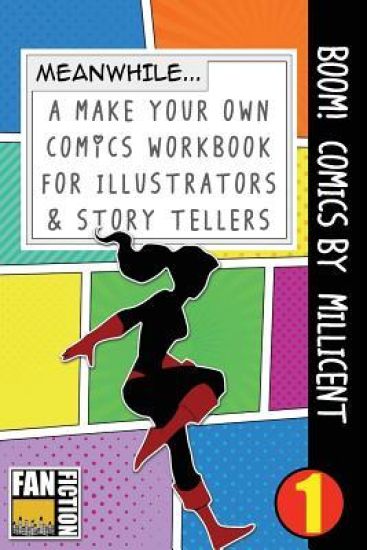
Boom! Comics by Millicent: A What Happens Next Comic Book for Budding Illustrators and Story Tellers
Bokkaku Dojinshi
Createspace Independent Publishing Platform
2018
nidottu
Grab This Deal For The Comics Artist In Your Life For Less Than $10See that girl always doodling and dreaming up stories and plots? She's gonna LOVE the What Happens Next Comic Book For Budding Artists edition, created especially for young artists between 9 and 14 years of age.Bokkaku Dojinshi has created this book as a 6 by 9 inch, perfect pocket book form. Plenty of different templates to explore as well as loads of room to keep track of plot ideas.There is even space for special expression studies of the main characters so the budding artist hits the right emotion in her images every single time.This book is perfect for: mangagraphic novelsSunday funniesanimefan fictionParents and teachers love What Happens Next Comics series for these reasons: helps speech developmentincreases literacydevelops a sense of sequencecreates confidencedevelops an appreciation for artboots creativityOnce you get this book, notice how handy it is - perfect pocket book size means no bulky bags on summer trips or lazy afternoons under a willow tree. All you need is your pencil and ink pen Can't wait to see what you make of your And then... comic book
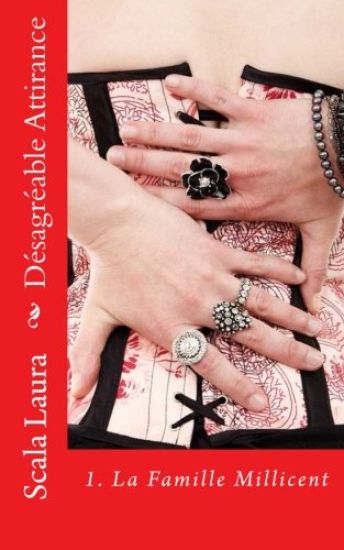
Désagréable Attirance: 1. La Famille Millicent
Scala Laura
Createspace Independent Publishing Platform
2016
nidottu
Ang le de l'Esprit Saint n'a rien d'une dame. Elle n'en a pas les mani res, elle ne souhaite pas se marier, ni c toyer la noblesse dont elle fait partie, et sa r putation a t compromise. Aussi, lorsqu'elle re oit la demande en mariage d'un Duc, qu'elle ne conna t ni d' ve ni d'Adam, elle n'a aucune intention de se laisser faire. Elle le lui dit clairement, mais Oscar ne se laisse pas d monter. Ni par a, ni par les tentatives d'assassinat contre sa futur femme. Car voyez-vous, les humains ne sont pas les seuls roder sur Terre....
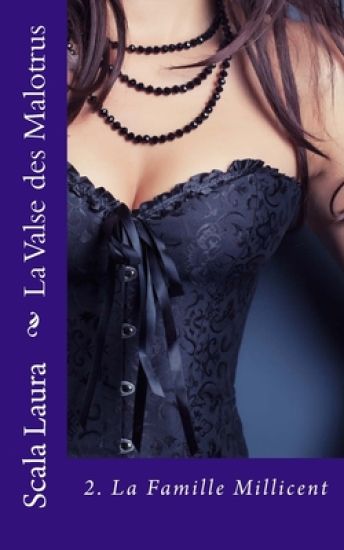
La Valse des Malotrus: 2. La Famille Millicent
Scala Laura
Createspace Independent Publishing Platform
2016
nidottu
Aurore de Millicent va affronter la pire preuve de sa vie: les mondanit s. Sa famille a organis une semaine de festivit s, et par malheur, le Duc et la Duchesse sont absents. Elle va donc devoir jouer la parfaite maitresse de maison. Ce qui est compliqu pour une louve-garou aux tendances naturistes. Mais plus encore avec un homme aux portes de la Mort au fond du jardin et un Maitre d'Armes mal lev devant sa chambre.
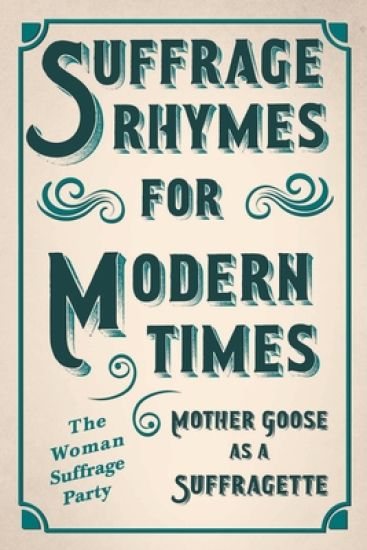
Suffrage Rhymes for Modern Times - Mother Goose as a Suffragette; With an Introductory Chapter from Millicent G. Fawcett
Read Co. Books
2021
pokkari
Originally published in 1912, this book contains a fantastic collection of illustrated, satirical poems written by The Women Suffrage Party. The Woman Suffrage Party was founded in New York, 1909. Fighting for the right to vote, these poems highlight the way women were treated at the time and strongly push the narrative for a change in history. With an introduction by English politician and feminist, Millicent Fawcett, this book is perfect for those who are interested in the Suffrage movement and also women in history.
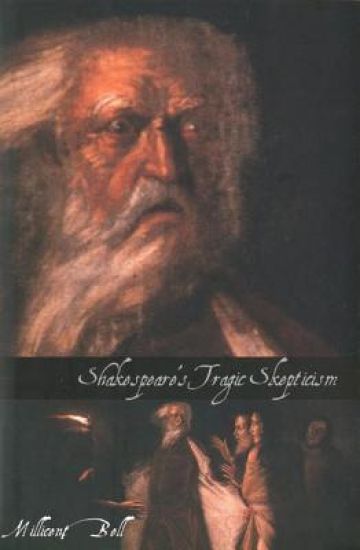
Readers of Shakespeare’s greatest tragedies have long noted the absence of readily explainable motivations for some of Shakespeare’s greatest characters: why does Hamlet delay his revenge for so long? Why does King Lear choose to renounce his power? Why is Othello so vulnerable to Iago’s malice? But while many critics have chosen to overlook these omissions or explain them away, Millicent Bell demonstrates that they are essential elements of Shakespeare’s philosophy of doubt. Examining the major tragedies, Millicent Bell reveals the persistent strain of philosophical skepticism. Like his contemporary, Montaigne, Shakespeare repeatedly calls attention to the essential unknowability of our world.In a period of social, political, and religious upheaval, uncertainty hovered over matters great and small—the succession of the crown, the death of loved ones from plague, the failure of a harvest. Tumultuous social conditions raised ultimate questions for Shakespeare, Bell argues, and ultimately provoked in him a skepticism which casts shadows of existential doubt over his greatest masterpieces.
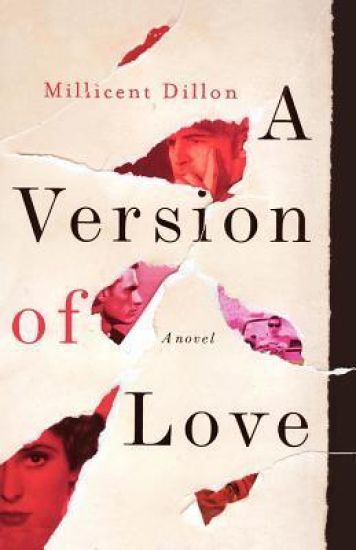
Not since D. M. Thomas's bestseller The White Hotel has there been such a remarkable novel about women, hysteria, and the profession of psychiatry as practiced by men. Set in California and Mexico in the late 1950s and early 1960s, A Version of Love is a bizarrely riveting tale of transgressive desire. Its lead players form a precarious triangle: a psychoanalyst who sleeps with his patient; a female "hysteric" on the verge of being cured; and a loner in the Sierra foothills who goes panning for gold and then love. "A dazzling achievement" (Robert Olen Butler), "a work of almost spookily controlled intelligence," A Version of Love is a breakthrough novel by Millicent Dillon, who "deserves to be honored as an American master of fiction" (Philip Lopate). "A brilliant new novel. The assurance and economy with which she gives us this strangely gripping and powerful story...are the hallmarks of a consummate artist....Her finest work yet."—Diane Johnson
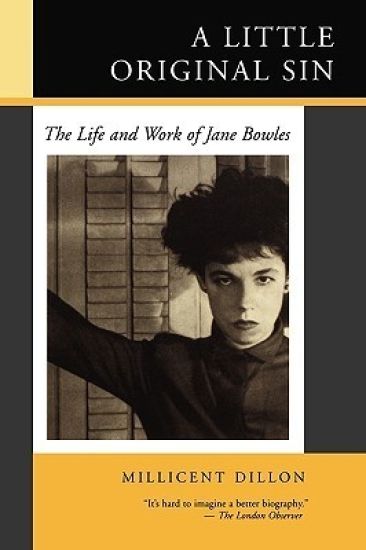
Tennessee Williams called Jane Bowles "the most important writer of prose fiction in modern American letters." John Ashbery said she was "one of the finest modern writers of fiction in any language," consistently producing "the surprise that is the one essential ingredient of great art." Here, available again, is the only biography of this powerful writer.
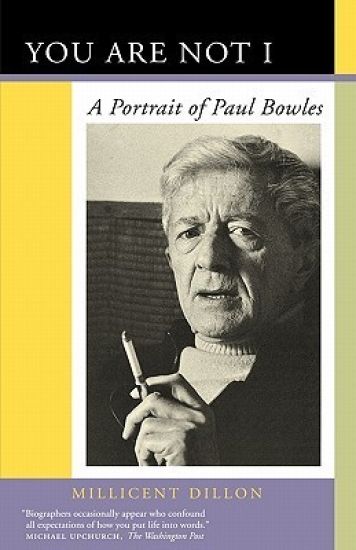
The famously enigmatic writer-composer Paul Bowles is the subject of Millicent Dillon's unforgettable new book. Her portrait of the chameleonlike artist is much more than an account of Bowles' life, however. It is also a meditation on biography that questions the biographer's role, the subject's credibility, and the very nature of 'truth' in the telling of a life. Millicent Dillon first met Paul Bowles in Tangier in 1977, when she was writing a biography of his wife, the author Jane Bowles, who died in 1973. Dillon returned to Morocco in 1992 to work with Bowles on a book about his own life. In Bowles' book-lined apartment often crowded with visitors, Dillon observes the magnetism the aging artist exerts on anyone who comes into his circle. Bowles talks of his difficult childhood and of his grief over Jane's long illness, of exile, dreams, and madness. He is charming and evasive with Dillon, generous and devious. As the book unfolds, Dillon's own reflections and concerns surface alongside details of Bowles' daily life, his physical condition, his interactions with others. Her portrait of the artist is seen simultaneously with her construction of that portrait, and in a kind of literary legerdemain we are able to observe Dillon on the biographical canvas along with Bowles and his deceased wife. Author of the international bestseller "The Sheltering Sky" and numerous other works, as well as an acclaimed composer, Paul Bowles has had an immensely rich creative life. Millicent Dillon seems to have been destined to write this unconventional biography of the artist, and the result is wonderful, disturbing, and strangely compelling, like Paul Bowles himself.

Life Of The Right Honorable Sir William Molesworth
Millicent Garrett Fawcett
Kessinger Pub
2007
pokkari
Henry James rebelled intuitively against the tyranny and banality of plots. Believing a life to have many potential paths and a self to hold many destinies, he hung the evocative shadow of "what might have been" over much of what he wrote. Yet James also realized that no life can be lived--and no story written--except by submission to some outcome. The limiting conventions of society and literature are, he found, almost inescapable. In a major, comprehensive new study of James's work, Millicent Bell explores this oscillation between hope and fatalism, indeterminacy and form, and uncertainty and meaning. In the process Bell provides fresh insight into how we read and interpret fiction.Bell demonstrates how James's texts steadfastly, almost perversely at times, preserve a sense of alternative possibilities. James involves his characters in overlapping scenarios drawn from folklore, drama, literature, or naturalist formula. The reader engages, with the hero or heroine, in imagining many plots other than the one that finally--and often ambiguously--emerges. The story arouses expectations, proposes courses, then cancels them successively. In complicity with author and character, the reader crafts the story in an adventure of constant revision and anticipation. Literary meaning becomes an experience as well as a goal. In the end, revelations and resolutions, even if unclear or partial, assume an altered significance in light of the earlier imaginings.Not surprisingly, James's deepest sympathies lay with those characters who resisted entrapment by cultural expectations--his idealistic free spirits like Isabel, his marriage renouncers like Fleda Vetch, his largely silent and detached witnesses to life like Strether and the generous Maisie. They are frequently the victims of callous manipulators who box them into oppressive roles or who literally "plot against" them. By looking closely at James's critiques of the "clever" categorical mind and at his loving and complex portraits of characters of unfulfilled potentiality, Bell celebrates the paradoxes of James's story-denying fiction.In extended analyses of "Daisy Miller," Washington Square, The Portrait of a Lady; The Bostonians, The Princess Casamassima, "The Aspern Papers," The Spoils of Poynton, "The Turn of the Screw," What Maisie Knew, "The Beast in the Jungle," "The Jolly Corner," The Wings of the Dove, and The Ambassadors, Bell relates James's work to influential movements of the day, notably impressionism and naturalism. She examines the influence of Hawthorne, Emerson, Flaubert, Balzac, and Zola on James at various periods throughout his career. Drawing on rich traditions of criticism and on stimulating recent theories, Bell forges a critical approach both accessible and profound for this elegant reading of one of the greatest writers of this or any time.
The movement known as neorealism lasted seven years, generated only twenty-one films, failed at the box office, and fell short of its didactic and aesthetic aspirations. Yet it exerted such a profound influence on Italian cinema that all the best postwar directors had to come to terms with it, whether in seeming imitation (the early Olmi), in commercial exploitation (the middle Comencini) or in ostensible rejection (the recent Tavianis). Despite the reactionary pressures of the marketplace and the highly personalized visions of Fellini, Antonioni. And Visconti, Italian cinema has maintained its moral commitment to use the medium in socially responsible ways--if not to change the world, as the first neorealists hoped, then at least to move filmgoers to face the pressing economic, political, and human problems in their midst. From Rossellini's Open City (1945) to the Taviani brothers' Night of the Shooting Stars (1982). The author does close readings of seventeen films that tell the story of neorealism's evolving influence on Italian postwar cinematic expression. Other films discussed are De Sica's Bicycle Thief and Umberto D. De Santis's Bitter Rice, Comencini's Bread, Love, and Fantasy, Fellini's La strada, Visconti's Senso, Antonioni's Red Desert, Olmi's Il Posto, Germi's Seduced and Abandoned, Pasolini's Teorema, Petri's Investigation of a Citizen above Suspicion, Bertolucci's The Conformist, Rosi's Christ Stopped at Eboli, and Wertmuller's Love and Anarchy, Scola's We All Loved Each Other So Much provides the occasion for the author's own retrospective consideration of how Italian cinema has fulfilled, or disappointed, the promise of neorealism.
What is the impulse to transform literary narrative into cinematic discourse, and what are the factors that determine that transformation? In Filmmaking by the Book, Millicent Marcus considers the adaptive process as the sum total of a series of encounters: the institutional encounter between literary and film cultures, the semiotic encounter between two very different signifying systems, and the personal encounter between author and filmmaker-sometimes involving an overt Oedipal struggle for selfhood. Marcus explores that process by looking at key works by such major postwar Italian filmmakers as Visconti, De Sica, Pasolini, Fellini, and the Taviani brothers. Drawing on the methodologies of semiotics, psychoanalysis, feminism, and ideological criticism, she finds that cinematic imaginations typically employ literary texts self-consciously to resolve specific artistic problems. Each of the filmmakers studied here define their own authorial task in relation to that of the literary precursor, and insert "umbilical" scenes or "allegories of adaptation" to teach viewers how to read their cinematic rewriting of literary sources.