

Kirjahaku
Etsi kirjoja tekijän nimen, kirjan nimen tai ISBN:n perusteella.
1000 tulosta hakusanalla Monica C. Diochon
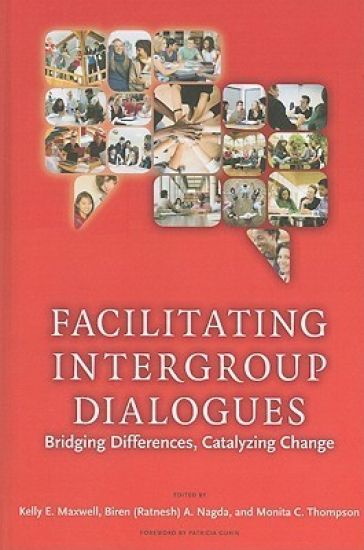
Facilitating Intergroup Dialogues
Kelly E. Maxwell; Biren Ratnesh Nagda; Monita C. Thompson
Stylus Publishing
2011
sidottu
Co-published with Intergroup dialogue has emerged as an effective educational and community building method to bring together members of diverse social and cultural groups to engage in learning together so that they may work collectively and individually to promote greater diversity, equality and justice. Intergroup dialogues bring together individuals from different identity groups (such as people of color and white people; women and men; lesbian, gay, and bisexual people and heterosexual people), and uses explicit pedagogy that involves three important features: content learning, structured interaction, and facilitative guidance. The least understood role in the pedagogy is that of facilitation. This volume, the first dedicated entirely to intergroup dialogue facilitation, draws on the experiences of contributors and on emerging research to address the multi-dimensional role of facilitators and co-facilitators, the training and support of facilitators, and ways of improving practice in both educational and community settings. It constitutes a comprehensive guide for practitioners, covering the theoretical, conceptual, and practical knowledge they need. Presenting the work and insights of scholars, practitioners and scholar-practitioners who train facilitators for intergroup dialogues, this book bridges the theoretical and conceptual foundations of intergroup relations and social justice education with training models for intergroup dialogue facilitation. It is intended for staff, faculty, and administrators in higher education, and community agencies, as well as for human resources departments in workplaces. Contributors:Charles Behling, University of Michigan, Ann Arbor, The Program on Intergroup RelationsBarry Checkoway, University of Michigan, Ann Arbor, School of Social WorkMark Chesler, University of Michigan, Ann Arbor, The Program on Intergroup RelationsKeri De Jong, University of Massachusetts at Amherst, School of EducationRoger Fisher, University of Michigan, Ann Arbor, The Program on Intergroup RelationsNichola G. FulmerPatricia Gurin, University of Michigan, Ann Arbor, The Program on Intergroup RelationsTanya Kachwaha, University of Massachusetts at Amherst, School of EducationChristina Kelleher, Institute for Sustained Dialogue, Sustained Dialogue Campus NetworkAriel Kirkland, Occidental College, Student facilitatorJames Knauer, Lock Haven University of Pennsylvania, Democracy LabJoycelyn Landrum-Brown, University of Illinois at Urbana-Champaign, Program on Intergroup RelationsShaquanda D. Lindsey, Occidental College, Student facilitatorDavid J. Martineau, Washington University, St. Louis, School of Social WorkKelly E. MaxwellBiren (Ratnesh) A. NagdaTeddy Nemeroff, Institute for Sustained Dialogue, Sustained Dialogue Campus NetworkRomina Pacheco, University of Massachusetts at Amherst, School of EducationPriya Parker, Institute for Sustained Dialogue, Sustained Dialogue Campus NetworkJaclyn Rodríguez, Occidental College, Department of PsychologyAndrea C. Rodríguez-Scheel, Occidental College, Student facilitatorMichael S. Spencer, University of Michigan, Ann Arbor, School of Social WorkMonita C. ThompsonNorma TimbangThai Hung V. TranCarolyn Vasques-Scalera, Independent Scholar Thomas E. Walker, University of Denver, Center for Multicultural ExcellenceKathleen Wong (Lau), Arizona State University/Western Michigan University, Intergroup Relations Center/Intercultural CommunicationAnna M. Yeakley, Independent Intergroup Dialogue ConsultantXimena Zúñiga, University of Massachusetts at Amherst, School of Education
Facilitating Intergroup Dialogues
Kelly E. Maxwell; Biren Ratnesh Nagda; Monita C. Thompson
Stylus Publishing
2011
nidottu
Co-published with Intergroup dialogue has emerged as an effective educational and community building method to bring together members of diverse social and cultural groups to engage in learning together so that they may work collectively and individually to promote greater diversity, equality and justice. Intergroup dialogues bring together individuals from different identity groups (such as people of color and white people; women and men; lesbian, gay, and bisexual people and heterosexual people), and uses explicit pedagogy that involves three important features: content learning, structured interaction, and facilitative guidance. The least understood role in the pedagogy is that of facilitation. This volume, the first dedicated entirely to intergroup dialogue facilitation, draws on the experiences of contributors and on emerging research to address the multi-dimensional role of facilitators and co-facilitators, the training and support of facilitators, and ways of improving practice in both educational and community settings. It constitutes a comprehensive guide for practitioners, covering the theoretical, conceptual, and practical knowledge they need. Presenting the work and insights of scholars, practitioners and scholar-practitioners who train facilitators for intergroup dialogues, this book bridges the theoretical and conceptual foundations of intergroup relations and social justice education with training models for intergroup dialogue facilitation. It is intended for staff, faculty, and administrators in higher education, and community agencies, as well as for human resources departments in workplaces. Contributors:Charles Behling, University of Michigan, Ann Arbor, The Program on Intergroup RelationsBarry Checkoway, University of Michigan, Ann Arbor, School of Social WorkMark Chesler, University of Michigan, Ann Arbor, The Program on Intergroup RelationsKeri De Jong, University of Massachusetts at Amherst, School of EducationRoger Fisher, University of Michigan, Ann Arbor, The Program on Intergroup RelationsNichola G. FulmerPatricia Gurin, University of Michigan, Ann Arbor, The Program on Intergroup RelationsTanya Kachwaha, University of Massachusetts at Amherst, School of EducationChristina Kelleher, Institute for Sustained Dialogue, Sustained Dialogue Campus NetworkAriel Kirkland, Occidental College, Student facilitatorJames Knauer, Lock Haven University of Pennsylvania, Democracy LabJoycelyn Landrum-Brown, University of Illinois at Urbana-Champaign, Program on Intergroup RelationsShaquanda D. Lindsey, Occidental College, Student facilitatorDavid J. Martineau, Washington University, St. Louis, School of Social WorkKelly E. MaxwellBiren (Ratnesh) A. NagdaTeddy Nemeroff, Institute for Sustained Dialogue, Sustained Dialogue Campus NetworkRomina Pacheco, University of Massachusetts at Amherst, School of EducationPriya Parker, Institute for Sustained Dialogue, Sustained Dialogue Campus NetworkJaclyn Rodríguez, Occidental College, Department of PsychologyAndrea C. Rodríguez-Scheel, Occidental College, Student facilitatorMichael S. Spencer, University of Michigan, Ann Arbor, School of Social WorkMonita C. ThompsonNorma TimbangThai Hung V. TranCarolyn Vasques-Scalera, Independent Scholar Thomas E. Walker, University of Denver, Center for Multicultural ExcellenceKathleen Wong (Lau), Arizona State University/Western Michigan University, Intergroup Relations Center/Intercultural CommunicationAnna M. Yeakley, Independent Intergroup Dialogue ConsultantXimena Zúñiga, University of Massachusetts at Amherst, School of Education
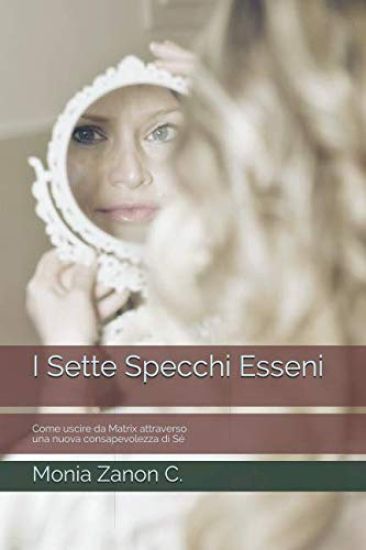
I Sette Specchi Esseni: Come Uscire Da Matrix Attraverso Una Nuova Consapevolezza Di Sé
Monia Zanon C.
Independently Published
2019
nidottu
Volevo leggere un libro che svelasse qualcosa di nuovo sugli Specchi Esseni, qualcosa che permettesse di rimanere nel flusso, in uno stato di felicit costante.Volevo leggere un libro che mi spiegasse in modo chiaro e pratico come cavarmela da sola nell'ottovolante che la vita, un libro che mi aiutasse a scoprire gli strumenti per smettere di soffrire, per uscire da tutti quei clich che si ripetono nel quotidiano come carta copiativa.Non l'ho trovato. Cos l'ho scritto io.I Sette Specchi Esseni, un libro di sopravvivenza. Anzi, un libro che aiuta a vivere meglio, anzich sopravvivere. un manuale sul mondo delle cose che passano, un viaggio nella Matrix nascosta che partendo dalle antiche tradizioni fino ai pi moderni principi di fisica quantistica ne sveler le leggi e i segreti.Quali sono i codici che regolano la sofferenza nel mondo delle forme?Come scovarli?Come usarli?Riflettendoci nei misteriosi Specchi Esseni riusciremo a trovare la via per uscire finalmente da Matrix RECENSIONI"Quello che propone l'autrice un viaggio interessante e potente che ci render padroni del nostro destino, un'avventura sia storica che scientifica, un'analisi sia religiosa che spirituale. Monia, mediante la sua scrittura amorevole e gentile, sapr guidarti altrove rispetto a ci che crediamo di conoscere, verso nuove prospettive, oltre Matrix, oltre ci che percepiamo come vero dentro e fuori di noi.Matrix tutto ci che ci circonda, la lente distorta con cui guardiamo il mondo, una gabbia senza sbarre che imprigiona... In un'epoca dove sembra pi importante mostrare anzich essere, in un'epoca dove la violenza non solo fisica, ma anche tutto ci che ci fa sentire persone inadeguate e sbagliate, ecco che la saggezza antica ci viene in soccorso... strumenti essenziali per liberarci dai continui clich e dalle credenze che imprigionano le nostre anime... un viaggio alla scoperta della tua vera essenza."Giulia Gava, psicologaL'AUTRICE...DA PICCOLA ERO MAGRA, DEBOLE, DERISA, SOLITARIA E STRANA.NESSUNO, ME COMPRESA, AVREBBE MAI PUNTATO SU DI ME.IMPARA A DARTI TEMPO...Da pi di vent'anni Monia Zanon lavora nel campo della motivazione e della crescita personale aiutando gli altri a scoprire i propri talenti. Coach motivazionale, counselor nella relazione d'aiuto, operatrice olistica e trainer, Monia autrice di numerosi saggi e romanzi internazionali il cui intento quello di risvegliare il lettore alla consapevolezza di se e condurlo al proprio successo personale.Nel 2011 il famoso biologo di fama mondiale Bruce Lipton scrive a proposito di "Progetto Anima" "La crisi e le sfide che il mondo di oggi sta fronteggiando, sono segni inconfutabili di un incredibile sconvolgimento evolutivo, Progetto Anima di Monia Zanon, offre ai lettori un valido e pratico strumento per gestire abilmente le mal percepite limitazioni, in modo da poter scrivere nuove storie di crescita e miglioramento per loro stessi, i loro figli ed il Mondo".Monia da anni ricercatrice nel campo delle energie sottili, con le "Tecniche dell'Accorgersi" che divulga a tutti i "viandanti" che credono in questo e nei molti mondi possibili.Docente presso l'Universit Popolare Human Project, scrittrice curiosa, speaker radiofonico, studiosa in continua ricerca, Monia offre generosi contenuti mirati alla crescita personale attraverso conferenze, seminari, radio e nel suo omonimo canale Youtube in cui si possono trovare numerose risorse free.

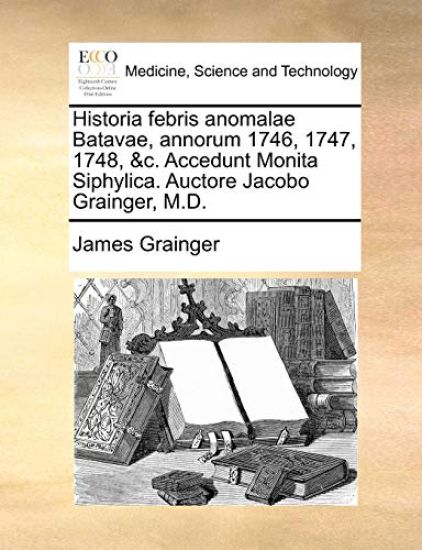
Historia febris anomalae Batavae, annorum 1746, 1747, 1748, &c. Accedunt Monita Siphylica. Auctore Jacobo Grainger, M.D.
James Grainger
Gale Ecco, Print Editions
2010
pokkari
Historia febris anomalae Batavae, annorum 1746, 1747, 1748, &c. Accedunt Monita Siphylica. Auctore Jacobo Grainger, M.D.
James Grainger
Gale Ecco, Print Editions
2018
sidottu
The 18th century was a wealth of knowledge, exploration and rapidly growing technology and expanding record-keeping made possible by advances in the printing press. In its determination to preserve the century of revolution, Gale initiated a revolution of its own: digitization of epic proportions to preserve these invaluable works in the largest archive of its kind. Now for the first time these high-quality digital copies of original 18th century manuscripts are available in print, making them highly accessible to libraries, undergraduate students, and independent scholars.Medical theory and practice of the 1700s developed rapidly, as is evidenced by the extensive collection, which includes descriptions of diseases, their conditions, and treatments. Books on science and technology, agriculture, military technology, natural philosophy, even cookbooks, are all contained here.++++The below data was compiled from various identification fields in the bibliographic record of this title. This data is provided as an additional tool in helping to insure edition identification: ++++British LibraryT077153'Monita siphylica' comes after p.196. With a final leaf of errata.Edinburgi: excudebant Hamilton, Balfour, et Neill, 1753. xii,196, 4],34, 2]p.; 8
Though most programmers use two or more languages, they usually have a mastery of one. Although Microsoft has advertised that the .NET runtime is language agnostic and that C# and Visual Basic .NET are so close that switching between the two is really quite easy, that?s only true up to a point. Some of the differences are obvious, but others are very subtle. C# & VB.NET Conversion Pocket Reference helps you easily make the switch from one language to another. The differences occur in three main areas: syntax, object-oriented principles, and the Visual Studio .NET IDE. Syntax concerns the statements and language elements. Object oriented differences are less obvious, and concern differences in implementation and feature sets between the two languages. IDE differences include things like compiler settings or attributes. There is also a fourth area of difference: language features that are present in one language but have no equivalent in the other. These unique language features are also covered in this book. C# & VB.NET Conversion Pocket Reference is a perfect companion for documents and books that don?t have examples using your mastered language. Author Jose Mojica expects that you know one of the two languages, but does not make an assumption about which one. He presents the information in a language-neutral point of view so that programmers from either background can read a section and feel that it is targeted to them.

The Feminine Ethos in C. S. Lewis's «Chronicles of Narnia»
Monika Hilder
Peter Lang Publishing Inc
2012
sidottu
C. S. Lewis, fantasy novelist, literary scholar, and Christian apologist, is one of the most original and well-known literary figures of the twentieth century. As one who stood at the crossroads of Edwardian and modern thinking, he is often read as a sexist or even misogynistic man of his time, but this fresh rereading assesses Lewis as a prescient thinker who transformed typical Western gender paradigms. The Feminine Ethos in C. S. Lewis’s ‘Chronicles of Narnia’ proposes that Lewis’s highly nuanced metaphorical view of gender relations has been misunderstood precisely because it challenges Western chauvinist assumptions on sex and gender. Instead of perpetuating sexism, Lewis subverts the culturally inherited chauvinism of «masculine» classical heroism with the biblically inspired vision of a surprisingly «feminine» spiritual heroism. His view that we are all «feminine» in relation to the «masculine» God – a theological feminism that crosses gender lines – means that qualities we tend to consider to be feminine, such as humility, are the qualities essential to being fully human. This book’s theoretical framework is Lewis’s own, grounded in his view of biblical thinking, as he was informed by writers such as Milton, Wordsworth, and George MacDonald, and in terms of the uniquely progressive implications for twentieth-first century cultural studies. This highly insightful and entertaining study of theological feminism in Lewis’s Chronicles of Narnia will be compelling for anyone interested in children’s and fantasy literature, Inklings scholarship, gender discourse, ethical and spiritual discourse, literature and theology, and cultural studies in general.
Essentials of C++
Prof (dr ) Anand Kumar Tripathi; Monika Tripathi
LAP Lambert Academic Publishing
2019
pokkari
Break down biostatistics, make sense of complex concepts, and pass your class If you're taking biostatistics, you may need or want a little extra assistance as you make your way through. Biostatistics For Dummies follows a typical biostatistics course at the college level, helping you understand even the most difficult concepts, so you can get the grade you need. Start at the beginning by learning how to read and understand mathematical equations and conduct clinical research. Then, use your knowledge to analyze and graph your data. This new edition includes more example problems with step-by-step walkthroughs on how to use statistical software to analyze large datasets. Biostatistics For Dummies is your go-to guide for making sense of it all. Review basic statistics and decode mathematical equationsLearn how to analyze and graph data from clinical research studiesLook for relationships with correlation and regressionUse software to properly analyze large datasets Anyone studying in clinical science, public health, pharmaceutical sciences, chemistry, and epidemiology-related fields will want this book to get through that biostatistics course.


TERAPIA GÉNICA: APLICACIÓN Y FUTURO EN ORTODONCIA
Monika Shukla; Shalu Jain; C Munish Reddy
Ediciones Nuestro Conocimiento
2024
nidottu


GENNAYa TERAPIYa: PRIMENENIE I PERSPEKTIVY V ORTODONTII
Monika Shukla; Shalu Yain; C Munish Reddy
Sciencia Scripts
2024
nidottu
Generalized Convexity, Nonsmooth Variational Inequalities, and Nonsmooth Optimization
Qamrul Hasan Ansari; C. S. Lalitha; Monika Mehta
Taylor Francis Inc
2013
sidottu
Until now, no book addressed convexity, monotonicity, and variational inequalities together. Generalized Convexity, Nonsmooth Variational Inequalities, and Nonsmooth Optimization covers all three topics, including new variational inequality problems defined by a bifunction.The first part of the book focuses on generalized convexity and generalized monotonicity. The authors investigate convexity and generalized convexity for both the differentiable and nondifferentiable case. For the nondifferentiable case, they introduce the concepts in terms of a bifunction and the Clarke subdifferential.The second part offers insight into variational inequalities and optimization problems in smooth as well as nonsmooth settings. The book discusses existence and uniqueness criteria for a variational inequality, the gap function associated with it, and numerical methods to solve it. It also examines characterizations of a solution set of an optimization problem and explores variational inequalities defined by a bifunction and set-valued version given in terms of the Clarke subdifferential.Integrating results on convexity, monotonicity, and variational inequalities into one unified source, this book deepens your understanding of various classes of problems, such as systems of nonlinear equations, optimization problems, complementarity problems, and fixed-point problems. The book shows how variational inequality theory not only serves as a tool for formulating a variety of equilibrium problems, but also provides algorithms for computational purposes.

Skuggorna ruva
Sabine Mickelsson; Linda Andersson; Veronica Kronholm; Annah Bohman; Cecilia Hultberg; Ulrika Medén; Malin V. Olsson; Jenny Hansson; Micha Foss; Anja Moberg; Monika Chanovian; C N Persson; Laura Marken; Erik Jansson; Nina Ehrgård Ejlertsson; Charlotte Dahlström; Andreas Lindblad; Jörgen Hassler; Carina Persson; Phlip Stenström; Ingbritt Wik; Lotta Nakano; May Hallsten; Emelie Kempe
Nohiding Förlag
2023
isokokoinen pokkari
I dag är det exakt femtioåtta år sedan jag träffade henne för första gången - Lucia. Nästan ett halvt liv har förflutit, men aldrig har jag berättat för någon om henne. Inte ens mina närmaste. Jag var rädd. Rädd för att betraktas som fullkomligt galen. Men nu, när cancern tagit min kropp, är det dags för mig att berätta. Jag vill helt enkelt inte ta med mig historien graven.