Kirjojen hintavertailu. Mukana 11 627 378 kirjaa ja 12 kauppaa.

Kirjahaku

Etsi kirjoja tekijän nimen, kirjan nimen tai ISBN:n perusteella.

1000 tulosta hakusanalla Monika Czekanowska-Gutman

Realism and Reality in Helga Schubert, Helga Koenigsdorf and Monika Maron
This book analyses the neglected short prose of Helga Schubert, Helga Konigsdorf and Monika Maron, concentrating on their pre-"Wende" writing. In addition to in-depth analysis of themes, the use and non-use of realism is examined. Each author is preoccupied with a stagnating society, but communicates differently. Schubert is covertly political, limiting herself to snapshots of life in the GDR. Konigsdorf diagnosed society's illnesses as a distortion of values linked to industrialization and Maron consciously attacks the regime in her work, exposing the corruption of the State. By focussing on women, this study furthers the establishment of female writers in mainstream academic discourse, and reflects not just the women's political but also their philosophical and social approaches to life. Analysis of their short fiction provides a more complete overview of the authors' development, thereby complementing studies, of their novels."

The Strawberry Picker

The Strawberry Picker

Monika Feth

Definitions
2007
pokkari
Eighteen-year-old Jenna is sharing a flat in Bröhl, Germany, with her friends Caro and Merle when a girl is killed nearby. The murder seems to have parallels with two other frightening crimes.Then one day Caro is found murdered - stabbed seven times and with her necklace missing, just like the other girls. At the funeral Jenna swears revenge in front of everybody, and in turn attracts the attention of Nat, a handsome and mysterious strawberry picker. With Jenna sidetracked by love, Merle sets about solving Caro's murder herself. But as the answer dawns on her, another horrifying reality emerges.
Masculinity, Femininity, and American Political Behavior

Masculinity, Femininity, and American Political Behavior

Monika L McDermott

Oxford University Press Inc
2016
sidottu
What influences political behavior more -- one's gender or one's gendered personality traits? Certain gendered traits have long been associated with particular political leanings in American politics. For example, the Democratic Party is thought to have a compassionate, feminine nature while the Republican Party is deemed to have a tougher, more masculine nature. Masculinity, Femininity, and American Political Behavior, a first-of-its-kind analysis of the effects of individuals' gendered personality traits -- masculinity and femininity -- on their political attitudes and behavior, argues that gendered personalities, and not biological sex, are what drive the political behavior of individual citizens. Drawing on a groundbreaking national survey measuring gendered personality traits and political preferences, the book shows that individuals' levels of masculine and feminine personality traits help to determine their party identification, vote choice, ideology, and political engagement. And in conjunction with biological sex, these traits also influence attitudes about sex roles. For example, the more strongly an individual identifies with "feminine" characteristics, the more strongly they identify with the Democratic Party. Likewise, the more "masculine" an individual, the more they are drawn to the GOP. The book also demonstrates that, despite conventional wisdom, biological sex does not dictate gendered personalities. As such, the personality trait approach of the book moves gender and politics research well beyond the traditional male/female dichotomy. Moreover, Masculinity, Femininity, and American Political Behavior points to new and as yet underexplored strategies for candidate campaigns, get out the vote efforts, and officeholders' governing behavior.
Masculinity, Femininity, and American Political Behavior

Masculinity, Femininity, and American Political Behavior

Monika L McDermott

Oxford University Press Inc
2016
nidottu
What influences political behavior more -- one's gender or one's gendered personality traits? Certain gendered traits have long been associated with particular political leanings in American politics. For example, the Democratic Party is thought to have a compassionate, feminine nature while the Republican Party is deemed to have a tougher, more masculine nature. Masculinity, Femininity, and American Political Behavior, a first-of-its-kind analysis of the effects of individuals' gendered personality traits -- masculinity and femininity -- on their political attitudes and behavior, argues that gendered personalities, and not biological sex, are what drive the political behavior of individual citizens. Drawing on a groundbreaking national survey measuring gendered personality traits and political preferences, the book shows that individuals' levels of masculine and feminine personality traits help to determine their party identification, vote choice, ideology, and political engagement. And in conjunction with biological sex, these traits also influence attitudes about sex roles. For example, the more strongly an individual identifies with "feminine" characteristics, the more strongly they identify with the Democratic Party. Likewise, the more "masculine" an individual, the more they are drawn to the GOP. The book also demonstrates that, despite conventional wisdom, biological sex does not dictate gendered personalities. As such, the personality trait approach of the book moves gender and politics research well beyond the traditional male/female dichotomy. Moreover, Masculinity, Femininity, and American Political Behavior points to new and as yet underexplored strategies for candidate campaigns, get out the vote efforts, and officeholders' governing behavior.
The Discourse of News Values

The Discourse of News Values

Monika Bednarek; Helen Caple

Oxford University Press Inc
2017
sidottu
The Discourse of News Values breaks new ground in multimodal news discourse, offering the first book-length treatment of the discursive analysis of news values and the construction of newsworthiness. The book explores how the news is "sold" (made newsworthy) to audiences through the semiotic resources of language and image, providing a new analytical framework which can be used by other researchers in their own subsequent studies. It combines in-depth theoretical discussion with analyses of authentic news discourse (both language and images) from around the English-speaking world, including three empirical case studies: one that analyzes news values around the topic of cycling across different English-speaking cultures; one that analyzes images disseminated by news media organizations via Facebook; and a third that focuses on the 100 "most shared" news items.
The Discourse of News Values

The Discourse of News Values

Monika Bednarek; Helen Caple

Oxford University Press Inc
2017
nidottu
The Discourse of News Values breaks new ground in multimodal news discourse, offering the first book-length treatment of the discursive analysis of news values and the construction of newsworthiness. The book explores how the news is "sold" (made newsworthy) to audiences through the semiotic resources of language and image, providing a new analytical framework which can be used by other researchers in their own subsequent studies. It combines in-depth theoretical discussion with analyses of authentic news discourse (both language and images) from around the English-speaking world, including three empirical case studies: one that analyzes news values around the topic of cycling across different English-speaking cultures; one that analyzes images disseminated by news media organizations via Facebook; and a third that focuses on the 100 "most shared" news items.
Metaphors of Confinement

Metaphors of Confinement

Monika Fludernik

Oxford University Press
2019
sidottu
Metaphors of Confinement: The Prison in Fact, Fiction, and Fantasy offers a historical survey of imaginings of the prison as expressed in carceral metaphors in a range of texts about imprisonment from Antiquity to the present as well as non-penal situations described as confining or restrictive. These imaginings coalesce into a 'carceral imaginary' that determines the way we think about prisons, just as social debates about punishment and criminals feed into the way carceral imaginary develops over time. Examining not only English-language prose fiction but also poetry and drama from the Middle Ages to postcolonial, particularly African, literature, the book juxtaposes literary and non-literary contexts and contrasts fictional and nonfictional representations of (im)prison(ment) and discussions about the prison as institution and experiential reality. It comments on present-day trends of punitivity and foregrounds the ethical dimensions of penal punishment. The main argument concerns the continuity of carceral metaphors through the centuries despite historical developments that included major shifts in policy (such as the invention of the penitentiary). The study looks at selected carceral metaphors, often from two complementary perspectives, such as the home as prison or the prison as home, or the factory as prison and the prison as factory. The case studies present particularly relevant genres and texts that employ these metaphors, often from a historical perspective that analyses development through different periods.
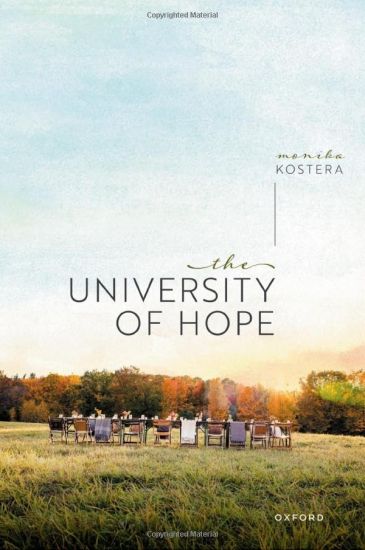
The University of Hope

The University of Hope

Monika Kostera

Oxford University Press
2024
sidottu
Is the University as we know it dead? Monika Kostera thinks not, but across the globe universities are under attack, be it by external forces or from within. Will they survive? Our civilisation requires that they must: planetary survival and sustainability depend on them. This book provides vital resources to give us all - professional academics, students, and university administrators - hope that universities will emerge renewed out of the current crisis. As this inspiring work shows, the practice of academic virtues can enable us to cultivate the awareness of the common good that academia serves: the preservation and development of humanity's potential of knowledge. Drawing on a rich variety of ideas, theories, empirical cases, real and fictitious stories, as well as examples and images from art and literature, Monika Kostera demonstrates the splendid complexity of academic ecosystems. It is through looking for hope for the university that we find hope for society and the planet. In suggesting tangible steps for restoring a sense of meaning to academic work and the collegial community worldwide, The University of Hope shows us a path out of the darkness.
Historians and Nationalism

Historians and Nationalism

Monika Baár

Oxford University Press
2010
sidottu
Peripheral cultures have been largely absent from the European canon of historiography. Seeking to redress the balance, Monika Baár discusses the achievements of five East-Central European historians in the nineteenth century: Joachim Lelewel (Polish); Simonas Daukantas (Lithuanian); Franti&sek Palacký (Czech); Mihály Horváth (Hungarian) and Mihail Kogalniceanu (Romanian). Comparing their efforts to promote a unified vision of national culture in their respective countries, Baár illuminates the complexities of historical writing in the region in the nineteenth century. Drawing on previously untranslated documents, Baár reconstructs the scholars' shared intellectual background and their nationalistic aims, arguing that historians on the European periphery made significant contributions to historical writing, and had far more in common with their Western and Central European contemporaries than has been previously assumed.
Historians and Nationalism

Historians and Nationalism

Monika Baár

Oxford University Press
2013
nidottu
Peripheral cultures have been largely absent from the European canon of historiography. Seeking to redress the balance, Monika Baár discusses the achievements of five East-Central European historians in the nineteenth century: Joachim Lelewel (Polish); Simonas Daukantas (Lithuanian); Frantisek Palacký (Czech); Mihály Horváth (Hungarian) and Mihail Kogalniceanu (Romanian). Comparing their efforts to promote a unified vision of national culture in their respective countries, Baár illuminates the complexities of historical writing in the region in the nineteenth century. Drawing on previously untranslated documents, Baár reconstructs the scholars' shared intellectual background and their nationalistic aims, arguing that historians on the European periphery made significant contributions to historical writing, and had far more in common with their Western and Central European contemporaries than has been previously assumed.
The Good Project

The Good Project

Monika Krause

University of Chicago Press
2014
sidottu
NGOs set out to save lives, relieve suffering, and service basic human needs. They are committed to serving people across national borders and without regard to race, ethnicity, gender, or religion, and they offer crucial help during earthquakes, tsunamis, wars, and pandemics. But with so many ailing areas in need of assistance, how do these organizations decide where to go-and who gets the aid? In The Good Project, Monika Krause dives into the intricacies of the decision-making process at NGOs and uncovers a basic truth: It may be the case that relief agencies try to help people but, in practical terms, the main focus of their work is to produce projects. Agencies sell projects to key institutional donors, and in the process the project and its beneficiaries become commodities. In an effort to guarantee a successful project, organizations are incentivized to help those who are easy to help, while those who are hardest to help often receive no assistance at all. The poorest of the world are made to compete against each other to become projects - and in exchange they offer legitimacy to aid agencies and donor governments. Sure to be controversial, The Good Project offers a provocative new perspective on how NGOs succeed and fail on a local and global level.
The Good Project – Humanitarian Relief NGOs and the Fragmentation of Reason
NGOs set out to save lives, relieve suffering, and service basic human needs. They are committed to serving people across national borders and without regard to race, ethnicity, gender, or religion, and they offer crucial help during earthquakes, tsunamis, wars, and pandemics. But with so many ailing areas in need of assistance, how do these organizations decide where to go - and who gets the aid? In The Good Project, Monika Krause dives into the intricacies of the decision-making process at NGOs and uncovers a basic truth: It may be the case that relief agencies try to help people but, in practical terms, the main focus of their work is to produce projects. Agencies sell projects to key institutional donors, and in the process the project and its beneficiaries become commodities. In an effort to guarantee a successful project, organizations are incentivized to help those who are easy to help, while those who are hardest to help often receive no assistance at all. The poorest of the world are made to compete against each other to become projects - and in exchange they offer legitimacy to aid agencies and donor governments. Sure to be controversial, The Good Project offers a provocative new perspective on how NGOs succeed and fail on a local and global level.
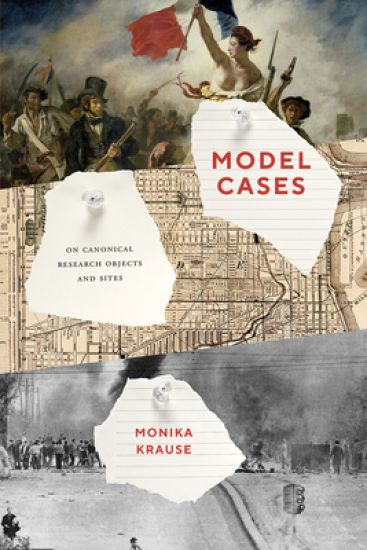
Model Cases

Model Cases

Monika Krause

University of Chicago Press
2021
sidottu
In Model Cases, Monika Krause asks about the concrete material research objects behind shared conversations about classes of objects, periods, and regions in the social sciences and humanities. It is well known that biologists focus on particular organisms, such as mice, fruit flies, or particular viruses when they study general questions about life, development, and disease. Krause shows that scholars in the social sciences and humanities also draw on some cases more than others, selecting research objects influenced by a range of ideological but also mundane factors, such as convenience, historicist ideas about development over time, schemas in the general population, and schemas particular to specific scholarly communities. Some research objects are studied repeatedly and shape our understanding of more general ideas in disproportionate ways: The French Revolution has profoundly influenced our concepts of revolution, of citizenship, and of political modernity, just like studies of doctors have set the agenda for research on the professions. Based on an extensive analysis of the role of model cases in different fields, Krause argues that they can be useful for scholarly communities if they are acknowledged and reflected as particular objects; she also highlights the importance of research strategies based on neglected research objects and neglected combinations of research objects and scholarly concerns.
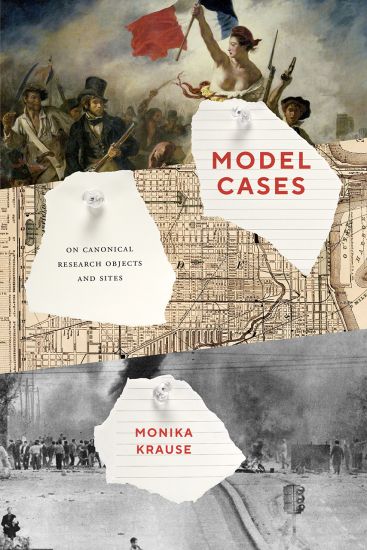
Model Cases

Model Cases

Monika Krause

University of Chicago Press
2021
nidottu
In Model Cases, Monika Krause asks about the concrete material research objects behind shared conversations about classes of objects, periods, and regions in the social sciences and humanities. It is well known that biologists focus on particular organisms, such as mice, fruit flies, or particular viruses when they study general questions about life, development, and disease. Krause shows that scholars in the social sciences and humanities also draw on some cases more than others, selecting research objects influenced by a range of ideological but also mundane factors, such as convenience, historicist ideas about development over time, schemas in the general population, and schemas particular to specific scholarly communities. Some research objects are studied repeatedly and shape our understanding of more general ideas in disproportionate ways: The French Revolution has profoundly influenced our concepts of revolution, of citizenship, and of political modernity, just like studies of doctors have set the agenda for research on the professions. Based on an extensive analysis of the role of model cases in different fields, Krause argues that they can be useful for scholarly communities if they are acknowledged and reflected as particular objects; she also highlights the importance of research strategies based on neglected research objects and neglected combinations of research objects and scholarly concerns.