

Kirjahaku
Etsi kirjoja tekijän nimen, kirjan nimen tai ISBN:n perusteella.
1000 tulosta hakusanalla NOT KNOWN

Not Knowing the Value of Life
Krishna's Mercy
Createspace Independent Publishing Platform
2014
nidottu
"Why is that your cruel, crooked, blackish and yellowish eyes do not fall to the ground while looking at me, O uncivilized one?" (Sita Devi, Valmiki Ramayana, Sundara Kand, 22.18) "Not Knowing the Value of Life" is a collection of twenty-four essays discussing verses from the Ramayana which deal with Sita's rebuke of Ravana and her hope of again seeing her husband Rama.
The wildly varied essays in "Not-Knowing" combine to form a posthumous manifesto of one of America s masters of literary experiment. Here are Barthelme s thoughts on writing (his own and others); his observations on art, architecture, film, and city life; interviews, including two previously unpublished; and meditations on everything from "Superman III" to the art of rendering Melancholy Baby on jazz banjolele. This is a rich and eclectic selection of work by the man Robert Coover has called one of the great citizens of contemporary world letters. "

Poetry, the art of words flowing together in a sense that captures your mind. In this book, you will find yourself lost in letters to God, heartache, pain, suffering, love and loss. You will find that many poems sound more like prayers or letters. In the beginning stages of writing, that is exactly what they were before their transformation into what you are about to read, poetry from the heart and soul. You will find darkness and light as you continue to turn each page. Each poem will bring a new meaning, a new message and a new sense of direction for you to unfold.
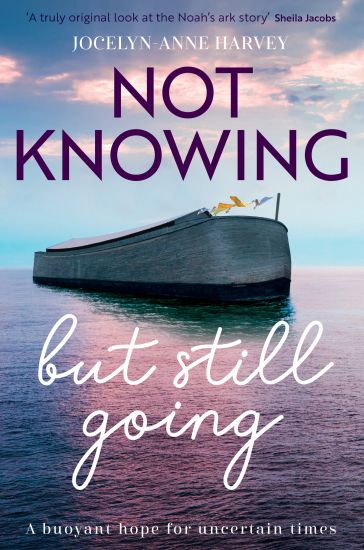
In order to thrive in these worrying times, this fascinating book proposes we head, uncomfortably, towards the unknown, rather than away from it. By developing a unique relationship with Not Knowing we discover a new way of living, working and succeeding in our modern world. This book re-frames the concept of Not Knowing, from being in a fearful place of weakness and ignorance, moving to something we must engage with personally. It introduces us to a new paradigm, where Not Knowing becomes an exciting opportunity, where we are no longer limited by what we already know and our habitual reactions to things that life throws at us, so that deeper knowing can emerge, full of rich possibilities and wisdom. Learn: Why your hard-won knowledge may be holding you back. How to recognise when you are entering your real learning zone. Lessons from people who thrive in the unknown. Powerful ideas that will help you experience joy and possibility, rather than uncertainty and worry.
Knowledge and expertise are highly valued in today's business world. These values are introduced at an early age by our education system, and at work, we are assessed based on what we know, on having the answers and solutions. Our need for certainty, to know what's going on, to have all the answers, exerts strong pressure in our lives. This award-winning book offers an alternative, contrarian approach to dealing with such pressures - and to embrace "not knowing" rather than fearing it. The authors argue it is by "not knowing" that we in fact develop an exploratory mindset, and we discover, engage and create new ways to deal with business and management problems and issues. The book is supported by stories of individuals and the positive change they made in their lives through "not knowing". Solving new problems with old ways of thinking are no longer useful in the new world.

A beautifully written suite of personal essays on the value of not knowing. Moments of clarity are rare and fleeting; how can we become comfortable outside of them, in the more general condition of uncertainty within which we make our lives? Written by English professor Emily Ogden while her children were small, On Not Knowing forays into this rich, ambivalent space. Each of her sharply observed essays invites the reader to think with her about questions she can't set aside: not knowing how to give birth, to listen, to hold it together, to love. Unapologetically capacious in her range of reference and idiosyncratic in the canon she draws on, Ogden moves nimbly among the registers of experience, from the operation of a breast pump to the art of herding cattle; from one-night stands to the stories of Edgar Allan Poe; from kayaking near a whale to a psychoanalytic meditation on drowning. Committed to the accumulation of knowledge, Ogden nonetheless finds that knowingness for her can be a way of getting stuck, a way of not really living. Rather than the defensiveness of willful ignorance, On Not Knowing celebrates the defenselessness of not knowing yet-possibly of not knowing ever. Ultimately, this book shows how resisting the temptation of knowingness and embracing the position of not knowing becomes a form of love.

A beautifully written suite of personal essays on the value of not knowing. Moments of clarity are rare and fleeting; how can we become comfortable outside of them, in the more general condition of uncertainty within which we make our lives? Written by English professor Emily Ogden while her children were small, On Not Knowing forays into this rich, ambivalent space. Each of her sharply observed essays invites the reader to think with her about questions she can't set aside: not knowing how to give birth, to listen, to hold it together, to love. Unapologetically capacious in her range of reference and idiosyncratic in the canon she draws on, Ogden moves nimbly among the registers of experience, from the operation of a breast pump to the art of herding cattle; from one-night stands to the stories of Edgar Allan Poe; from kayaking near a whale to a psychoanalytic meditation on drowning. Committed to the accumulation of knowledge, Ogden nonetheless finds that knowingness for her can be a way of getting stuck, a way of not really living. Rather than the defensiveness of willful ignorance, On Not Knowing celebrates the defenselessness of not knowing yet--possibly of not knowing ever. Ultimately, this book shows how resisting the temptation of knowingness and embracing the position of not knowing becomes a form of love.
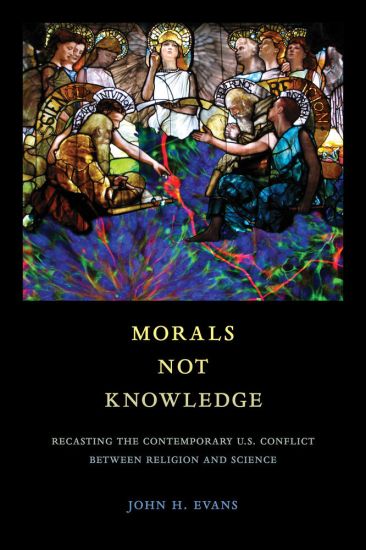
A free ebook version of this title is available through Luminos, University of California Press’s Open Access publishing program for monographs. Visit www.luminosoa.org to learn more. In a time when conservative politicians challenge the irrefutability of scientific findings such as climate change, it is more important than ever to understand the conflict at the heart of the “religion vs. science” debates unfolding in the public sphere. In this groundbreaking work, John H. Evans reveals that, with a few limited exceptions, even the most conservative religious Americans accept science’s ability to make factual claims about the world. However, many religious people take issue with the morality implicitly promoted by some forms of science. Using clear and engaging scholarship, Evans upends the prevailing notion that there is a fundamental conflict over the way that scientists and religious people make claims about nature and argues that only by properly understanding moral conflict between contemporary religion and science will we be able to contribute to a more productive interaction between these two great institutions.
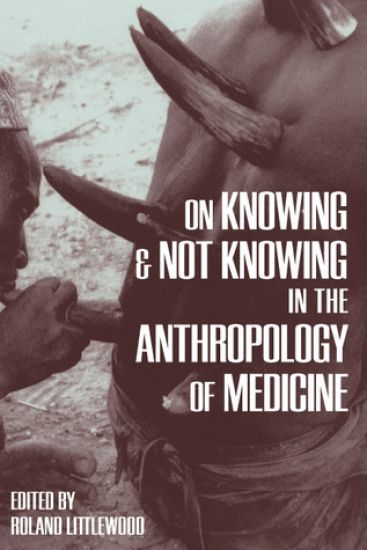
On Knowing and Not Knowing in the Anthropology of Medicine
Left Coast Press Inc
2007
sidottu
Social scientific studies of medicine typically assume that systems of medical knowledge are uniform and consistent. But while anthropologists have long rejected the notion that cultures are discrete, bounded, and rule-drive entities, medical anthropology has been slower to develop alternative approaches to understanding cultures of health. This provocative volume considers the theoretical, methodological, and ethnographic implications of the fact that medical knowledge is frequently dynamic, incoherent, and contradictory, and that and our understanding of it is necessarily incomplete and partial. In diverse settings from indigenous cultures to Western medical industries, contributors consider such issues as how to define the boundaries of “medical” knowledge versus other kinds of knowledge; how to understand overlapping and shifting medical discourses; the medical profession’s need for anthropologists to produce “explanatory models”; the limits of the Western scientific method and the potential for methodological pluralism; constraints on fieldwork including violence and structural factors limiting access; and the subjectivity and interests of the researcher. On Knowing and Not Knowing in the Anthropology of Medicine will stimulate innovative thinking and productive debate for practitioners, researchers, and students in the social science of health and medicine.
On Knowing and Not Knowing in the Anthropology of Medicine
Left Coast Press Inc
2007
nidottu
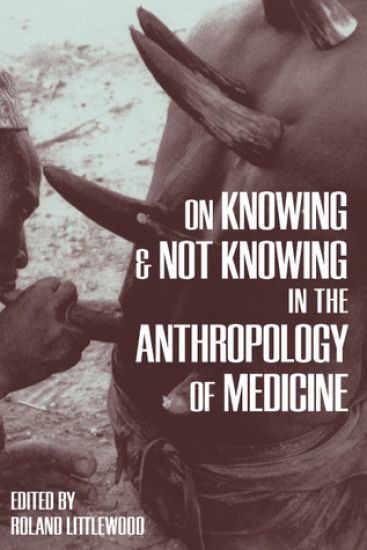
Social scientific studies of medicine typically assume that systems of medical knowledge are uniform and consistent. But while anthropologists have long rejected the notion that cultures are discrete, bounded, and rule-drive entities, medical anthropology has been slower to develop alternative approaches to understanding cultures of health. This provocative volume considers the theoretical, methodological, and ethnographic implications of the fact that medical knowledge is frequently dynamic, incoherent, and contradictory, and that and our understanding of it is necessarily incomplete and partial. In diverse settings from indigenous cultures to Western medical industries, contributors consider such issues as how to define the boundaries of “medical” knowledge versus other kinds of knowledge; how to understand overlapping and shifting medical discourses; the medical profession’s need for anthropologists to produce “explanatory models”; the limits of the Western scientific method and the potential for methodological pluralism; constraints on fieldwork including violence and structural factors limiting access; and the subjectivity and interests of the researcher. On Knowing and Not Knowing in the Anthropology of Medicine will stimulate innovative thinking and productive debate for practitioners, researchers, and students in the social science of health and medicine.

A beautifully written suite of personal essays on the value of not knowing
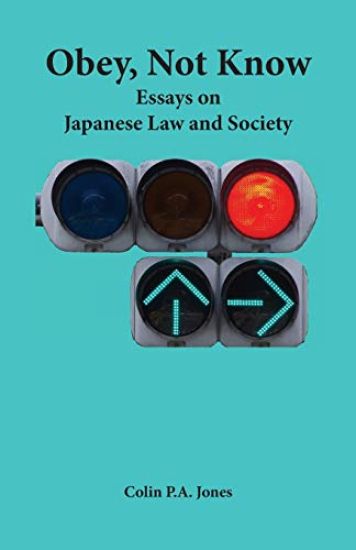
Like many things Japanese, the Japanese legal system has its peculiarities... and Professor Jones applies his decades of legal and teaching experience to shed light on its mysteries. As with most legal systems there is method to its madness, and while the reasoning behind it all is a bit different from the approaches of Western nations, it works. Usually. Based on the author's long-running feature in The Japan Times, the book offers a selection of his most important columns, plus other articles drawn from numerous sources, and including a number of never-before published pieces. Older articles have been updated to reflect more recent developments, but remain vitally important to understanding how things work in Japan. And in spite of being written by an attorney, the book is in everyday English, peppered with entertaining and sometimes stinging asides. Here, at last, is a glimpse into the Japanese legal system, ideal for foreign residents of Japan as well as legal researchers and practitioners.
Knowing When You Do not Know
World Bank Publications
2012
nidottu
Economists have long sought to predict how macroeconomic shocks will affect individual welfare. Macroeconomic data and forecasts are easily available when crises strike. But policy action requires not only understanding the magnitude of a macro shock, but also identifying which households or individuals are being hurt by (or benefit from) the crisis. A popular solution is to extrapolate the welfare impact of a shock from the historical response of income or consumption poverty to changes in output, by estimating an 'elasticity' of poverty to growth. Although this method provides an estimate for the aggregate poverty impact of a macro shock, it has limited value for analysts and policymakers alike. Aggregate numbers are useful to capture the attention of policymakers and the international community, but in the absence of any information on who is affected and to what extent, provide little guidance on what actions need to be taken. This volume outlines a more comprehensive approach to the problem, showcasing a microsimulation model, developed in response to demand from World Bank staff working in countries and country governments in the wake of the global financial crisis of 2008-09. Starting with the idea of using simple macroeconomic projections as the 'macro linkages' to a micro behavioral model built from household data, the model was conceptualized, refined and tested in a diverse mix of countries: Bangladesh, Philippines, Mexico, Poland and Mongolia. The results fed into country policy dialogue and lending operations of Bank teams, as well as various reports, research papers and briefs.
Knowing and Not Knowing in Intimate Relationships
Paul C. Rosenblatt; Elizabeth Wieling
Cambridge University Press
2013
sidottu
In the extensive literature on couples and intimacy, little has been written about knowing and not knowing as people experience and understand them. Based on intensive interviews with thirty-seven adults, this book shows that knowing and not knowing are central to couple relationships. They are entangled in love, sexual attraction, trust, commitment, caring, empathy, decision making, conflict, and many other aspects of couple life. Often the entanglement is paradoxical. For example, many interviewees revealed that they hungered to be known and yet kept secrets from their partner. Many described working hard at knowing their partner well, and yet there were also things about their partner and their partner's past that they wanted not to know. This book's qualitative, phenomenological approach builds on and adds to the largely quantitative social psychological, communications and family field literature to offer a new and accessible insight into the experience of intimacy.
Knowing and Not Knowing in Intimate Relationships
Paul C. Rosenblatt; Elizabeth Wieling
Cambridge University Press
2015
pokkari
In the extensive literature on couples and intimacy, little has been written about knowing and not knowing as people experience and understand them. Based on intensive interviews with thirty-seven adults, this book shows that knowing and not knowing are central to couple relationships. They are entangled in love, sexual attraction, trust, commitment, caring, empathy, decision making, conflict, and many other aspects of couple life. Often the entanglement is paradoxical. For example, many interviewees revealed that they hungered to be known and yet kept secrets from their partner. Many described working hard at knowing their partner well, and yet there were also things about their partner and their partner's past that they wanted not to know. This book's qualitative, phenomenological approach builds on and adds to the largely quantitative social psychological, communications and family field literature to offer a new and accessible insight into the experience of intimacy.
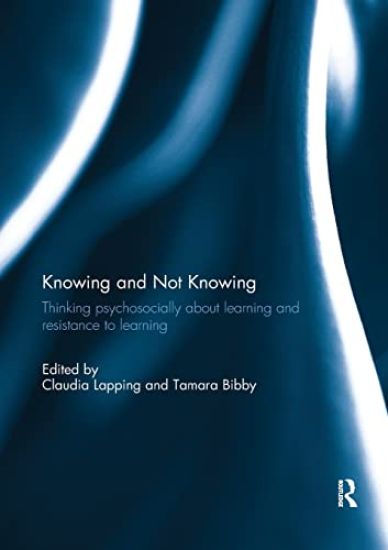
Knowing and Not Knowing
Routledge
2019
nidottu
The social world is saturated with powerful formations of knowledge that colonise individual and institutional identities. Some knowledge emerges as legitimised and authoritative; other knowledge is resisted or repressed. Psychosocial approaches highlight the unstable basis of knowledge, learning and research; of knowing and not knowing. How do we come to formulate knowledge in the ways that we do? Are there other possible ways of knowing that are too difficult or unsettling for us to begin to explore? Do we need the authority of legitimised institutions and regularized methods to build secure knowledge? What might it mean to build insecure edifices of knowledge? How might we trouble notions of knowledge in processes of teaching, learning and research?This collection addresses these questions, drawing on a range of psychoanalytic and social theory, from Bion, Freud and Lacan, to Derrida, Kristeva and Zizek. Showcasing work from North America, Europe and Japan, contributors explore writing as a practice that can stabilise or unsettle subjectivities; the unconscious relations between school practices, subjectivities, educational spaces and ideologies; implications of the productive energies and the deadening inwardness associated with mourning and melancholia for formal and informal learning; and the authority we invest in apparently rigid or ephemeral institutional spaces. Strongly empirical as well as theoretical in approach, this collection will be of interest to students and academics seeking ways to resist normative orders of legitimacy and coherence in education and research. This book was originally published as a special issue of Pedagogy, Culture & Society.
Knowing and Not Knowing
Routledge
2016
sidottu
The social world is saturated with powerful formations of knowledge that colonise individual and institutional identities. Some knowledge emerges as legitimised and authoritative; other knowledge is resisted or repressed. Psychosocial approaches highlight the unstable basis of knowledge, learning and research; of knowing and not knowing. How do we come to formulate knowledge in the ways that we do? Are there other possible ways of knowing that are too difficult or unsettling for us to begin to explore? Do we need the authority of legitimised institutions and regularized methods to build secure knowledge? What might it mean to build insecure edifices of knowledge? How might we trouble notions of knowledge in processes of teaching, learning and research?This collection addresses these questions, drawing on a range of psychoanalytic and social theory, from Bion, Freud and Lacan, to Derrida, Kristeva and Zizek. Showcasing work from North America, Europe and Japan, contributors explore writing as a practice that can stabilise or unsettle subjectivities; the unconscious relations between school practices, subjectivities, educational spaces and ideologies; implications of the productive energies and the deadening inwardness associated with mourning and melancholia for formal and informal learning; and the authority we invest in apparently rigid or ephemeral institutional spaces. Strongly empirical as well as theoretical in approach, this collection will be of interest to students and academics seeking ways to resist normative orders of legitimacy and coherence in education and research. This book was originally published as a special issue of Pedagogy, Culture & Society.