Kirjojen hintavertailu. Mukana 11 627 373 kirjaa ja 12 kauppaa.

Kirjahaku

Etsi kirjoja tekijän nimen, kirjan nimen tai ISBN:n perusteella.

460 tulosta hakusanalla Nabokov Dmitri

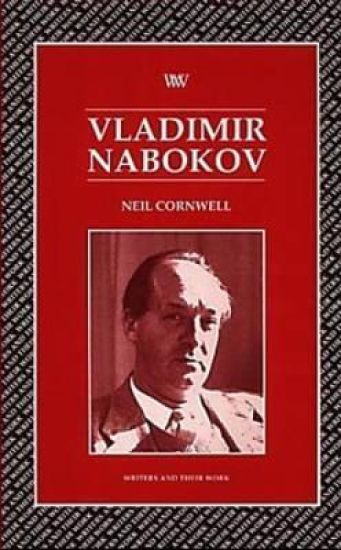
Vladimir Nabokov

Vladimir Nabokov

Neil Cornwell

Liverpool University Press
1999
pokkari
Vladimir Nabokov’s extraordinary literary career, as a master of Russian and English prose, is unique. Acclaimed in the limited Russian émigré world, under the name of Sirin, Nabokov switched to writing in English and settled in America, a refugee from Hitler’s Europe. Exile, memory, lost love and the magic of childhood are among his themes; stylistic and structural dexterity are his hallmarks; Lolita (ranked number 4 in the 1998 New York Modern Library list of 100 best novels of the century published in English) enabled him to retire to a final and productive period of European residence. Film versions of his most controversial novel keep Nabokov’s name before the public, while almost his entire oeuvre remains currently available in paperback. Neil Cornwell’s study, published for the Nabokov centenary, examines five of Nabokov’s major novels, plus his short stories and critical writings, situating his work against the ever-expanding mass of VN scholarship, and noting his cultural debt to Russia, Europe, America and the British Isles.
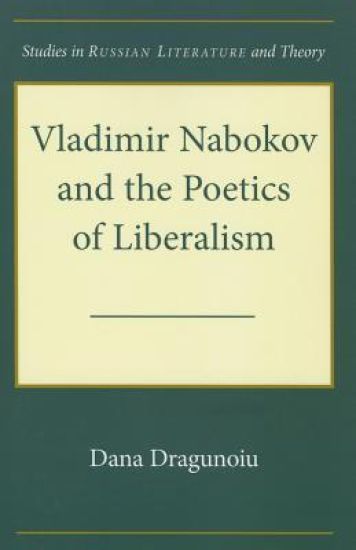
Vladimir Nabokov and the Poetics of Liberalism

Vladimir Nabokov and the Poetics of Liberalism

Dana Dragunoiu

Northwestern University Press
2012
nidottu
Alongside the puzzles contained in Nabokov's fiction, scholars have been unable to untangle the seemingly contradictory relationship between, on one hand, the fiction and the beliefs and principles suggested by Nabokov's biography and, on the other hand, the statements he made outside of his work.
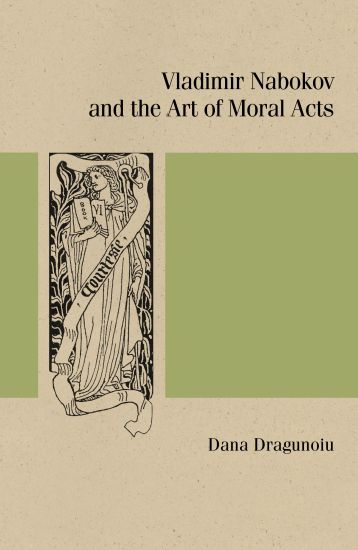
Vladimir Nabokov and the Art of Moral Acts

Vladimir Nabokov and the Art of Moral Acts

Dana Dragunoiu

Northwestern University Press
2021
nidottu
This book shows how ethics and aesthetics interact in the works of one of the most celebrated literary stylists of the twentieth century: the Russian American novelist Vladimir Nabokov. Dana Dragunoiu reads Nabokov’s fictional worlds as battlegrounds between an autonomous will and heteronomous passions, demonstrating Nabokov’s insistence that genuinely moral acts occur when the will triumphs over the passions by answering the call of duty. Dragunoiu puts Nabokov’s novels into dialogue with the work of writers such as Alexander Pushkin, William Shakespeare, Leo Tolstoy, and Marcel Proust; with Kantian moral philosophy; with the institution of the modern duel of honor; and with the European traditions of chivalric literature that Nabokov studied as an undergraduate at Cambridge University. This configuration of literary influences and philosophical contexts allows Dragunoiu to advance an original and provocative argument about the formation, career, and legacies of an author who viewed moral activity as an art, and for whom artistic and moral acts served as testaments to the freedom of the will.
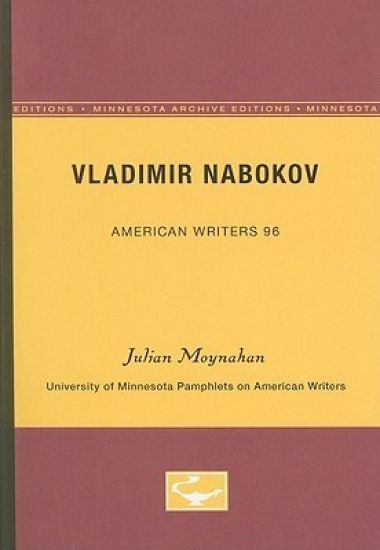
Vladimir Nabokov - American Writers 96

Vladimir Nabokov - American Writers 96

Moynahan Julian

UNIVERSITY OF MINNESOTA PRESS
1971
nidottu
Vladimir Nabokov - American Writers 96 was first published in 1971. Minnesota Archive Editions uses digital technology to make long-unavailable books once again accessible, and are published unaltered from the original University of Minnesota Press editions.
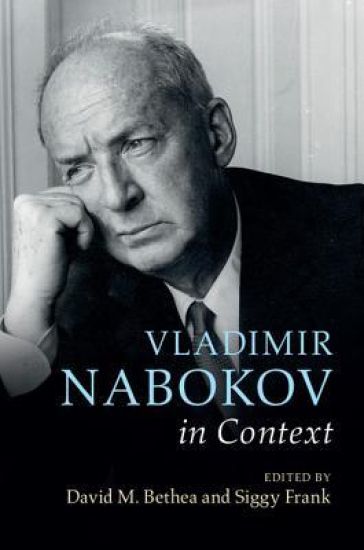
Vladimir Nabokov in Context

Vladimir Nabokov in Context

Cambridge University Press
2018
sidottu
Vladimir Nabokov, bilingual writer of dazzling masterpieces, is a phenomenon that both resists and requires contextualization. This book challenges the myth of Nabokov as a sole genius who worked in isolation from his surroundings, as it seeks to anchor his work firmly within the historical, cultural, intellectual and political contexts of the turbulent twentieth century. Vladimir Nabokov in Context maps the ever-changing sites, people, cultures and ideologies of his itinerant life which shaped the production and reception of his work. Concise and lively essays by leading scholars reveal a complex relationship of mutual influence between Nabokov's work and his environment. Appealing to a wide community of literary scholars this timely companion to Nabokov's writing offers new insights and approaches to one of the most important, and yet most elusive writers of modern literature.
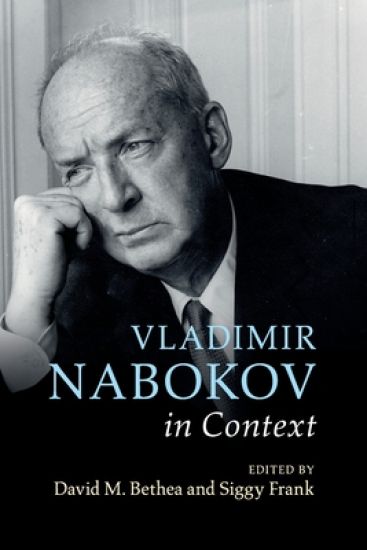
Vladimir Nabokov in Context

Vladimir Nabokov in Context

Cambridge University Press
2020
pokkari
Vladimir Nabokov, bilingual writer of dazzling masterpieces, is a phenomenon that both resists and requires contextualization. This book challenges the myth of Nabokov as a sole genius who worked in isolation from his surroundings, as it seeks to anchor his work firmly within the historical, cultural, intellectual and political contexts of the turbulent twentieth century. Vladimir Nabokov in Context maps the ever-changing sites, people, cultures and ideologies of his itinerant life which shaped the production and reception of his work. Concise and lively essays by leading scholars reveal a complex relationship of mutual influence between Nabokov's work and his environment. Appealing to a wide community of literary scholars this timely companion to Nabokov's writing offers new insights and approaches to one of the most important, and yet most elusive writers of modern literature.
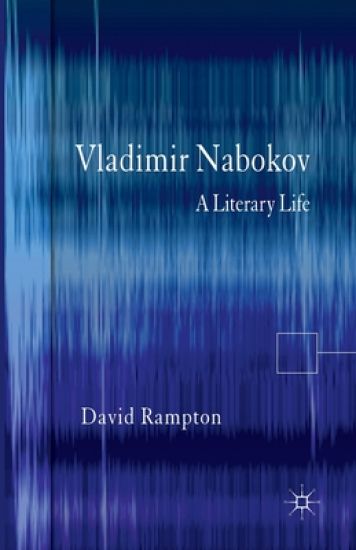
Vladimir Nabokov

Vladimir Nabokov

D. Rampton

Palgrave Macmillan
2012
nidottu
A clearly written, insightful study of Nabokov the novelist, providing an expert analysis of the 17 novels he wrote during a career spanning more than 50 years: one of the most impressive, challenging, and controversial literary achievements of our time.
Vladimir Nabokov as an Author-Translator

Vladimir Nabokov as an Author-Translator

Julie Loison-Charles

BLOOMSBURY PUBLISHING PLC
2022
sidottu
Exploring the deeply translational and transnational nature of the writings of Vladimir Nabokov, this book argues that all his work is unified by the permanent presence of three cultures and languages: Russian, English and French. In particular, Julie Loison-Charles focusses on Nabokov’s dual nature as both an author and a translator, and the ways in which translation permeates his fictional writing from his very first Russian works to his last novels in English.Although self-translation has received a lot of attention in Nabokov criticism, this book considers his work as an author-translator, drawing particular attention to his often underappreciated and underestimated, but no less crucial, third language; French. Looking at Nabokov’s encounters with pseudotranslation, Julie Loison-Charles demonstrates the influence this had on his practice as both a translator and a writer, arguing that this experience was crucial to his ability to create bridges between the literary traditions of Europe, Russia and America. The book also triangulates his practice and theory of translation for Onegin with those of Chateaubriand and Venuti to illuminate Nabokov’s transnational vision of literature and his ethics of translation before presenting a robust case for reconsidering his collaborative translations in French as mediated self-translations.
Vladimir Nabokov as an Author-Translator

Vladimir Nabokov as an Author-Translator

Julie Loison-Charles

BLOOMSBURY PUBLISHING PLC
2024
nidottu
Exploring the deeply translational and transnational nature of the writings of Vladimir Nabokov, this book argues that all his work is unified by the permanent presence of three cultures and languages: Russian, English and French. In particular, Julie Loison-Charles focusses on Nabokov’s dual nature as both an author and a translator, and the ways in which translation permeates his fictional writing from his very first Russian works to his last novels in English.Although self-translation has received a lot of attention in Nabokov criticism, this book considers his work as an author-translator, drawing particular attention to his often underappreciated and underestimated, but no less crucial, third language; French. Looking at Nabokov’s encounters with pseudotranslation, Julie Loison-Charles demonstrates the influence this had on his practice as both a translator and a writer, arguing that this experience was crucial to his ability to create bridges between the literary traditions of Europe, Russia and America. The book also triangulates his practice and theory of translation for Onegin with those of Chateaubriand and Venuti to illuminate Nabokov’s transnational vision of literature and his ethics of translation before presenting a robust case for reconsidering his collaborative translations in French as mediated self-translations.
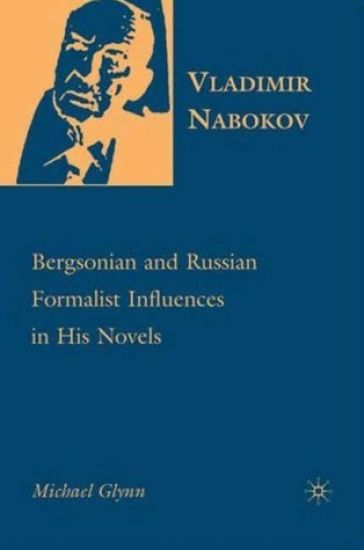
Vladimir Nabokov

Vladimir Nabokov

M. Glynn

Palgrave Macmillan
2007
sidottu
Glynn provides a new reading of Vladimir Nabokov s work by seeking to challenge the notion that he was a Symbolist writer concerned with a transcendent reality. Glynn argues that Nabokov s epistemology was in fact anti-Symbolist and that this aligned him with both Bergsonism and Russian Formalism, which intellectual systems were themselves hostile to a Symbolist epistemology. Symbolism may be seen to devalue material reality by presenting it as a mere adumbration of a higher realm. Nabokov, however, valued the immediate material world and was creatively engaged by the tendency of the deluded mind to efface that reality.
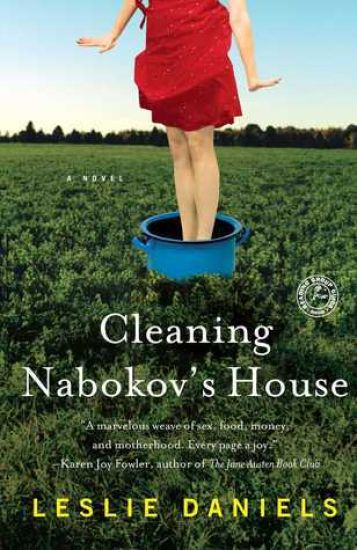
Cleaning Nabokov's House

Cleaning Nabokov's House

Leslie Daniels

Touchstone Books
2012
nidottu
Now in paperback, the stunning debut about a woman rediscovering herself after a divorce explores the heartbreaking and deeply funny aspects of the mess called love. With glowing reviews from the Los Angeles Times, The Boston Globe, The Wall Street Journal, the New York Post, NPR's All Things Considered, and more.When Barb Barrett walks out on her loveless marriage, she doesn't realize she will lose everything: her home, her financial security, even her beloved children. Approaching forty with her life in shambles and no family or friends to turn to, Barb must now discover what it means to rely on herself in a stark new emotional landscape. With only a questionable business plan in hand, Barb is determined to reinvent herself. She moves into a house once occupied by the literary genius Vladimir Nabokov, author of the notorious Lolita. She discovers what could be Nabokov's last unpublished manuscript and from there begins a personal journey that is deliciously romantic, darkly comic, and wise. Written in elegant prose and illuminated by sharp humor and wit, Cleaning Nabokov's House offers a new vision of modern love and a reminder that it is never too late to find loyalty to our truest selves.
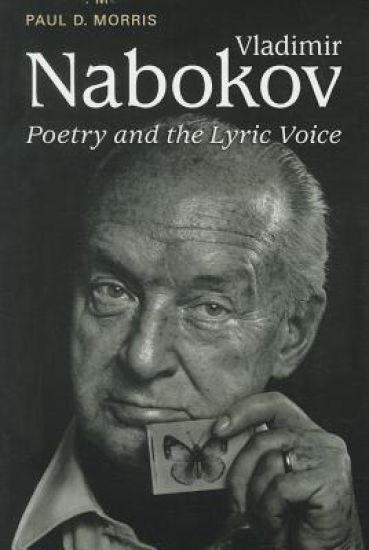
Vladimir Nabokov

Vladimir Nabokov

Paul D. Morris

University of Toronto Press
2011
pokkari
Vladimir Nabokov (1899-1977), the eminent Russian-American writer and intellectual, is best known for his novels, though he was also the author of plays, poems, and short stories. In this important new work, Paul D. Morris offers a comprehensive reading of Nabokov's Russian and English poetry, until now a neglected facet of his oeuvre. Morris' unique and insightful study re-evaluates Nabokov's poetry and demonstrates that poetry was in fact central to his identity as an author and was the source of his distinctive authorial - lyric - voice. After offering a critical overview of the multi-staged history of the reception of Nabokov's poetry and an extensive analysis of his poetic writing, Morris argues that Nabokov's poetry has largely been misinterpreted and its place in his oeuvre misunderstood. Through a detailed examination of the form and content of Nabokov's writings, Morris demonstrates that Nabokov's innovations in the realms of drama, the short story, and the novel were profoundly shaped by his lyric sensibility.
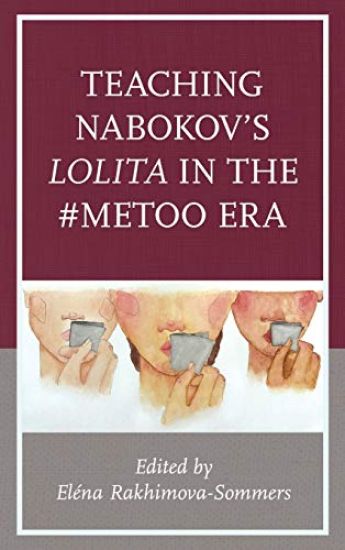
Teaching Nabokov's Lolita in the #MeToo Era
Teaching Nabokov’s Lolita in the #MeToo Era and Online seeks to critique Nabokov’s Lolita from the standpoint of its teachability to undergraduate and graduate students in the twenty first century. The #MeToo Movement has spurred a reassessment of what constitutes appropriate professional and sexual relations, a reassessment that has challenged how we teach our students, especially when we are studying controversial works. The time has come to ask - in the #MeToo Era and beyond, how do we approach Nabokov’s inflammatory masterpiece, Lolita? How do we read a novel that describes an unpardonable crime? How do we balance analysis of Lolita’s brilliant language and aesthetic complexity with due attention to its troubling content? This volume offers practical and specific answers to this question and includes suggestions for teaching the novel in conventional and online modalities. Essays by distinguished Nabokov scholars explore the multilayered nature of Nabokov’s Lolita by sharing innovative assignments and creative-writing exercises, teaching approaches to especially challenging parts of the text, methodologies of teaching the novel through different mediums from film to theatre, and new critical analyses and interpretations.
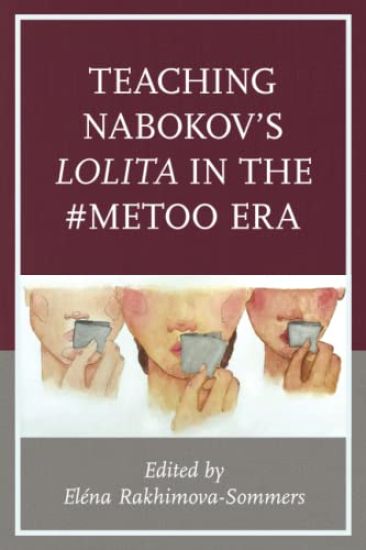
Teaching Nabokov's Lolita in the #MeToo Era
Teaching Nabokov’s Lolita in the #MeToo Era seeks to critique the novel from the standpoint of its teachability to undergraduate and graduate students in the twenty-first century. The time has come to ask: in the #MeToo era and beyond, how do we approach Nabokov’s inflammatory masterpiece, Lolita? How do we read a novel that describes an unpardonable crime? How do we balance analysis of Lolita’s brilliant language and aesthetic complexity with due attention to its troubling content? This student-focused volume offers practical and specific answers to these questions and includes suggestions for teaching the novel in conventional and online modalities. Distinguished Nabokov scholars explore the multilayered nature of Lolita by sharing innovative assignments, creative-writing exercises, methodologies of teaching the novel through film and theatre, and new critical analyses and interpretations.