Kirjojen hintavertailu. Mukana 11 717 486 kirjaa ja 12 kauppaa.

Kirjahaku

Etsi kirjoja tekijän nimen, kirjan nimen tai ISBN:n perusteella.

1000 tulosta hakusanalla Nathaniel Hawthorne

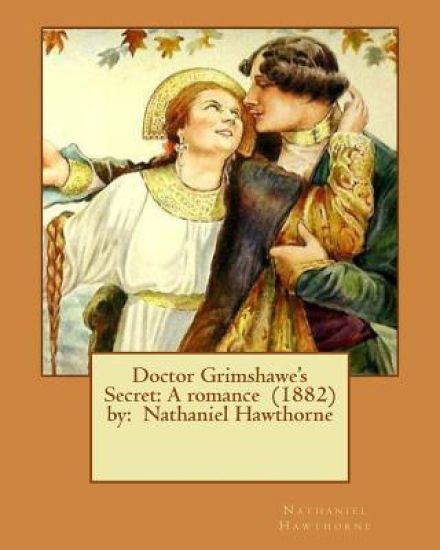
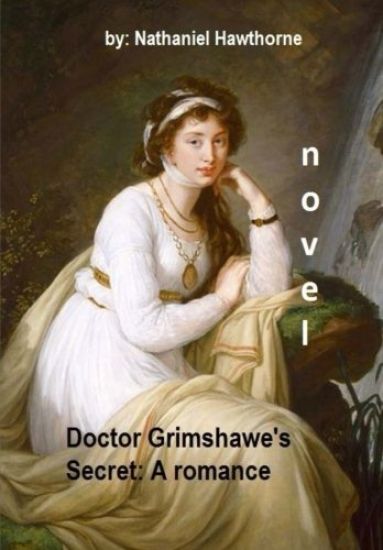
Doctor Grimshawe's Secret: A romance .NOVEL By: Nathaniel Hawthorne

Doctor Grimshawe's Secret: A romance .NOVEL By: Nathaniel Hawthorne

Nathaniel Hawthorne

Createspace Independent Publishing Platform
2016
nidottu
Nathaniel Hawthorne born Nathaniel Hathorne; July 4, 1804 - May 19, 1864) was an American novelist, Dark Romantic, and short story writer. He was born in 1804 in Salem, Massachusetts, to Nathaniel Hathorne and the former Elizabeth Clarke Manning. His ancestors include John Hathorne, the only judge involved in the Salem witch trials who never repented of his actions. Nathaniel later added a "w" to make his name "Hawthorne" in order to hide this relation. He entered Bowdoin College in 1821, was elected to Phi Beta Kappa in 1824, 1] and graduated in 1825. Hawthorne published his first work, a novel titled Fanshawe, in 1828; he later tried to suppress it, feeling it was not equal to the standard of his later work. 2] He published several short stories in periodicals, which he collected in 1837 as Twice-Told Tales. The next year, he became engaged to Sophia Peabody. He worked at the Boston Custom House and joined Brook Farm, a transcendentalist community, before marrying Peabody in 1842. The couple moved to The Old Manse in Concord, Massachusetts, later moving to Salem, the Berkshires, then to The Wayside in Concord. The Scarlet Letter was published in 1850, followed by a succession of other novels. A political appointment as consul took Hawthorne and family to Europe before their return to Concord in 1860. Hawthorne died on May 19, 1864, and was survived by his wife and their three children.
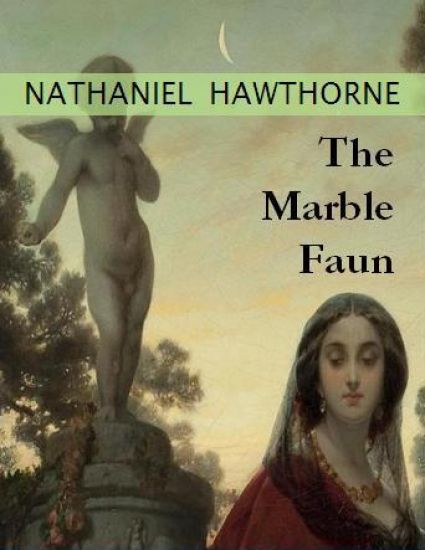
The Marble Faun . By: Nathaniel Hawthorne ( romance, the last by Hawthorne )

The Marble Faun . By: Nathaniel Hawthorne ( romance, the last by Hawthorne )

Nathaniel Hawthorne

Createspace Independent Publishing Platform
2016
nidottu
The Marble Faun: Or, The Romance of Monte Beni, also known by the British title Transformation, was the last of the four major romances by Nathaniel Hawthorne, and was published in 1860. The Marble Faun, written on the eve of the American Civil War, is set in a fantastical Italy. The romance mixes elements of a fable, pastoral, gothic novel, and travel guide.This romance focuses on four main characters: Miriam, Hilda, Kenyon, and Donatello. Miriam is a beautiful painter with an unknown past. Throughout the novel, she is compared to many other women including Eve, Beatrice Cenci, Judith, and Cleopatra. Miriam is pursued by a mysterious, threatening man who is her "evil genius" through life. Hilda is an innocent copyist. She is compared to the Virgin Mary and the white dove. Her simple, unbendable moral principles can make her severe in spite of her tender heart. Miriam and Hilda are often contrasted.
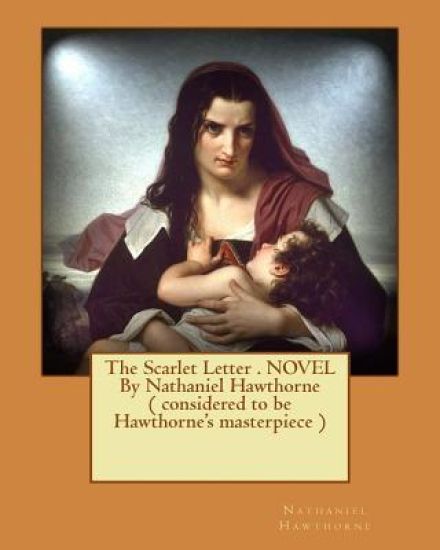
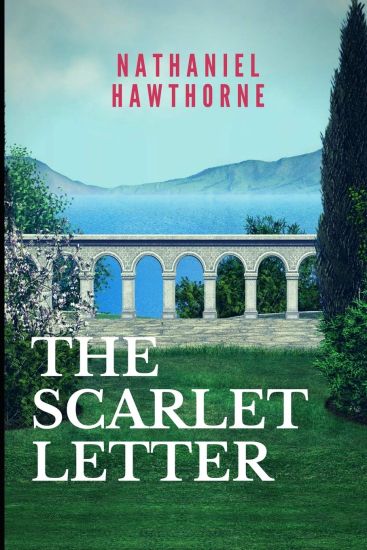
The Scarlet Letter . Novel by Nathaniel Hawthorne ( Considered to Be Hawthorne's Masterpiece )

The Scarlet Letter . Novel by Nathaniel Hawthorne ( Considered to Be Hawthorne's Masterpiece )

Nathaniel Hawthorne

Createspace Independent Publishing Platform
2016
nidottu
The Scarlet Letter: A Romance is an 1850 work of fiction in a historical setting, written by American author Nathaniel Hawthorne. The book is considered to be his "masterwork". 1] Set in 17th-century Puritan Boston, Massachusetts, during the years 1642 to 1649, it tells the story of Hester Prynne, who conceives a daughter through an affair and struggles to create a new life of repentance and dignity. Throughout the book, Hawthorne explores themes of legalism, sin, and guilt.In June 1642, in the Puritan town of Boston, a crowd gathers to witness the punishment of Hester Prynne, a young woman found guilty of adultery. She is required to wear a scarlet "A" ("A" standing for adulteress) on her dress to shame her. She must stand on the scaffold for three hours, to be exposed to public humiliation. As Hester approaches the scaffold, many of the women in the crowd are angered by her beauty and quiet dignity. When demanded and cajoled to name the father of her child, Hester refuses. As Hester looks out over the crowd, she notices a small, misshapen man and recognizes him as her long-lost husband, who has been presumed lost at sea. When the husband sees Hester's shame, he asks a man in the crowd about her and is told the story of his wife's adultery. He angrily exclaims that the child's father, the partner in the adulterous act, should also be punished and vows to find the man. He chooses a new name - Roger Chillingworth - to aid him in his plan.
The Scarlet Letter (1850) ( Hawthorne's Masterpiece ) Novel by: Nathaniel Hawthorne

The Scarlet Letter (1850) ( Hawthorne's Masterpiece ) Novel by: Nathaniel Hawthorne

Nathaniel Hawthorne

Createspace Independent Publishing Platform
2017
nidottu
The Scarlet Letter: A Romance is an 1850 work of fiction in a historical setting, written by American author Nathaniel Hawthorne. The book is considered to be his "masterwork". Set in 17th-century Puritan Boston, Massachusetts, during the years 1642 to 1649, it tells the story of Hester Prynne, who conceives a daughter through an affair and struggles to create a new life of repentance and dignity. Throughout the book, Hawthorne explores themes of legalism, sin, and guilt.
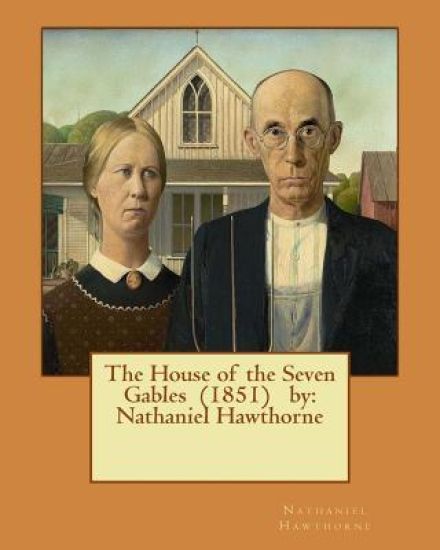
The House of the Seven Gables Nathaniel Hawthorne

The House of the Seven Gables Nathaniel Hawthorne

Nathaniel Hawthorne

Createspace Independent Publishing Platform
2017
nidottu
In a sleepy little New England village stands a dark, weather-beaten, many-gabled house. This brooding mansion is haunted by a centuries-old curse that casts the shadow of ancestral sin upon the last four members of the distinctive Pyncheon family. Mysterious deaths threaten the living. Musty documents nestle behind hidden panels carrying the secret of the family's salvation-or its downfall. Hawthorne called The House of the Seven Gables "a Romance," and freely bestowed upon it many fascinating gothic touches. A brilliant intertwining of the popular, the symbolic, and the historical, the novel is a powerful exploration of personal and national guilt, a work that Henry James declared "the closest approach we are likely to have to the Great American Novel."
Fire Worship Nathaniel Hawthorne

Fire Worship Nathaniel Hawthorne

Nathaniel Hawthorne

Createspace Independent Publishing Platform
2017
nidottu
It is a great revolution in social and domestic life, and no less so in the life of a secluded student, this almost universal exchange of the open fireplace for the cheerless and ungenial stove. On such a morning as now lowers around our old gray parsonage...
Nathaniel Hawthorne

Nathaniel Hawthorne

Salem Press Inc
2009
sidottu
This title offers in-depth critical discussions of his life and works. To this day Nathaniel Hawthorne remains one of the most studied authors in the English language. His literary output included tales, novels, and essays, and his influence was felt by writers the world over. As stated in Jack Lynch's introduction to this volume, Hawthorne's works 'can be found in virtually every library in the English-speaking world. No responsible survey course on American literature is complete without ""The Scarlet Letter""; no reputable collection of American short stories can omit ""The Birth-mark"" or ""Rappaccini's Daughter"". He stands at the center of nineteenth-century American literature.' Indeed Hawthorne is considered to be among the forefathers of American literature. Edited by literary scholar Jack Lynch of Rutgers University, Newark, this volume in the ""Critical Insights"" series brings together some of the high points of the last half-decade of Hawthorne criticism. The essays contained within present a variety of critical viewpoints and an array of critical approaches. Some consider the cultural and historical contexts of Hawthorne's works, while others examine the state of Hawthorne studies through changing critical fashions. Some of the essays look to biographical speculation, some consider Hawthorne's psychology, and yet others look closely to those issues that concerned Hawthorne most. Hawthorne's major work, ""The Scarlet Letter"" receives critical attention with essays by Hugo McPherson, John G. Bayer, and Evans Lansing Smith, while some of Hawthorne's stories are examined in essays by Kathryn B. McKee and Bill Christophersen. His essays receive careful consideration by Thomas R. Moore, while well-known scholars such as Leo B. Levy, Nina Baym, Claudia D. Johnson, and Melvin W. Askew probe broad subjects such as 19th century perfectionism, the fall of man, and notions of the sublime. While necessarily a sampling of the critical approaches to Hawthorne's work, the 18 essays contained in this volume provide an excellent starting point for those readers interested in studying this 19th century American literary master. Each essay is 5,000 words in length, and all essays conclude with a list of ""Works Cited,"" along with endnotes.
The Scarlet Letter: New Edition - Scarlet Letter by Nathaniel Hawthorne
The Scarlet Letter by Nathaniel Hawthorne is a real classic.You should grab it and read it to experience it yourself.Here's a simple plot to The Scarlet Letter: In Puritan Boston, Massachusetts, a crowd gathers to witness the punishment of Hester Prynne, a young woman who has given birth to a baby of unknown parentage. She is required to wear a scarlet "A" on her dress when she is in front of the townspeople to shame her. The letter "A" stands for adulteress, although this is never said explicitly in the novel. Her sentence required her to stand on the scaffold for three hours, exposed to public humiliation, and to wear the scarlet "A" for the rest of her life. As Hester approaches the scaffold, many of the women in the crowd are angered by her beauty and quiet dignity. When demanded and cajoled to name the father of her child, Hester refuses.As Hester looks out over the crowd, she notices a small, misshapen man and recognizes him as her long-lost husband, who has been presumed lost at sea. When the husband sees Hester's shame, he asks a man in the crowd about her and is told the story of his wife's adultery. He angrily exclaims that the child's father, the partner in the adulterous act, should also be punished and vows to find the man. He chooses a new name, Roger Chillingworth, to aid him in his plan.The Reverend John Wilson and the minister of Hester's church, Arthur Dimmesdale, question the woman, but she refuses to name her lover. After she returns to her prison cell, the jailer brings in Roger Chillingworth, a physician, to calm Hester and her child with his roots and herbs. He and Hester have an open conversation regarding their marriage and the fact that they were both in the wrong. Her lover, however, is another matter and he demands to know who it is; Hester refuses to divulge such information. He accepts this, stating that he will find out anyway, and forces her to hide that he is her husband. If she ever reveals him, he warns her, he will destroy the child's father. Hester agrees to Chillingworth's terms although she suspects she will regret it.Following her release from prison, Hester settles in a cottage at the edge of town and earns a meager living with her needlework, which is of extraordinary quality. She lives a quiet, somber life with her daughter, Pearl, and performs acts of charity for the poor. She is troubled by her daughter's unusual fascination with Hester's scarlet "A". The shunning of Hester also extends to Pearl, who has no playmates or friends except her mother. As she grows older, Pearl becomes capricious and unruly. Her conduct starts rumors, and, not surprisingly, the church members suggest Pearl be taken away from Hester.Hester, hearing rumors that she may lose Pearl, goes to speak to Governor Bellingham. With him are ministers Wilson and Dimmesdale. Hester appeals to Dimmesdale in desperation, and the minister persuades the governor to let Pearl remain in Hester's care.Because Dimmesdale's health has begun to fail, the townspeople are happy to have Chillingworth, a newly arrived physician, take up lodgings with their beloved minister. Being in such close contact with Dimmesdale, Chillingworth begins to suspect that the minister's illness is the result of some unconfessed guilt. He applies psychological pressure to the minister because he suspects Dimmesdale is Pearl's father. One evening, pulling the sleeping Dimmesdale's vestment aside, Chillingworth sees a symbol that represents his shame on the minister's pale chest.Tormented by his guilty conscience, Dimmesdale goes to the square where Hester was punished years earlier. Climbing the scaffold, he admits his guilt but cannot find the courage to do so publicly..........The Scarlet Letter by Nathaniel Hawthorne
The Scarlet Letter: New Premium Classic Edition - The Scarlet Letter By Nathaniel Hawthorne
"The Scarlet Letter by Nathaniel Hawthorne is a real classic.You should grab it and read it to experience it yourself.Like all of Hawthorne's novels, "The Scarlet Letter" has but a slender plot and but few characters with an influence on the development of the story. Its great dramatic force depends entirely on the mental states of the actors and their relations to one another, -relations of conscience, - relations between wronged and wrongers. Its great burden is the weight of unacknowledged sin as seen in the remorse and cowardice and suffering of the Rev. Arthur Dimmesdale. Contrasted with his concealed agony is the constant confession, conveyed by the letter, which is forced upon Hester, and has a double effect, - a healthful one, working beneficently, and making her helpful and benevolent, tolerant and thoughtful; and an unhealthful one, which by the great emphasis placed on her transgression, the keeping her forever under its ban and isolating her from her fellows, prepares her to break away from the long repression and lapse again into sin when she plans her flight. Roger Chillingworth is an embodiment of subtle and refined revenge. The most striking situation is perhaps "The Minister's Vigil," in chapter xii. The book, though corresponding in its tone and burden to some of the shorter stories, had a more startling and dramatic character, and a strangeness, which at once took hold of a larger public than any of those had attracted. Though imperfectly comprehended, and even misunderstood in some quarters, it was seen to have a new and unique quality; and Hawthorne's reputation became national.......The Scarlet Letter by Nathaniel Hawthorne
Mosses from an Old Manse and Other Stories: Nathaniel Hawthorne
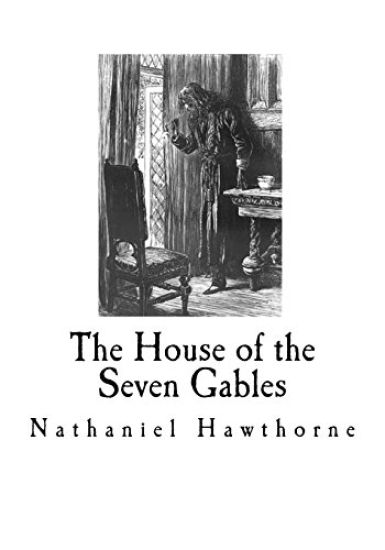
Mosses from an Old Manse and Other Stories: Nathaniel Hawthorne
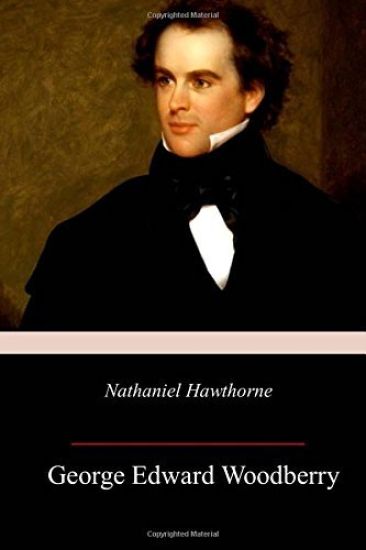
Nathaniel Hawthorne

Createspace Independent Publishing Platform
2018
nidottu
Mosses from an Old Manse and Other Stories by Nathaniel Hawthorne. Mosses from an Old Manse is a short story collection by Nathaniel Hawthorne, first published in 1846. After the book's first publication, Hawthorne sent copies to critics including Margaret Fuller, Rufus Wilmot Griswold, Edgar Allan Poe, and Henry Theodore Tuckerman. Poe responded with a lengthy review in which he praised Hawthorne's writing but faulted him for associating with New England journals, Ralph Waldo Emerson, and the Transcendentalists. He wrote, "Let him mend his pen, get a bottle of visible ink, come out from the Old Manse, cut Mr. Alcott, hang (if possible) the editor of 'The Dial, ' and throw out of the window to the pigs all his odd numbers of the North American Review. A young Walt Whitman wrote that Hawthorne was underpaid, and it was unfair that his book competed with imported European books. He asked, "Shall real American genius shiver with neglect while the public runs after this foreign trash?" Generally, most contemporary critics praised the collection and considered it better than Hawthorne's earlier collection, Twice-Told Tales.
The House of the Seven Gables: Nathaniel Hawthorne

The House of the Seven Gables: Nathaniel Hawthorne

Nathaniel Hawthorne

Createspace Independent Publishing Platform
2018
nidottu
The House of the Seven Gables by Nathaniel Hawthorne. The House of the Seven Gables is a Gothic novel written beginning in mid-1850 by American author Nathaniel Hawthorne and published in April 1851 by Ticknor and Fields of Boston. The novel follows a New England family and their ancestral home. In the book, Hawthorne explores themes of guilt, retribution, and atonement and colors the tale with suggestions of the supernatural and witchcraft. The setting for the book was inspired by a gabled house in Salem belonging to Hawthorne's cousin Susanna Ingersoll and by ancestors of Hawthorne who had played a part in the Salem Witch Trials of 1692. IN September of the year during the February of which Hawthorne had completed "The Scarlet Letter," he began "The House of the Seven Gables." Meanwhile, he had removed from Salem to Lenox, in Berkshire County, Massachusetts, where he occupied with his family a small red wooden house, still standing at the date of this edition, near the Stockbridge Bowl. "I sha'n't have the new story ready by November," he explained to his publisher, on the 1st of October, "for I am never good for anything in the literary way till after the first autumnal frost, which has somewhat such an effect on my imagination that it does on the foliage here about me-multiplying and brightening its hues." But by vigorous application he was able to complete the new work about the middle of the January following. Since research has disclosed the manner in which the romance is interwoven with incidents from the history of the Hawthorne family, "The House of the Seven Gables" has acquired an interest apart from that by which it first appealed to the public. John Hathorne (as the name was then spelled), the great-grandfather of Nathaniel Hawthorne, was a magistrate at Salem in the latter part of the seventeenth century, and officiated at the famous trials for witchcraft held there. It is of record that he used peculiar severity towards a certain woman who was among the accused; and the husband of this woman prophesied that God would take revenge upon his wife's persecutors.