Kirjojen hintavertailu. Mukana 11 627 463 kirjaa ja 12 kauppaa.

Kirjahaku

Etsi kirjoja tekijän nimen, kirjan nimen tai ISBN:n perusteella.

460 tulosta hakusanalla Nyssa Kathryn

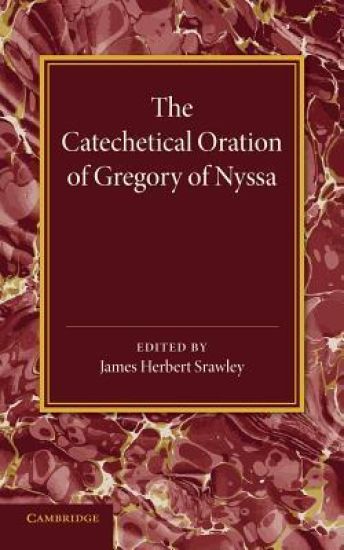
The Catechetical Oration of Gregory of Nyssa
Originally published in 1903, this book presents the complete Greek text of Gregory of Nyssa's Oratio Catechetica. The text is consummately edited with detailed textual notes and a long critical introduction. This book will be of value to anyone with an interest in Gregory of Nyssa, theology and the history of Christianity.
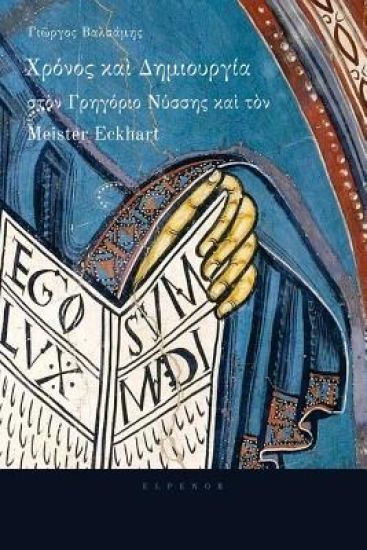
Time and Creation in Gregory of Nyssa and Meister Eckhart

Time and Creation in Gregory of Nyssa and Meister Eckhart

George Valsamis

Createspace Independent Publishing Platform
2017
nidottu
To what extent creation implies the Creator's nearness to His works? What kind of 'paradise' man abandoned with the 'transgression'? Which is the 'prime matter' of beings? What is the meaning for man of the spatiotemporal structure and change as opposed to the simplicity of the divine nature? What does the origin of beings 'out of nothing' mean? How is the divine will related to space and time? What is the meaning of the end of times? What does creation of man 'according to the image' mean? How is the soul related to Creation? How does Monotheism agree with trinitarianism and what is the real value of trinitarianism for the existence of God and man? Raising questions related with these issues, the current study of the cosmology of Gregory of Nyssa and Meister Eckhart highlights also the importance of theoretical similarities and differences between the two great Christian Mystics. The book is offered at cost price. Official page: elpenor.org/books/eckhart-nyssa/default.asp
Ethik und christliche Identität bei Gregor von Nyssa

Ethik und christliche Identität bei Gregor von Nyssa

Sandra Leuenberger-Wenger

Mohr Siebeck
2008
nidottu
Sandra Leuenberger-Wenger untersucht die ethischen Reflexionen und Ratschläge Gregors von Nyssa, ihre unterschiedlichen Formen und ihre Bedeutung für die Vergewisserung christlicher Identität. Dabei zeigt sie, dass sich die Frage nach dem geglückten Leben in einer spezifisch christlichen Lebensweise mit wechselndem Adressatenkreis unterschiedlich stellte. Je nachdem, ob Gregor sich in Predigten an seine Gemeinde wandte oder Schriften für ein literarisches Publikum verfasste, ging er von unterschiedlichen Voraussetzungen und Interessen aus, welche sich in seiner Argumentationsweise niederschlagen. Die Mehrheit der Gemeinde musste zuerst von der Bedeutung einer guten christlichen Lebensweise überzeugt und dazu motiviert werden. Dagegen brachte das literarische Publikum Gregors sowohl Bildung als auch Interesse an einem möglichst vollkommenen christlichen Leben mit, zudem vielfach auch Kenntnisse von philosophischen Konzepten des guten Lebens, gegenüber denen das christliche überzeugen musste. Die Autorin stellt dar, wie Gregor gegenüber seinen unterschiedlichen Adressatenkreisen die Bedeutung eines guten christlichen Lebens aufzeigte und sich bemühte, seinen Adressaten ein Bewusstsein für christlich motiviertes Handeln zu vermitteln: Die Adressaten sollten sich sowohl durch ihr Handeln als auch durch die Begründung ihres Handelns vor sich und der Umwelt als Christen ausweisen. Auf der Grundlage seines Tugendbegriffs und seiner christlichen Anthropologie zeigte Gregor in unterschiedlichen Kontexten und anhand verschiedener Problemstellungen sozial- wie auch individualethischer Art auf, worin ein geglücktes christliches Leben besteht.
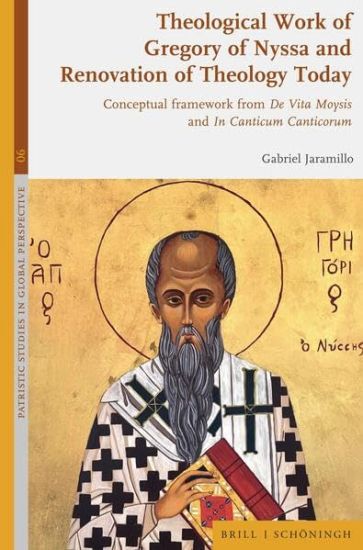
Theological Work of Gregory of Nyssa and Renovation of Theology Today: Conceptual Framework from de Vita Moysis and in Canticum Canticorum
Theology as an exercise in continual renovation must be renewed permanently from its sources and in dialogue with the signs of the times. In this regard, Balthasar said that the principal problem of contemporary theology was the separation of theology and spirituality. Two aspects that was united in the thinking of the Fathers of the church. This work shows this problem in contemporary theology, especially in Latin American context and builds a bridge with the Christian eastern tradition present in Gregory of Nyssa. From an analysis of the Homilies on the Song of Songs and the Life of Moses, the research seeks to prove the possibility of understanding the theological work of Gregory in the conceptual framework of the categories μυστήριον, μυσταγωγία, μυστικά, γν φος, ἀκολουθία and ἐπέκτασι&#962 - categories that could allow a synthesis between theology and spirituality and could be a contribution to the renovation of theology today.
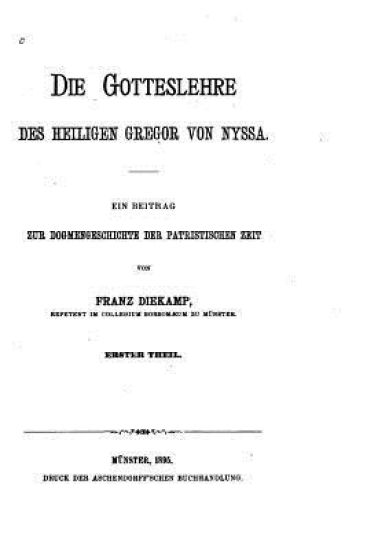
Die Gotteslehre des heiligen Gregor von Nyssa
Die Gotteslehre des heiligen Gregor von Nyssa - ein Beitrag zur Dogmengeschichte der patristischen Zeit - erster Teil ist ein unver nderter, hochwertiger Nachdruck der Originalausgabe aus dem Jahr 1896. Hansebooks ist Herausgeber von Literatur zu unterschiedlichen Themengebieten wie Forschung und Wissenschaft, Reisen und Expeditionen, Kochen und Ern hrung, Medizin und weiteren Genres. Der Schwerpunkt des Verlages liegt auf dem Erhalt historischer Literatur. Viele Werke historischer Schriftsteller und Wissenschaftler sind heute nur noch als Antiquit ten erh ltlich. Hansebooks verlegt diese B cher neu und tr gt damit zum Erhalt selten gewordener Literatur und historischem Wissen auch f r die Zukunft bei.
Human Nature in Gregory of Nyssa: Philosophical Background and Theological Significance
This volume explores Gregory Of Nyssa's concept of human nature. It argues that the frequent use Gregory makes of phusis-terminology is not only a terminological predilection, but rather the key to the philosophical and theological foundations of his thought.Starting from an overview of the theological landscape in the early 360's the study first demonstrates the meaning and relevance of universal human nature as an analogy for the Trinity in Cappadocian theology. The second part explores Gregory's use of this same notion in his teaching on the divine economy. It is argued that Gregory takes this philosophical theory into the service of his own theology.Ultimately the book provides an example for the mutual interaction of philosophy and Christian theology in the fourth century.
Human Nature in Gregory of Nyssa

Human Nature in Gregory of Nyssa

Johannes Zachhuber

Brill
1999
sidottu
This volume explores Gregory Of Nyssa's concept of human nature. It argues that the frequent use Gregory makes of phusis-terminology is not only a terminological predilection, but rather the key to the philosophical and theological foundations of his thought. Starting from an overview of the theological landscape in the early 360's the study first demonstrates the meaning and relevance of universal human nature as an analogy for the Trinity in Cappadocian theology. The second part explores Gregory's use of this same notion in his teaching on the divine economy. It is argued that Gregory takes this philosophical theory into the service of his own theology. Ultimately the book provides an example for the mutual interaction of philosophy and Christian theology in the fourth century.
Arrows: Erica Schreiner, Nyssa Frank
The 11 short stories are written by writer, filmmaker, video & performance artist, Erica Schreiner (http://www.ericaschreiner.com/). Schreiner's collection of narrative performance poems encompass themes including the mystical world, Source, the Universe, quest for meaning, love, death, severing and growth. Each story has an interpretive, complex and original drawing created by artist, performer, and owner of The Living Gallery, Nyssa Frank (www.nyssafrank.com). Arrows, literally and symbolically, is a theme shared throughout the writing and depicted in the illustrations. Thick with metaphor, at times, characters in the stories, remove their arrows and shoot them into the sky, or lay them out in a row in representation of love and vulnerability. One story in particular can be accurately summed up by its title, "I am a Woman with Horse Legs, Awkwardly Carrying my Bow and Arrow."
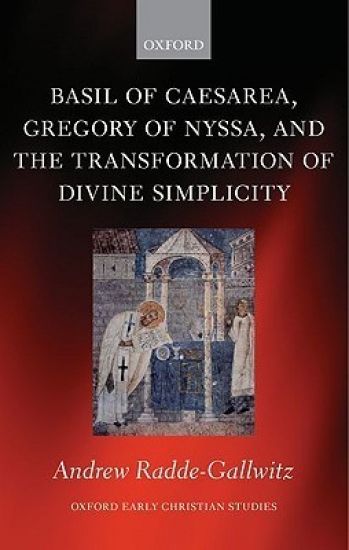
Basil of Caesarea, Gregory of Nyssa, and the Transformation of Divine Simplicity
Divine simplicity is the idea that, as the ultimate principle of the universe, God must be a non-composite unity not made up of parts or diverse attributes. The idea was appropriated by early Christian theologians from non-Christian philosophy and played a pivotal role in the development of Christian thought. Andrew Radde-Gallwitz charts the progress of the idea of divine simplicity from the second through the fourth centuries, with particular attention to Basil of Caesarea and Gregory of Nyssa, two of the most subtle writers on this topic, both instrumental in the construction of the Trinitarian doctrine proclaimed as orthodox at the Council of Constantinople in 381. He demonstrates that divine simplicity was not a philosophical appendage awkwardly attached to the early Christian doctrine of God, but a notion that enabled Christians to articulate the consistency of God as portrayed in their scriptures. Basil and Gregory offered a unique construal of simplicity in responding to their principal doctrinal opponent, Eunomius of Cyzicus. Challenging accepted interpretations of the Cappadocian brothers and the standard account of divine simplicity in recent philosophical literature, Radde-Gallwitz argues that Basil and Gregory's achievement in transforming ideas inherited from the non-Christian philosophy of their time has an ongoing relevance for Christian theological epistemology today.
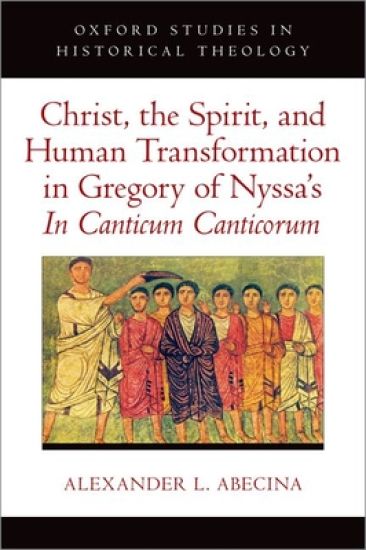
Christ, the Spirit, and Human Transformation in Gregory of Nyssa's In Canticum Canticorum
This book provides a comprehensive literary and theological analysis of Gregory of Nyssa's theology of union with God, culminating in a fresh reading of his final written work, In Canticum Canticorum (c.391), a collection of fifteen allegorical homilies on the Song of Songs. Part I gives the essential background for the study of In Canticum Canticorum by analysing several of Gregory's earlier works (c.370--385), tracing the main contours of his account of the human transformation and union with God. Author Alexander Abecina explores topics such as Gregory's theology of virginity and spiritual marriage, his theology of baptism, his trinitarian theology, and his Spirit-based Christology. In Part II Abecina builds on his key findings in Part I to structure a detailed analysis of In Canticum Canticorum. Engaging with the latest contemporary scholarship on Gregory of Nyssa, the author shows how Gregory's allegorical interpretation of the Song of Songs represents a corresponding account of human transformation and union with God from the perspective of subjective experience of this reality. Rather than marking a new development in Gregory's mature thought, Abecina demonstrates that the subjective experience gained from Gregory's reading of the Song of Songs recapitulates the key elements of his objective account and therefore renders coherent his earlier soteriological doctrine.