Die Historische Kommission zu Berlin betreibt die Erforschung der Landesgeschichte und der Historischen Landeskunde Berlin-Brandenburgs bzw. Brandenburg-Preußens in Form von wissenschaftlichen Untersuchungen, Vorträgen, Tagungen und Veröffentlichungen sowie durch Serviceleistungen. Dabei kooperiert die Kommission auch mit anderen Institutionen und begleitet wissenschaftliche und praktische Vorhaben von allgemeinem öffentlichen Interesse. In der Schriftenreihe werden die Ergebnisse der einzelnen wissenschaftlichen Projekte der Kommission veröffentlicht.Die bis 2010 als „Einzelveröffentlichungen der Historischen Kommission zu Berlin“ erschienenen Bände, die ursprünglich im K.G. Saur Verlag erschienen sind, finden sich hier.
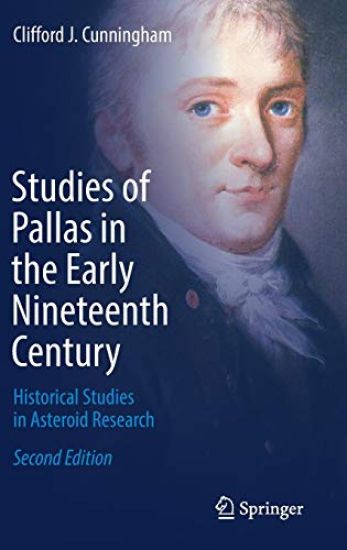
Based on extensive primary sources, many never previously translated into English, this is the definitive account of the discovery of Pallas as it went from being classified as a new planet to reclassification as the second of a previously unknown group of celestial objects. Cunningham, a dedicated scholar of asteroids, includes a large set of newly translated correspondence as well as the many scientific papers about Pallas in addition to sections of Schroeter's 1805 book on the subject.It was Olbers who discovered Pallas, in 1802, the second of many asteroids that would be officially identified as such. From the Gold Medal offered by the Paris Academy to solve the mystery of Pallas' gravitational perturbations to Gauss' Pallas Anagram, the asteroid remained a lingering mystery to leading thinkers of the time. Representing an intersection of science, mathematics, and philosophy, the puzzle of Pallas occupied the thoughts of an amazing panorama of intellectual giants in Europe in the early 1800s.
Based on extensive primary sources, many never previously translated into English, this is the definitive account of the discovery of Pallas as it went from being classified as a new planet to reclassification as the second of a previously unknown group of celestial objects. Cunningham, a dedicated scholar of asteroids, includes a large set of newly translated correspondence as well as the many scientific papers about Pallas in addition to sections of Schroeter's 1805 book on the subject.It was Olbers who discovered Pallas, in 1802, the second of many asteroids that would be officially identified as such. From the Gold Medal offered by the Paris Academy to solve the mystery of Pallas' gravitational perturbations to Gauss' Pallas Anagram, the asteroid remained a lingering mystery to leading thinkers of the time. Representing an intersection of science, mathematics, and philosophy, the puzzle of Pallas occupied the thoughts of an amazing panorama of intellectual giants in Europe in the early 1800s.