Kirjahaku
Etsi kirjoja tekijän nimen, kirjan nimen tai ISBN:n perusteella.
1000 tulosta hakusanalla Pascal Paul Piazza

Pascal's Leben und der Geist seiner Schriften zum Theil nach neu aufgefundenen Handschriften mit Untersuchungen Ã1/4ber die Moral der Jesuiten
Hermann Reuchlin
Hutson Street Press
2025
sidottu

Pascal's Leben und der Geist seiner Schriften zum Theil nach neu aufgefundenen Handschriften mit Untersuchungen Ã1/4ber die Moral der Jesuiten
Hermann Reuchlin
Hutson Street Press
2025
pokkari

Pascal Iron Works
Hutson Street Press
2025
sidottu

Pascal Iron Works
Hutson Street Press
2025
pokkari
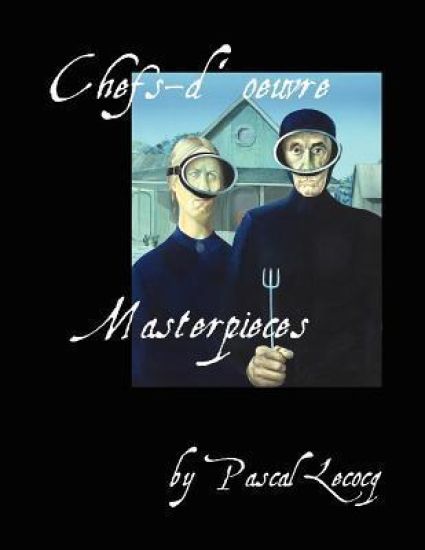
Parodies and Pastiches of the Chefs-d'oeuvre / Masterpieces of the Painting by Pascal Lecocq. References and reverence to the Old Masters, mostly revisited in the blue, underwater, humorous and surreal universe of Pascal, the Painter of Blue.
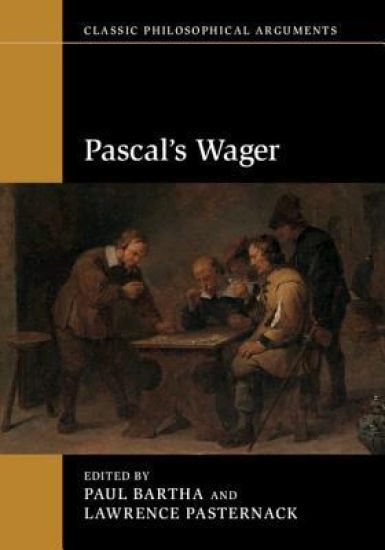
Pascal's Wager
Cambridge University Press
2018
sidottu
In his famous Wager, Blaise Pascal (1623–62) offers the reader an argument that it is rational to strive to believe in God. Philosophical debates about this classic argument have continued until our own times. This volume provides a comprehensive examination of Pascal's Wager, including its theological framework, its place in the history of philosophy, and its importance to contemporary decision theory. The volume starts with a valuable primer on infinity and decision theory for students and non-specialists. A sequence of chapters then examines topics including the Wager's underlying theology, its influence on later philosophical figures, and contemporary analyses of the Wager including Alan Hájek's challenge to its validity, the many gods objection, and the ethics of belief. The final five chapters explore various ways in which the Wager has inspired contemporary decision theory, including questions related to infinite utility, imprecise probabilities, and infinitesimals.
Originally published in 1942, this book constitutes the companion volume to The Heart of Pascal (1945); both volumes were formed using selections from Pascal's Pensées. The text gathers together a series of selections, presented in French, which illustrate Pascal's Christian faith and thoughts on the relationship between man and God. An appendix and preface by the editor are also provided. This is a highly informative book that will be of value to anyone with an interest in Pascal and his late thought.

Pascal, B: Moral Der Jesuiten Dargestellt Von Einem Frommen
Blaise Pascal
KESSINGER PUBLISHING, LLC
2009
nidottu


Pascal, B: Betrachtungen Uber Religion Und Christenthum (183
Blaise Pascal
KESSINGER PUBLISHING, LLC
2010
nidottu




Pascal D'Angelo: Son of Italy is a memoir written by Pascal D'Angelo, chronicling his life growing up in Italy and his eventual immigration to the United States. The book begins with D'Angelo's childhood in Calabria, Italy, where he was raised by his mother and grandmother after his father's untimely death. Despite facing poverty and hardship, D'Angelo found solace in his love for soccer and his close-knit community.As he grew older, D'Angelo became increasingly disillusioned with the political and economic climate in Italy, and eventually decided to immigrate to the United States in search of a better life. The memoir details his struggles to adjust to life in a new country, including learning English and navigating the cultural differences.Throughout the book, D'Angelo reflects on his experiences with humor and humility, offering a unique perspective on the immigrant experience. He also discusses the importance of family, community, and hard work in achieving success and happiness.Pascal D'Angelo: Son of Italy is a poignant and inspiring memoir that offers a glimpse into the life of an Italian immigrant and the challenges and triumphs he faced in pursuit of the American Dream.Extremely Rare Reprint Of The First Edition With The Carl Van Doren Introduction. An Account Of How The Author Left His Work With A Pick And Shovel To Become A Poet.This scarce antiquarian book is a facsimile reprint of the old original and may contain some imperfections such as library marks and notations. Because we believe this work is culturally important, we have made it available as part of our commitment for protecting, preserving, and promoting the world's literature in affordable, high quality, modern editions, that are true to their original work.