Kirjahaku
Etsi kirjoja tekijän nimen, kirjan nimen tai ISBN:n perusteella.
1000 tulosta hakusanalla Patrick M. Georges

What if your life didn't go on as it's programmed to, restarting at specific times in your past, repeatedly? What if Ken Grimwood's unparalleled novel, Replay, turned out to be reality? What would you do after your initial shock subsided somewhat? What would you do after you had done all the obvious things you could do? Louis finds himself in such a predicament, leaping back into his past, struggling to comprehend what's happening to him. He seeks some passing solace in the company of individuals who had marked his life-from Elvis Presley to Steve Irwin-sadly, all of whom had died too early but whom he attempts to save one way or another. Dedicated to Ken Grimwood and ultimately to longtime travel, this novel tries to intimate and cope with many of its inherent problems, especially death and immortality, two extremes that seem to lack a common ground.
With time to no end at his disposal-over 60 years repeating endlessly-Louis Sasportas, a man forever obsessed by the Shoah, sets out to avenge the six million Jews that were annihilated along with the progeny that could never come to be. What if Ken Grimwood's unparalleled novel, Replay, turned out to be reality? Having found himself in the predicament of leaping back into his past according to a precise timetable, the main character of Unfinished Business continues the leaps he was thrown into in Forty-four Forever, struggling to focus his lives on a single purpose while seeking some solace in the company of individuals who had marked our lives, including Elvis Presley, Charlie Chaplin, John Lennon, Philip K. Dick, Carl Sagan and Douglas Adams.

The Five Dysfunctions of a Team: Poster, 2nd Edition
Patrick M. Lencioni
John Wiley Sons Inc
2012
nidottu
POSTERKensuke Okabayashi (Jersey City, NJ) is a working illustrator, a graduate of the School of Visual Arts, and an instructor at the Educational Alliance Art School in New York City.

Based on the best-selling leadership fable, The Five Dysfunctions of a Team, the new edition of this easy-to-use workbook provides participants with an opportunity to explore the pitfalls that are side-tracking their team. Beginning with a 38-item team assessment, the workbook guides participants through The Five Dysfunctions of a Team. Targeted toward managers and team-leaders, this workshop is perfect for off-sites and retreats, a series of team development meetings, and as an excellent team development tool.
The Five Dysfunctions of a Team: Team Assessment
Patrick M. Lencioni
John Wiley Sons Inc
2012
nidottu
The Five Dysfunctions of a Team Workshop Team Assessment is a 38-item paper handout that is an excellent team development tool. A key component of the facilitator-lead Five Dysfunctions of a Team Workshop, the Team Assessment delivers what the name implies "a team assessment" rather than an individual self-assessment. It provides participants with an opportunity to begin exploring the pitfalls that are side-tracking their team. Easy to use, the Assessment is ideal for team off-sites, retreats, or a series of team development meetings. It will help teams of all types increase their cohesiveness and productivity.

The Five Dysfunctions of a Team: Facilitator's Guide Set
Patrick M. Lencioni
John Wiley Sons Inc
2012
nidottu
"Based on my work with executive teams over the past ten years, I've come to the conclusion that teamwork remains the single most untapped competitive advantage for any organization. Whether you work in a corporation, a non-profit, or a small, entrepreneurial venture, finding a way to minimize politics and confusion within your organization can lead to extraordinary improvement in morale, productivity, and results."—Patrick Lencioni Based on the best-selling leadership fable The Five Dysfunctions of a Team, the new edition of this easy-to-use workbook provides participants with an opportunity to explore the pitfalls that are side-tracking their team. Beginning with a 38-item team assessment, the workbook guides participants through The Five Dysfunctions of a Team: Absence of TrustFear of ConflictLack of CommitmentAvoidance of AccountabilityInattention to Results In addition to the standard workshop for teams, this expanded second edition featues a workshop targeted toward managers and team-leaders. Perfect for off-sites and retreats or even a series of team development meetings, this workbook is an excellent team development tool. It will allow leaders to begin the process of increasing cohesiveness and productivity.

Based on my work with executive teams over the past ten years, I've come to the conclusion that teamwork remains the single most untapped competitive advantage for any organization. Whether you work in a corporation, a non-profit, or a small, entrepreneurial venture, finding a way to minimize politics and confusion within your organization can lead to extraordinary improvement in morale, productivity, and results. -Patrick Lencioni Based on the best-selling leadership fable The Five Dysfunctions of a Team, the new edition of this easy-to-use workbook provides participants with an opportunity to explore the pitfalls that are side-tracking their team. Beginning with a 38-item team assessment, the workbook guides participants through The Five Dysfunctions of a Team: Absence of TrustFear of ConflictLack of CommitmentAvoidance of AccountabilityInattention to Results Ideal for team off-sites and retreats or even a series of team development meetings, this workbook is an excellent team development tool. It will allow teams of all types to begin the process of increasing cohesiveness and productivity.

The Five Dysfunctions of a Team: Facilitator's Guide Set Deluxe
Patrick M. Lencioni
John Wiley Sons Inc
2012
irtolehti
Based on my work with executive teams over the past ten years, I've come to the conclusion that teamwork remains the single most untapped competitive advantage for any organization. Whether you work in a corporation, a non-profit, or a small, entrepreneurial venture, finding a way to minimize politics and confusion within your organization can lead to extraordinary improvement in morale, productivity, and results."—Patrick Lencioni Based on the best-selling leadership fable The Five Dysfunctions of a Team, the new edition of this easy-to-use workbook provides participants with an opportunity to explore the pitfalls that are side-tracking their team. Beginning with a 38-item team assessment, the workbook guides participants through The Five Dysfunctions of a Team: Absence of TrustFear of ConflictLack of CommitmentAvoidance of AccountabilityInattention to Results In addition to the standard workshop for teams, this expanded second edition featues a workshop targeted toward managers and team-leaders. Perfect for off-sites and retreats or even a series of team development meetings, this workbook is an excellent team development tool. It will allow leaders to begin the process of increasing cohesiveness and productivity. This Deluxe Facilitator's Guide also offers The Five Dysfunctions of a Team DVD Presentation, in addition to the components of the standard Facilitator's Guide: binder (with tabs and loose-leaf pages), hardcover book, paper assessment, sample participant workbooks and poster.

In his classic book, The Five Dysfunctions of a Team, Patrick Lencioni laid out a groundbreaking approach for tackling the perilous group behaviors that destroy teamwork. Here he turns his focus to the individual, revealing the three indispensable virtues of an ideal team player. In The Ideal Team Player, Lencioni tells the story of Jeff Shanley, a leader desperate to save his uncle’s company by restoring its cultural commitment to teamwork. Jeff must crack the code on the virtues that real team players possess, and then build a culture of hiring and development around those virtues. Beyond the fable, Lencioni presents a practical framework and actionable tools for identifying, hiring, and developing ideal team players. Whether you’re a leader trying to create a culture around teamwork, a staffing professional looking to hire real team players, or a team player wanting to improve yourself, this book will prove to be as useful as it is compelling.

The Truth About Employee Engagement was originally published as The Three Signs of a Miserable Job. A bestselling author and business guru tells how to improve job satisfaction and performance. In his sixth fable, bestselling author Patrick Lencioni takes on a topic that almost everyone can relate to: job misery. Millions of workers, even those who have carefully chosen careers based on true passions and interests, dread going to work, suffering each day as they trudge to jobs that make them cynical, weary, and frustrated. It is a simple fact of business life that any job, from investment banker to dishwasher, can become miserable. Through the story of a CEO turned pizzeria manager, Lencioni reveals the three elements that make work miserable -- irrelevance, immeasurability, and anonymity -- and gives managers and their employees the keys to make any job more engaging. As with all of Lencioni’s books, this one is filled with actionable advice you can put into effect immediately. In addition to the fable, the book includes a detailed model examining the three root causes of job misery and how they can be remedied. It covers the benefits of managing for job engagement within organizations -- increased productivity, greater retention, and competitive advantage -- and offers examples of how managers can use the applications in the book to deal with specific jobs and situations. Patrick Lencioni is President of The Table Group, a management consulting firm specializing in executive team development and organizational health. As a consultant and keynote speaker, he has worked with thousands of senior executives and executive teams in organizations ranging from Fortune 500 companies to high-tech startups to universities and nonprofits. His clients include. AT&T, Direct TV, JCPenney, Microsoft, Nestle, Northwestern Mutual, Southwest Airlines and St. Jude Chilren’s Research Hospital. Lencioni is the author of ten bestselling books, including The Five Dysfunctions of a Team and The Advantage. He previously worked for Oracle, Sybase, and the management consulting firm Bain & Company.

Shay was still angry but shrugged nonchalantly as if to say, it’s not that big of a deal. “So, what am I wrong about?” “You’re not going to want to hear this, but I have to tell you anyway.” Liam paused before finishing. “You might be working hard, but you’re not doing it for the company.” “What the hell does that mean?” Shay wanted to know. Knowing that his adversary might punch him for what he was about to say, Liam responded. “You’re doing it for yourself.” New York Times best-selling author Patrick Lencioni has written a dozen books that focus on how leaders can build teams and lead organizations. In The Motive, he shifts his attention toward helping them understand the importance of why they’re leading in the first place. In what may be his edgiest page-turner to date, Lencioni thrusts his readers into a day-long conversation between rival CEOs. Shay Davis is the CEO of Golden Gate Alarm, who, after just a year in his role, is beginning to worry about his job and is desperate to figure out how to turn things around. With nowhere else to turn, Shay receives some hard-to-swallow advice from the most unlikely and unwanted source—Liam Alcott, CEO of a more successful security company and his most hated opponent. Lencioni uses unexpected plot twists and crisp dialogue to take us on a journey that culminates in a resolution that is as unexpected as it is enlightening. As he does in his other books, he then provides a straightforward summary of the lessons from the fable, combining a clear explanation of his theory with practical advice to help executives examine their true motivation for leading. In addition to provoking readers to honestly assess themselves, Lencioni presents action steps for changing their approach in five key areas. In doing so, he helps leaders avoid the pitfalls that stifle their organizations and even hurt the people they are meant to serve.

First published in 1999, this study of the politics of education in Cameroon, the Congo and Kenya presents arresting empirical evidence that urban elites exiting public sector educational systems they have dominated in favour of private school networks of their own creation. Seeking to enhance their offspring’s chances for survival and even domination in a world of scarce resources and limited opportunities for employment, elites see private schools as tools to shape newly emerging civil societies in Africa in their own image. From a theoretical perspective, the fresh evidence presented here shows that schooling has once again become a major social force influencing the balance of state and society in modern Africa. Re-examining an older political tradition of class analysis and integrating it into more recent civil society perspectives, the author shows that the abandonment of the unreliable education services of dysfunctional African states in favour of private schools has profound consequences for class articulation in societies dividing, once again, according to educational opportunities.

First published in 1999, this study of the politics of education in Cameroon, the Congo and Kenya presents arresting empirical evidence that urban elites exiting public sector educational systems they have dominated in favour of private school networks of their own creation. Seeking to enhance their offspring’s chances for survival and even domination in a world of scarce resources and limited opportunities for employment, elites see private schools as tools to shape newly emerging civil societies in Africa in their own image. From a theoretical perspective, the fresh evidence presented here shows that schooling has once again become a major social force influencing the balance of state and society in modern Africa. Re-examining an older political tradition of class analysis and integrating it into more recent civil society perspectives, the author shows that the abandonment of the unreliable education services of dysfunctional African states in favour of private schools has profound consequences for class articulation in societies dividing, once again, according to educational opportunities.


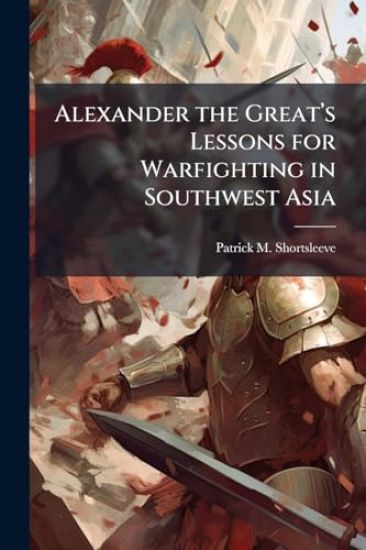
Alexander the Great's Lessons for Warfighting in Southwest Asia
Patrick M. Shortsleeve
BiblioScholar
2012
nidottu
Much of what the US military encounters in Southwest Asia today was encountered by Alexander the Great thousands of years ago. Today's military can still learn a lot about how to conduct warfare from Alexander the Great. Alexander's strategies and tactics provide historical lessons which could assist current US military operations in the Southwest Asia region. This research paper will demonstrate how Alexander waged war in Southwest Asia and show how Alexander's lessons from the past can help with what the United States is doing today. The paper focuses on Alexander's expeditionary force structure, logistics, strategies, tactics, post conflict operations and finally the similarities to the United States military. This work has been selected by scholars as being culturally important, and is part of the knowledge base of civilization as we know it. This work was reproduced from the original artifact, and remains as true to the original work as possible. Therefore, you will see the original copyright references, library stamps (as most of these works have been housed in our most important libraries around the world), and other notations in the work. This work is in the public domain in the United States of America, and possibly other nations. Within the United States, you may freely copy and distribute this work, as no entity (individual or corporate) has a copyright on the body of the work. As a reproduction of a historical artifact, this work may contain missing or blurred pages, poor pictures, errant marks, etc. Scholars believe, and we concur, that this work is important enough to be preserved, reproduced, and made generally available to the public. We appreciate your support of the preservation process, and thank you for being an important part of keeping this knowledge alive and relevant.

This essay explores the evolution of USAF concerns about collateral damage and examines the causes and effects of this unfortunate by-product of airpower. It concludes that the concerns harbored about causing collateral damage reduce the military effectiveness of airpower. ... The USAF can take actions which will help alleviate some of the causes of collateral damage. Improvements in the areas of planning and technology provide certain relief, but ultimately, political and military leaders must accept that collateral damage is an inevitable part of airpower. This work has been selected by scholars as being culturally important, and is part of the knowledge base of civilization as we know it. This work was reproduced from the original artifact, and remains as true to the original work as possible. Therefore, you will see the original copyright references, library stamps (as most of these works have been housed in our most important libraries around the world), and other notations in the work. This work is in the public domain in the United States of America, and possibly other nations. Within the United States, you may freely copy and distribute this work, as no entity (individual or corporate) has a copyright on the body of the work. As a reproduction of a historical artifact, this work may contain missing or blurred pages, poor pictures, errant marks, etc. Scholars believe, and we concur, that this work is important enough to be preserved, reproduced, and made generally available to the public. We appreciate your support of the preservation process, and thank you for being an important part of keeping this knowledge alive and relevant.