Kirjojen hintavertailu. Mukana 12 390 323 kirjaa ja 12 kauppaa.

Kirjahaku

Etsi kirjoja tekijän nimen, kirjan nimen tai ISBN:n perusteella.

1000 tulosta hakusanalla Patrick Rocha

Tradition in the Early Church

Tradition in the Early Church

R. P. C. (Richard Patrick Cro Hanson

Hassell Street Press
2021
sidottu
This work has been selected by scholars as being culturally important and is part of the knowledge base of civilization as we know it.This work is in the public domain in the United States of America, and possibly other nations. Within the United States, you may freely copy and distribute this work, as no entity (individual or corporate) has a copyright on the body of the work.Scholars believe, and we concur, that this work is important enough to be preserved, reproduced, and made generally available to the public. To ensure a quality reading experience, this work has been proofread and republished using a format that seamlessly blends the original graphical elements with text in an easy-to-read typeface.We appreciate your support of the preservation process, and thank you for being an important part of keeping this knowledge alive and relevant.
Tradition in the Early Church

Tradition in the Early Church

R. P. C. (Richard Patrick Cro Hanson

Hassell Street Press
2021
nidottu
This work has been selected by scholars as being culturally important and is part of the knowledge base of civilization as we know it.This work is in the public domain in the United States of America, and possibly other nations. Within the United States, you may freely copy and distribute this work, as no entity (individual or corporate) has a copyright on the body of the work.Scholars believe, and we concur, that this work is important enough to be preserved, reproduced, and made generally available to the public. To ensure a quality reading experience, this work has been proofread and republished using a format that seamlessly blends the original graphical elements with text in an easy-to-read typeface.We appreciate your support of the preservation process, and thank you for being an important part of keeping this knowledge alive and relevant.
A Critical Commentary Upon the Book of the Wisdom of Jesus the son of Sirach. Being a Continuation of Bishop Patrick and Mr. Lowth. By Richard Arnald,
The 18th century was a wealth of knowledge, exploration and rapidly growing technology and expanding record-keeping made possible by advances in the printing press. In its determination to preserve the century of revolution, Gale initiated a revolution of its own: digitization of epic proportions to preserve these invaluable works in the largest archive of its kind. Now for the first time these high-quality digital copies of original 18th century manuscripts are available in print, making them highly accessible to libraries, undergraduate students, and independent scholars.The Age of Enlightenment profoundly enriched religious and philosophical understanding and continues to influence present-day thinking. Works collected here include masterpieces by David Hume, Immanuel Kant, and Jean-Jacques Rousseau, as well as religious sermons and moral debates on the issues of the day, such as the slave trade. The Age of Reason saw conflict between Protestantism and Catholicism transformed into one between faith and logic -- a debate that continues in the twenty-first century.++++The below data was compiled from various identification fields in the bibliographic record of this title. This data is provided as an additional tool in helping to insure edition identification: ++++William Andrews Clark Memorial Library (UCLA)N003066London: printed for the author, by W. Bowyer. And sold by J. and P. Knapton, S. Birt, W. Thurlbourn in Cambridge, Mr. Martin and Mr. Brice at Leicester, and Mr. Ward and Mr. Ayscough at Nottingham, 1748. ix, 7], iv,248p.; 4
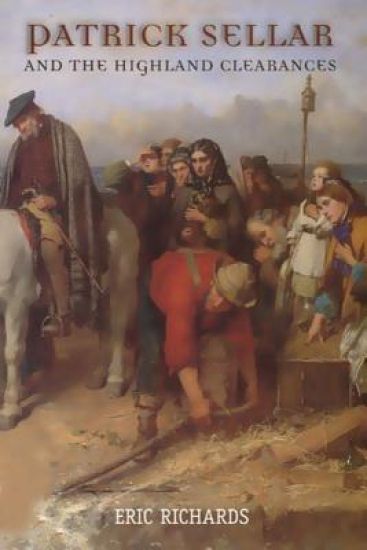
Patrick Sellar and the Highland Clearances

Patrick Sellar and the Highland Clearances

Eric Richards

Polygon at Edinburgh University Press
1999
nidottu
Winner of the Saltire Society Scottish History Book of the Year Award In April 1816 Patrick Sellar was brought to trial in Inverness for culpable homicide for his treatment of the Highlanders of Strathnaver, the most northerly part of the Scottish highlands. In the process of evicting them from their ancient lands he had allegedly burnt houses, destroyed mills and wrecked pastures. There is perhaps no more hated nor reviled individual in Highland history. This outstanding new book, however, gives a balanced assessment of the man, a vivid account of a terrible episode in Highland history, and a riveting narration of a tormented life. Richard's book is an account of Sellar's life and times: that he was ruthless, avaricious, devious and cruel is beyond question. But his letters suggest a streak of idealism: did he really believe that the displaced highlanders would be better off, better fed, educated and housed in their new homes? Have the Highlands in the end become more productive and prosperous? In the course of his fast-moving and gripping account, Eric Richards looks carefully at these vexed questions.
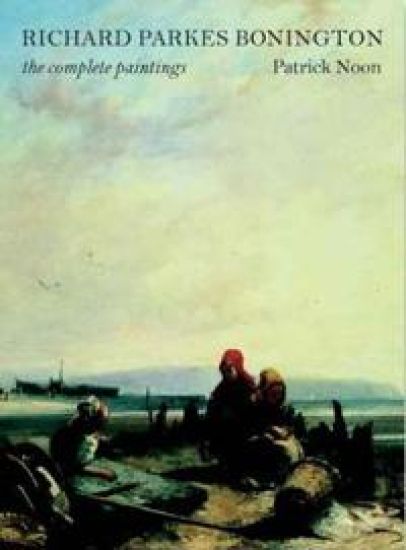
Richard Parkes Bonington

Richard Parkes Bonington

Patrick Noon

Yale University Press
2008
sidottu
Only twenty-five at the time of his death in 1828, young Richard Parkes Bonington nevertheless was a seminal figure in the development of modernism in nineteenth-century French painting. This catalogue raisonné of his oil and watercolor paintings represents the first attempt to establish and present the artist’s complete known oeuvre. Drawing on 25 years of research, Patrick Noon catalogues, analyzes, and reproduces 400 artworks now indisputably attributed to Bonington. Many of these paintings have never before been published. The book sets Bonington’s achievement in the context of the intellectual, social, and artistic ferment of high romanticism in Paris and London, and it shows the profound effect of his style on his friend and contemporary, Eugène Delacroix, and many others. Noon’s detailed and accurate study will inform all future discourse on Bonington and his remarkable legacy.Published for the Paul Mellon Centre for Studies in British Art
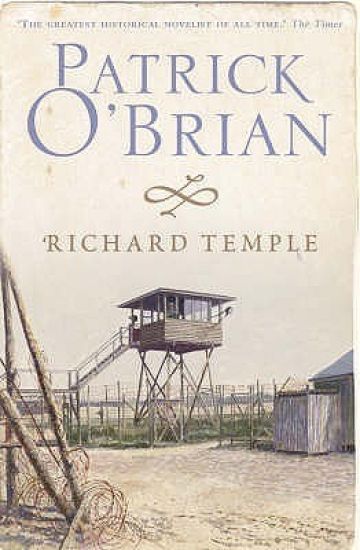
Richard Temple

Richard Temple

Patrick O'Brian

WW Norton Co
2007
pokkari
The protagonist of this World War II novel is a prisoner of the German army in France. In order to keep himself sane while denying the charges and absorbing the beatings of his captors, Richard Temple conducts a minute examination one might almost call it a prosecution of his own life. Temple escapes from a blighted childhood and his widowed, alcoholic mother thanks to an artistic gift, the one thing of value he has to his name. His life as a painter in London of the '30s is cruelly deprived. In order to eat, he squanders this one asset by becoming a forger of art, specializing in minor works by Utrillo. He is rescued by the love of a beautiful and wealthy woman, and it is the failure of this relationship and the outbreak of war that propel him into the world of espionage."
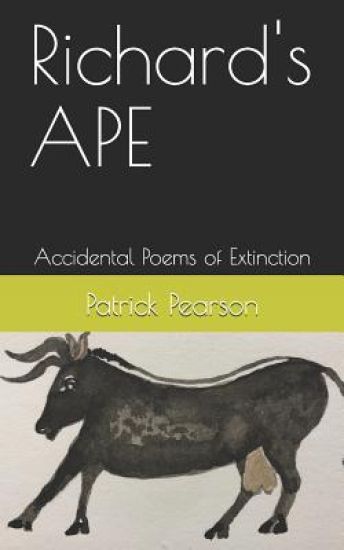
Richard's APE: Accidental Poems of Extinction

Richard's APE: Accidental Poems of Extinction

Patrick Pearson

Independently Published
2019
nidottu
What was it like to experience at close hand a dramatic battle between two aurochs bulls 15,000 years ago in the prehistoric marshes which are now the coastline of Wales? We don't know, because they're extinct.To watch a pair of woolly rhinoceroses mating less than a mile from where Lyme Regis stands today? We don't know, because they're extinct.To come across an Irish elk helplessly mired in a bog thousands of years before Ireland was separated from the mainland? We don't know, because they're extinct.To be awed by the unexpected emergence right before our eyes, from a hawthorn wood above what is now Loch Ness, of one of the last straight-tusked elephants to walk the earth? We don't know, because they're extinct.Kailu, a Palaeolithic cave artist, does know, because he's experienced all of these and more while the species still exist. This little volume contains fifteen sonnets that Kailu would have written if Kailu could write, set within the landscapes that eventually become the British Isles, with each sonnet recounting a meeting between the cave artist and an iconic animal species which humankind later exterminates.Kailu is a character in the novel Rewilding Richard, and the poems of his experiences as he crosses the icy westernmost lands of the untamed European continent appear fully-formed in the notebook of the protagonist of the novel's title. Richard, who has flown from Australia to Britain to 'rewild' himself in landscapes being ecologically restored, is flabbergasted to discover the poems in his own handwriting and can't recall writing any of them. These fifteen sonnets are a reminder of the tsunami of hundreds and thousands of extinctions occurring worldwide in our Anthropocene age, and a cry for humans of the 21st century to set aside half of Earth's surface for wildness, to give our remaining wild species a chance of survival and our threatened planet the capacity to heal itself.Sonnets don't have to be fourteen lines. Some of these sonnets take inspiration from master-sonneteers of the past and have twenty lines, or ten, and rhyme, or not. Rules in poetry are meant to be broken, just as in life, even when it appals the rule-bound most.Opposite each sonnet there is a brief note about the animal we have lost, and a quick life lesson for humans from its life or its death.
Richard Bancroft and Elizabethan Anti-Puritanism

Richard Bancroft and Elizabethan Anti-Puritanism

Patrick Collinson

Cambridge University Press
2013
sidottu
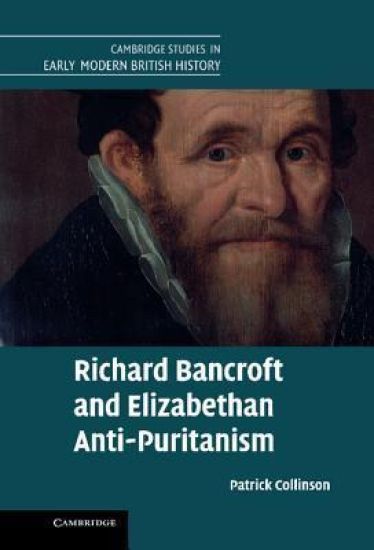
This major new study is an exploration of the Elizabethan Puritan movement through the eyes of its most determined and relentless opponent, Richard Bancroft, later Archbishop of Canterbury. It analyses his obsession with the perceived threat to the stability of the church and state presented by the advocates of radical presbyterian reform. The book forensically examines Bancroft's polemical tracts and archive of documents and letters, casting important new light on religious politics and culture. Focussing on the ways in which anti-Puritanism interacted with Puritanism, it also illuminates the process by which religious identities were forged in the early modern era. The final book of Patrick Collinson, the pre-eminent historian of sixteenth-century England, this is the culmination of a lifetime of seminal work on the English Reformation and its ramifications.
Richard Bancroft and Elizabethan Anti-Puritanism

Richard Bancroft and Elizabethan Anti-Puritanism

Patrick Collinson

Cambridge University Press
2016
pokkari
This major new study is an exploration of the Elizabethan Puritan movement through the eyes of its most determined and relentless opponent, Richard Bancroft, later Archbishop of Canterbury. It analyses his obsession with the perceived threat to the stability of the church and state presented by the advocates of radical presbyterian reform. The book forensically examines Bancroft's polemical tracts and archive of documents and letters, casting important new light on religious politics and culture. Focussing on the ways in which anti-Puritanism interacted with Puritanism, it also illuminates the process by which religious identities were forged in the early modern era. The final book of Patrick Collinson, the pre-eminent historian of sixteenth-century England, this is the culmination of a lifetime of seminal work on the English Reformation and its ramifications.
Richard Owen

Richard Owen

Patrick Armstrong

REAKTION BOOKS
2023
nidottu
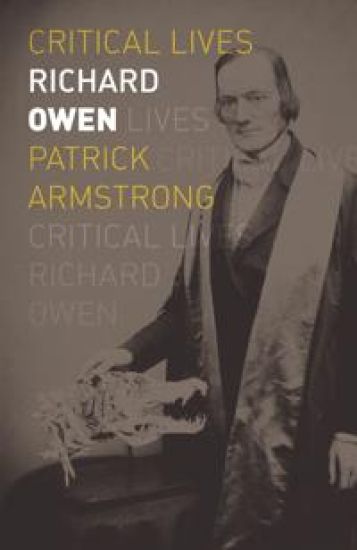
Brilliant, hard-working, immensely productive and influential, the naturalist Richard Owen was a great promoter of science, and played a large role in shaping London’s Natural History Museum. An often difficult and arrogant individual, he was accused of plagiarism and bullying, and is the only man whom Charles Darwin claimed to hate. Although strongly opposed to Darwin and Thomas Huxley’s theories of evolution through natural selection, there is evidence that a few of Owen’s ideas were not so very distant from theirs. This biography gives an account of Owen’s life and work, providing possible psychological and social reasons for his more controversial characteristics and his sometimes rather strained relations with various scientific contemporaries.
Richard Temple

Richard Temple

Patrick O’Brian

HarperCollins Publishers Ltd
2006
nidottu
This is the story of Richard Temple – prisoner of war, sometime adventurer, lover and artist – told with insight, empathy and drama by one of the world's master storytellers. Captive in a brutal German prison towards the end of World War II, Richard Temple has been stripped of everything that once defined him: pride, courage, his very identity have all been surrendered in a desperate bid to protect his secrets from the Nazis. But with the real Richard Temple suppressed to the point of near-extinction, a sudden respite in his torture allows him a moment of rare release, when he can lower his guard and remember who he is. Huddled in his cell, too badly beaten to move, the action of the novel takes place in the Richard’s mind as he retraces a convoluted course from an unhappy childhood, through a vague and uncertain adolescence to a complex, compromised adulthood, shot through with artistic sensibility and the myriad impulses that make a man. Patrick O'Brian's signature combination of narrative flair, intuitive sympathy and psychological insight make this a fascinating exploration of how passive resistance can be a form of courage and what it truly means to be a hero.