Best BIG Joke Book for Kids is a book of short jokes, that are guaranteed age appropriate. Funny jokes, Knock Knock jokes, Kids Jokes, Brain Teasers and Tongue Twisters. Jokes for Kids, Best Joke Book for Kids is styled for as kids grow older they find certain jokes less and less funny. This means you have to come up with age appropriate jokes to keep them entertained. Jokes are more than just for laughs. They also stimulate thought and educate. That does not mean you go stiff on the kids, far from it. You want jokes that are funny, corny and have some substance. Usually the really good jokes will give even you the tickles. Kids jokes, with over 600 funny jokes and tongue twisters, this will keep the kids, and adults laughing for some time.
A Proven, Step-By-Step Method to Master the Art of Time Management and Become Super Productive. You are about to discover a proven strategy on how to master productivity using 30 easy steps. When it comes to productivity, every human being is privileged to have the same number of hours in the day as others. Interestingly, just because we all have 24 hours a day doesn't mean that we end up being equal in different aspects of life. In fact, while some of us complain about how little time we have to get things done or how time seems to fly too fast, others can easily manage to get lots of stuff done. So what's the difference between the super-productive individuals and the rest? How can some people get so much done in less time? Well, simple; they have mastered the art of time management. Identify habits that affect your productivity negatively and get rid of such habits. Work to enhance your efficiency levels. Let's see how you too can master productivity This book will let you in on the super productive habits required, such that you can master productivity This Is An Effective Guide On: Master the Art of Identifying Productivity HabitsActionable Ways To Get More Done In Less TimeHack Your BrainLearn How To Take ActionGrow YourselfBecome A Super Productive You Easily Learn These Master Tips: Effectively Deal With DistractionsFlip Travel Time Into Your FavourBecome a Master at Setting GoalsSolving ProblemsOutsource To Free Up Your TimeAuto-pay Your BillsReward YourselfMuch Much More Become a true master at driving efficient time management and increase your productivity with immediate effec
Do you feel entrapped in negative thoughts? Are you looking for a new mental balance?Everybody walking the face of the earth knows what it's like to be anxious and depressive. Anxiety and depression are a normal reactions to situations of danger or mourning. The problem is when they persist beyond the physiological reaction times and become the leitmotif of your days. That's when they turn into psychosomatic disorders such as palpitations, tachycardia, gastritis, headaches, insomnia, etc.The solution is to reframe your brain with Cognitive-behavioral therapy (CBT). This type of psychotherapy teaches you to identify your recurrent negative thoughts and dysfunctional patterns of interpretation of reality, to replace them with positive beliefs. This work stimulates new synaptic pathways and promotes the release of happiness neurotransmitters (serotonin, dopamine, oxytocin).The CBT techniques can help you really, to manage anxiety, stress, insomnia, depression, and post-traumatic stress disorder. In this book, you'll learn: understand your negative mental pattern;recognize the signs and symptom that reveal if you're anxious or depressive;proven CBT techniques for reframing your brain and creating new neuronal pathways;manage anxiety, insomnia, depression and PTD (post-traumatic disorder;enjoy a more clean and light mindset.if you think this topic is too complicated for you or difficult to apply, you'll find here a simple guide that will show you how to freedom of your negative thoughts and to manage your emotions.What are you waiting for? Scroll up and click the BUY NOW button ...
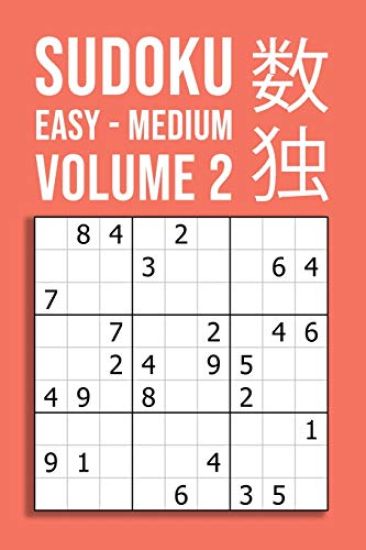
- Sudoku puzzles are a proven method for keeping the mind healthy and combating Alzheimer's and Dementia - Hours of entertainment - 2 difficulty Levels - easy and medium- Puzzles are in size 24 font, so that you will never suffer from eye-strain while doing them - Plenty of white space for number scribbling, with only two 9x9 puzzles per page - Format easy to use and to take everywhere (6"x9" paperback)- Perfect gift for that special someone
Change your life for the better. Learn how to `rubberise' your brain, making it more flexible and resilient. Deal with challenges in an optimal way, and `bounce' back from adversity. Whether you've failed an exam, bungled an interview, screwed up a relationship, broken your diet, or stuffed up at work, your brain is the key to getting back on track.Your brain controls your conscious thoughts and behaviours, like deciding whether to study or party, or whether to get two scoops of gelato or six. And when you find yourself doing things that you wish you hadn't done (like all that gelato), it's likely your brain has indulged in what psychological scientists call suboptimal thinking. Essentially, your brain doesn't always deliver the kind of thinking that leads to desired positive outcomes, such as maintaining supportive friendships, and doing well in your work, studies and social life. But you and your brain can do better.In this book, five leading psychological educators show you simple tools derived from a wide range of solid science covering everything from positive psychology to goal setting, from mindfulness to CBT, and from emotional regulation to moral reasoning, to optimise your thinking.Using a model they have developed over years of study and application you can discover how resilience and psychological flexibility combine to allow you to choose ways of thinking in response to different situations that will produce the best outcome for you for that situation. Read this book and learn how to optimally tackle issues of motivation, stress, time-management, and relationship maintenance. Your mind will be clearer and your life better.
This book illustrates in a unique way the most common diseases affecting the human nervous system using different imaging modalities derived from radiology, nuclear medicine, and neuropathology. The features of the diseases are visualized on computerized tomography (CT)-scans, magnetic resonance imaging (MRI)-scans, nuclear medicine scans, surgical intraoperative as well as gross-anatomy and histology preparations. For each disease entity, the structural changes are illustrated in a correlative comparative way based on the various imaging techniques. The brain diseases are presented in a systematic way allowing the reader to easily find the topics in which she or he is particularly interested. In Part 1 of the book, the imaging techniques are described in a practical, straightforward way. The morphological built-up of the normal human brain and its vascular supply are presented in Part 2. The chapters of the subsequent Parts 3 to 10 deal with the following diseases involving the nervous system including: hemodynamic, vascular, infectious, neurodegenerative, demyelination, epilepsy, trauma and intoxication, and tumors. The authors incite the clinician to see the cell, the tissue, the organ, the disorder by enabling him to recognize brain lesions or interpreting histologic findings and to correlate this knowledge with molecular biologic concepts. Thus, this book bridges the gap between neuro-clinicians, neuro-imagers and neuro-pathologists. The information provided will facilitate the understanding of the disease processes in the daily routine work of neurologists, neuroradiologists, neurosurgeons, neuropathologists, and all allied clinical disciplines.
Provides a highly visual, readily accessible introduction to the main events that occur during neural development and their mechanisms Building Brains: An Introduction to Neural Development, 2nd Edition describes how brains construct themselves, from simple beginnings in the early embryo to become the most complex living structures on the planet. It explains how cells first become neural, how their proliferation is controlled, what regulates the types of neural cells they become, how neurons connect to each other, how these connections are later refined under the influence of neural activity, and why some neurons normally die. This student-friendly guide stresses and justifies the generally-held belief that a greater knowledge of how nervous systems construct themselves will help us find new ways of treating diseases of the nervous system that are thought to originate from faulty development, such as autism spectrum disorders, epilepsy, and schizophrenia. A concise, illustrated guide focusing on core elements and emphasizing common principles of developmental mechanisms, supplemented by suggestions for further readingText boxes provide detail on major advances, issues of particular uncertainty or controversy, and examples of human diseases that result from abnormal developmentIntroduces the methods for studying neural development, allowing the reader to understand the main evidence underlying research advancesOffers a balanced mammalian/non-mammalian perspective (and emphasizes mechanisms that are conserved across species), drawing on examples from model organisms like the fruit fly, nematode worm, frog, zebrafish, chick, mouse and humanAssociated Website includes all the figures from the textbook and explanatory movies Filled with full-colorartwork that reinforces important concepts; an extensive glossary and definitions that help readers from different backgrounds; and chapter summaries that stress important points and aid revision, Building Brains: An Introduction to Neural Development, 2nd Edition is perfect for undergraduate students and postgraduates who may not have a background in neuroscience and/or molecular genetics. “This elegant book ranges with ease and authority over the vast field of developmental neuroscience. This excellent textbook should be on the shelf of every neuroscientist, as well as on the reading list of every neuroscience student.” —Sir Colin Blakemore, Oxford University “With an extensive use of clear and colorful illustrations, this book makes accessible to undergraduates the beauty and complexity of neural development. The book fills a void in undergraduate neuroscience curricula.”—Professor Mark Bear, Picower Institute, MIT. Highly Commended, British Medical Association Medical Book Awards 2012 Published with the New York Academy of Sciences
The essential guide to recovering from concussion and other brain injuries.Recovering from a brain injury can be a challenging and prolonged process. Learn how to maximize your recovery from the effects of brain injuries with the guidance of Sandeep Vaishnavi, MD, PhD, and Vani Rao, MBBS, MD, two leading medical experts with extensive experience helping patients recover from concussion and other brain injuries. Healing the Traumatized Brain explains how the brain works, how injuries affect the brain, and how to use your brain's own power to recover. This detailed guide contains essential information on:• The emotional, behavioral, mental, and physical effects following concussion and other brain injuries• Medication options and lifestyle changes• Practical strategies for healing, including stress management, behavioral therapy, and cognitive rehabilitation• Neuroplasticity and nutrition as they affect recovery• Behavioral disorders, balance disorders, and hormonal changes following concussion and other brain injuries• The effects of coexisting factors such as other medical problems, recreational drug use, the misuse of prescribed medications, and poor sleep hygiene• The science associated with repeated brain trauma and promising therapies on the horizonBuilding on the work of Vaishnavi and Rao's best-selling book The Traumatized Brain, this guide is filled with practical information and tips for coping with concussion, injury from a stroke, and other brain injuries.
The essential guide to recovering from concussion and other brain injuries.Recovering from a brain injury can be a challenging and prolonged process. Learn how to maximize your recovery from the effects of brain injuries with the guidance of Sandeep Vaishnavi, MD, PhD, and Vani Rao, MBBS, MD, two leading medical experts with extensive experience helping patients recover from concussion and other brain injuries. Healing the Traumatized Brain explains how the brain works, how injuries affect the brain, and how to use your brain's own power to recover. This detailed guide contains essential information on:• The emotional, behavioral, mental, and physical effects following concussion and other brain injuries• Medication options and lifestyle changes• Practical strategies for healing, including stress management, behavioral therapy, and cognitive rehabilitation• Neuroplasticity and nutrition as they affect recovery• Behavioral disorders, balance disorders, and hormonal changes following concussion and other brain injuries• The effects of coexisting factors such as other medical problems, recreational drug use, the misuse of prescribed medications, and poor sleep hygiene• The science associated with repeated brain trauma and promising therapies on the horizonBuilding on the work of Vaishnavi and Rao's best-selling book The Traumatized Brain, this guide is filled with practical information and tips for coping with concussion, injury from a stroke, and other brain injuries.
Walther Birkmayer, one of the co-discoverers of the neuro- chemical causes of Parkinson's disease and of its treatment by neurotransmitter-replacement therapy, and his former col- laborator and colleague Peter Riederer have succeeded in this book in giving us an outline and overview of current knowl- edge of the biochemistry of the brain and synaptic transmis- sion between nerve cells, together with an appreciation of how these factors relate to recent findings in human behavioural science, an area in which both authors have made substantial contributions. Ethology is the systematic study of behaviour, and its impor- tance was recognized by the award of the Nobel Prize for Medicine to its founders and principal exponents Konrad Lorenz, Niko Tinbergen and Karl von Frisch. Human behav- ioural science extends their methods to human beings, and we owe the application of these methods in the human field to among others Irenaeus von Eibl-Eibesfeldt as far as normal human behaviour is concerned, and to Dieter von Ploog for the study of abnormal behaviour. These workers have played a decisive part in helping us to understand the biological factors that govern human behaviour. Fundamental to all these stud- ies is the way we humans feel, and thanks to our ability to express our feelings, thoughts and emotions in words, we can accurately describe these feelings, thoughts and emotions, not only in normal circumstances but also when we believe them to be disturbed.
This volume contains the proceedings of a conference held at the National Institutes of Health in Bethesda on March 21-23. 1988. jointly sponsored by the International Council for Control of Iodine Deficiency Disorders (ICCIDD) and the Fogarty International Center of the National Institutes of Health. Several themes converged to make this meeting timely. The first is an increasing awareness of iodine deficiency disorders as a world-wide problem of public health and a preventable cause of mental deficiency. and as a subject of scientific effort. Increased interest in these problems owes a great deal to accessibility to remote and under developed areas of the world where iodine deficiency persists. As with any subject. greater scrutiny yields unexpected complexity and interest. It is true that provision of iodine. typically as iodized salt, is the necessary and sufficient preventative for iodine deficiency disorders. without including endemic cretinism. This provision is a governmental, economic and social problem. Apart from this, however, the scientific and medical problem of iodine deficiency and its effect on brain development and function is one of great interest and importance for developmental neurology and psychology. Even though the specific preventative agent is known, we do not totally understand the neurobiological questions raised.
With full access to the union's records, John Gennard and Peter Bain have produced a wide-ranging history of SOGAT up to its merger with the National Graphical Association in 1991. In addition to presenting a thorough study of the union, this book provides a valuable insight into the paper and printing industries during a period of great change as well as examining some of the most momentous events in recent British industrial relations history.
Bring the heart of your company into the community with effective CSR Doing Good by Doing Good shows companies how to improve the bottom line by implementing an engaging, authentic, and business-enhancing program that helps staff and business thrive. International CSR consultant Peter Baines draws upon lessons learnt from the challenges faced in his career as a police officer, forensic investigator, and founder of Hands Across the Water to describe the Australian CSR landscape, and the factors that make up a program that benefits everyone involved. Case studies illustrate the real effect of CSR on both business and society, with clear guidance toward maximizing involvement, engaging all employees, and improving the bottom line. The case studies draw out the companies that are focusing on creating shared value in meeting the challenges of society whilst at the same time bringing strong economic returns. Consumers are now expecting that big businesses with ever-increasing profits give back to the community from which those profits arise. At the same time, shareholders are demanding their share and are happy to see dividends soar. Getting this right is a balancing act, and Doing Good by Doing Good helps companies delineate a plan of action for getting it done. Readers will: Define an effective CSR strategy that promotes better business and makes a real impactUnderstand the current landscape to evaluate the CSR options that are right for your companyUnderstand why corporate philanthropy is no longer enoughIdentify the hard and soft key performance indicators that help keep your program on trackGain an understanding of the concept of shared value and the importance to businessGain insight into each step of the CSR process, from interest, to information, to implementation The concept of CSR is not new, but traditional "payroll deductions" and "volunteer days" are out-dated and grossly ineffective. Today, companies are building simple, well-constructed programs that are changing business and changing lives on a much grander scale. Doing Good by Doing Good provides a fool proof strategy for CSR planning, with value to the company, employees, and community at large.
With full access to the union's records, John Gennard and Peter Bain have produced a wide-ranging history of SOGAT up to its merger with the National Graphical Association in 1991. In addition to presenting a thorough study of the union, this book provides a valuable insight into the paper and printing industries during a period of great change as well as examining some of the most momentous events in recent British industrial relations history.
Become a courageous leader and learn how to take risks, defy limitations and inspire the extraordinary In Leadership Matters, celebrated humanitarian Peter Baines OAM shares remarkable stories and unique insights about leadership in challenging times. Drawing on more than 20 years of experience in leading others through crises and disasters, Peter demonstrates how great leaders rise above adversity. He unpacks how leadership skills such as courage, compassion, and integrity are essential for finding a way forward and triumphing against the odds. Leadership Matters shares the leadership lessons that have emerged from Peter’s decades of work in international counterterrorism and disaster response. In particular, it reveals how the devastating aftermath of Thailand’s Boxing Day Tsunami has shaped Peter’s understanding of what it means to be a true leader. You’ll learn how Peter founded a multi-million-dollar charity to help those he met along the way. And you’ll learn the principles that have guided him in the decades since that transformative event: how to lead and inspire others as you work together to achieve the extraordinary. Leadership Matters will inspire you to: Stop making excuses and take actionFind the unique solutions that are required by unique challengesMotivate your team by being present and fostering integrityFind courage for difficult decisions and compassion for hard conversations Leadership Matters: Stories and Insights for Leaders, Achievers and Visionaries shows how great leaders can find their purpose and make a real, vital impact on the world around them.