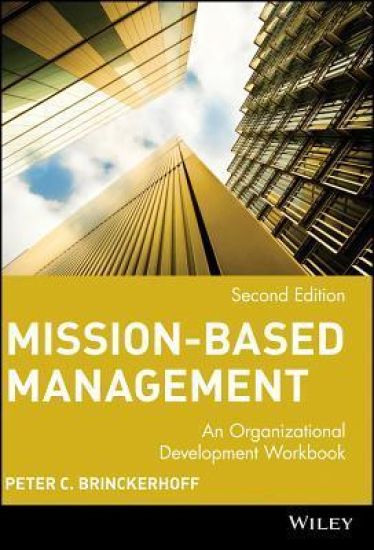
FROM THE AUTHOR OF THE "BEST NEW NONPROFIT BOOK"!The Alliance for Nonprofit Management This practical, comprehensive, and easy-to-use workbook provides key tools to help managers of nonprofits ensure that their organization pursues its mission, meets the changing needs of the communityand has enough money to make ends meetwhile also satisfying the demands of funders, clientele, boards, staff, and bankers. Designed to equip nonprofit managers and other nonprofit workers with the guidance they need to do their jobs and run their organizations more effectively and efficiently, this workbook is also a hands-on tool to help implement the ideas in the authors highly regarded Mission-Based Management. Filled with indispensable checklists, worksheets, forms, displays, and hands-on suggestions, and including a companion CD-ROM, the Workbook will show you how to smoothly and successfully: *Hone your organizations core competencies *Focus your resources *Improve overall mission capability *Get the most out of group discussions *Utilize self-assessment tools ... and much more to help you and all involved help your organization achieve its mission
Once a nonprofit is established and money has been raised to fulfill a philanthropic mission, the management of the organization must then plan financially for the future. This book in the Mission-Based Management Series outlines a proven plan for financial success. It is packed with practical strategies for helping an organization get more funds from current sources, find and develop new funding sources, keep more of what they've made, and more.
Monosaccharides Their Chemistry and Their Roles in Natural Products Peter Collins University of London, UK Robin Ferrier Victoria University of Wellington, NZ An in-depth text for students starting their study of carbohydrate chemistry, Monosaccharides relates the vast field of carbohydrate chemistry to both synthetic organic chemistry and biological processes. The structures and reactions of monosaccharides are examined in detail and their applications in synthesis and as biologically active compounds are discussed and explained at length. This textbook, written by two well-known experienced teachers and researchers in carbohydrate chemistry, provides: * up-to-date coverage of this rapidly expanding and developing field * classification of monosaccharide reactions according to reaction site * treatment of monosaccharides as organic compounds with rationalized chemistry * more than 1000 references to the primary literature * a discussion of monosaccharides as components of biologically active compounds Monosaccharides will be invaluable for students and lecturers alike in organic, bioorganic and natural products chemistry, biochemistry, glycobiology and molecular biology.
From its roots in classical mechanics and reliance on stability theory to the evolution of practical stabilization ideas, this volume offers comprehensive coverage of environmental torques encountered in space; energy dissipation and its effects on the attitude stability of spinning bodies; motion equations for four archetypical systems; orientation parameters; illustrations of key concepts with on-orbit flight data; and typical engineering hardware, with examples of the implementation of dynamic ideas. The sole prerequisites are a fundamental knowledge of vector dynamics and matrix algebra; suitable for use as a text for advanced undergraduates and graduate students, this unified treatment is also a valuable reference for professionals. 1986 ed.
A potentially life-changing book, filled with profiles of people who have successfully made the transition from employee to entrepreneur. Practical and inspiring, it covers everything from getting your employer's help, finding clients, and estimating your income, to the psychological adjustments that go along with self-employment. Line drawings.
The introduction of state planning and party dictatorship dramatically altered the environment for social theory in the German Democratic Republic. But social thought did not disappear. By the mid-1950s, East German social theorists discovered the basic contradictions of state socialism that would eventually lead to its collapse: the inability of the plan to function without markets and its inability to permit markets; the inability of the party-state to guarantee the rule of law and yet also the need for a regular system of rules in a modern industrial society; and the contradictory philosophical claims of a Marxist-Leninist philosophy that rejected idealism, and Marxist-Leninist dogma with its idealistic claim to know the laws of social modernization. Making use of archival sources, Caldwell examines the articulation of these analyses, their subsequent suppression by party authorities in the late 1950s, and their return under the guise of cybernetics in the 1960s.
Formal political theory seeks to develop formal, mathematical models of political and economic processes. This book attempts to integrate the last twenty years of development in this field. Professor Ordeshook uses the modern developments in the theory of games (decision making with multiple, interactive decision makers) as the basis for the synthesis. Topics covered include models of elections and of committee processes, the demand and supply of public goods, and surveys of game theory and social-choice theory. Game Theory and Political Theory is designed as a textbook for graduate courses in formal political theory and political economy.
The introduction of state planning and party dictatorship dramatically altered the environment for social theory in the German Democratic Republic. But social thought did not disappear. By the mid-1950s, East German social theorists discovered the basic contradictions of state socialism that would eventually lead to its collapse: the inability of the plan to function without markets and its inability to permit markets; the inability of the party-state to guarantee the rule of law and yet also the need for a regular system of rules in a modern industrial society; and the contradictory philosophical claims of a Marxist-Leninist philosophy that rejected idealism, and Marxist-Leninist dogma with its idealistic claim to know the laws of social modernization. Making use of archival sources, Caldwell examines the articulation of these analyses, their subsequent suppression by party authorities in the late 1950s, and their return under the guise of cybernetics in the 1960s.
Eastern Orthodox and Oriental Orthodox Christians have been separated since the aftermath of the Council of Chalcedon in 451. This book offers a fresh perspective on the conciliar era, exploring the separation between dyophysite and miaphysite Christians through historical and theological lenses. This study examines the theological formulations of the seven great councils alongside other key writings— presented here in Greek with English translations. It invites a reconsideration of figures long revered or rejected by the different churches, and traces how Greek philosophical terminology was gradually reshaped to express Christian belief—a process that took different forms across the diverse regions in late antiquity. More than a reappraisal of the past, this study challenges readers to reflect on the nature of patristic authority, and its enduring implications for theology and the restoration of communion among the churches.
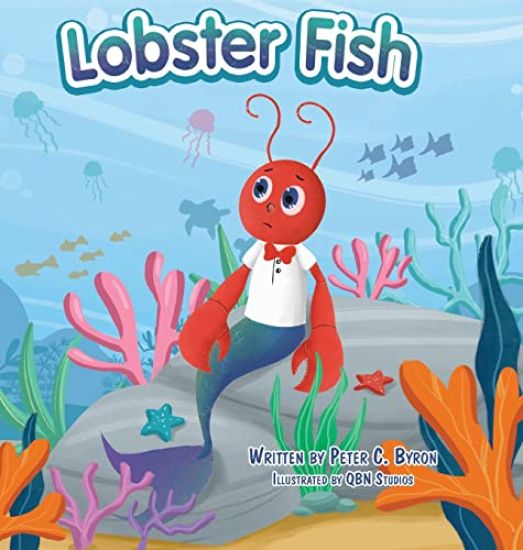
Join Lobster Fish on his journey from the Atlantic ocean across the U.S.A in this colorful children's tale told in an upbeat and easy to read rhyming pattern. Lobster Fish is a coming of age story about a half lobster - half fish who leaves his home out of curiosity only to be swept up in a fantastic series of events that lead him to the answers he is looking for.
Other Choices is a fast moving story about Ed, a new kid in town who refuses to follow the crowd. He finds himself at odds with his classmates, especially Robert, a bully who is the captain of the hockey team. Ed refuses to be told what to do by his brother or by his classmates. Ignoring their threats, he does what he wants. When he is challenged, Ed discovers that he has the inner strength to do what he thinks is right.Ed’s story is about not giving in to peer pressure and bullying and about making other choices.
"Our Earth is a wonderful place and we humans are its prime animal product. We have the responsibility to look after it, to nurture it and to damage it as little as possible. We are the first inhabitants that leave behind anything other than rotting corpses and ant hills. How are we meeting our responsibilities?"In this companion volume to Dr Bruechle's Issues and Challenges - Matters for Consideration, Discussion and Consensus, the author revisits and updates some of his original themes, and adds new points for discussion. As the fate of our Earth and its inhabitants becomes more urgent, Dr Bruechle's work gains moment and significance. We must address his concerns before it is too late.
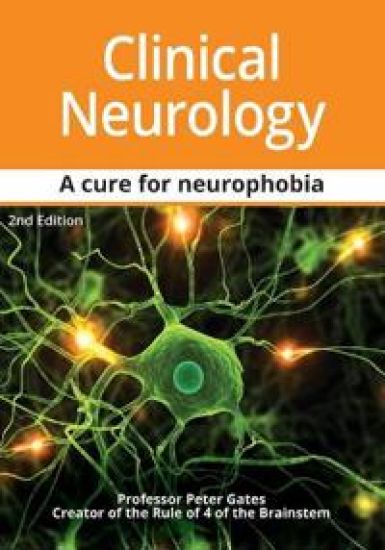
This is the second edition of an introductory clinical neurology textbook written for students, hospital medical officers, neurologists in training, non-neurologist's and those that teach them. It contains the principles of clinical neurology that were relevant 100 years ago and will still be relevant in 100 years. It contains novel approaches to clinical neurology. The nervous system is likened to a map grid with meridians of longitude (the two ascending sensory and the one descending motor pathways) and the parallels of latitude, (the dermatomes, myotomes, reflexes, brainstem cranial nerves and the cortical signs). This enables accurate localisation. It contains 3 rules that enable the diagnosis of brainstem strokes (the rule of 4) and every peripheral nerve or nerve root problem in the upper (the 5*3*5* rule) and the lower limbs (the 2*2*4 rule) without the need for detailed knowledge of neuroanatomy. There are numerous illustrations and tables that complement the text. The first 5 chapters cover neuroanatomy, the neurological history, examination of the limbs, the brainstem and cranial nerves, and the cerebral hemispheres. There is a unique chapter (6) that explains the diagnostic approach once the history and neurological examination have been performed. Subsequent chapters cover intermittent disturbances of neurological function (with a very unique approach dividing disturbances into those that call falls and those that do not cause falls either with and without impairment of consciousness), seizures and epilepsy, headache and facial pain, cerebral vascular, disease, common neck and arm problems, back pain and common leg problems, abnormal movements and difficulty walking and miscellaneous neurological disorders. The last chapter discusses retrieving information and keeping up to date.The appendices discuss the bedside assessment of cognitive function, benign focal seizures of childhood, new nomenclature and drugs for epilepsy, treatment of migraine, epidemiology and prevention of stroke, tissue plasminogen activator and clot retrieval, dysphagia screen, nerve conduction studies and EMG, diagnostic criteria for multiple sclerosis and treatment of Parkinson's. Finally, Professor Gates reprints his 3 hypothesis papers. Firstly, that hypertension is secondary to, not the cause of arteriorsclerosis with superimposed atherosclerosis. Secondly, that Meniere's disease is a sodium dependant potassium channelopathy and has nothing to do with endolymphatic hydrops. Thirdly, his insights into the management of Idiopathic Intracranial Hypertension (IIH), in particular the potential use of short-term drainage of CSF at very low pressure and resolution of IIH.
In 'Issues and Challenges' I have presented my opinions about several matters I consider need unemotional discussion, not to cram those opinions into the minds of others but to introduce them to others, with the aim of provoking the needed discussion and, if possible, consensus.Looking disinterestedly at the current western democracies, it is difficult to be pleased with what one sees with their silly, almost childish, squabbles and, often, their concentration on emotional matters that are really of little importance to the future of the human race. Other leadership systems that have been tried - fascism, communism, religious leadership, hereditary royalty, and leadership based on wealth or military power - have all shown themselves to have even worse flaws than democracy in the past, and, where still practised as they are in North Korea, in China and in the Middle East, continue to show flaws. Is it possible that the main shortcoming with all these systems does not lie in the systems but with the human animals leading those systems, and those that give those leaders their power? Is it possible that the human animal is a squabbling, conniving, greedy, militant and inherently nasty creature, and that humanity living peacefully on our planet Earth, and advancing science, art and architecture, is only a pipe dream? On the other hand is it possible that the negative traits of humanity can be kept under control? Could balanced, universal education bring about a better humanity, a humanity that could live in productive peace for a fulfilling future on our one and only planet? Or are we doomed to continue despoiling the planet, and will we continue to kill each other with our ever more sophisticated weaponry? Humanity needs to examine these matters and to arrive at answers.