Kirjojen hintavertailu. Mukana 11 342 296 kirjaa ja 12 kauppaa.

Kirjahaku

Etsi kirjoja tekijän nimen, kirjan nimen tai ISBN:n perusteella.

1000 tulosta hakusanalla Peter J Fast

Propertius, Greek Myth, and Virgil

Propertius, Greek Myth, and Virgil

Peter J. Heslin

Oxford University Press
2018
sidottu
This volume offers a strikingly innovative account of Propertius' relationship with Virgil, positing a keen rivalry between two of the greatest poets of Latin literature, contemporaries within the circle of Maecenas. It begins by examining all of the references to Greek mythology in Propertius' first book; these passages emerge as strongly intertextual in nature, providing a way for the poet to situate himself with respect to his predecessors, both Greek and Roman. More specifically, myth is also the medium of a sustained polemic with Virgil's Eclogues, published only a few years earlier. Virgil's response can be traced in the Georgics, and subsequently, in his second and third books, Propertius continued to use mythology and its relationship to contemporary events as a vehicle for literary polemic. This volume argues that their competition can be seen as exemplifying a revised model for how the poets within Maecenas' circle interacted and engaged with each other's work - a model based on rivalry rather than ideological adhesion or subversion - while also painting a revealing picture of how Virgil was viewed by a contemporary in the days before his death had canonized his work as an instant classic. In particular, its novel interpretation offers us a new understanding of Propertius, one of the foundational figures in Western love poetry, and how his frequent references to other poets, especially Gallus and Ennius, take on new meanings when interpreted as responses to Virgil's changing career.
Statistics and Scientific Method

Statistics and Scientific Method

Peter J. Diggle; Amanda G. Chetwynd

Oxford University Press
2011
sidottu
Most introductory statistics text-books are written either in a highly mathematical style for an intended readership of mathematics undergraduate students, or in a recipe-book style for an intended audience of non-mathematically inclined undergraduate or postgraduate students, typically in a single discipline; hence, "statistics for biologists", "statistics for psychologists", and so on. An antidote to technique-oriented service courses, this book is different. It studiously avoids the recipe-book style and keeps algebraic details of specific statistical methods to the minimum extent necessary to understand the underlying concepts. Instead, the text aims to give the reader a clear understanding of how core statistical ideas of experimental design, modelling and data analysis are integral to the scientific method. Aimed primarily at beginning postgraduate students across a range of scientific disciplines (albeit with a bias towards the biological, environmental and health sciences), it therefore assumes some maturity of understanding of scientific method, but does not require any prior knowledge of statistics, or any mathematical knowledge beyond basic algebra and a willingness to come to terms with mathematical notation. Any statistical analysis of a realistically sized data-set requires the use of specially written computer software. An Appendix introduces the reader to our open-source software of choice, R, whilst the book's web-page includes downloadable data and R code that enables the reader to reproduce all of the analyses in the book and, with easy modifications, to adapt the code to analyse their own data if they wish. However, the book is not intended to be a textbook on statistical computing, and all of the material in the book can be understood without using either R or any other computer software.
Statistics and Scientific Method

Statistics and Scientific Method

Peter J. Diggle; Amanda G. Chetwynd

Oxford University Press
2011
nidottu
Most introductory statistics text-books are written either in a highly mathematical style for an intended readership of mathematics undergraduate students, or in a recipe-book style for an intended audience of non-mathematically inclined undergraduate or postgraduate students, typically in a single discipline; hence, "statistics for biologists", "statistics for psychologists", and so on. An antidote to technique-oriented service courses, this book is different. It studiously avoids the recipe-book style and keeps algebraic details of specific statistical methods to the minimum extent necessary to understand the underlying concepts. Instead, the text aims to give the reader a clear understanding of how core statistical ideas of experimental design, modelling and data analysis are integral to the scientific method. Aimed primarily at beginning postgraduate students across a range of scientific disciplines (albeit with a bias towards the biological, environmental and health sciences), it therefore assumes some maturity of understanding of scientific method, but does not require any prior knowledge of statistics, or any mathematical knowledge beyond basic algebra and a willingness to come to terms with mathematical notation. Any statistical analysis of a realistically sized data-set requires the use of specially written computer software. An Appendix introduces the reader to our open-source software of choice, R, whilst the book's web-page includes downloadable data and R code that enables the reader to reproduce all of the analyses in the book and, with easy modifications, to adapt the code to analyse their own data if they wish. However, the book is not intended to be a textbook on statistical computing, and all of the material in the book can be understood without using either R or any other computer software.
Digitized

Digitized

Peter J. Bentley

Oxford University Press
2013
nidottu
There's a hidden science that affects every part of your life. You are fluent in its terminology of email, WiFi, social networking, and encryption. You use its results when you make a telephone call, access the Internet, use any factory-produced product, or travel in any modern car. The discipline is so new that some prefer to call it a branch of engineering or mathematics. But it is so powerful and world-changing that you would be hard-pressed to find a single human being on the planet unaffected by its achievements. The science of computers enables the supply and creation of power, food, water, medicine, transport, money, communication, entertainment, and most goods in shops. It has transformed societies with the Internet, the digitization of information, mobile phone networks and GPS technologies. Here, Peter J. Bentley explores how this young discipline grew from its theoretical conception by pioneers such as Turing, through its growth spurts in the Internet, its difficult adolescent stage where the promises of AI were never achieved and dot-com bubble burst, to its current stage as a (semi)mature field, now capable of remarkable achievements. Charting the successes and failures of computer science through the years, Bentley discusses what innovations may change our world in the future.
Digitized

Digitized

Peter J. Bentley

Oxford University Press
2012
sidottu
There's a hidden science that affects every part of your life. You are fluent in its terminology of email, WiFi, social networking, and encryption. You use its results when you make a telephone call, access the Internet, use any factory-produced product, or travel in any modern car. The discipline is so new that some prefer to call it a branch of engineering or mathematics. But it is so powerful and world-changing that you would be hard-pressed to find a single human being on the planet unaffected by its achievements. The science of computers enables the supply and creation of power, food, water, medicine, transport, money, communication, entertainment, and most goods in shops. It has transformed societies with the Internet, the digitization of information, mobile phone networks and GPS technologies. Here, Peter J. Bentley explores how this young discipline grew from its theoretical conception by pioneers such as Turing, through its growth spurts in the Internet, its difficult adolescent stage where the promises of AI were never achieved and dot-com bubble burst, to its current stage as a (semi)mature field, now capable of remarkable achievements. Charting the successes and failures of computer science through the years, Bentley discusses what innovations may change our world in the future.
Predestination

Predestination

Peter J. Thuesen

Oxford University Press Inc
2011
nidottu
Winner of the Christianity Today 2010 Book Award for History/Biography, and praised in Christian Century as "witty...erudite...masterful," this groundbreaking history, the first of its kind, shows that far from being only about the age-old riddle of divine sovereignty versus human free will, the debate over predestination is inseparable from other central Christian beliefs and practices--the efficacy of the sacraments, the existence of purgatory and hell, the extent of God's providential involvement in human affairs--and has fueled theological conflicts across denominations for centuries. Peter Thuesen reexamines not only familiar predestinarians such as the New England Puritans and many later Baptists and Presbyterians, but also non-Calvinists such as Catholics and Lutherans, and shows how even contemporary megachurches preach a "purpose-driven" outlook that owes much to the doctrine of predestination. For anyone wanting a fuller understanding of religion in America, Predestination offers both historical context on a doctrine that reaches back 1,600 years and a fresh perspective on today's denominational landscape.
The New York State Constitution, Second Edition

The New York State Constitution, Second Edition

Peter J. Galie; Christopher Bopst

Oxford University Press Inc
2012
sidottu
This fully updated new edition of The New York State Constitution provides an outstanding constitutional and historical account of the state's governing charter. In addition to an overview of New York's constitutional history, it provides an in-depth, section-by-section analysis of the entire constitution, detailing the many significant changes that have been made since its initial drafting. This treatment, along with a table of cases, index, and bibliography provides an unsurpassed reference guide for students, scholars, and practitioners of New York's constitution. The New York State Constitution provides ready access to material that will help scholars, judges, lawyers, students and the general public to understand the historical background to the New York Constitution, the intent of the framers, and the evolution and current meaning of its provisions. The Oxford Commentaries on the State Constitutions of the United States is an important series that reflects a renewed international interest in constitutional history and provides expert insight into each of the 50 state constitutions. Each volume in this innovative series contains a historical overview of the state's constitutional development, a section-by-section analysis of its current constitution, and a comprehensive guide to further research. Under the expert editorship of Professor G. Alan Tarr, Director of the Center on State Constitutional Studies at Rutgers University, this series provides essential reference tools for understanding state constitutional law. Books in the series can be purchased individually or as part of a complete set, giving readers unmatched access to these important political documents.
Commonwealth of Letters

Commonwealth of Letters

Peter J. Kalliney

Oxford University Press Inc
2013
sidottu
Commonwealth of Letters complicates the traditional understanding of the relationship between elite, aging modernists like T.S. Eliot and the generation of colonial poets and novelists from Africa and the Caribbean-- Kamau Brathwaite, Ngugi wa Thiong'o, Jean Rhys, and others-who rose to prominence after World War Two. Rather than a mostly one-sided relationship of exploitation, Kalliney emphasizes how both groups depended on-and thrived off-one another. The modernists, dispirited by the turn to a kind of bland, welfare-state realism in literature and the rise of commercial mass culture, sought rejuvenation and kindred spirits amongst a group of émigré writers from the Caribbean and Africa who had been educated in the literary curriculum exported to the colonies in the years before 1945. For their part, the postcolonial writers, ambitious for literary success and already skeptical of the trend toward corruption and philistinism among their compatriot anticolonial politicians, sought the access to cultural capital and the comforting embrace of literature provided by metropolitan modernists. As a result, modernist networks became defined by the exchange between metropolitan and colonial writers. In several chapters, Kalliney provides compelling analyses of colonial writers in postwar cultural institutions, such as the BBC, literary anthologies, and high profile English publishers such as Faber & Faber and Heinemann, developer of the African Writers Series. Throughout, Kalliney acknowledges the elements of cultural imperialism, and paternalism involved in these relationships; however, he broadens our perspective on postcolonial writers by emphasizing the strategic ways they manipulated these elite modernist networks to advance their own cultural agendas.Transatlantic Modernism and the Emergence of Postcolonial Literature is a study of midcentury literary institutions integral to modernism and postcolonial writing. Several organizations central to interwar modernism, such as the BBC, influential publishers, and university English departments, became important sites in the emergence of postcolonial literature after the war. How did some of modernism's leading figures of the 1930s, such as T.S. Eliot, Louis MacNeice, and Stephen Spender, come to admire late colonial and early postcolonial literature in the 1950s? Similarly, why did late colonial and early postcolonial writers--including Chinua Achebe, Kamau Brathwaite, Claude McKay, and Ngugi wa Thiong'o--actively seek alliances with metropolitan intellectuals? Peter Kalliney's original archival work on modernist cultural institutions demonstrates that this disparate group of intellectuals had strong professional incentives to treat one another more as fellow literary professionals, and less as political or cultural antagonists. Surprisingly, metropolitan intellectuals and their late colonial counterparts leaned heavily on modernist theories of aesthetic autonomy to facilitate their collaborative ventures. For white, metropolitan writers, T.S. Eliot's notion of impersonality could help recruit new audiences and conspirators from colonized regions of the world. For black, colonial writers, aesthetic autonomy could be used to imagine a literary sphere uniquely resistant to the forms of racial prejudice endemic to the colonial system. This strategic collaboration did not last forever, but it left a lasting imprint on the ultimate disposition of modernism and the evolution of postcolonial literature.
Reconciling Science and Religion

Reconciling Science and Religion

Peter J. Bowler

University of Chicago Press
2001
sidottu
This text provides a survey of the interplay between British science and religion from the late 19th century to World War II. The book argues that, unlike the United States, where a strong fundamentalist opposition to evolutionism developed in the 1920s (most famously expressed in the Scopes "monkey trial" of 1925), in Britain there was a concerted effort to reconcile science and religion. Intellectually conservative scientists championed the reconciliation and were supported by liberal theologians in the Free Churches and the Church of England, especially the Anglican "Modernists". Popular writers such as Julian Huxley and George Bernard Shaw sought to create a non-Christian religion similar in some respects to the Modernist position. Younger scientists and secularists - including rationalists such as H.G. Wells and the Marxists - tended to oppose these efforts, as did conservative Christians, who saw the liberal position as a betrayal of the true spirit of their religion. With the increased social tensions of the 1930s, as the churches move toward a neo-orthodoxy unfriendly to natural theology and biologists adopted the "modern synthesis" of genetics and evolutionary theory, the proposed reconciliation fell apart.
Science for All

Science for All

Peter J. Bowler

University of Chicago Press
2009
sidottu
Recent scholarship has revealed that pioneering Victorian scientists endeavored through voluminous writing to raise public interest in science and its implications. But it has generally been assumed that once science became a profession around the turn of the twentieth century, this new generation of scientists turned its collective back on public outreach. "Science for All" debunks this apocryphal notion. Peter J. Bowler surveys the books, serial works, magazines, and newspapers published between 1900 and the outbreak of World War II to show that practicing scientists were very active in writing about their work for a general readership. "Science for All" argues that the social environment of early twentieth-century Britain created a substantial market for science books and magazines aimed at those who had benefited from better secondary education but could not access higher learning. Scientists found it easy and profitable to write for this audience, Bowler reveals, and because their work was seen as educational, they faced no hostility from their peers. But when admission to colleges and universities became more accessible in the 1960s, this market diminished and professional scientists began to lose interest in writing at the nonspecialist level. Eagerly anticipated by scholars of scientific engagement throughout the ages, "Science for All" speaks to our own era and the continuing tension between science and public understanding.
Darwin Deleted

Darwin Deleted

Peter J. Bowler

University of Chicago Press
2013
sidottu
The ideas and terminology of Darwinism are so pervasive these days that it seems impossible to avoid them, let alone imagine a world without them. But in this remarkable rethinking of scientific history, Peter J. Bowler does just that. He asks: What if Charles Darwin had not returned from the voyage of the Beagle and thus did not write "On the Origin of Species"? Would the absence of Darwin's book have led to a different sequence of events, in which biology developed along a track that did not precipitate a great debate about the impact of evolutionism? Would there have been anything equivalent to "social Darwinism," and if so would the alternatives have been less pernicious and misappropriated? In "Darwin Deleted", Bowler argues that no one else was in a position to duplicate Darwin's complete theory of evolution by natural selection. Evolutionary biology would almost certainly have emerged, but through alternative theories, which were frequently promoted by scientists, religious thinkers, and moralists who feared the implications of natural selection. Because non-Darwinian elements of evolutionism flourished for a time in the real world, it is possible to plausibly imagine how they might have developed. Bowler's unique approach enables him to clearly explain the non-Darwinian tradition and fully elucidate the ideas of other scientists, such as Richard Owen and Thomas Huxley, whose work has often been misunderstood because of their distinctive responses to Darwin. "Darwin Deleted" boldly offers a new vision of scientific history. It is one where the sequence of discovery and development could have led to an alternative understanding of the relationship between evolution, heredity, and the environment-and, most significantly, a less contentious relationship between science and religion, avoiding the polarized attitudes that shape the conversation today.
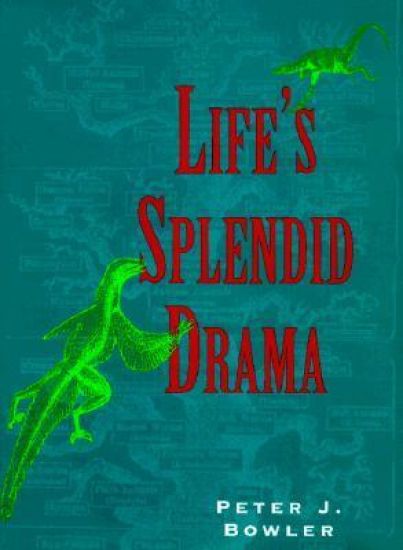
Life's Splendid Drama

Life's Splendid Drama

Peter J. Bowler

University of Chicago Press
1996
sidottu
Peter J. Bowler seeks to recover some of this lost history in this work, giving an account of evolutionary morphology and its relationships with paleontology and biogeography. He tracks major scientific debates over the origins of the main types of living animals and of extinct forms such as the dinosaurs. Charting the role of Darwin's ideas and the degree of their influence, the author seeks to show how these interactions constituted an interdisciplinary programme in evolutionary biology with a focus on reconstructing the past rather than on the mechanisms of change. Also examined is the rhetoric of "social Darwinism", Bowler arguing that it may have been derived not directly from the theory of natural selection but from the application of Darwinian principles to the rise and fall of different animal groups over time.
Life's Splendid Drama

Life's Splendid Drama

Peter J. Bowler

University of Chicago Press
1998
nidottu
The story of life's splendid drama has captivated generations of the general public, just as it has intrigued biologists, especially those who began to try to solve evolutionary puzzles in the years immediately after the publication of Darwin's Origin of Species in 1859. Yet histories of the Darwinian revolution have paid far more attention to theoretical debates and have largely ignored the researchers who struggled to comprehend the deeper evolutionary significance of fossil bones and the structures of living animals. Peter J. Bowler recovers some of this lost history in Life's Splendid Drama, the definitive account of evolutionary morphology and its relationships with paleontology and bio-geography."Intriguing and insightful."—William Kimler, American Scientist"[A] volume of impressive scholarship and extensive references."—Library Journal"One of Bowler's best."—Kevin Padian, Nature"[Bowler's] comprehensive review of the various debates and ideas in taxonomy, morphology, and vertebrate evolution . . . deserves the attention of biologists and other scholars interested in the history of ideas."—Choice"The persistence of pre-Darwinian modes of thought in contemporary biology underlines the importance of Bowler's book. Its value is not only in the history it provides, but also in the way it illumines the present."—Peter J. Causton, Boston Book Review
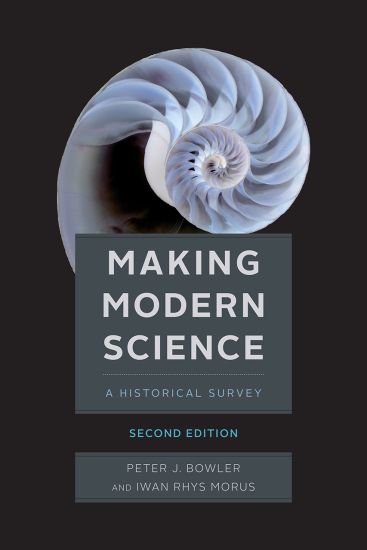
Making Modern Science, Second Edition

Making Modern Science, Second Edition

Peter J Bowler; Iwan Rhys Morus

University of Chicago Press
2020
pokkari
In this new edition of the top-selling coursebook, seasoned historians Peter J. Bowler and Iwan Rhys Morus expand on their authoritative survey of how the development of science has shaped our world. Exploring both the history of science and its influence on modern thought, the authors chronicle the major developments in scientific thinking, from the revolutionary ideas of the seventeenth century to contemporary issues in genetics, physics, and more. Designed for entry-level college courses and as a single-volume introduction for the general reader, Bowler and Morus present the history of science not as a series of names and dates but as an interconnected and complex web of relationships joining science and society. Thoroughly revised and expanded, the second edition draws on the latest research and scholarship. It also contains two entirely new chapters: one that explores the impact of computing on the development of science and another that surveys the complex interaction of Western science with the cultures of the rest of the world.
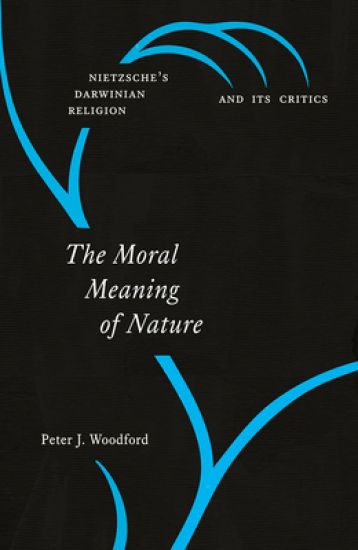
The Moral Meaning of Nature

The Moral Meaning of Nature

Peter J. Woodford

University of Chicago Press
2018
sidottu
What, if anything, does biological evolution tell us about the nature of religion, ethical values, or even the meaning and purpose of life? The Moral Meaning of Nature sheds new light on these enduring questions by examining the significance of an earlier—and unjustly neglected—discussion of Darwin in late nineteenth-century Germany. We start with Friedrich Nietzsche, whose writings staged one of the first confrontations with the Christian tradition using the resources of Darwinian thought. The lebensphilosophie, or “life-philosophy,” that arose from his engagement with evolutionary ideas drew responses from other influential thinkers, including Franz Overbeck, Georg Simmel, and Heinrich Rickert. These critics all offered cogent challenges to Nietzsche’s appropriation of the newly transforming biological sciences, his negotiation between science and religion, and his interpretation of the implications of Darwinian thought. They also each proposed alternative ways of making sense of Nietzsche’s unique question concerning the meaning of biological evolution “for life.” At the heart of the discussion were debates about the relation of facts and values, the place of divine purpose in the understanding of nonhuman and human agency, the concept of life, and the question of whether the sciences could offer resources to satisfy the human urge to discover sources of value in biological processes. The Moral Meaning of Nature focuses on the historical background of these questions, exposing the complex ways in which they recur in contemporary philosophical debate.
The Moral Meaning of Nature

The Moral Meaning of Nature

Peter J. Woodford

University of Chicago Press
2018
nidottu
What, if anything, does biological evolution tell us about the nature of religion, ethical values, or even the meaning and purpose of life? The Moral Meaning of Nature sheds new light on these enduring questions by examining the significance of an earlier—and unjustly neglected—discussion of Darwin in late nineteenth-century Germany. We start with Friedrich Nietzsche, whose writings staged one of the first confrontations with the Christian tradition using the resources of Darwinian thought. The lebensphilosophie, or “life-philosophy,” that arose from his engagement with evolutionary ideas drew responses from other influential thinkers, including Franz Overbeck, Georg Simmel, and Heinrich Rickert. These critics all offered cogent challenges to Nietzsche’s appropriation of the newly transforming biological sciences, his negotiation between science and religion, and his interpretation of the implications of Darwinian thought. They also each proposed alternative ways of making sense of Nietzsche’s unique question concerning the meaning of biological evolution “for life.” At the heart of the discussion were debates about the relation of facts and values, the place of divine purpose in the understanding of nonhuman and human agency, the concept of life, and the question of whether the sciences could offer resources to satisfy the human urge to discover sources of value in biological processes. The Moral Meaning of Nature focuses on the historical background of these questions, exposing the complex ways in which they recur in contemporary philosophical debate.
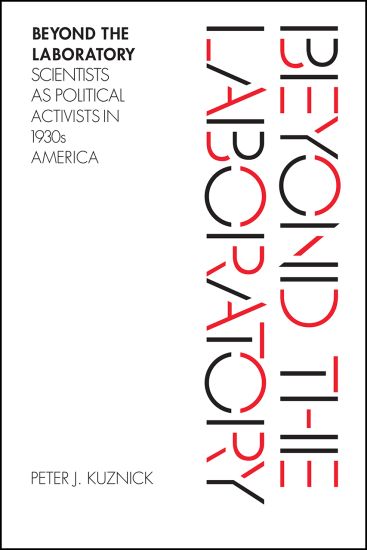
Beyond the Laboratory

Beyond the Laboratory

Peter J Kuznick

University of Chicago Press
2019
pokkari
The debate over scientists' social responsibility is a topic of great controversy today. Peter J. Kuznick here traces the origin of that debate to the 1930s and places it in a context that forces a reevaluation of the relationship between science and politics in twentieth-century America. Kuznick reveals how an influential segment of the American scientific community during the Depression era underwent a profound transformation in its social values and political beliefs, replacing a once-pervasive conservatism and antipathy to political involvement with a new ethic of social reform.
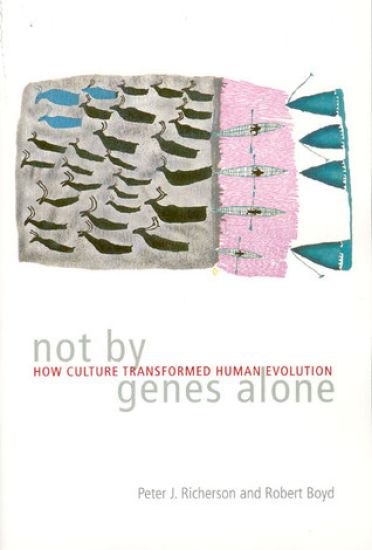
Not by Genes Alone

Not by Genes Alone

Peter J. Richerson; Robert Boyd

University of Chicago Press
2006
nidottu
Humans are a striking anomaly in the natural world. While we are similar to other mammals in many ways, our behavior sets us apart. Our unparalleled ability to adapt has allowed us to occupy virtually every habitat on earth, and our societies are larger, more complex, and more cooperative than any other mammal's. In "Not by Genes Alone", Peter J. Richerson and Robert Boyd argue that only a Darwinian theory of cultural evolution can explain these unique characteristics. "Not by Genes Alone" offers a radical interpretation of human evolution, arguing that our ecological dominance and our singular social systems stem from a psychology uniquely adapted to create complex culture. Richerson and Boyd consider culture to be essential to human adaptation, as much a part of human biology as bipedal locomotion. Drawing on work in the fields of anthropology, political science, sociology, and economics - and building their case with such fascinating examples as kayaks, clever knots, and yams that require twelve men to carry them - Richerson and Boyd convincingly demonstrate that culture and biology are inextricably linked. In abandoning the nature-versus-nurture debate as fundamentally misconceived, "Not by Genes Alone" is a truly original and groundbreaking theory of the role of culture in evolution and a book to be reckoned with for generations to come.
The Concept of Political Judgment

The Concept of Political Judgment

Peter J. Steinberger

University of Chicago Press
1993
sidottu
What is good political judgement? Is it a science subject to strict standards of logic and inference, or is it something more like an art, the product of intuition, feeling, or even chance? Peter J. Steinberger shows how the seemingly contradictory claims of inference and intuition are reconciled in the concept of political judgement. Resting his argument on the larger notion of judgement itself, Steinberger develops an original model of how political judgements are made and how we justify calling some of them "good." He lays the groundwork with a discussion of the ideas of Machiavelli, de Tocqueville, Nietzsche, Arendt, and Oakeshott on the nature of politics. Turning to the philosophic arguments of Kant, Gadamer, Grice, and Wittgenstein, he formulates a model of judgement as "intelligent performance," incorporating both intuition and rational reconstruction. Steinberger's conclusion - that a coherent political society must also be a judgmental one - is opposed to much contemporary thinking.
The Concept of Political Judgment

The Concept of Political Judgment

Peter J. Steinberger

University of Chicago Press
1993
nidottu
What is good political judgement? Is it a science subject to strict standards of logic and inference, or is it something more like an art, the product of intuition, feeling, or even chance? Peter J. Steinberger shows how the seemingly contradictory claims of inference and intuition are reconciled in the concept of political judgement. Resting his argument on the larger notion of judgement itself, Steinberger develops an original model of how political judgements are made and how we justify calling some of them "good." He lays the groundwork with a discussion of the ideas of Machiavelli, de Tocqueville, Nietzsche, Arendt, and Oakeshott on the nature of politics. Turning to the philosophic arguments of Kant, Gadamer, Grice, and Wittgenstein, he formulates a model of judgement as "intelligent performance," incorporating both intuition and rational reconstruction. Steinberger's conclusion - that a coherent political society must also be a judgmental one - is opposed to much contemporary thinking.