Kirjojen hintavertailu. Mukana 12 459 402 kirjaa ja 12 kauppaa.

Kirjahaku

Etsi kirjoja tekijän nimen, kirjan nimen tai ISBN:n perusteella.

509 tulosta hakusanalla Quintus Ennius

Quintus OakesA Detective Story (Edition1)

Quintus OakesA Detective Story (Edition1)

Charles Ross Jackson

Double 9 Books LLP
2025
nidottu
Quintus Oakes: A detective story explores the pursuit of truth through a lens of observation, intuition, and intellect as a detective navigates unsettling mysteries tied to a grand estate. The text examines the psychological intricacies of fear, deception, and secrecy that linger in the shadows of wealth and respectability. Through subtle cues and atmospheric tension, it draws attention to the layers of misdirection surrounding the investigation. The narrative suggests that reason and moral clarity are essential tools in confronting darkness disguised by civility. The detective figure is presented not just as a solver of puzzles, but as someone deeply attuned to human nature, capable of reading motives beneath surface appearances. The work underscores the idea that solving crime requires more than logic it requires an ethical compass and emotional acuity. By intertwining suspense with reflections on justice and perception, the book invites readers to consider how truth is revealed not only in what is seen, but in what is understood.
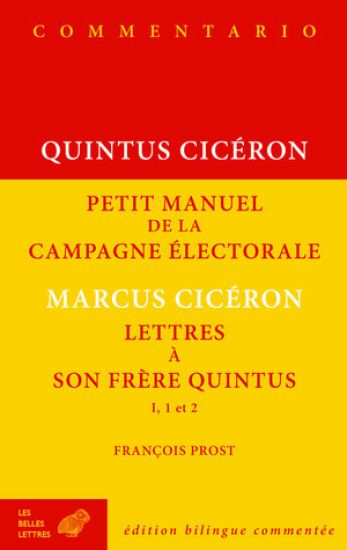
Quintus Ciceron, Petit Manuel de la Campagne Electorale Et Lettres a Son Frere Quintus
Les textes reunis ici constituent un dialogue epistolaire entre l'orateur et politicien Marcus Ciceron et son frere cadet Quintus, sur l'art et la maniere de reussir en politique a la fin de la Republique romaine. Dans son Petit manuel de la campagne electorale , Quintus conseille son aine alors candidat a la plus haute charge publique, le consulat, pour l'annee 63 av. J.-C. Il y revele les enjeux et les rouages essentiels d'une campagne electorale au plus haut niveau, eclaire les pieges qui attendent le candidat et les dilemmes moraux auxquels il est confronte: peut-on seduire l'electorat sans le tromper ? peut-on combiner reussite personnelle et souci de la moralite, dans un monde politique dangereux et violent ? A ce 'Petit manuel' repondent, en 59 av. J.-C., les deux lettres adressees par Marcus Ciceron a Quintus, alors gouverneur de la riche province d'Asie (Asie Mineure, en Turquie actuelle). Les conseils, mais aussi les reproches de l'aine au cadet montrent de l'interieur, l'exercice du pouvoir imperial de Rome sur ses provinces et posent de nouveau la question de la qualite morale de l'action politique: comment Rome peut exercer le pouvoir absolu sur ses sujets, sans verser dans la tyrannie ? Comment concilier les interets politiques et economiques des Romains avec le respect des personnes et la preservation des communautes gouvernees par le detenteur de l'autorite imperiale ? De cette reflexion, appliquee a une terre de culture grecque, emerge la conception ciceronienne de l'humanitas, une humanite a vocation universelle.
Quintus Fabius Pictor

Quintus Fabius Pictor

VDM Publishing House
2010
nidottu
Observera att förlaget som ger ut denna produkt baserar innehållet i sina produkter på fria källor som Wikipedia. Boken är med stor sannolikhet endast ett utdrag ur dessa informationskällor, alltså inte en vanlig bok i den bemärkelsen.
Quintus Lollius Urbicus

Quintus Lollius Urbicus

VDM Publishing House
2010
nidottu
Observera att förlaget som ger ut denna produkt baserar innehållet i sina produkter på fria källor som Wikipedia. Boken är med stor sannolikhet endast ett utdrag ur dessa informationskällor, alltså inte en vanlig bok i den bemärkelsen.
Quintus Horatius Flaccus

Quintus Horatius Flaccus

VDM Publishing House
2010
nidottu
Observera att förlaget som ger ut denna produkt baserar innehållet i sina produkter på fria källor som Wikipedia. Boken är med stor sannolikhet endast ett utdrag ur dessa informationskällor, alltså inte en vanlig bok i den bemärkelsen.
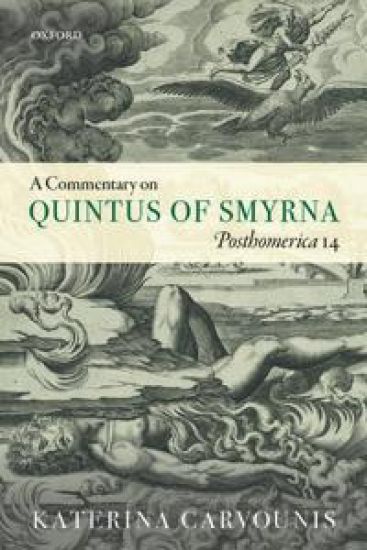
A Commentary on Quintus of Smyrna, Posthomerica 14

A Commentary on Quintus of Smyrna, Posthomerica 14

Katerina Carvounis

Oxford University Press
2019
sidottu
The Posthomerica, a Greek epic by Quintus of Smyrna believed to have been written in the third century AD, tells the story of the Trojan War beginning with the events immediately following the end of the narrative of the Iliad. Valued as one of the few surviving detailed poetic accounts of this period, Book 14, the final book of the poem, covers the events that take place the day after the sack of Troy, from Helen's return to Menelaus and the sacrifice of Polyxena, to the homeward journey of the victorious Greeks, which is abruptly interrupted by a divine storm. This detailed commentary divides the text of Posthomerica 14 into smaller narrative units, introducing each with an overview of the relevant literary tradition and a discussion of Quintus' possible direct models. There follows a line-by-line commentary addressing points of literary, stylistic, lexicographic, and textual-critical interest, and providing readers with a range of notes on background and vocabulary. The aim throughout is to illuminate the main features of Quintus' poetry and to offer as full an interpretation as possible of Posthomerica 14 within its literary context and in dialogue with the earlier tradition, in particular the diction, motifs, and narrative and literary techniques of the Homeric poems and the epic tradition more generally. For readers new to the Posthomerica, the volume also includes a thorough and up-to-date introduction offering an accessible overview of the poem's content, dates, context, models, and possible sources, including both the Epic Cycle and Latin literature.
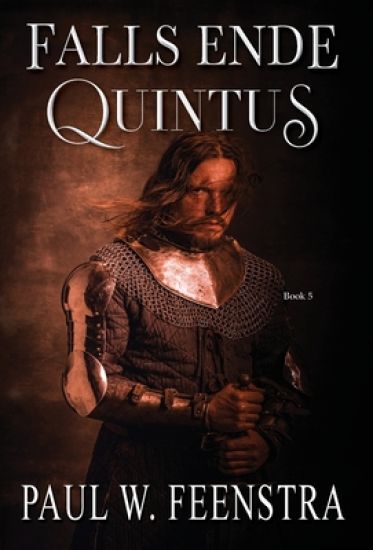
Falls Ende - Quintus

Falls Ende - Quintus

Paul W Feenstra

Mellester Press
2022
sidottu
Falls Ende - Quintus is book five in this fast-paced medieval series.Haunted by his father's troubled past, Odo's life is in imminent danger when he journeys to Dover Castle to attend to the king and queen. Shaken by revelations shared with him by Queen Eleanor, Odo seeks revenge and sets out to end the blood feud once and for all.Odo's fortitude is tested when King Henry makes an unusual request that forever changes Mellester Manor. Can he meet the challenge and survive those who seek his death because Mellester is no longer safe, not even from the influential apostles of the Church? Problems plague Mellester; his precious new Falls Ende Mill flounders, and its massive water wheel sits idle as Odo considers attacking a neighbouring hamlet. A few dissenting local lords refuse to swear their allegiance and don't believe Odo worthy of the noble title bestowed on him by the king. Without support, Odo faces overwhelming forces that he must overcome. Is this a test to gauge his strength and suitability as lord of the manor? Because there will be a reckoning, and it will require all his strength and determination to face, not just a battle of wits, but highly skilled armed knights that want him dead.Falls Ende - Quintus takes this epic series to a new and exciting level. Thoroughly original and deeply emotional, this medieval tale will leave you turning pages long into the night.Best read in sequence.
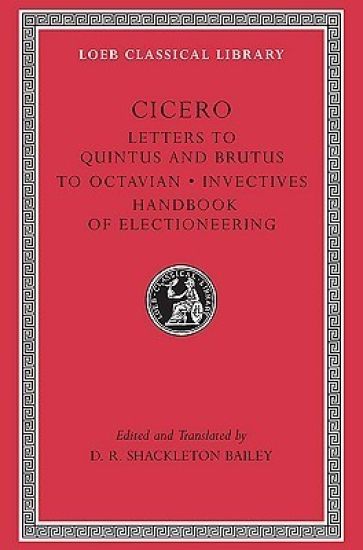
Letters to Quintus and Brutus. Letter Fragments. Letter to Octavian. Invectives. Handbook of Electioneering
Private correspondence and dubious disquisitions.Cicero had an affectionate relationship with his only brother, Quintus, down to the closing years of their lives. The letters from Cicero to him in this collection offer an intimate look at their world. Cicero’s close friendship with the intensely intellectual Brutus was signalized by Cicero’s dedication of his prized Orator to Brutus. The correspondence between the two collected here dates from the spring and summer of 43 BC, and it conveys some of the drama of the period following the assassination of Julius Caesar.Shackleton Bailey also provides in this volume a new text and translation of two invective speeches purportedly delivered in the Senate: Sallust attacking Cicero and Cicero attacking Sallust. These are probably anonymous ancient schoolbook exercises, but have come down to us with the works of Sallust and Cicero. Another work in the same category, the Letter to Octavian ostensibly by Cicero but probably dating from the third or fourth century AD, is included as well. Here too (with text by Shackleton Bailey and revised introduction and translation by M. I. Henderson) is the Handbook of Electioneering, a guide said to be written by Quintus to his brother, advising him on campaigning for the consulship of 63 BC. Whether or not this is genuinely the work of Quintus, it remains an interesting treatise on Roman elections. Letter fragments complete the volume; these were not previously available in the Loeb Classical Library.