Kirjojen hintavertailu. Mukana 11 342 296 kirjaa ja 12 kauppaa.

Kirjahaku

Etsi kirjoja tekijän nimen, kirjan nimen tai ISBN:n perusteella.

1000 tulosta hakusanalla R F

Using R for Bayesian Spatial and Spatio-Temporal Health Modeling
Progressively more and more attention has been paid to how location affects health outcomes. The area of disease mapping focusses on these problems, and the Bayesian paradigm has a major role to play in the understanding of the complex interplay of context and individual predisposition in such studies of disease. Using R for Bayesian Spatial and Spatio-Temporal Health Modeling provides a major resource for those interested in applying Bayesian methodology in small area health data studies.Features:Review of R graphics relevant to spatial health dataOverview of Bayesian methods and Bayesian hierarchical modeling as applied to spatial dataBayesian Computation and goodness-of-fitReview of basic Bayesian disease mapping modelsSpatio-temporal modeling with MCMC and INLASpecial topics include multivariate models, survival analysis, missing data, measurement error, variable selection, individual event modeling, and infectious disease modelingSoftware for fitting models based on BRugs, Nimble, CARBayes and INLAProvides code relevant to fitting all examples throughout the book at a supplementary website The book fills a void in the literature and available software, providing a crucial link for students and professionals alike to engage in the analysis of spatial and spatio-temporal health data from a Bayesian perspective using R. The book emphasizes the use of MCMC via Nimble, BRugs, and CARBAyes, but also includes INLA for comparative purposes. In addition, a wide range of packages useful in the analysis of geo-referenced spatial data are employed and code is provided. It will likely become a key reference for researchers and students from biostatistics, epidemiology, public health, and environmental science.
Using R for Bayesian Spatial and Spatio-Temporal Health Modeling
Progressively more and more attention has been paid to how location affects health outcomes. The area of disease mapping focusses on these problems, and the Bayesian paradigm has a major role to play in the understanding of the complex interplay of context and individual predisposition in such studies of disease. Using R for Bayesian Spatial and Spatio-Temporal Health Modeling provides a major resource for those interested in applying Bayesian methodology in small area health data studies.Features:Review of R graphics relevant to spatial health dataOverview of Bayesian methods and Bayesian hierarchical modeling as applied to spatial dataBayesian Computation and goodness-of-fitReview of basic Bayesian disease mapping modelsSpatio-temporal modeling with MCMC and INLASpecial topics include multivariate models, survival analysis, missing data, measurement error, variable selection, individual event modeling, and infectious disease modelingSoftware for fitting models based on BRugs, Nimble, CARBayes and INLAProvides code relevant to fitting all examples throughout the book at a supplementary website The book fills a void in the literature and available software, providing a crucial link for students and professionals alike to engage in the analysis of spatial and spatio-temporal health data from a Bayesian perspective using R. The book emphasizes the use of MCMC via Nimble, BRugs, and CARBAyes, but also includes INLA for comparative purposes. In addition, a wide range of packages useful in the analysis of geo-referenced spatial data are employed and code is provided. It will likely become a key reference for researchers and students from biostatistics, epidemiology, public health, and environmental science.
Implementing R for Statistics

Implementing R for Statistics

Muhammad Imran; Michail Tsagris; Farrukh Jamal; Christophe Chesneau

ELSEVIER SCIENCE PUBLISHING CO INC
2026
nidottu
Implementing R for Statistics is a timely first edition textbook that provides comprehensive coverage of basic statistical concepts using R, an important open-source programming language tool. This book guides the readers through understanding the R basics, from installing R and RStudio to exploring its basic structure and uses, to implementing and practicing these in statistics. Using the sophisticated and elegant data visualization of R, this book explains the latest advances in the R programming language using illustrated examples carefully designed to apply the core principles discussed in the text to emerging topics in the field. It also provides useful insights into the process of developing R packages and creating metadata, focusing on exploiting the flexible and user-friendly nature of R. Written by an international and experienced team of authors, Implementing R for Statistics is an essential text for students, lecturers, data scientists, and applied researchers in all areas of statistics and related fields such as biostatistics, health care, finance, risk management, social sciences, market research, and environmental and climate research.
Chineasy (R) for Children

Chineasy (R) for Children

ShaoLan Hsueh; Noma Bar

Thames Hudson Ltd
2018
sidottu
'ShaoLan demystifies Chinese characters through attractive graphics and imaginative activities. A very engaging book for young learners of Chinese.' – James Trapp, Primary Network Coordinator University College London, IOE, Confucius Institute for Schools Chineasy® is the fun and easy way to learn how to read Chinese characters with pictures. The book opens with introductory spreads explaining how the Chinese language is made up of building blocks. Subsequent spreads feature lively scenes and illustrations that help children to recognize basic Chinese characters. The book is organized by themes, each of which covers key vocabulary such as numbers, family, animals and food. Stories about the development of characters and customs provide the perfect introduction to Chinese culture, while games and activities allow children to put into practice what they have learned. The book also features eight practice pages for children to try out writing the Chinese characters. You’ll be surprised how easy Chinese is when you learn it the Chineasy® way!
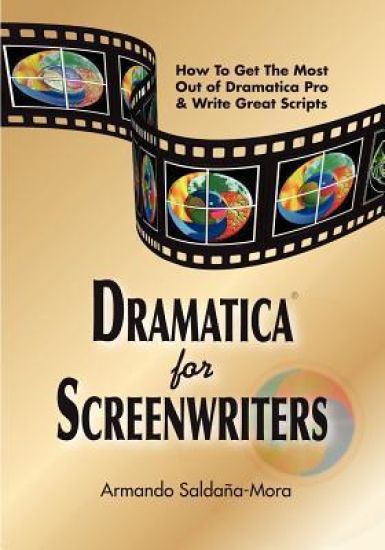
Dramatica(r) for Screenwriters: How to Get the Most out of Dramatica(r) Pro & Write Great Scripts
Dramatica for Screenwriters by Armando Salda a Mora is a must for any writer who wishes to get the most out of the Dramatica(r) Pro story development software. Written by a working screenwriter, this book gives real world, practical applications for using Dramatica to develop and write Screenplays. Book topics include: * What Dramatica offers the screenwriter * Dramatica in thirty seconds * Characters: Beyond the archetypes * Character Relationships as subplots * Note and sketch story development * How to get a complete plot * Four Dramatica Acts, Three Classical Acts * Narrative flow & writing the screenplay * And many more...
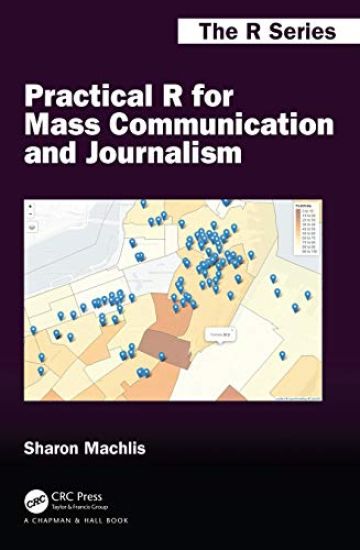
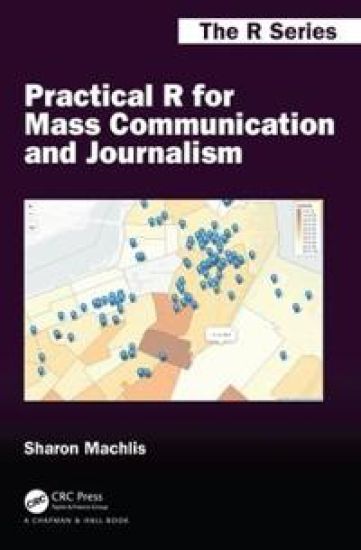
Practical R for Mass Communication and Journalism
Do you want to use R to tell stories? This book was written for you—whether you already know some R or have never coded before.Most R texts focus only on programming or statistical theory. Practical R for Mass Communication and Journalism gives you ideas, tools, and techniques for incorporating data and visualizations into your narratives.You’ll see step by step how to: Analyze airport flight delays, restaurant inspections, and election results Map bank locations, median incomes, and new voting districts Compare campaign contributions to final election results Extract data from PDFs Whip messy data into shape for analysis Scrape data from a website Create graphics ranging from simple, static charts to interactive visualizations for the WebIf you work or plan to work in a newsroom, government office, non-profit policy organization, or PR office, Practical R for Mass Communication and Journalism will help you use R in your world.This book has a companion website with code, links to additional resources, and searchable tables by function and task.Sharon Machlis is the author of Computerworld’s Beginner’s Guide to R, host of InfoWorld’s Do More With R video screencast series, admin for the R for Journalists Google Group, and is well known among Twitter users who follow the #rstats hashtag. She is Director of Editorial Data and Analytics at IDG Communications (parent company of Computerworld, InfoWorld, PC World and Macworld, among others) and a frequent speaker at data journalism and R conferences.
Using R for Item Response Theory Model Applications
Item response theory (IRT) is widely used in education and psychology and is expanding its applications to other social science areas, medical research, and business as well. Using R for Item Response Theory Model Applications is a practical guide for students, instructors, practitioners, and applied researchers who want to learn how to properly use R IRT packages to perform IRT model calibrations with their own data.This book provides practical line-by-line descriptions of how to use R IRT packages for various IRT models. The scope and coverage of the modeling in the book covers almost all models used in practice and in popular research, including: dichotomous response modeling polytomous response modeling mixed format data modeling concurrent multiple group modeling fixed item parameter calibration modelling with latent regression to include person-level covariate(s) simple structure, or between-item, multidimensional modeling cross-loading, or within-item, multidimensional modeling high-dimensional modeling bifactor modeling testlet modeling two-tier modelingFor beginners, this book provides a straightforward guide to learn how to use R for IRT applications. For more intermediate learners of IRT or users of R, this book will serve as a great time-saving tool for learning how to create the proper syntax, fit the various models, evaluate the models, and interpret the output using popular R IRT packages.
Using R for Item Response Theory Model Applications
Item response theory (IRT) is widely used in education and psychology and is expanding its applications to other social science areas, medical research, and business as well. Using R for Item Response Theory Model Applications is a practical guide for students, instructors, practitioners, and applied researchers who want to learn how to properly use R IRT packages to perform IRT model calibrations with their own data.This book provides practical line-by-line descriptions of how to use R IRT packages for various IRT models. The scope and coverage of the modeling in the book covers almost all models used in practice and in popular research, including: dichotomous response modeling polytomous response modeling mixed format data modeling concurrent multiple group modeling fixed item parameter calibration modelling with latent regression to include person-level covariate(s) simple structure, or between-item, multidimensional modeling cross-loading, or within-item, multidimensional modeling high-dimensional modeling bifactor modeling testlet modeling two-tier modelingFor beginners, this book provides a straightforward guide to learn how to use R for IRT applications. For more intermediate learners of IRT or users of R, this book will serve as a great time-saving tool for learning how to create the proper syntax, fit the various models, evaluate the models, and interpret the output using popular R IRT packages.
Practical R for Mass Communication and Journalism
Do you want to use R to tell stories? This book was written for you—whether you already know some R or have never coded before.Most R texts focus only on programming or statistical theory. Practical R for Mass Communication and Journalism gives you ideas, tools, and techniques for incorporating data and visualizations into your narratives.You’ll see step by step how to: Analyze airport flight delays, restaurant inspections, and election results Map bank locations, median incomes, and new voting districts Compare campaign contributions to final election results Extract data from PDFs Whip messy data into shape for analysis Scrape data from a website Create graphics ranging from simple, static charts to interactive visualizations for the WebIf you work or plan to work in a newsroom, government office, non-profit policy organization, or PR office, Practical R for Mass Communication and Journalism will help you use R in your world.This book has a companion website with code, links to additional resources, and searchable tables by function and task.Sharon Machlis is the author of Computerworld’s Beginner’s Guide to R, host of InfoWorld’s Do More With R video screencast series, admin for the R for Journalists Google Group, and is well known among Twitter users who follow the #rstats hashtag. She is Director of Editorial Data and Analytics at IDG Communications (parent company of Computerworld, InfoWorld, PC World and Macworld, among others) and a frequent speaker at data journalism and R conferences.
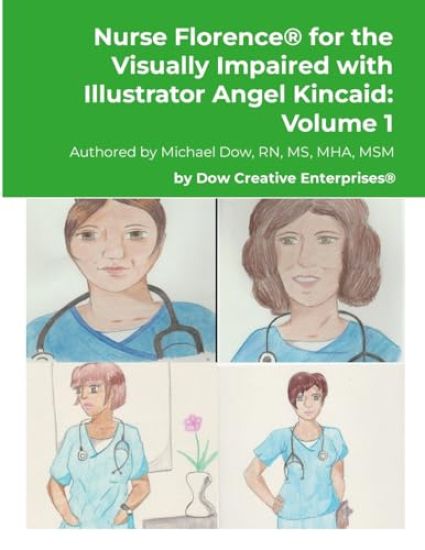
Nurse Florence(R) for the Visually Impaired with Illustrator Sela Goldfarb
Sometimes it seems only a nurse can bring technical information down to an understanding that an ordinary person can grasp. The Nurse Florence(R) book series provides high quality medical information that even a child can grasp. By introducing young kids to correct terminology and science concepts at an early age, we can help increase our children's health literacy level as well as help to prepare them for courses and jobs in Science, Technology, Engineering, and Math. We need more scientists so I hope that many children will enjoy this book series and consider a job involving science. Introducing Some Medical Words to Kids in Every Book(R) A Movement of Global Health Promotion and Literacy Dow Creative Enterprises(R) Help Civilization Reach Its Potential(R) Inside text has 1.5 line spacing and font sizes are up to 40.
Nurse Florence(R) for Beginning Readers: How Do We Feel Touch?
This is a health book series meant to help kids take their first steps in their journey of healthy living. A friendly nurse, Nurse Florence, guides three girls named Jean, Condi, and Sonia as they ask questions about their body and how to live healthier. The title character, Nurse Florence, is in honor of Florence Nightingale, the pioneer of modern nursing. We hope a new generation of kids get interested in nursing and other health careers. Dow Creative Enterprises(R) Help Civilization Reach Its Potential
Nurse Florence(R) for Beginning Readers
This is a health book series meant to help kids take their first steps in their journey of healthy living. A friendly nurse, Nurse Florence, guides three girls named Jean, Condi, and Sonia as they ask questions about their body and how to live healthier. The title character, Nurse Florence, is in honor of Florence Nightingale, the pioneer of modern nursing. We hope a new generation of kids get interested in nursing and other health careers. Dow Creative Enterprises(R) Help Civilization Reach Its Potential
Nurse Florence(R) for Beginning Readers: How Do We Feel Hot and Cold Things?
This is a health book series meant to help kids take their first steps in their journey of healthy living. A friendly nurse, Nurse Florence, guides three girls named Jean, Condi, and Sonia as they ask questions about their body and how to live healthier. The title character, Nurse Florence, is in honor of Florence Nightingale, the pioneer of modern nursing. We hope a new generation of kids get interested in nursing and other health careers. Dow Creative Enterprises(R) Help Civilization Reach Its Potential