Kirjahaku
Etsi kirjoja tekijän nimen, kirjan nimen tai ISBN:n perusteella.
1000 tulosta hakusanalla RICHARD MOORE

Richard B. Moore, Caribbean Militant in Harlem
Indiana University Press
1992
pokkari
"[This] critical edition of a selection of Richard B. Moore's essays closes one more gap in the astonishing history of twentieth-century Afro-American nationalism." —Journal of American History "This first collection of Moore's writings . . . [is] a welcome and important contribution to scholarship concerned with the political and intellectual history of African peoples in general and of African peoples in the Americas, in particular. . . . an inspiration to those who follow after to study and emulate his life and achievement." —Journal of American Ethnic History
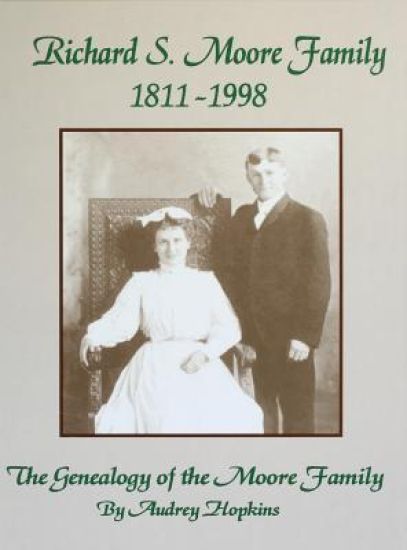
The Genealogy of the Moore Family, including death records, photos.
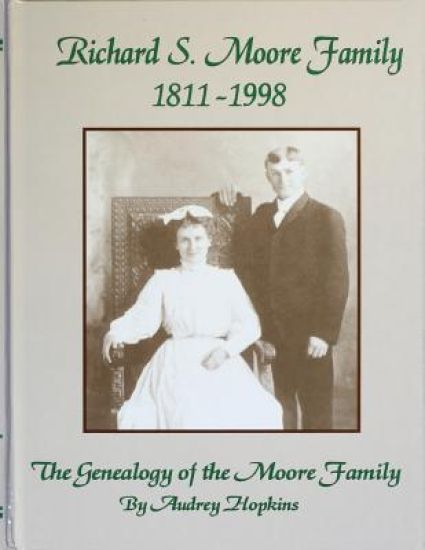
The Genealogy of the Moore Family, including death records, photos.
![The Works of the Late Right Honourable Richard Brinsley Sheridan. [edited by Thomas Moore.]](/covers/9781241087715.jpg)
The Works of the Late Right Honourable Richard Brinsley Sheridan. [edited by Thomas Moore.]
Richard Sheridan
British Library, Historical Print Editions
2011
pokkari


![The Works Of ... Richard Brinsley Sheridan [ed. By T. Moore]](/covers/9781012844004.jpg)
The Works Of ... Richard Brinsley Sheridan [ed. By T. Moore]
Wentworth Press
2019
pokkari


![Nominations of William S. [i.e. W.] Ginsberg, Richard T. Moore, Jesse L. White, Jr., and Eugene S. Witherspoon](/covers/9781379154068.jpg)
Nominations of William S. [i.e. W.] Ginsberg, Richard T. Moore, Jesse L. White, Jr., and Eugene S. Witherspoon
Palala Press
2018
pokkari
This work has been selected by scholars as being culturally important, and is part of the knowledge base of civilization as we know it. This work was reproduced from the original artifact, and remains as true to the original work as possible. Therefore, you will see the original copyright references, library stamps (as most of these works have been housed in our most important libraries around the world), and other notations in the work.This work is in the public domain in the United States of America, and possibly other nations. Within the United States, you may freely copy and distribute this work, as no entity (individual or corporate) has a copyright on the body of the work.As a reproduction of a historical artifact, this work may contain missing or blurred pages, poor pictures, errant marks, etc. Scholars believe, and we concur, that this work is important enough to be preserved, reproduced, and made generally available to the public. We appreciate your support of the preservation process, and thank you for being an important part of keeping this knowledge alive and relevant.

Richard Polwhele was a writer of rare energies. Today known only for The Unsex’d Females and its attack on radical women writers, Polwhele was a historian, translator, memoirist, and poet. As an indigent Cornish gentleman clergyman and JP, his extensive written output encompassed sermons, open letters, and even headstone verse. This book recovers the lost Polwhele, locating him within an archipelagic understanding of the vitality and complexity inherent in the loyalist tradition with British Romantic culture via a range of previously unexamined texts and manuscript sources.Torn between a desire for sociability and an appetite (and capacity) for a good argument, Polwhele’s outspoken contributions across a range of disciplines testify to the variety and dynamism of what has previously been considered provincial and reactionary. This book locates Polwhele’s work within key preoccupations of the age: the social, economic, and political valences of literary sociability in the age of print; the meaning of loyalism in an age of revolution; the meaning of place and belonging; enthusiasm, religious or otherwise; and the self-fashioning of the provincial man of letters. In doing so it argues for a broader definition of Romanticism than the one that has typed Polwhele as an unpalatable embarrassment and the anachronistic voice of provincial High Tory reaction.This volume will be of interest to those working in the field of late eighteenth and early nineteenth-century British Literature, with a particular focus on politics and on the nature of literary production and identity across the non-metropolitan areas of the British Isles.

Richard Polwhele was a writer of rare energies. Today known only for The Unsex’d Females and its attack on radical women writers, Polwhele was a historian, translator, memoirist, and poet. As an indigent Cornish gentleman clergyman and JP, his extensive written output encompassed sermons, open letters, and even headstone verse. This book recovers the lost Polwhele, locating him within an archipelagic understanding of the vitality and complexity inherent in the loyalist tradition with British Romantic culture via a range of previously unexamined texts and manuscript sources.Torn between a desire for sociability and an appetite (and capacity) for a good argument, Polwhele’s outspoken contributions across a range of disciplines testify to the variety and dynamism of what has previously been considered provincial and reactionary. This book locates Polwhele’s work within key preoccupations of the age: the social, economic, and political valences of literary sociability in the age of print; the meaning of loyalism in an age of revolution; the meaning of place and belonging; enthusiasm, religious or otherwise; and the self-fashioning of the provincial man of letters. In doing so it argues for a broader definition of Romanticism than the one that has typed Polwhele as an unpalatable embarrassment and the anachronistic voice of provincial High Tory reaction.This volume will be of interest to those working in the field of late eighteenth and early nineteenth-century British Literature, with a particular focus on politics and on the nature of literary production and identity across the non-metropolitan areas of the British Isles.
Ailey Moore, A Tale Of The Times: Showing How Evictions, Murder, And Such-Like Pastimes Are Managed And Justice Administered, In Ireland (1856)
Richard Baptist O'Brien
KESSINGER PUBLISHING, LLC
2008
nidottu
Ailey Moore, A Tale Of The Times: Showing How Evictions, Murder, And Such-Like Pastimes Are Managed And Justice Administered, In Ireland (1856)
Richard Baptist O'Brien
KESSINGER PUBLISHING, LLC
2008
sidottu
Moorestown: Where rich men's dreams came true and poor men's sons went to Vietnam to die
Richard Thomas Edwards
Createspace Independent Publishing Platform
2018
nidottu
Moorestown was my town back in the 50s and 60s. My father ran the Criterion Movie Theater in town and was responsible for the Moorestown Memorial Field. This book is a panoramic view of the town as I knew it.

The Works of Richard Brinsley Sheridan
Thomas Moore; Richard Brinsley Sheridan
Hansebooks
2017
pokkari