Kirjojen hintavertailu. Mukana 11 244 527 kirjaa ja 12 kauppaa.

Kirjahaku

Etsi kirjoja tekijän nimen, kirjan nimen tai ISBN:n perusteella.

1000 tulosta hakusanalla Rashed Hasan Faap

Computer Aided Engineering Design and Manufacturing

Computer Aided Engineering Design and Manufacturing

Wasim Ahmed Khan; Volkan Esat; Muhammad Hammad; Warsame Hassan Ali; Muhammad Qasim Zafar; Rashid Ali

Springer International Publishing AG
2025
sidottu
This text introduces the modern concepts relevant to system engineering design and manufacturing from a 4th Industrial Revolution perspective. The book surveys the current status and cutting edge in Computer Aided Design and Computer Aided Manufacturing (CAD/CAM). This bridges the gaps between academic research and industry. It consists of seven parts and seventeen chapters that first structure the subject areas and later detail the main topics under consideration. Each part of the book and each chapter contains a prelude guiding the reader in a systematic way to the next part or topic. The book explains concepts using state-of-the-art teaching methods, using objectives, learning outcomes and review questions. MS PowerPoint Slides and Solution Manual for instructors are available online as well as videos.

Fiscal and Monetary Policies in Developing Countries

Fiscal and Monetary Policies in Developing Countries

Rashed Al Mahmud Titumir

TAYLOR FRANCIS LTD
2021
sidottu
The COVID-19 crisis has fractured the pre-existing structural rigidities and institutional fragilities in the economies of developing countries more than ever, necessitating a rethinking of fiscal and monetary policies, the main vehicles for relief, recovery and reconstruction. This book examines the barriers to transformation in developing countries in the wake of the pandemic and analyses the paths to recovery based on an economic policymaking agenda. It juxtaposes fiscal and monetary policies and state-building from pre- and post-colonial periods to the present-day context. It employs an interdisciplinary approach and ventures beyond the well-rehearsed tendency to explain the state of developing countries by considering the experiences of advanced economies. The book utilises data on three levels: the aggregate level using world data, the single-country context with case studies and a cross-country assessment for comparative analysis. Further, the book critically assesses the relevance of different schools of thought and provides nuanced, thought-provoking theoretical apparatuses applicable to developing countries, as well as allowing the reader to undertake a country-specific analysis through the detailed historical country case studies undertaken in each chapter. Each chapter has a detailed and separate theoretical and empirical section for the ease of understanding of the key propositions in the book. The book will find an audience among scholars and researchers alike, who wish to gain a deeper understanding of the formulation of fiscal and monetary policies, specifically in developing countries. For policymakers and policy advocates, the book will serve as the groundwork for monetary and fiscal policies in the context of developing countries, providing more relevant instruments for transformational pathways.
Fiscal and Monetary Policies in Developing Countries

Fiscal and Monetary Policies in Developing Countries

Rashed Al Mahmud Titumir

TAYLOR FRANCIS LTD
2023
nidottu
The COVID-19 crisis has fractured the pre-existing structural rigidities and institutional fragilities in the economies of developing countries more than ever, necessitating a rethinking of fiscal and monetary policies, the main vehicles for relief, recovery and reconstruction. This book examines the barriers to transformation in developing countries in the wake of the pandemic and analyses the paths to recovery based on an economic policymaking agenda. It juxtaposes fiscal and monetary policies and state-building from pre- and post-colonial periods to the present-day context. It employs an interdisciplinary approach and ventures beyond the well-rehearsed tendency to explain the state of developing countries by considering the experiences of advanced economies. The book utilises data on three levels: the aggregate level using world data, the single-country context with case studies and a cross-country assessment for comparative analysis. Further, the book critically assesses the relevance of different schools of thought and provides nuanced, thought-provoking theoretical apparatuses applicable to developing countries, as well as allowing the reader to undertake a country-specific analysis through the detailed historical country case studies undertaken in each chapter. Each chapter has a detailed and separate theoretical and empirical section for the ease of understanding of the key propositions in the book. The book will find an audience among scholars and researchers alike, who wish to gain a deeper understanding of the formulation of fiscal and monetary policies, specifically in developing countries. For policymakers and policy advocates, the book will serve as the groundwork for monetary and fiscal policies in the context of developing countries, providing more relevant instruments for transformational pathways.
State Building and Social Policies in Developing Countries

State Building and Social Policies in Developing Countries

Rashed Al Mahmud Titumir

TAYLOR FRANCIS LTD
2022
sidottu
This book moves away from the orthodox neoliberal paradigm to suggest a new framework linking social policy with citizenship and transformation. The interjection of nation building, public society and public provisioning to the study of education, healthcare and employment caters to the needs of citizens equitably. By combining and coagulating these three broad arenas of politico-economic discussion, this book takes a new approach to the analysis of social policymaking in developing countries to indicate the drivers and triggers of transformation. It makes comprehensive, thorough critical comparisons between the trajectories of developed and developing countries, finds out the gaps in transformation and suggests drivers for changes.The intentions of social policymaking, as proposed in the book, are to curb the growing inequalities in the forms of class, power and marginalisation. The chapters on education focus on provisioning of public goods for skills formation, innovation and citizenship education. The sections on healthcare centre on universal health care as opposed to universal health coverage by analysing access, healthcare-seeking behaviour, price setting, market provisioning etc. For the chapters on employment, propositions are posited regarding the expansion of productive capacity, factor mobility and social security to ensure work for all.Besides theorising education, healthcare and employment based on public provisioning by the people’s state, underwritten by a public society, the book provides feasible solutions through data sourced from all major international organisations. In addition, it recognises the unique postcolonial struggles and aspirations of the developing countries, and accordingly resorts to defining the normative principles, reflecting nuances, subtleties and peculiarities.This book is a continuation of the author's Fiscal and Monetary Policies in Developing Countries: State, Citizenship and Transformation (Routledge) and will draw the attention of scholars and researchers who wish to gain a deeper understanding of, and pragmatic solutions to, social policies that address the transformational pathways of developing countries, accentuated by the COVID-19 pandemic.
State Building and Social Policies in Developing Countries

State Building and Social Policies in Developing Countries

Rashed Al Mahmud Titumir

TAYLOR FRANCIS LTD
2024
nidottu
This book moves away from the orthodox neoliberal paradigm to suggest a new framework linking social policy with citizenship and transformation. The interjection of nation building, public society and public provisioning to the study of education, healthcare and employment caters to the needs of citizens equitably. By combining and coagulating these three broad arenas of politico-economic discussion, this book takes a new approach to the analysis of social policymaking in developing countries to indicate the drivers and triggers of transformation. It makes comprehensive, thorough critical comparisons between the trajectories of developed and developing countries, finds out the gaps in transformation and suggests drivers for changes.The intentions of social policymaking, as proposed in the book, are to curb the growing inequalities in the forms of class, power and marginalisation. The chapters on education focus on provisioning of public goods for skills formation, innovation and citizenship education. The sections on healthcare centre on universal health care as opposed to universal health coverage by analysing access, healthcare-seeking behaviour, price setting, market provisioning etc. For the chapters on employment, propositions are posited regarding the expansion of productive capacity, factor mobility and social security to ensure work for all.Besides theorising education, healthcare and employment based on public provisioning by the people’s state, underwritten by a public society, the book provides feasible solutions through data sourced from all major international organisations. In addition, it recognises the unique postcolonial struggles and aspirations of the developing countries, and accordingly resorts to defining the normative principles, reflecting nuances, subtleties and peculiarities.This book is a continuation of the author's Fiscal and Monetary Policies in Developing Countries: State, Citizenship and Transformation (Routledge) and will draw the attention of scholars and researchers who wish to gain a deeper understanding of, and pragmatic solutions to, social policies that address the transformational pathways of developing countries, accentuated by the COVID-19 pandemic.
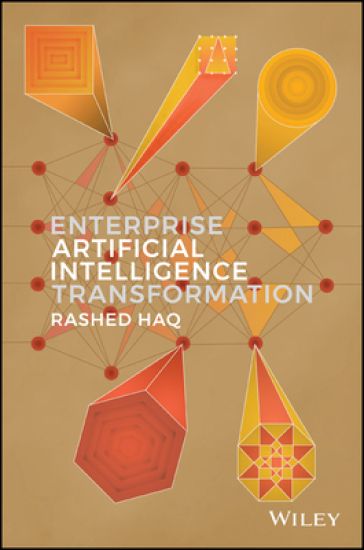
Enterprise Artificial Intelligence Transformation
Enterprise Artificial Intelligence Transformation AI is everywhere. From doctor's offices to cars and even refrigerators, AI technology is quickly infiltrating our daily lives. AI has the ability to transform simple tasks into technological feats at a human level. This will change the world, plain and simple. That's why AI mastery is such a sought-after skill for tech professionals. Author Rashed Haq is a subject matter expert on AI, having developed AI and data science strategies, platforms, and applications for Publicis Sapient's clients for over 10 years. He shares that expertise in the new book, Enterprise Artificial Intelligence Transformation. The first of its kind, this book grants technology leaders the insight to create and scale their AI capabilities and bring their companies into the new generation of technology. As AI continues to grow into a necessary feature for many businesses, more and more leaders are interested in harnessing the technology within their own organizations. In this new book, leaders will learn to master AI fundamentals, grow their career opportunities, and gain confidence in machine learning. Enterprise Artificial Intelligence Transformation covers a wide range of topics, including: Real-world AI use cases and examplesMachine learning, deep learning, and slimantic modelingRisk management of AI modelsAI strategies for development and expansionAI Center of Excellence creating and management If you're an industry, business, or technology professional that wants to attain the skills needed to grow your machine learning capabilities and effectively scale the work you're already doing, you'll find what you need in Enterprise Artificial Intelligence Transformation.
SONGS OF INNOCENCE, Reflections and Recollections
Songs of Innocence: Reflections and Recollections includes an array of poems that touch upon different political, philosophical, psychological, emotional and social issues and values. It is a deep reflection on life with all its ups and downs. It is a quest for a better and deeper understanding of life, truth, nature and man. In a word, it's reflections on unresolved dilemmas, reflections on exile, so to speak.
Building a Salesforce-Powered Front Office
Harness the power of Salesforce to manage and grow your business. This book shows you how to use the Salesforce CRM tool to consolidate consumer data into a single place to gain better insight into your business and more easily manage data.Data (such as email, spreadsheets, databases) is generated through the front office or face of your business, where your company interacts with customers and revenue is generated. In a hotel, for instance, the front office is the lobby where guests are greeted, their problems are handled, and room payments are made. Another example is a coffee shop, where the front office is an employee taking a customer's order or serving a drink.Salespeople connect to customers by selling your company’s goods or services. Marketing team members connect with them through advertising and promotional activities. Service and support staff assist customers with problems and provide help with products.This book introduces the many ways Salesforce-based innovations are transforming the technology landscape and the strategies that may be used for designing and launching a digital front office. The book examines how organizations can launch and grow digital solutions and strategies for the governance of the platform and provides an overview of digital transformation across industries. What You Will Learn Understand basic Salesforce concepts, including the digital front office process tower, lead to cash journey, core CRM functions, best practices, and moreReview data management concepts, integrated sales, customer service, marketing operations, and proposal and business development needs in a systematic wayUse frameworks to build a business architecture and multi-year technology roadmapGet familiar with Salesforce business processes and concepts such as account, contact, lead, and opportunity management; marketing campaigns; master data management (MDM); and lead scoring, grading, and activity management across the front officeDefine and develop digital marketing challenges and strategy (people, process, brand, messaging, and ROI), measure campaign data, and create an end-to-end campaign in Salesforce Who This Book Is ForBusiness executives, C-suites, IT management, and Salesforce managers and professionals working in IT, business development, sales operations, program management, marketing operations, and proposal development
A Soldier's Debt: Sometimes the only way to run...is to the other side

A Soldier's Debt: Sometimes the only way to run...is to the other side

Rashed Chowdhury

Createspace Independent Publishing Platform
2015
nidottu
When a brutal military regime commits one of the worst genocides in history against its own people in East Pakistan, a loyal soldier turns rebel to avenge the deaths of those innocent millions of his community. He makes a daredevil escape through own deployments, reaches the "other side" and trains the guns on the very killers he once swore to serve. After months of bloody war, the soldier and his fellow fighters win victory. Bangladesh is born. That soldier, an army captain, fulfills a debt to his people. He tells his story in A Soldier's Debt. A Soldier's Debt is an emotion packed personal account of atrocities and triumph seen through the eyes and soul of a man on the ground. It captures intense internal conflicts against a setting fully loaded with suspense, bravery and thrills. In 350 pages of in-your-face details, the soldier (author) walks the reader through an escape that changes one's life and a conflict that changes the world. Reader will relive the period, as writer and reader become one.
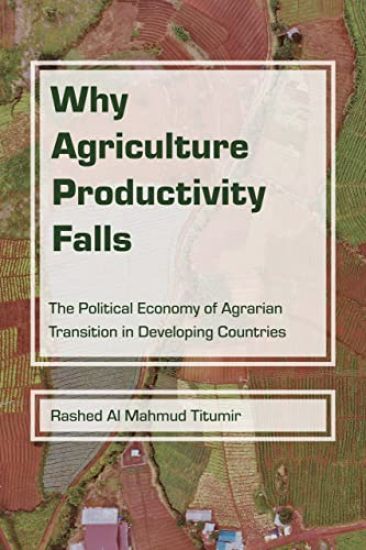
Why Agriculture Productivity Falls

Why Agriculture Productivity Falls

Rashed Al Mahmud Titumir

PURDUE UNIVERSITY PRESS
2023
sidottu
Why Agriculture Productivity Falls: The Political Economy of Agrarian Transition in Developing Countries offers a new explanation for the decline in agricultural productivity in developing countries. Transcending the conventional approaches to understanding productivity using agricultural inputs and factors of production, this work brings in the role of formal and informal institutions that govern transactions, property rights, and accumulation. This more robust methodology leads to a comprehensive, well-balanced lens to perceive agrarian transition in developing countries. It argues that the existing process of accumulation has resulted in nonsustainable agriculture because of market failures—the result of asymmetries of power, diseconomies of scale, and unstable property rights. The book covers the historical shifts in land relations, productivity, and class relations that have led to present-day challenges in sustainability. The result is arrested productivity growth. Agrarian transition should be understood in the context of the wider economic development in society, including how political settlement and primitive accumulation inhibited the kind of property rights that encourage growth. Why Agriculture Productivity Falls is a much-needed corrective to the traditional understanding, because before we can increase productivity, we must understand the root causes of those challenges.
Why Agriculture Productivity Falls

Why Agriculture Productivity Falls

Rashed Al Mahmud Titumir

PURDUE UNIVERSITY PRESS
2023
nidottu
Why Agriculture Productivity Falls: The Political Economy of Agrarian Transition in Developing Countries offers a new explanation for the decline in agricultural productivity in developing countries. Transcending the conventional approaches to understanding productivity using agricultural inputs and factors of production, this work brings in the role of formal and informal institutions that govern transactions, property rights, and accumulation. This more robust methodology leads to a comprehensive, well-balanced lens to perceive agrarian transition in developing countries. It argues that the existing process of accumulation has resulted in nonsustainable agriculture because of market failures—the result of asymmetries of power, diseconomies of scale, and unstable property rights. The book covers the historical shifts in land relations, productivity, and class relations that have led to present-day challenges in sustainability. The result is arrested productivity growth. Agrarian transition should be understood in the context of the wider economic development in society, including how political settlement and primitive accumulation inhibited the kind of property rights that encourage growth. Why Agriculture Productivity Falls is a much-needed corrective to the traditional understanding, because before we can increase productivity, we must understand the root causes of those challenges.