Kirjojen hintavertailu. Mukana 12 414 792 kirjaa ja 12 kauppaa.

Kirjahaku

Etsi kirjoja tekijän nimen, kirjan nimen tai ISBN:n perusteella.

1000 tulosta hakusanalla Raymond Williams

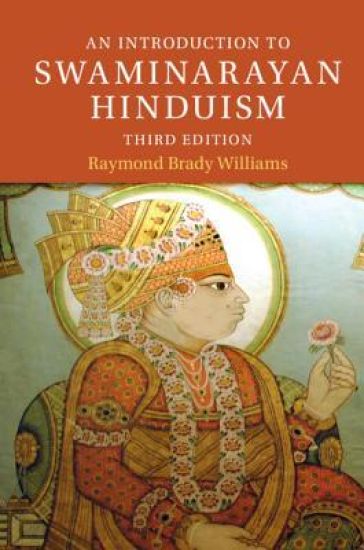
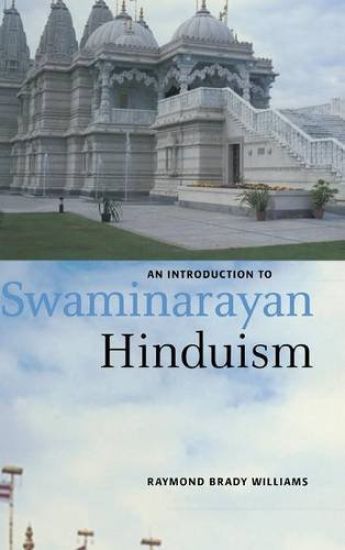
An Introduction to Swaminarayan Hinduism

An Introduction to Swaminarayan Hinduism

Raymond Brady Williams

Cambridge University Press
2001
sidottu
A comprehensive study of a modern form of Hinduism that is growing in the place of its birth in the Indian state of Gujarat and among Indian immigrants in east Africa, Great Britain, and the United States. It is the most prominent form of transnational Hinduism because it creates networks that define and preserve ethnic and religious identity in the modern context of rapid mobility and communication. Founded by Sahajanand Swami or Swaminarayan (1781–1830), a religious reformer in a time of great social and political change in Gujarat, Swaminarayan Hinduism expounds a path of devotion to Swaminarayan as the final, perfect manifestation of God. Raymond Brady Williams provides a detailed introduction to the history, theology, discipline, and ritual of this important form of Hinduism. Based on and extending, with considerable updating and revision, his A New Face of Hinduism: The Swaminarayan Religion (1984), the book places Swaminarayan in the context of transnational Hinduism and analyses its current status in India and abroad.
An Introduction to Swaminarayan Hinduism

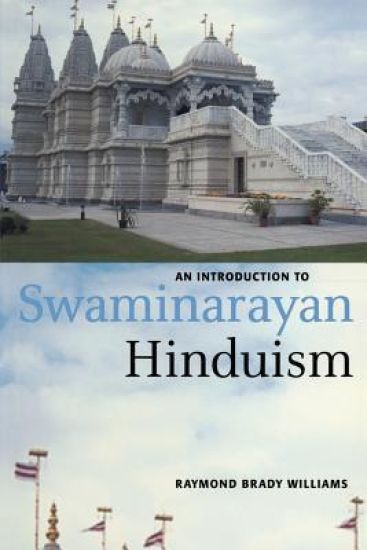
An Introduction to Swaminarayan Hinduism

Raymond Brady Williams

Cambridge University Press
2001
pokkari
An Introduction to Swaminarayan Hinduism is a comprehensive study of a modern form of Hinduism that is growing in the place of its birth in the Indian state of Gujarat and among Indian immigrants in east Africa, Great Britain, and the United States. It is the most prominent form of transnational Hinduism because it creates networks that define and preserve ethnic and religious identity in the modern context of rapid mobility and communication. Founded by Sahajanand Swami or Swaminarayan (1781–1830), a religious reformer in a time of great social and political change in Gujarat, Swaminarayan Hinduism expounds a path of devotion to Swaminarayan as the final, perfect manifestation of God. Raymond Brady Williams provides a detailed introduction to the history, theology, discipline, and ritual of this important form of Hinduism. Based on and extending, with considerable updating and revision, his A New Face of Hinduism: The Swaminarayan Religion (Cambridge, 1984), the book places Swaminarayan in the context of transnational Hinduism and analyses its current status in India and abroad.
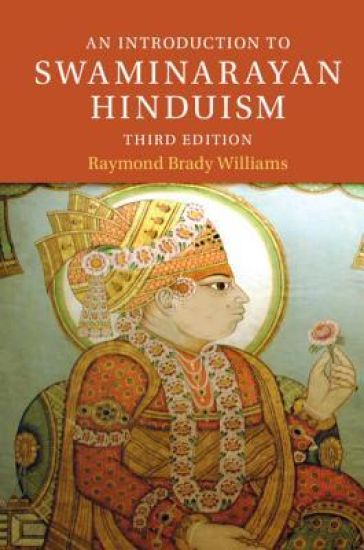
An Introduction to Swaminarayan Hinduism

An Introduction to Swaminarayan Hinduism

Raymond Brady Williams

Cambridge University Press
2018
sidottu
An Introduction to Swaminarayan Hinduism, third edition, offers a comprehensive study of a contemporary form of Hinduism. Begun as a revival and reform movement in India 200 years ago, it has now become one of the fastest growing and most prominent forms of Hinduism. The Swaminarayan Hindu transnational network of temples and institutions is expanding in India, East Africa, the UK, USA, Australasia, and in other African and Asian cities. The devotion, rituals, and discipline taught by its founder, Sahajanand Swami (1781–1830) and elaborated by current leaders in major festivals, diverse media, and over the Internet, help preserve ethnic and religious identity in many modern cultural and political contexts. Swaminarayan Hinduism, here described through its history, divisions, leaders, theology and practices, provides valuable case studies of contemporary Hinduism, religion, migrants, and transnationalism. This new edition includes up-to-date information about growth, geographic expansion, leadership transitions, and impact of Swaminarayan institutions in India and abroad.
An Introduction to Swaminarayan Hinduism

An Introduction to Swaminarayan Hinduism

Raymond Brady Williams

Cambridge University Press
2018
pokkari
An Introduction to Swaminarayan Hinduism, third edition, offers a comprehensive study of a contemporary form of Hinduism. Begun as a revival and reform movement in India 200 years ago, it has now become one of the fastest growing and most prominent forms of Hinduism. The Swaminarayan Hindu transnational network of temples and institutions is expanding in India, East Africa, the UK, USA, Australasia, and in other African and Asian cities. The devotion, rituals, and discipline taught by its founder, Sahajanand Swami (1781–1830) and elaborated by current leaders in major festivals, diverse media, and over the Internet, help preserve ethnic and religious identity in many modern cultural and political contexts. Swaminarayan Hinduism, here described through its history, divisions, leaders, theology and practices, provides valuable case studies of contemporary Hinduism, religion, migrants, and transnationalism. This new edition includes up-to-date information about growth, geographic expansion, leadership transitions, and impact of Swaminarayan institutions in India and abroad.
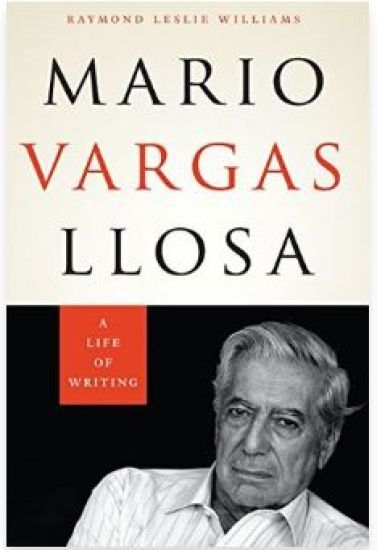
Mario Vargas Llosa

Mario Vargas Llosa

Raymond Leslie Williams

University of Texas Press
2014
nidottu
Awarded the Nobel Prize in 2010 at the age of seventy-four, Peruvian writer Mario Vargas Llosa has held pivotal roles in the evolution and revolutions of modern Latin American literature. Perhaps surprisingly, no complete history of Vargas Llosa’s works, placed in biographical and historical context, has been published-until now. A masterwork from one of America’s most revered scholars of Latin American fiction, Mario Vargas Llosa: A Life of Writing provides a critical overview of Vargas Llosa’s numerous novels while reinvigorating debates regarding conventional interpretations of the work.Weaving analysis with discussions of the writer’s political commentary, Raymond Leslie Williams traces the author’s youthful identity as a leftist student of the 1960s to a repudiation of some of his earlier ideas beginning in the 1980s. Providing a unique perspective on the complexity, nuance, and scope of Vargas Llosa’s lauded early novels and on his passionate support of indigenous populations in his homeland, Williams then turns his eye to the recent works, which serve as a bridge between the legacies of the Boom and the diverse array of contemporary Latin American fiction writers at work today. In addition, Williams provides a detailed description of Vargas Llosa’s traumatic childhood and its impact on him-seen particularly in his lifelong disdain for authority figures-as well as of the authors who influenced his approach, from Faulkner to Flaubert. Culminating in reflections drawn from Williams’s formal interviews and casual conversations with the author at key phases of both men’s careers, this is a landmark publication that will spark new lines of inquiry into an intricate body of work.
A Companion to Gabriel García Márquez

A Companion to Gabriel García Márquez

Raymond Leslie Williams

Tamesis Books
2013
pokkari
One of the major Latin American writers of the twentieth century. This book offers discussion and analysis of the subtle writing of Nobel Laureate Gabriel García Márquez - a traditionalist who draws from classic Western texts, a Modernist committed to modernizing the conservative literary tradition in Colombia and Latin America, an internationally recognized major writer of the 1960s Boom, the key figure in popularizing what has been called "magic realism" and, finally, a Modernist who has occasionally engaged in some ofthe strategies of the postmodern. The author demonstrates that García Márquez is above all a committed and highly accomplished Modernist fiction writer who has successfully synthesized his political vision in his writing and absorbed a vast array of cultural and literary traditions. Drawing on García Márquez's interviews with Williams and others over the years, the book also explores the importance of the non-literary, the presence of oral tradition and the visual arts, thus providing a more complete insight into García Márquez's strategies as a Modernist with heterogeneous aesthetic interests, as well as an understanding of his social and political preoccupations. RAYMOND LESLIE WILLIAMS is Professor of Latin American Literature at the University of California, Riverside.
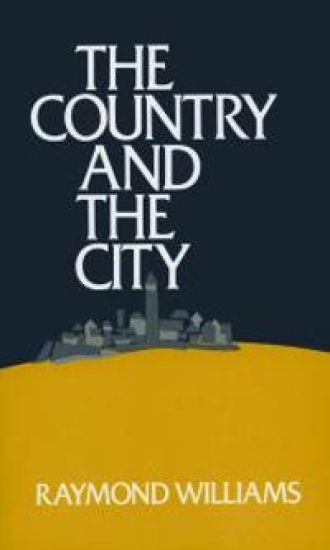
The Country and the City in the Modern Novel

The Country and the City in the Modern Novel

Williams Raymond

Oxford University Press
1975
nidottu
As a brilliant survey of English literature in terms of changing attitudes towards country and city, Williams' highly-acclaimed study reveals the shifting images and associations between these two traditional poles of life throughout the major developmental periods of English culture.
Culture and Society, 1780-1950

Culture and Society, 1780-1950

Williams Raymond

Columbia University Press
1983
pokkari
Acknowledged as perhaps the masterpiece of materialist criticism in the English language, this omnibus ranges over British literary history from George Eliot to George Orwell to inquire about the complex ways economic reality shapes the imagination.
Adventures with Raymond and Bonnie

Adventures with Raymond and Bonnie

John Williams

TROUBADOR PUBLISHING
2023
nidottu
Living in rural Billsborough County, a young robin called Raymond and his best friend Bonnie, a blue tit, get into all sorts of adventures. Raymond is plucky, brave and (surprisingly for a robin), well-read. What Bonnie lacks in knowledge she makes up for with common sense. Always right, she tends to be nosy and sometimes lacks concentration. In ‘The Deserted Cottage’, we see the young pals waking with the firm intention of spending another day having fun. It’s mid-winter and they often visit nearby Fir Cottage where they can expect food and fresh water provided by nice old Mr Digweed. One snowy December day, Raymond and Bonnie meet up early and fly the short distance over to the cottage only to find it deserted and with no sign of food or water. Initially, they are just concerned about Mr Digweed’s health but, later that day, they discover that the forlorn-looking cottage has attracted the interest of two suspicious-looking strangers. Who are these intruders and what, exactly, do they want? How can two little birds help Mr Digweed and protect Fir Cottage? Where will they find help? Unfortunately, there is also a threat to the birds' habitat! It looks as though they might have to move away from the countryside that they love so much. Far from being fun, this turned out to be a very challenging day that the little feathered friends will never forget. Ideal for ages 7-9, this charming tale illustrated by Simon Goodway will have all young readers flocking around to hear what Raymond and Bonnie get up to next!
Plants of Colonial Days: A Guide to 160 Flowers, Shrubs, and Trees in the Gardens of Colonial Williamsburg
Plants of Colonial Days: A Guide to 160 Flowers, Shrubs, and Trees in the Gardens of Colonial Williamsburg is a comprehensive guidebook written by Raymond L. Taylor. The book provides a detailed description of 160 different species of plants that were commonly found in the gardens of Colonial Williamsburg, a historic district in Virginia. The guidebook is organized alphabetically by plant name and includes full-color photographs of each species, along with information on their history, uses, and cultural significance. The book also includes a map of the gardens of Colonial Williamsburg, making it easy for readers to locate the plants they are interested in. This guidebook is a valuable resource for gardeners, historians, and anyone interested in the flora of colonial America.This scarce antiquarian book is a facsimile reprint of the old original and may contain some imperfections such as library marks and notations. Because we believe this work is culturally important, we have made it available as part of our commitment for protecting, preserving, and promoting the world's literature in affordable, high quality, modern editions, that are true to their original work.
The Postmodern Novel in Latin America

The Postmodern Novel in Latin America

Raymond L. Williams

Palgrave Macmillan
1995
sidottu
Recent Latin American cultural and political magazines have noted the trend of postmodernity in the literature of the region, with a range of responses. Some critics consider it a foreign importation and sign of cultural imperialism. Others feel that postmodernism reflects a culture of mass media manipulated by the dominating classes. But the debate has been particularly headed by a new group of young writers who consider themselves postmodern and politically progressive: Severo Sarduy of Cuba, Diamela Eltit of Chile, and R.H. Moreno-Duran of Colombia, among others. By examining a group of the most representative innovative writers active today, Williams argues that the postmodern novel in Latin America is as political and valuable as its more traditional and modern predecessors.