Kirjojen hintavertailu. Mukana 12 366 791 kirjaa ja 12 kauppaa.

Kirjahaku

Etsi kirjoja tekijän nimen, kirjan nimen tai ISBN:n perusteella.

1000 tulosta hakusanalla Redner Sidney

The Hummingbird Review; Volume III, No.1

The Hummingbird Review; Volume III, No.1

Charles Redner

Redner Investments
2012
nidottu
A light breeze floated across Zimbabwe, picked up speed in Botswana darted north over Egypt, sailed west to Morocco, and then blew across the Atlantic. A zephyr carried voices of Africa to our ears and into our hearts. Two African poets share their verses; an American screenwriter conveys his behind the scenes treatment, Hollywood-style, of Ali and Foreman's "Rumble in the Jungle;" and a woman studying elephants, like Goodall studied chimpanzees, cram this issue with unique views as diverse as the continent itself. Wonder along with us as Brian Wilkes ponders tribal customs of the Cherokee Nation that match those of Berbers (Imazighen) living in the Atlas Mountains. Be sure to read Moroccan born, Said Leghlid's talk with Professor Noam Chomsky who looks beyond the obvious to help us understand the causes and possible aftermath of the Arab Spring.The Hummingbird Review presents fine writing by both new writers and fully established literary figures. The review is committed to portraying the beauty and challenges of life-the full human experience-through literature and art, and promotes cross-cultural writing in all forms.

The Humanities, the Social Sciences and the University
The Humanities, the Social Sciences and the University is an intellectual history of research in the humanities and social sciences. It scrutinizes the priorities, values, objectives and publishing agendas of the modern university in order to assess the institutional pressures on research in major disciplines such as literature, history, sociology and economics. It argues that all these disciplines are currently experiencing a deep malaise – though to different degrees – due to loss of faith in the Enlightenment project, which entailed the pursuit of knowledge through reason. Extreme scepticism, promoted since the 1970s by French Theory, which regards knowledge as an instrument of power, is a major factor in this disorientation. Overall, the book concludes that though universities have grown stronger, wealthier and more powerful in the last century, the quality and seriousness of the research they typically produce are weaker and intellectually less important and the institution is in danger of losing its way.An accessible and compelling read, this book will appeal to scholars of sociology, education and intellectual history with interests in higher education policy and academic life.
The Humanities, the Social Sciences and the University
The Humanities, the Social Sciences and the University is an intellectual history of research in the humanities and social sciences. It scrutinizes the priorities, values, objectives and publishing agendas of the modern university in order to assess the institutional pressures on research in major disciplines such as literature, history, sociology and economics. It argues that all these disciplines are currently experiencing a deep malaise – though to different degrees – due to loss of faith in the Enlightenment project, which entailed the pursuit of knowledge through reason. Extreme scepticism, promoted since the 1970s by French Theory, which regards knowledge as an instrument of power, is a major factor in this disorientation. Overall, the book concludes that though universities have grown stronger, wealthier and more powerful in the last century, the quality and seriousness of the research they typically produce are weaker and intellectually less important and the institution is in danger of losing its way.An accessible and compelling read, this book will appeal to scholars of sociology, education and intellectual history with interests in higher education policy and academic life.
Malign Masters Gentile Heidegger Lukács Wittgenstein
A politically oriented study of the thought of the founders of the main schools of contemporary academic philosophy, those which dominate nearly all universities throughout the world. It concentrates on four key masters: Wittgenstein, who founded both Logical Positivism and the so-called Common Language or Analytic school; Heidegger, the acknowledged master of Hermeneutic Philosophy or the so-called Continental school; Lukacs, the founder of Hegelian Marxism and the leading Communist philosopher of the Soviet period; and, finally, the now lesser-known Gentile, the Hegelian Idealist.
Totalitarianism, Globalization, Colonialism

Totalitarianism, Globalization, Colonialism

Harry Redner

AldineTransaction
2014
sidottu
The century that began in 1914 with the outbreak of the First World War was catastrophic. Over the course of that one-hundred-year span, civilizations were destroyed in the Old World, the New World, and the Third World, the latter represented by China, India, and Islam.In Europe the main agent of destruction was totalitarianism; in America it was globalization, ushered in by modernity; and in the non-Western world it was colonialism, followed later by totalitarianism and globalization. Harry Redner examines each of these processes, providing theoretical and historical accounts of their emergence. He considers the effects of Nazism and Bolshevism on the morale and morals of Europe; studies the effects on the United States of the nation's emergence as a major world power; and describes the impact of modernization on China, India, and Islam as they underwent Europeanization, Sovietization, and Americanization.Redner confronts us with a paradox: in the midst of unprecedented material affluence and organizational efficiency, one that uses advanced technologies and cutting-edge scientific knowledge, we are also sinking into an unprecedented cultural, moral, intellectual, and spiritual decline. He locates the origins of this condition in the violently contradictory processes of the twentieth century.
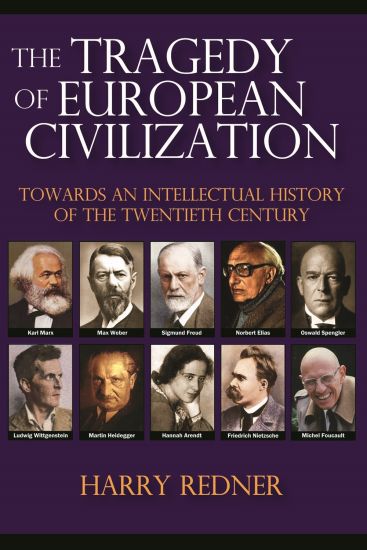
The Tragedy of European Civilization

The Tragedy of European Civilization

Harry Redner

AldineTransaction
2015
sidottu
The tragedy of European civilization is a protracted historical event spanning the twentieth century and in many ways is ongoing. During this time some of the greatest modern thinkers were active, producing works that both reflected what was happening in history and contributed towards shaping it. This work is a critique of their ideas. Harry Redner establishes where and how they went wrong, in some cases with apocalyptic consequences for Europe and the world.The great intellectuals of the age, at once philosophers, sociologists, political theorists, historians and much else besides, include Marx, Weber, Freud, Elias, Spengler, Wittgenstein, Heidegger, Arendt, Nietzsche, and Foucault. All of them had a historical impact, even if only in molding academic disciplines and shaping of public opinion, as was the case with the philosophers Wittgenstein and Arendt.This book explores the close links between anti-Semitism and cultural pessimism and the relation between psychology and sociology. Other themes range from the history and theory of the state, to the misconception of language and power. Suitable for students of sociology, philosophy, political theory, history, and cultural studies, this brilliant exploration of our civilization and its tragedies will also be of interest to intellectual general readers.
Totalitarianism, Globalization, Colonialism

Totalitarianism, Globalization, Colonialism

Harry Redner

AldineTransaction
2016
nidottu
The century that began in 1914 with the outbreak of the First World War was catastrophic. Over the course of that one-hundred-year span, civilizations were destroyed in the Old World, the New World, and the Third World, the latter represented by China, India, and Islam.In Europe the main agent of destruction was totalitarianism; in America it was globalization, ushered in by modernity; and in the non-Western world it was colonialism, followed later by totalitarianism and globalization. Harry Redner examines each of these processes, providing theoretical and historical accounts of their emergence. He considers the effects of Nazism and Bolshevism on the morale and morals of Europe; studies the effects on the United States of the nation's emergence as a major world power; and describes the impact of modernization on China, India, and Islam as they underwent Europeanization, Sovietization, and Americanization.Redner confronts us with a paradox: in the midst of unprecedented material affluence and organizational efficiency, one that uses advanced technologies and cutting-edge scientific knowledge, we are also sinking into an unprecedented cultural, moral, intellectual, and spiritual decline. He locates the origins of this condition in the violently contradictory processes of the twentieth century.
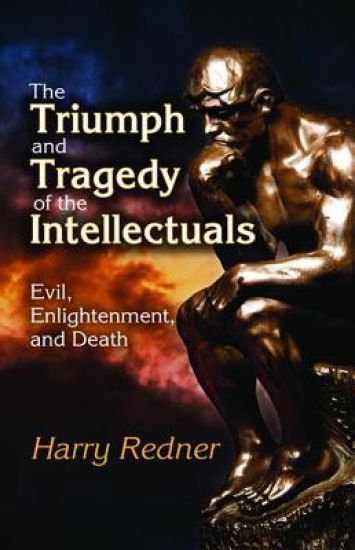
The Triumph and Tragedy of the Intellectuals

The Triumph and Tragedy of the Intellectuals

Harry Redner

AldineTransaction
2016
sidottu
This fourth instalment of Harry Redner's tetralogy on the history of civilization argues that intellectuals have a brilliant past, a dubious present, and possibly no future. He contends that the philosophers of the seventeenth century laid the ground for the intellectuals of the eighteenth century, the Age of Enlightenment. They, in turn, promoted a fundamental transformation of human consciousness: they literally intellectualized the world. The outcome was the disenchantment of the world in all its cultural dimensions: in art, religion, ethics, politics, and philosophy.In this fascinating study, Redner demonstrates how secularization took the sting out of both the dread and promise of an afterlife and intellectuals learned to die without the hope of immortality popularized by philosophy and religion. Ultimately, they produced the ideologies that generated the totalitarian regimes of the twentieth century, which subsequently exterminated these intellectuals through mass murder on a scale never before experienced. The book traces the sources of this fatal entanglement and goes on to examine the contemporary condition of intellectuals in America and the world.Wherein lies the future of the intellectuals? Redner suggest that in the present state of globalization, dominated by technocrats, experts, and professionals, their fate remains uncertain.
Terror Travels the Devil's Highway

Terror Travels the Devil's Highway

Charles Redner

Createspace Independent Publishing Platform
2011
nidottu
Maggie Lopez, a smart, tough, feisty Tucson border patrol agent snaps the suspenders of FBI and CIA agents in order to get them to cooperate for the sake of national security. Need she bang their heads together? Find out: "Terror Travels the Devil's Highway." Twentieth Anniversary of 9/11 issue now available..
Everything You Never Wanted to Know about Erectile Dysfunction and Penile Implants

Everything You Never Wanted to Know about Erectile Dysfunction and Penile Implants

Rick Redner Msw; Brenda Redner

Lulu Publishing Services
2016
pokkari
Erectile dysfunction (ED) is a thief. ED takes away physical and emotional intimacy. ED steals your confidence in the bedroom. ED robs you of your manhood. ED walks off with your self-esteem. ED has the potential to destroy lives, and end relationships. Here's a surprising fact, the sudden onset of ED can save your life. Frequently, ED is early warning signal of current or future cardiovascular problems. In Everything You Never Wanted to Know about Erectile Dysfunction and Penile Implants: End Your Silence, Sadness, Suffering, and Shame, help men and couples recognize and overcome the roadblocks to seeking help with ED. They guide men and couples through the depression, grief and the inevitable relational conflicts when coping with ED. They set couples on a path to discover healthy ways to think about, talk about, or cure erectile dysfunction. Rick and Brenda share their four-year journey with ED, and the intimate details about their experiences with penile implant surgery.
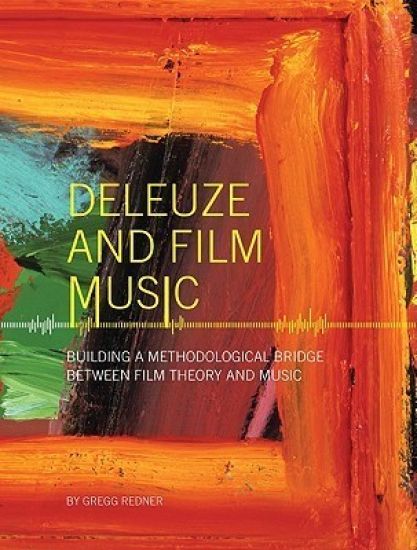
Deleuze and Film Music

Deleuze and Film Music

Gregg Redner

Intellect Books
2010
nidottu
The analysis of film music is emerging as one of the fastest-growing areas of interest in film studies. Yet scholarship in this up-and-coming field has been beset by the lack of a common language and methodology between film and music theory. Drawing on the philosophy of Gilles Deleuze, film studies scholar Gregg Redner provides a much-needed analysis of the problem which then forms the basis of his exploration of the function of the film score and its relation to film's other elements. Not just a groundbreaking examination of persistent difficulties in this new area of study, Deleuze and Film Music also offers a solution—a methodological bridge—that will take film music analysis to a new level.
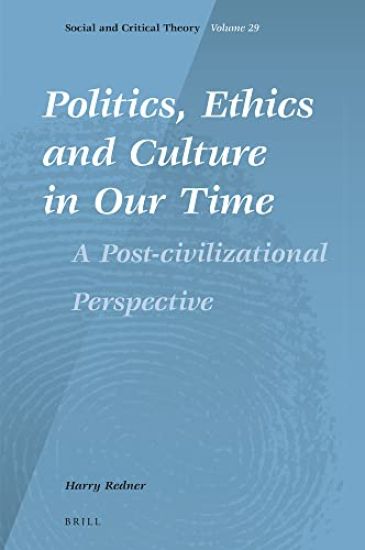
Politics, Ethics and Culture in Our Time: A Post-Civilizational Perspective
Global capitalism is effecting changes in human life as momentous as those that occurred during the Neolithic Revolution, the Axial Age (700-300 BC), and the modern era post-1500, when industrial capitalism, state power, and science reshaped the civilized world. The transformation is paradoxical, however. Science and technology ensure material progress but the market promotes cultural obsolescence and erodes belief in the Enlightenment ideals that inspired the quest for progress. In Western democracies, liberty and equality are proving irreconcilable, citizens becoming demoralized, fraternity fractured; meanwhile despotic Eurasian states are recycling old faiths and concocting neo-imperialist ideologies. These contradictions must be confronted if the cultural values that sustain civilized life are to be conserved.