Kirjojen hintavertailu. Mukana 11 342 296 kirjaa ja 12 kauppaa.

Kirjahaku

Etsi kirjoja tekijän nimen, kirjan nimen tai ISBN:n perusteella.

1000 tulosta hakusanalla Robert Atkinson

Robert E. Lee: A Life

Robert E. Lee: A Life

Roy Blount

PENGUIN BOOKS
2007
nidottu
A "witty, lively and wholly fascinating" (The New York Times) portrait of an iconic Southern hero With lively storytelling and full-hearted Southern directness, Roy Blount, Jr., presents a unique portrait of Robert E. Lee. Fascinated by the qualities that made Lee such a charismatic, though reluctant, leader, Blount vividly conveys Lee's audacity and uncanny successes in battle, as well as his humility, his quirky sense of humor, and the sorrowful sense of responsibility he felt for his outnumbered, half-starved army. The first concise biography of this American legend, Robert E. Lee will appeal to history and military buffs, students of Southern culture, and every reader curious about the makeup of a man who has become an American icon.
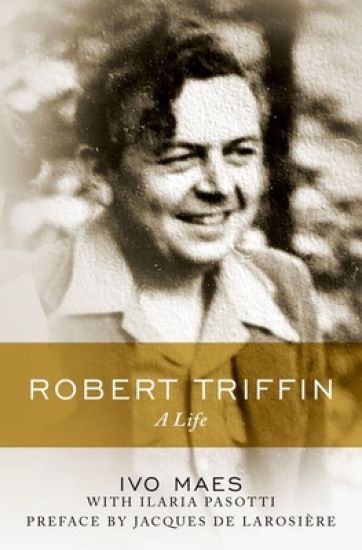
Robert Triffin

Robert Triffin

Ivo Maes

Oxford University Press Inc
2021
sidottu
With World War II still raging, nations came together to create a new international monetary order, the Bretton Woods system. This agreement created the International Monetary Fund, the World Bank, and a system of stable exchange rates with currencies pegged against the dollar. One man saw the political, economic, and moral tensions inherent in keeping the dollar, a national currency, as a global reserve currency. When the monetary arrangement collapsed in 1973, economist Robert Triffin had already predicted its downfall two decades previously. Robert Triffin, a Belgian-American scholar and policy advisor, was a defining voice in economics and international politics in the twentieth century and an architect of the new multilateral liberal world order in his own right. Best known for his analysis of the vulnerabilities of the international monetary system - the "Triffin dilemma" - Triffin was a voice of reason and compassion in the postwar period. Triffin played a key role in the debates on European monetary integration, especially with his proposals for a European Reserve Fund and a European currency unit, becoming one of the intellectual fathers of Europe's single currency, the euro. This intellectual biography evaluates what made Triffin a crucial figure in modern economic history. With an emphasis on the ideas that shaped the postwar international system, Robert Triffin: A Life explores both the man and the mission. In addition to analyzing his work in economics and policymaking, Ivo Maes and Ilaria Pasotti trace Triffin's story from a very modest background, as the son of a butcher, who grew up through the interwar period, to a singularly influential economist in the late twentieth century. The first biography of one of the intellectual giants of the postwar era, Robert Triffin critically examines the accomplishments and the legacy of a scholar who believed that innovations in economic policy could lead to a better and more peaceful world.
Robert Kilwardby

Robert Kilwardby

José Filipe Silva

Oxford University Press Inc
2020
sidottu
Archbishop of Canterbury from 1272 until his death in 1279, the Dominican friar Robert Kildwardby has long been known primarily for his participation in the Oxford Prohibitions of 1277, but his contributions spread far wider. A central figure in the Late Middle Ages, Kilwardby was one of the earliest commentators of the work of Aristotle, as well as an unwavering proponent of Augustinian thought and a believer of the plurality of forms. Although he was a prominent thinker of the time, key areas of his philosophical thought remain unexamined in contemporary scholarship. José Filipe Silva here offers the first book-length analysis of Kilwardby's full body of work, which is essential in understanding both the reception of Aristotle in the Latin West and the developments of later medieval philosophy. Beginning with his early philosophical commitments, Silva tracks Kilwardby's life and academic thought, including his theories on knowledge, moral happiness, and the nature of the soul, along with his attempts to reconcile Augustinian and Aristotelian thought. Ultimately, Robert Kilwardby offers a comprehensive overview of an unsung scholar, solidifying his philosophical legacy as one of the most influential authors of the Late Middle Ages.
Robert Kilwardby

Robert Kilwardby

José Filipe Silva

Oxford University Press Inc
2020
nidottu
Archbishop of Canterbury from 1272 until his death in 1279, the Dominican friar Robert Kildwardby has long been known primarily for his participation in the Oxford Prohibitions of 1277, but his contributions spread far wider. A central figure in the Late Middle Ages, Kilwardby was one of the earliest commentators of the work of Aristotle, as well as an unwavering proponent of Augustinian thought and a believer of the plurality of forms. Although he was a prominent thinker of the time, key areas of his philosophical thought remain unexamined in contemporary scholarship. José Filipe Silva here offers the first book-length analysis of Kilwardby's full body of work, which is essential in understanding both the reception of Aristotle in the Latin West and the developments of later medieval philosophy. Beginning with his early philosophical commitments, Silva tracks Kilwardby's life and academic thought, including his theories on knowledge, moral happiness, and the nature of the soul, along with his attempts to reconcile Augustinian and Aristotelian thought. Ultimately, Robert Kilwardby offers a comprehensive overview of an unsung scholar, solidifying his philosophical legacy as one of the most influential authors of the Late Middle Ages.
Robert Michels, Socialism, and Modernity

Robert Michels, Socialism, and Modernity

Andrew G. Bonnell

Oxford University Press
2022
sidottu
Robert Michels (1876-1936) is best known for his 1911 book Political Parties, which is still a standard reference in political science debates. Michels' work sought to prove an "iron law of oligarchy" that governs the organisational evolution of democratic political parties. The work was closely informed by Michels' engagement with the German Social Democratic Party in the early 1900s, his involvement in radical politics in France and Italy in this period, and by his interest in a range of intellectual and social movements - including feminism, nationalism, racial theory, and the emerging disciplines of sociology and political science. Using archival and printed sources hitherto overlooked in work on Michels, this new study contests previous arguments which have sought to explain Michels as a disillusioned adherent of ideas of direct democracy or as an extremist moving from revolutionary syndicalism to fascism. The biographical and intellectual influences on Michels are shown to be more complex, and more transnational, than such schematic explanations have allowed. Andrew Bonnell sheds new light on Michels' relationship with the German Social Democratic Party and on his understanding of his own role as an intellectual in a workers' party. Bonnell also analyses Michels' problematical relationship with revolutionary syndicalism in France and Italy. Michels was connected to a possibly uniquely diverse network of intellectual and political contacts in pre-1914 Europe. This transnational intellectual history illuminates the intellectual worlds in which Michels moved and presents a new interpretation of his shift from the radical left of the spectrum to Italian fascism, an intellectual itinerary which has intrigued many historians.
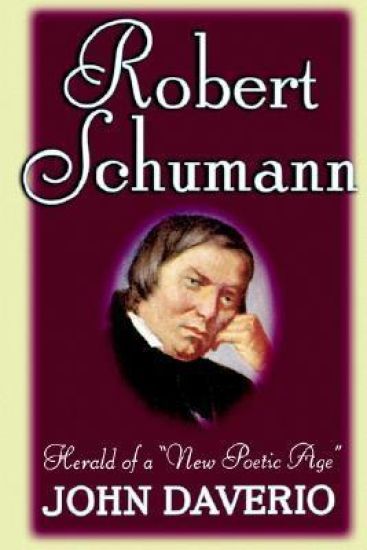
Robert Schumann: Herald of a 'New Poetic Age'

Robert Schumann: Herald of a 'New Poetic Age'

John Daverio

Oxford University Press Inc
1997
sidottu
Forced by a hand injury to abandon a career as a pianist, Robert Schumann went on to become one of the world's great composers. Among many works, his Spring Symphony (1841), Piano Concerto in A Minor (1841/1845), and the Third, or Rhenish, Symphony (1850) exemplify his infusion of classical forms with intense, personal emotion. His musical influence continues today and has inspired many other famous composers in the century since his death. Indeed Brahms, in a letter of January 1873, wrote: `The remembrance of Schumann is sacred to me. I will always take this noble pure artist as my model'. Now, in Robert Schumann: Herald of a `New Poetic Age', John Daverio presents the first comprehensive study of the composer's life and works to appear in nearly a century. Long regarded as a quintessentially romantic figure, Schumann also has been portrayed as a profoundly tragic one: a composer who began his career as a genius and ended it as a mere talent. Daverio takes issue with this Schumann myth, arguing instead that the composer's entire creative life was guided by the desire to imbue music with the intellectual substance of literature. A close analysis of the interdependence among Schumann's activities as reader, diarist, critic, and musician reveals the depth of his literary sensibility. Drawing on documents only recently brought to light, the author also provides a fresh outlook on the relationship between Schumann's mental illness - which brought on an extended sanitarium stay and eventual death in 1856 - and his musical creativity. Schumann's character as man and artist thus emerges in all its complexity. The book concludes with an analysis of the late works and a postlude on Schumann's influence on successors from Brahms to Berg. This well-researched study of Schumann interprets the composer's creative legacy in the context of his life and times, combining nineteenth-century cultural and intellectual history with a fascinating analysis of the works themselves.
Robert Grosseteste

Robert Grosseteste

McEvoy

Oxford University Press Inc
2000
nidottu
In this book, James McEvoy provides a brief, accessible introduction to the thought of Robert Grosseteste (c.1168-1253). Grosseteste was the initiator of the English scientific tradition, one of the first chancellors of Oxford University, and a famous teacher and commentator on the newly discovered works of Aristotle. Despite his importance, very little of his work is available in English. McEvoy translates into English brief passages from Grosseteste's own writings which are of central importance to his thought and builds around them the first general, inclusive overview of the entire range of Grosseteste's intellectual achievement.
Robert Bresson

Robert Bresson

Tony Pipolo

Oxford University Press Inc
2010
nidottu
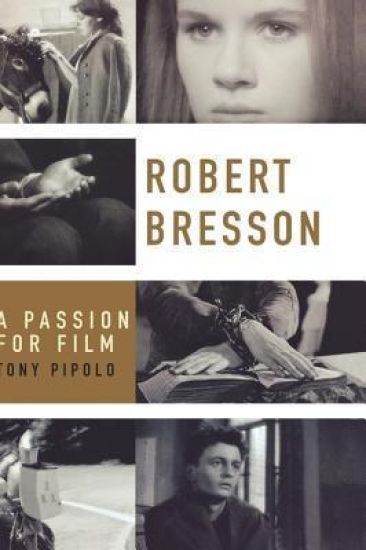
The films of the late French filmmaker Robert Bresson, once thought formidable both because of the somberness of their subject matter and the austerity of the filmmaker's style, have in the last decade found a new audience. In part, this is owing to the rarely acknowledged but profound influence his style has had on later filmmakers-from Chantal Akerman to Michael Haeneke. This book looks at Bresson's body of work not only by coming to terms with its thematic preoccupations and the development of its unique authorial style, but also in terms of the ouvre's seminal place in the history of film. The filmic rhetoric that Bresson pursued was nothing less than an effort to create an exemplary form of film narrative, throwing off the conventions of the theater and acting that still dominate mainstream filmmaking. In this respect, Bresson's films are no less ground-breaking than those of D.W. Griffith and Sergei Eisenstein. In addition, while few who have written about Bresson would deny the highly personal and idiosyncratic nature of his work, its autobiographical dimension has never been fully explored. This constitutes a rich vein for investigation and the films-in both their subject matter and style-mirror and trace the aesthetic and psychological dispositions of the filmmaker. What one discovers in these explorations is a deeper relationship between the filmmaker and his literary models-especially the novelists Georges Bernanos and Fyodor Dostoevsky. With both, he also shares convictions about the ¨fallen¨ nature of humanity, an attitude of mourning for the loss of childhood innocence, a strong preoccupation with Christian theology, and the role evil and sexuality play in our lives. In this book Bresson's sources, style, and biography are explored via a chronological investigation of his films, yielding a dense analysis worthy of this master filmmaker.
Robert Bresson

Robert Bresson

Tony Pipolo

Oxford University Press Inc
2010
sidottu
The films of the late French filmmaker Robert Bresson, once thought formidable both because of the somberness of their subject matter and the austerity of the filmmaker's style, have in the last decade found a new audience. In part, this is owing to the rarely acknowledged but profound influence his style has had on later filmmakers-from Chantal Akerman to Michael Haeneke. This book looks at Bresson's body of work not only by coming to terms with its thematic preoccupations and the development of its unique authorial style, but also in terms of the ouvre's seminal place in the history of film. The filmic rhetoric that Bresson pursued was nothing less than an effort to create an exemplary form of film narrative, throwing off the conventions of the theater and acting that still dominate mainstream filmmaking. In this respect, Bresson's films are no less ground-breaking than those of D.W. Griffith and Sergei Eisenstein. In addition, while few who have written about Bresson would deny the highly personal and idiosyncratic nature of his work, its autobiographical dimension has never been fully explored. This constitutes a rich vein for investigation and the films-in both their subject matter and style-mirror and trace the aesthetic and psychological dispositions of the filmmaker. What one discovers in these explorations is a deeper relationship between the filmmaker and his literary models-especially the novelists Georges Bernanos and Fyodor Dostoevsky. With both, he also shares convictions about the ¨fallen¨ nature of humanity, an attitude of mourning for the loss of childhood innocence, a strong preoccupation with Christian theology, and the role evil and sexuality play in our lives. In this book Bresson's sources, style, and biography are explored via a chronological investigation of his films, yielding a dense analysis worthy of this master filmmaker.
The Diary of Robert Sharp of South Cave

The Diary of Robert Sharp of South Cave

Robert Sharp

Oxford University Press
1997
muu
This diary gives a vivid picture of life in a Yorkshire village between the Napoleonic Wars and the Victorian era. Robert Sharp, schoolmaster, village constable, shopkeeper, and tax collector, was in a unique position to observe the affairs of the village and the lives of his fellow-villagers, whom he describes with wry humour and affection, often quoting their conversations verbatim. He also took a keen interest in what was happening outside the village, both nationally and internationally, giving the reader a valuable insight into how these events were reflected at the local level and how they were viewed by contemporaries.
Robert Grosseteste

Robert Grosseteste

Robert Grosseteste

Oxford University Press
2000
nidottu
Grosseteste is a crucially important figure in the history of English learning, representing the last flowering of a fully native tradition of scholarship. His Hexaemeron is rare among works of this period in giving such a wide and deep insight into the medieval world view. A work of Grosseteste's early maturity (probably completed around 1235) it is a commentary on the early chapters of Genesis, on the six days of creation, and gives him a context for expounding his attitude to theology, to the world, and to the place of human beings in that world. It is a masterly compilation and reconciliation of conflicting Greek and Latin authorities, handled with great confidence, which gives a supremely rich account of the unity of medieval learning, where the study of God includes the study of the whole world.
Robert Kilwardby, Notule libri Priorum, Part 1
Robert Kilwardby (d.1279) was an English scholar who lectured on logic and grammar at the University of Paris in the 1230s. His lectures earned him widespread fame in Europe. Throughout the thirteenth century and up to the sixteenth, Kilwardby's lectures on Aristotle's Prior Analytics were considered to contain the authoritative exposition of Aristotle's syllogistic logic. They were published at Venice in 1499. Written in the heady atmosphere of the early 1200s, when long-forgotten Aristotelian works were being rediscovered, Kilwardby's commentary is the work of a penetrating philosophical intellect intent not only on understanding Aristotle's logic but on pushing it to its limits. The present edition, in two volumes, contains the first critical edition of the lectures, together with an English translation. Part 1 contains an extensive introduction, placing Kilwardby's work within its historical context and demonstrating its importance both as an exposition of Aristotle's text and as an original contribution to philosophical logic. It also contains Lectures 1-38. Part 2 contains Lectures 39-77 and the comprehensive indexes.
Robert Kilwardby: Notule libri Priorum, Part 2
Robert Kilwardby (d.1279) was an English scholar who lectured on logic and grammar at the University of Paris in the 1230s. His lectures earned him widespread fame in Europe. Throughout the thirteenth century and up to the sixteenth, Kilwardby's lectures on Aristotle's Prior Analytics were considered to contain the authoritative exposition of Aristotle's syllogistic logic. They were published at Venice in 1499. Written in the heady atmosphere of the early 1200s, when long-forgotten Aristotelian works were being rediscovered, Kilwardby's commentary is the work of a penetrating philosophical intellect intent not only on understanding Aristotle's logic but on pushing it to its limits. The present edition, in two volumes, contains the first critical edition of the lectures, together with an English translation. Part 1 contains an extensive introduction, placing Kilwardby's work within its historical context and demonstrating its importance both as an exposition of Aristotle's text and as an original contribution to philosophical logic. It also contains Lectures 1-38. Part 2 contains Lectures 39-77 and the comprehensive indexes.
Robert Greystones on the Freedom of the Will
If there is a heaven and you get there, could you still sin? If not, why not, if you're still free? If there is a hell and you end up there, why couldn't you choose to repent and get out? If not, why not, if you're still free? However esoteric these questions may seem, they forced thinkers in the fourteenth century to think hard about just what it is to be free. In what, exactly, does human freedom consist? By addressing a number of theological 'limit situations', such as those mentioned above, Robert Greystones, while at Oxford University in the 1320s, developed his own philosophical theory of human freedom, which is remarkably coherent and persuasive. This volume presents for the first time the Latin critical edition of his discussions, with a clear English translation on facing pages, along with an extensive introduction, describing his life and teaching on human freedom. This volume presents the Latin critical edition, with English translation on facing pages, of six questions from Robert Greystones's Sentences commentary. Greystones's discussions provide an excellent window onto debates concerning the will at Oxford in the early 1320s, since he works out his solutions in critical dialogue with contemporaries such as William of Ockham, William of Alnwick, Robert Cowton, Richard Conington, Henry of Harclay, and Peter Aureol. In order to show the cut and thrust of these debates, the editors include many ample quotations from these thinkers, including material found only in manuscript. A clear and extensive introduction describes Greystones's life and doctrine of the will. The editors also provide a complete list of Greystones's numerous questions in the four books of his commentary, found only in Westminster Abbey MS 13.
Robert Grosseteste

Robert Grosseteste

Oxford University Press
2017
sidottu
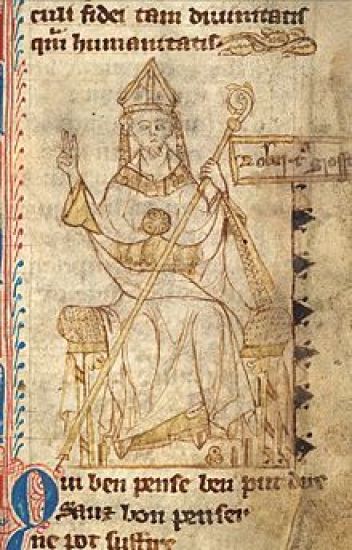
Robert Grosseteste (c. 1168-1253), Bishop of Lincoln from 1235 to 1253, was one of the most prominent and remarkable figures in thirteenth-century English intellectual life. He made a powerful impression on his contemporaries and subsequent thinkers at Oxford, and has been hailed as an inspiration to scientific developments in fourteenth-century Oxford. De libero arbitrio, his influential treatise on free will, was written between about 1225 and the early 1230s. This new edition contains Latin texts and en-face English translations of the two versions of the treatise. An extensive introduction provides a thorough account of Grosseteste's treatise, the sources of the text and also its uses in later writers such as Richard Rufus of Cornwall and Richard Fishacre. This book will be of interest not only to specialists in medieval philosophy and theology, but also to the general reader interested in free will.
Robert Greystones on Certainty and Skepticism
Robert Greystones on Certainty and Skepticism: Selections from His Works is a continuation of the volume previously published by Auctores Britannici Medii Aevi, Robert Greystones on the Freedom of the Will: Selections from His Commentary on the Sentences (edited by Mark Henninger, with Robert Andrews and Jennifer Ottman, 2017). In the course of preparation of the first volume, startling information arose concerning the nature and extent of Greystones' skepticism. Following draft editions of a number of Greystones' Sentences commentary questions, the most relevant five questions were selected for editing and translation. Greystones is in the tradition of Nicholas of Autrecourt, William Crathorn, Monachus Niger (the Black Monk), Nicholas Aston, and John Went, but the earliest of these figures. Building upon the 69th proposition of the Condemnation of 1277, Greystones concludes that God's unlimited power must lead to a radical skepticism about human knowledge. We cannot be certain whether we are in this life or the afterlife, in a body or not. We cannot be certain about the existence of any external object. We have no certain knowledge of cause and effect, the existence of substances, or of any contingent event. Like Descartes, Greystones held that we can be certain about our own existence (ego sum). But preempting Descartes' appeal to a beneficent, non-deceptive God, Greystones says: God does not deceive. But you deceive yourself if you insist on believing that something exists when you know that it might not! You know that God can intervene at any instant, and thus that you can never completely trust your senses. Greystones' skepticism is strikingly significant in light of the later historical development of philosophy. Recent researchers on medieval skepticism such as Henrik Lagerlund, Dominik Perler, and Jos é Luis Bermúdez show no awareness of Greystones. Indeed, Bermúdez claims that "the resources were not available in the thirteenth and fourteenth centuries to entertain those ... skeptical worries that were identified as distinctive of Cartesian skepticism." This edition of Greystones should prompt not just a footnote to, but a re-writing of, the history of philosophy.
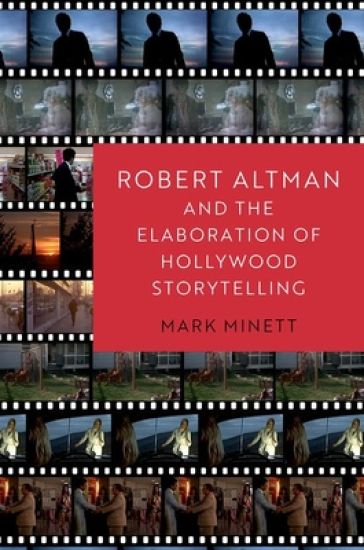
Robert Altman and the Elaboration of Hollywood Storytelling
Robert Altman and the Elaboration of Hollywood Storytelling reveals an Altman barely glimpsed in previous critical accounts of the filmmaker. This re-examination of his seminal work during the "Hollywood Renaissance" or "New Hollywood" period of the early 1970s (including M*A*S*H, Brewster McCloud, McCabe & Mrs. Miller, Images, The Long Goodbye, Thieves Like Us, California Split, and Nashville) sheds new light on both the films and the filmmaker, reframing Altman as a complex, pragmatic innovator whose work exceeds, but is also grounded in, the norms of classical Hollywood storytelling rather than someone who rejected those norms in favor of modernist art cinema. Its findings and approach hold important implications for the study of cinematic authorship. Largely avoiding thematic exegesis, it employs an historical poetics approach, robust functionalist frameworks, archival research, and formal and statistical analysis to demystify the essential features of the standard account of Altman's filmmaking history and profile-lax narrative form, heavy reliance on the zoom, sound design replete with overlapping dialogue, improvisational infidelity to the screenplay, and a desire to subvert based in his time in the training grounds of industrial filmmaking and filmed television. The book provides a clear example of how a filmmaker might work collaboratively and pragmatically within and across media institutions to elaborate upon their sanctioned practices and aims. We misunderstand Altman's work, and the creative work of Hollywood filmmakers in general, when we insist on describing innovation as opposition to institutional norms and on describing those norms as simply assimilating innovation.
Robert Altman and the Elaboration of Hollywood Storytelling
Robert Altman and the Elaboration of Hollywood Storytelling reveals an Altman barely glimpsed in previous critical accounts of the filmmaker. This re-examination of his seminal work during the "Hollywood Renaissance" or "New Hollywood" period of the early 1970s (including M*A*S*H, Brewster McCloud, McCabe & Mrs. Miller, Images, The Long Goodbye, Thieves Like Us, California Split, and Nashville) sheds new light on both the films and the filmmaker, reframing Altman as a complex, pragmatic innovator whose work exceeds, but is also grounded in, the norms of classical Hollywood storytelling rather than someone who rejected those norms in favor of modernist art cinema. Its findings and approach hold important implications for the study of cinematic authorship. Largely avoiding thematic exegesis, it employs an historical poetics approach, robust functionalist frameworks, archival research, and formal and statistical analysis to demystify the essential features of the standard account of Altman's filmmaking history and profile-lax narrative form, heavy reliance on the zoom, sound design replete with overlapping dialogue, improvisational infidelity to the screenplay, and a desire to subvert based in his time in the training grounds of industrial filmmaking and filmed television. The book provides a clear example of how a filmmaker might work collaboratively and pragmatically within and across media institutions to elaborate upon their sanctioned practices and aims. We misunderstand Altman's work, and the creative work of Hollywood filmmakers in general, when we insist on describing innovation as opposition to institutional norms and on describing those norms as simply assimilating innovation.