A powerful post-apocalyptic novel in which nuclear war has devastated America. Z FOR ZACHARIAH by Robert C. O'Brien is one of The Originals from Penguin - iconic, outspoken, first. Ann Burden has been living alone in a valley for over a year - until Loomis, a scientist in a radiation-proof suit, arrives. She hopes they will be companions but his behaviour towards her becomes increasingly threatening as he attacks her and then cuts off her food supply and tries to bring her under his control. Although there may be no one else alive, Ann steals his suit and leaves the valley in search of humanity.The Originals are the pioneers of fiction for young adults. From political awakening, war and unrequited love to addiction, teenage pregnancy and nuclear holocaust, The Originals confront big issues and articulate difficult truths. The collection includes: The Outsiders - S.E. Hinton, I Capture the Castle - Dodie Smith, Postcards from No Man's Land - Aidan Chambers, After the First Death - Robert Cormier, Dear Nobody - Berlie Doherty, The Endless Steppe - Esther Hautzig, Buddy - Nigel Hinton, Across the Barricades - Joan Lingard, The Twelfth Day of July - Joan Lingard, No Turning Back - Beverley Naidoo, Z for Zachariah - Richard C. O'Brien, The Wave - Morton Rhue, The Red Pony - John Steinbeck, The Pearl - John Steinbeck, Stone Cold - Robert Swindells
While existing scholarship informs us about early contact between Christians, Muslims, and Jews, the nature of that interaction, and how it developed over time, is still often misunderstood. Robert Gregg emphasizes that there was both mutual curiosity, since all three religions had ancestral traditions and a commanding God in common, and also wary competitiveness, as each group was compelled to sharpen its identity against the other two. Faced with the overlap of many scriptural stories, they were eager to defend the claim that they alone were God's preferred people. In Shared Stories, Rival Tellings, Gregg performs a comparative investigation of how Jewish, Christian, and Muslim interpreters--both writers and artists--developed their distinctive and exclusionary understandings of narratives common to their three Holy Books: Cain and Abel, Sara and Hagar, Joseph and Potiphar's Wife, Jonah and the Whale, and Mary the Mother of Jesus. Exposed in the process are the major issues under contention and the social-intellectual forces that contributed to spirited, creative, and sometimes combative exchanges between Muslims, Christians and Jews. In illuminating these historical moments, and their implications for contemporary relations between these three religions, Gregg argues that scripture interpreters played an often underappreciated role in each religion's individual development of thought, spirituality, and worship, and in the three religions' debates with one another-and the cultural results of those debates.
Global America tells the story of how Americans were swept up in the swift-moving currents of twentieth-century world history. Drawing on the latest research on the history of the United States in the world, it demonstrates how global interactions and developments transformed both America and the world. Global America weaves together topics such as social reform, the world wars, and the rise of conservatism in a way that helps readers gain a fresh understanding of America's place in the world. It pays particular attention to themes of race, class, and gender and how each has shaped--and been shaped by--U.S. engagement with the world. In connecting U.S. and world history, Global America argues that the more America sought to change the world, the more the world changed America. Global America offers a synthesis accessible to undergraduates. The chapters are organized chronologically, beginning with the 1890s and ending in 2013. Starting with U.S. expansion in the late nineteenth century, the book situates American developments within the context of major political and economic events, explores key developments in culture and society, and ends with the rise and partial decline of American power in recent years.
Financing Water Security and Green Growth offers a comprehensive overview of the innovative financial instruments and approaches available to implement water security and green growth initiatives at various scales and in different contexts. Robert C. Brears explores the use of a variety of public, private, and blended finance models to create climate-resilient water supplies, reduce water-energy-food nexus pressures, encourage water conservation and efficiency, and increase water reliability. He examines how these methods can decrease the costs and pollution associated with wastewater disposal, utilize natural processes to improve water quality, manage water quantity by restoring the hydrologic function of the landscape, and improve overall water governance. The book also provides in-depth case studies of the innovative application of financing tools to achieve water security and green growth in various locations of differing climates, lifestyles, and income levels, and identifies best practices.
Science, philosophy of science, and metaphysics have long been concerned with the question of how order, stability, and novelty are possible and how they happen. How can order come out of disorder? This book introduces a new account, contextual emergence, seeking to answer these questions. The authors offer an alternative picture of the world with an alternative account of how novelty and order arise, and how both are possible. Contextual emergence is grounded primarily in the sciences as opposed to logic or metaphysics. It is both an explanatory and ontological account of emergence that gets beyond the impasse between “weak” and “strong” emergence in the emergence debates. It challenges the “foundationalist” or hierarchical picture of reality and emphasizes the ontological and explanatory fundamentality of multiscale stability conditions and their contextual constraints, often operating globally over interconnected, interdependent, and interacting entities and their multiscale relations. It also focuses on the conditions that make the existence, stability, and persistence of emergent systems and their states and observables possible. These conditions and constraints are irreducibly multiscale relations, so it is not surprising that scientific explanation is often multiscale. Such multiscale conditions act as gatekeepers for systems to access modal possibilities (e.g., reducing or enhancing a system's degrees of freedom). Using examples from across the sciences, ranging from physics to biology to neuroscience and beyond, this book demonstrates that there is an empirically well-grounded, viable alternative to ontological reductionism coupled with explanatory anti-reductionism (weak emergence) and ontological disunity coupled with the impossibility of robust scientific explanation (strong emergence). Central metaphysics of science concerns are also addressed. Emergence in Context: A Treatise in Twenty-First Century Natural Philosophy is written primarily for philosophers of science, but also professional scientists from multiple disciplines who are interested in emergence and particularly in the metaphysics of science.
The explosion of creative and speculative philosophy that emerged in Europe in the second half of the eighteenth century is a thrilling intellectual adventure story, as well as an essential chapter in the history of philosophy. The main theme of this story is the rise and fall of the Self. The Self in question is no ordinary self - no individual personality nor even one of the many heroic or mock-heroic personalities of the early nineteenth century. The Self is the Transcendental Self, whose nature and ambitions are unprecedently arrogant, cosmic and often obscure. In modest terms, this universal self is human nature. In less modest terms, the Transcendental Self is nothing less than God. This thesis is what Solomon terms the Transcendental Pretence. The book is an accessible introduction to the difficult authors of modern European philosophy. The major figures and movements are treated in an integrated narrative, free of jargon. Included are: The Enlightenment and Romanticism, German Idealism, Kant, Fichte, Schelling and the Romantics, Hegel, Schopenhauer, Kierkegaard, Feuerbach, Max Bretano, Meinong, Frege, Dilthey, Bergson, Nietzsche, Husserl, Freud, Wittgenstein, Heidegger, Hermeneutics, Sartre, Post-Modernism, Structuralism, Foucault and Derrida.
The Phenomenology of Spirit was Hegel's grandest experiment, changing our vision of the world and the very nature of philosophical enterprise. In this book, Solomon captures the bold and exhilarating spirit, presenting the Phenomenology as a thoroughly personal as well as philosophical work. He begins with a historical introduction, which lays the groundwork for a section-by-section analysis of the Phenomenology. Both the initiated and readers unacquainted with the intricacies of German idealism will find this to be an accessible and exciting introduction to this great philosopher's monumental work.
Robert Solomon here brings together a collection of his published articles, focusing on key issues in the writings of major continental philosophers, including Hegel, Nietzsche, Kierkegaard, Satre, and Camus. The essays not only shed light on these writers, but also develop a set of provocative and forcefully-argued original theses, and encapsulate some of the central ideas of his most important books.
Robert Solomon here brings together a collection of his published articles, focusing on key issues in the writings of major continental philosophers, including Hegel, Nietzsche, Kierkegaard, Sartre, and Camus.
Provides a brief history of Western philosophy and philosophers, and provides information on Eastern philosophy and philosophers in such areas as Confucianism, Taoism, Buddhism, Zoroastrianism, and Jainism.
The Antichrist, though mentioned a mere four times in the Bible, and then only obscurely, has exercised a tight hold on popular imagination throughout history. This has been particularly true in the U.S., says author Robert C. Fuller, where Americans have tended to view our nation as uniquely blessed by God--a belief that leaves us especially prone to demonizing our enemies. In Naming the Antichrist, Fuller takes us on a fascinating journey through the dark side of the American religious psyche, from the earliest American colonists right up to contemporary fundamentalists such as Pat Robertson and Hal Lindsey. Fuller begins by offering a brief history of the idea of the Antichrist and its origins in the apocalyptic thought in the Judeo-Christian tradition, and traces the eventual 71Gws how the colonists saw Antichrist personified in native Americans and French Catholics, in Anne Hutchinson, Roger Williams, and the witches of Salem, in the Church of England and the King. He looks at the Second Great Awakening in the early nineteenth century, showing how such prominent Americans as Yale president Timothy Dwight and the Reverend Jedidiah Morse (father of Samuel Morse) saw the work of the Antichrist in phenomena ranging from the French Revolution to Masonry. In the twentieth century, he finds a startling array of hate-mongers--from Gerald Winrod (who vilified Roosevelt as a pawn of the Antichrist) to the Ku Klux Klan--who drew on apocalyptic imagery in their attacks on Jews, Catholics, blacks, socialists, and others. Finally, Fuller considers contemporary fundamentalist writers such as Hal Lindsey (author of The Late Great Planet Earth, with some 19 million copies sold), Mary Stewart Relfe (whose candidates for the Antichrist have included such figures as Henry Kissinger, Pope John Paul II, and Anwar Sadat), and a host of others who have found Antichrist in the sinister guise of the European Economic Community, the National Council of Churches, feminism, New Age religions, and even supermarket barcodes and fibre optics (the latter functioning as "the eye of the Antichrist"). Throughout, Fuller reveals in vivid detail how our unique American obsession with the Antichrist reflects the struggle to understand ourselves--and our enemies--within the mythic context of the battle of absolute good versus absolute evil. From the Scofield Reference Bible (no other book had greater impact on the American Antichrist tradition) to the Scopes Monkey Trial, Fuller provides an informative and often startling look at a thread that weaves persistently throughout American religious and cultural life.
When the ancient Greek philosopher, Pythagoras, was asked if he was a wise man, he humbly replied "No, I am only a lover of wisdom." This love of wisdom has been central to the philosophical enterprise for thousands of years, inspiring some of the most dazzling and daring achievements of the human intellect and providing the very basis for how we understand the world. Now, readers eager to acquire a basic familiarity with the history of philosophy but intimidated by the task will find in A Passion for Wisdom: Philosophy Through the Ages, a lively, accessible, and highly enjoyable tour of the world's great ideas. Without simplifying their subject, editors Robert Solomon and Kathleen Higgins tell the story of philosophy's development with great clarity and refreshing wit. The brevity of their study, in fact, allows readers to see more clearly the connections and divergences between philosophers, as well as the way ideas change, reappear, and evolve over time. The authors begin with the most ancient religious beliefs and bring us right up to the feminist and multicultural philosophies of the present. Along the way, major philosophers are highlighted, from Plato and Aquinas to William James and Simone deBeauvoir, and major categories explored, from metaphysics and ethics to politics and logic. We also see the evolution of enduring ideas--how, for example, the value of subjective experience is treated in Augustine, Luther, Descartes, and Kirkegaard, how the idea of dynamic change appears in the work of Heraclitus, Darwin, Hegel, and Nietzsche, and how the recurring dichotomies between faith and reason, belief and skepticism, mysticism and empiricism occupy philosophers from one generation to the next. The authors make clear the many ways philosophers have argued with, borrowed from, and built on each other's ideas throughout the ages. We see Francis Bacon rejecting Aristotelian dogma, the impact of Buddhism on Schopenhauer, and the influence of Hume and Rousseau on the monumental philosophy of Imanuel Kant. The book is enlivened as well by telling anecdotes and sparkling quotations. We're treated to Thomas Hobbes' assessment--"Life is nasty, brutish, and short," Hegel's description of Napoleon as "world history on horseback," Schopenhauer's assertion that Art allows us a "Sabbath from the penal servitude of willing," and many other memorable and provocative observations. Accessible, comprehensive, and delightfully written, A Passion for Wisdom is a splendid introduction to an intellectual tradition that reaches back over three thousand years. More than that, it is a much-needed reminder for the present of the power inherent in humanity's wonder before the world.
This is a greatly abridged adaptation of Solomon and Higgins' 1995 OUP publication, A Short History of Philosophy. As in the longer book, the authors offer a guided tour of the full panorama of philosophy. Here, however, they concentrate on a few highlights of world philosophical history, offering the general reader a quick and painless introduction to the world's great philosophers.
Is business ethics a contradiction in terms? Absolutely not, says Robert Solomon. In fact, he maintains that sound ethics is a necessary precondition of any long-term business enterprise, and that excellence in business must exist on the foundation of values that most of us hold dear. Drawing on twenty years of experience consulting with major corporations on ethics, Solomon clarifies the difficult ethical choices all people in business are faced with from time to time. He takes an "Aristotelian" approach to ethical questions, reminding readers that a corporation--like an individual--is embedded in a community, and that corporate values such as fairness and honesty are meaningless until transformed into action. Values--coupled with action--become virtues, and virtues make possible any good business corporate relationship. Without a base of shared values, trust and mutual benefits, today's national and international business world will fall apart. In keeping with his conviction that virtue and profit must thrive together, Solomon both examines the ways in which deficient values actually destroy businesses, and debunks the pervasive myths that encourage unethical business practices. Complete with a working catalog of virtues designed to illustrate the importance of integrity in any business situation, this compelling handbook contains a goldmine of wisdom for either the small business manager or the corporate executive struggling with ethical issues.
"What is Justice?" was one of Socrates' most provocative and to this day unresolved questions. What is Justice? is an attempt to bring together many of the most prominent and influential writings on the topic of justice, both before and after Socrates, with particular emphasis on questions of justice in the modern world, especially in (more or less) egalitarian, democratic societies. The book places special emphasis on "social contract" theories of justice, both ancient and modern, culminating in the monumental work of John Rawls and various responses to his work. This book also puts special emphasis on questions of retributive justice and punishment that are typically excluded from volumes concerned with civil and "distributive" justice. In this new edition the editors expand and bring up-to-date both the readins on justice and punishment and more recent responses to Rawls' work, including Rawls' own most recent work. This book is designed to be flexible for use in very different courses and contexts and comprehensible to a wide variety of students and readers. It presupposes no philosophical or specialized background. The book is divided into five parts, together with a general introduction to the subject and an updated bibliography. Part One includes classical sources from Homer, Plato, Aristotle, the Bible, the Koran, Aquinas, and Mencius. Part Two includes readings on the state of nature and the social contract from Hobbes and Locke to Rawls, Nozick, Gauthier, and Baier. Part Three includes the Declaration of Independence and Amendments to the US Constitution and discussions of property and social justice from Locke, Hume, and Adam Smith to Engels, Marx, Mill, von Hayek, and some contemporary authors. Part Four includes a wide variety of readings on punishment, several with specific concerns about the death penalty. Part Five begins with selections from Rawls' work and includes responses from Dworkin, Nagel, Nozick, MacIntyre, Sandel, Walzer, Okin and Rawls himself. Every selection is preceded by a brief introduction, providing some biography, history, and context for the reading, and each of the five parts begins with an introduction to the topics to be discussed. Every selection, however, is self-contained, so that the readings can be selected in virtually any order to suit the needs of the instructor or reader.
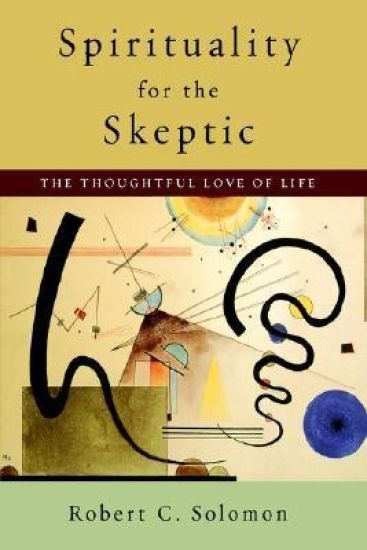
Is it possible to be spiritual and yet not believe in the supernatural? Can a person be spiritual without belonging to a religious group or organization? In this book, philosopher Robert Solomon offers challenging answers to these questions as he explodes commonly held myths about what is means to be spiritual in today's pluralistic world. Based on Solomon's own struggles to reconcile philosophy with religion, Spirituality for the Skeptic offers a model of a vibrant, fulfilling spirituality that embraces the complexities of human existence and acknowledges the joys and tragedies of life. Solomon has forged an enlightened new path that synthesizes spirituality with emotions, intellect, science, and common sense. His new paradigm, "naturalized" spirituality, establishes as its cornerstone the "thoughtful love of life"--a passionate concern for the here-and-now, and not the by-and-by. Being spiritual doesn't mean being holed up as a recluse, spending hours in meditation and contemplation, Solomon argues. It demands involvement and emotional engagement with others in the struggle to find meaning in our lives. As such, this modern-day spirituality encompasses a passionate enthusiasm for the world, the transformation of self, cosmic trust and rationality, coming to terms with fate, and viewing life as a gift, all of which are explored in depth throughout this book. Spirituality for the Skeptic answers the need for a non-institutional, non-dogmatic spirituality that leads to personal fulfillment and satisfaction. By examining the ideas of great thinkers from Socrates and Nietzsche to Buddha to Kafka, Solomon arrives at a practical vision of spirituality that should appeal to many seekers looking to make sense of the human condition.
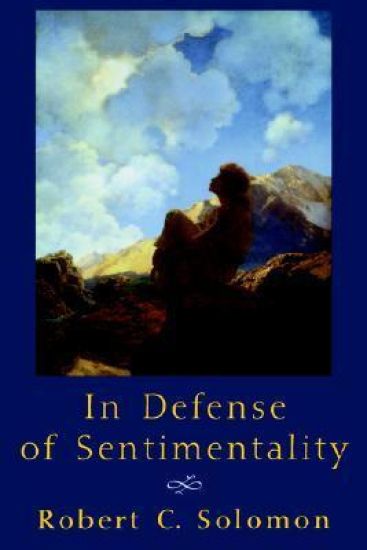
Philosophy has as much to do with feelings as it does with thoughts and thinking. Philosophy, accordingly, requires not only emotional sensitivity but an understanding of the emotions, not as curious but marginal psychological phenomena but as the very substance of life. In this, the second book in a series devoted to his work on the emotions, Robert Solomon presents a defense of the emotions and of sentimentality against the background of what he perceives as a long history of abuse in philosophy and social thought and art and literary criticism. The title piece reopens a classic debate about the role of sentimentality in art and literature. In subsequent chapters, Solomon discusses not only such "moral sentiments" as sympathy and compassion but also grief, gratitude, love, horror, and even vengeance. He also defends, with appropriate caution, the "seven deadly sins". The emotions--at least, some emotions--are essential to a well-lived life. They are or can be virtues, features of the human condition without which civilized life would be unimaginable.
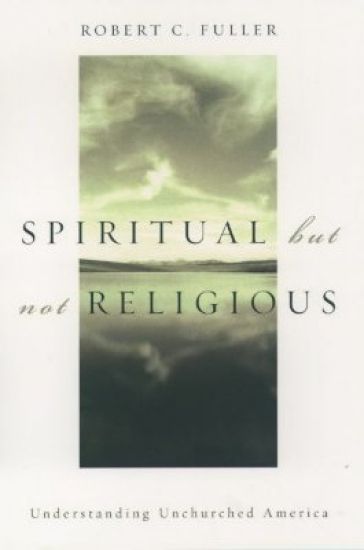
Nearly 40% of all Americans have no connection with organized religion. Yet many of these people, even though they might never step inside a house of worship, live profoundly spiritual lives. But what is the nature and value of unchurched spirituality in America? Is it a recent phenomenon, a New Age fad that will soon fade, or a long-standing and essential aspect of the American experience? In Spiritual But Not Religious, Robert Fuller offers fascinating answers to these questions. He shows that alternative spiritual practices have a long and rich history in America, dating back to the colonial period, when church membership rarely exceeded 17% and interest in astrology, numerology, magic, and witchcraft ran high. Fuller traces such unchurched traditions into the mid-nineteenth century, when Americans responded enthusiastically to new philosophies such as Swedenborgianism, Transcendentalism, and mesmerism, right up to the current interest in meditation, channeling, divination, and a host of other unconventional spiritual practices. Throughout, Fuller argues that far from the flighty and narcissistic dilettantes they are often made out to be, unchurched spiritual seekers embrace a mature and dynamic set of basic beliefs. They focus on inner sources of spirituality and on this world rather than the afterlife; they believe in the accessibility of God and in the mind's untapped powers; they see a fundamental unity between science and religion and an equality between genders and races; and they are more willing to test their beliefs and change them when they prove untenable. Timely, sweeping in its scope, and informed by a clear historical understanding, Spiritual But Not Religious offers fresh perspective on the growing numbers of Americans who find their spirituality outside the church.
In business, politics, marriage, indeed in any significant relationship, trust is the essential precondition upon which all real success depends. But what, precisely, is trust? How can it be achieved and sustained? And, most importantly, how can it be regained once it has been broken? In Building Trust, Robert C. Solomon and Fernando Flores offer compelling answers to these questions. They argue that trust is not something that simply exists from the beginning, something we can assume or take for granted; that it is not a static quality or "social glue." Instead, they assert that trust is an emotional skill, an active and dynamic part of our lives that we build and sustain with our promises and commitments, our emotions and integrity. In looking closely at the effects of mistrust, such as insidious office politics that can sabotage a company's efficiency, Solomon and Flores demonstrate how to move from naïve trust that is easily shattered to an authentic trust that is sophisticated, reflective, and possible to renew. As the global economy makes us more and more reliant on "strangers," and as our political and personal interactions become more complex, Building Trust offers invaluable insight into a vital aspect of human relationships.
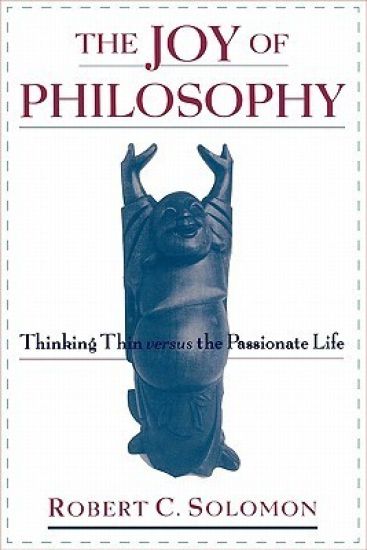
The Joy of Philosophy is a return to some of the perennial questions of philosophy--questions about the meaning of life; about death and tragedy; about the respective roles of rationality and passion in the good life; about love, compassion, and revenge; about honesty, deception, and betrayal; and about who we are and how we think about who we are. Recapturing the heart-felt confusion and excitement that originally brings us all to philosophy, internationally renowned teacher and lecturer Robert C. Solomon offers both a critique of contemporary philosophy and an invitation to engage in philosophy in a different way. He attempts to save philosophy from itself and its self-imposed diet of thin arguments and logical analysis to recover the richness and complexity of life in thought. Solomon defends the passionate life in contrast to the life of thoughtful contemplation idealized by so many philosophers, attempting to recapture the kind of philosophy that Nietzsche celebrated as a "joyful wisdom."