Kirjojen hintavertailu. Mukana 11 244 527 kirjaa ja 12 kauppaa.

Kirjahaku

Etsi kirjoja tekijän nimen, kirjan nimen tai ISBN:n perusteella.

1000 tulosta hakusanalla Robert Cottrell

Robert Grosseteste

Robert Grosseteste

Robert Grosseteste

Oxford University Press
2000
nidottu
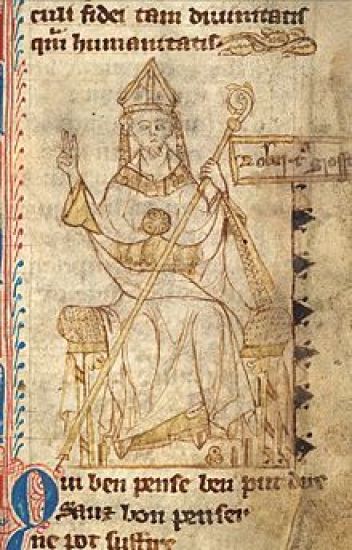
Grosseteste is a crucially important figure in the history of English learning, representing the last flowering of a fully native tradition of scholarship. His Hexaemeron is rare among works of this period in giving such a wide and deep insight into the medieval world view. A work of Grosseteste's early maturity (probably completed around 1235) it is a commentary on the early chapters of Genesis, on the six days of creation, and gives him a context for expounding his attitude to theology, to the world, and to the place of human beings in that world. It is a masterly compilation and reconciliation of conflicting Greek and Latin authorities, handled with great confidence, which gives a supremely rich account of the unity of medieval learning, where the study of God includes the study of the whole world.
Robert Kilwardby, Notule libri Priorum, Part 1
Robert Kilwardby (d.1279) was an English scholar who lectured on logic and grammar at the University of Paris in the 1230s. His lectures earned him widespread fame in Europe. Throughout the thirteenth century and up to the sixteenth, Kilwardby's lectures on Aristotle's Prior Analytics were considered to contain the authoritative exposition of Aristotle's syllogistic logic. They were published at Venice in 1499. Written in the heady atmosphere of the early 1200s, when long-forgotten Aristotelian works were being rediscovered, Kilwardby's commentary is the work of a penetrating philosophical intellect intent not only on understanding Aristotle's logic but on pushing it to its limits. The present edition, in two volumes, contains the first critical edition of the lectures, together with an English translation. Part 1 contains an extensive introduction, placing Kilwardby's work within its historical context and demonstrating its importance both as an exposition of Aristotle's text and as an original contribution to philosophical logic. It also contains Lectures 1-38. Part 2 contains Lectures 39-77 and the comprehensive indexes.
Robert Kilwardby: Notule libri Priorum, Part 2
Robert Kilwardby (d.1279) was an English scholar who lectured on logic and grammar at the University of Paris in the 1230s. His lectures earned him widespread fame in Europe. Throughout the thirteenth century and up to the sixteenth, Kilwardby's lectures on Aristotle's Prior Analytics were considered to contain the authoritative exposition of Aristotle's syllogistic logic. They were published at Venice in 1499. Written in the heady atmosphere of the early 1200s, when long-forgotten Aristotelian works were being rediscovered, Kilwardby's commentary is the work of a penetrating philosophical intellect intent not only on understanding Aristotle's logic but on pushing it to its limits. The present edition, in two volumes, contains the first critical edition of the lectures, together with an English translation. Part 1 contains an extensive introduction, placing Kilwardby's work within its historical context and demonstrating its importance both as an exposition of Aristotle's text and as an original contribution to philosophical logic. It also contains Lectures 1-38. Part 2 contains Lectures 39-77 and the comprehensive indexes.
Robert Greystones on the Freedom of the Will
If there is a heaven and you get there, could you still sin? If not, why not, if you're still free? If there is a hell and you end up there, why couldn't you choose to repent and get out? If not, why not, if you're still free? However esoteric these questions may seem, they forced thinkers in the fourteenth century to think hard about just what it is to be free. In what, exactly, does human freedom consist? By addressing a number of theological 'limit situations', such as those mentioned above, Robert Greystones, while at Oxford University in the 1320s, developed his own philosophical theory of human freedom, which is remarkably coherent and persuasive. This volume presents for the first time the Latin critical edition of his discussions, with a clear English translation on facing pages, along with an extensive introduction, describing his life and teaching on human freedom. This volume presents the Latin critical edition, with English translation on facing pages, of six questions from Robert Greystones's Sentences commentary. Greystones's discussions provide an excellent window onto debates concerning the will at Oxford in the early 1320s, since he works out his solutions in critical dialogue with contemporaries such as William of Ockham, William of Alnwick, Robert Cowton, Richard Conington, Henry of Harclay, and Peter Aureol. In order to show the cut and thrust of these debates, the editors include many ample quotations from these thinkers, including material found only in manuscript. A clear and extensive introduction describes Greystones's life and doctrine of the will. The editors also provide a complete list of Greystones's numerous questions in the four books of his commentary, found only in Westminster Abbey MS 13.
Robert Grosseteste

Robert Grosseteste

Oxford University Press
2017
sidottu
Robert Grosseteste (c. 1168-1253), Bishop of Lincoln from 1235 to 1253, was one of the most prominent and remarkable figures in thirteenth-century English intellectual life. He made a powerful impression on his contemporaries and subsequent thinkers at Oxford, and has been hailed as an inspiration to scientific developments in fourteenth-century Oxford. De libero arbitrio, his influential treatise on free will, was written between about 1225 and the early 1230s. This new edition contains Latin texts and en-face English translations of the two versions of the treatise. An extensive introduction provides a thorough account of Grosseteste's treatise, the sources of the text and also its uses in later writers such as Richard Rufus of Cornwall and Richard Fishacre. This book will be of interest not only to specialists in medieval philosophy and theology, but also to the general reader interested in free will.
Robert Greystones on Certainty and Skepticism
Robert Greystones on Certainty and Skepticism: Selections from His Works is a continuation of the volume previously published by Auctores Britannici Medii Aevi, Robert Greystones on the Freedom of the Will: Selections from His Commentary on the Sentences (edited by Mark Henninger, with Robert Andrews and Jennifer Ottman, 2017). In the course of preparation of the first volume, startling information arose concerning the nature and extent of Greystones' skepticism. Following draft editions of a number of Greystones' Sentences commentary questions, the most relevant five questions were selected for editing and translation. Greystones is in the tradition of Nicholas of Autrecourt, William Crathorn, Monachus Niger (the Black Monk), Nicholas Aston, and John Went, but the earliest of these figures. Building upon the 69th proposition of the Condemnation of 1277, Greystones concludes that God's unlimited power must lead to a radical skepticism about human knowledge. We cannot be certain whether we are in this life or the afterlife, in a body or not. We cannot be certain about the existence of any external object. We have no certain knowledge of cause and effect, the existence of substances, or of any contingent event. Like Descartes, Greystones held that we can be certain about our own existence (ego sum). But preempting Descartes' appeal to a beneficent, non-deceptive God, Greystones says: God does not deceive. But you deceive yourself if you insist on believing that something exists when you know that it might not! You know that God can intervene at any instant, and thus that you can never completely trust your senses. Greystones' skepticism is strikingly significant in light of the later historical development of philosophy. Recent researchers on medieval skepticism such as Henrik Lagerlund, Dominik Perler, and Jos é Luis Bermúdez show no awareness of Greystones. Indeed, Bermúdez claims that "the resources were not available in the thirteenth and fourteenth centuries to entertain those ... skeptical worries that were identified as distinctive of Cartesian skepticism." This edition of Greystones should prompt not just a footnote to, but a re-writing of, the history of philosophy.
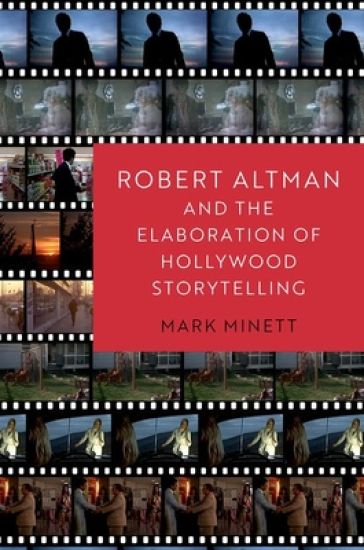
Robert Altman and the Elaboration of Hollywood Storytelling
Robert Altman and the Elaboration of Hollywood Storytelling reveals an Altman barely glimpsed in previous critical accounts of the filmmaker. This re-examination of his seminal work during the "Hollywood Renaissance" or "New Hollywood" period of the early 1970s (including M*A*S*H, Brewster McCloud, McCabe & Mrs. Miller, Images, The Long Goodbye, Thieves Like Us, California Split, and Nashville) sheds new light on both the films and the filmmaker, reframing Altman as a complex, pragmatic innovator whose work exceeds, but is also grounded in, the norms of classical Hollywood storytelling rather than someone who rejected those norms in favor of modernist art cinema. Its findings and approach hold important implications for the study of cinematic authorship. Largely avoiding thematic exegesis, it employs an historical poetics approach, robust functionalist frameworks, archival research, and formal and statistical analysis to demystify the essential features of the standard account of Altman's filmmaking history and profile-lax narrative form, heavy reliance on the zoom, sound design replete with overlapping dialogue, improvisational infidelity to the screenplay, and a desire to subvert based in his time in the training grounds of industrial filmmaking and filmed television. The book provides a clear example of how a filmmaker might work collaboratively and pragmatically within and across media institutions to elaborate upon their sanctioned practices and aims. We misunderstand Altman's work, and the creative work of Hollywood filmmakers in general, when we insist on describing innovation as opposition to institutional norms and on describing those norms as simply assimilating innovation.
Robert Altman and the Elaboration of Hollywood Storytelling
Robert Altman and the Elaboration of Hollywood Storytelling reveals an Altman barely glimpsed in previous critical accounts of the filmmaker. This re-examination of his seminal work during the "Hollywood Renaissance" or "New Hollywood" period of the early 1970s (including M*A*S*H, Brewster McCloud, McCabe & Mrs. Miller, Images, The Long Goodbye, Thieves Like Us, California Split, and Nashville) sheds new light on both the films and the filmmaker, reframing Altman as a complex, pragmatic innovator whose work exceeds, but is also grounded in, the norms of classical Hollywood storytelling rather than someone who rejected those norms in favor of modernist art cinema. Its findings and approach hold important implications for the study of cinematic authorship. Largely avoiding thematic exegesis, it employs an historical poetics approach, robust functionalist frameworks, archival research, and formal and statistical analysis to demystify the essential features of the standard account of Altman's filmmaking history and profile-lax narrative form, heavy reliance on the zoom, sound design replete with overlapping dialogue, improvisational infidelity to the screenplay, and a desire to subvert based in his time in the training grounds of industrial filmmaking and filmed television. The book provides a clear example of how a filmmaker might work collaboratively and pragmatically within and across media institutions to elaborate upon their sanctioned practices and aims. We misunderstand Altman's work, and the creative work of Hollywood filmmakers in general, when we insist on describing innovation as opposition to institutional norms and on describing those norms as simply assimilating innovation.
Robert Schumann's Leipzig Chamber Works

Robert Schumann's Leipzig Chamber Works

Julie Hedges Brown

OXFORD UNIVERSITY PRESS INC
2024
sidottu
The first in-depth study in almost half a century of Robert Schumann's multi-movement Leipzig chamber works, this book offers novel and diverse encounters with the three Op. 41 String Quartets, the Op. 44 Piano Quintet, and the Op. 47 Piano Quartet. The volume adopts a two-pronged approach, exploring the reception of this music from both composer- and listener-oriented perspectives. On the one hand, it shows how this repertory illuminates Schumann's response to certain past and contemporary composers; to his own youthful, experimental past; and to various literary and cultural influences. At the same time, the book explores how different people have heard this music: listeners in Schumann's own day and beyond, in both Germanic and non-Germanic regions, and comprising the voices of critics, performers, audiences, even figures in disciplines outside of music. Such reception stories yield new insights into whether these works represent a more conservative or progressive mindset for the composer. The book thus offers a more nuanced understanding of Schumann's stylistic development. Balancing new critical and contextual frameworks with close analyses of selected movements in a wide range of forms, author Julie Hedges Brown offers new pathways for rehearing the Leipzig chamber repertory.
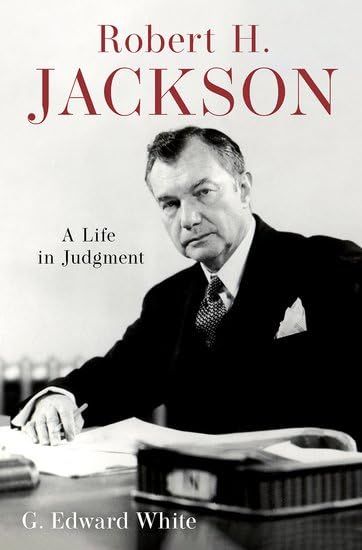
Robert H. Jackson

Robert H. Jackson

OXFORD UNIVERSITY PRESS INC
2025
sidottu
Discover the meteoric rise of one of the most extraordinary and singular figures in American jurisprudence, Robert H. Jackson, from self-trained lawyer to influential Supreme Court Justice and chief U.S. prosecutor at the Nuremberg trials, in this compelling new biography.Until he joined the U.S. government in 1934, Robert H. Jackson had been a lawyer in private practice in Upstate New York who was admitted to the bar without going to college and after completing only one year of law school. Once part of FDR's administration, Jackson became, in rapid succession, United States Solicitor General and United States Attorney General, where he successfully defended New Deal programs before the Supreme Court, including the legality of Lend Lease, which helped the U.S. give war supplies to England in exchange for grants of territory and harbors. Jackson played a central role in formulating the arguments justifying a number of initiatives on constitutional grounds and in drafting the policy statements that accompanied them. In 1941, FDR nominated him to be Associate Justice of the Supreme Court, on which he served until his death in 1954, only months after his adding his vote to the unanimous decision in Brown V. Board of Education. It was a meteoric rise for someone from outside the elite, and essentially self-trained. That didn't stop Jackson from becoming one of the most influential and independent-minded judges of his day, unafraid to question the status quo and leave his mark on a number of landmark cases, including West Virginia State Board of Education v. Barnett, which guaranteed First Amendment rights by holding that students in public schools did not have to salute the flag or recite the Pledge of Allegiance. He dissented from the notorious decision in Korematsu v. U.S., which condoned the internment of Japanese-Americans during World War Two. To many, however, Jackson's most significant contribution was as chief U.S. prosecutor at the Nuremberg war trials following the war. Drawing on Jackson's extensive personal papers in the Library of Congress and the Jackson Center, as well as a substantial oral history, G. Edward White's biography offers the first full-length portrait in decades of this fascinating and seminal figure.
Robert Burton: The Anatomy of Melancholy: Volume IV: Commentary up to Part 1, Section 2, Member 3, Subsection 15, 'Misery of Schollers'
This is the fourth volume of the Clarendon edition of Robert Burton's Anatomy of Melancholy and the first of three volumes of Commentary. It contains commentary on the text up to p. 327 of volume one - i.e. The Argument of the Frontispeice, Democritus to the Reader, and Partition 1 as far as the end of Section 2, Member 3, Subsection 15: 'Misery of Schollers'. In his study of morbid psychology as it was understood in his day, Burton cites many other writers. No previous edition of the Anatomy has identified all of these or verified all his quotations. In addition to explanatory notes and translations of all the passages in Latin, this edition attempts to locate all Burton's sources in the actual books he himself owned or to which he probably had access. The last of the three volumes of commentary will contain a Biobibliography listing over 1,500 authorities referred to by Burton, many very obscure, and will give not only bibliographical details but information about the writers.
The Poetical Works of Robert Browning: Volume VII. The Ring and the Book, Books I-IV
Henry James described Browning's extended dramatic poem The Ring and the Book, over 20,000 lines in length, as `a great living thing', `a proportioned monstrous magnificence'. The story was developed from some old legal documents discovered by Browning concerning an actual murder which took place in Rome in 1698, and its writing was his major preoccupation in the 1860s, the early years of his widowerhood in London. This volume gives us the first third of the poems, Books I to IV. The Introduction draws on unpublished letters, journals, and working papers not examined by previous editors, to illuminate how the poem was conceived and researched, the range of people the poet consulted, and the five-year period of composition. The poem's complex publishing history is disentangled in the Text part of the Introduction, including a discussion of the corrections and revisions Browning made on sheets from volumes I, III, and IV of the second edition, which he later forgot and which never appeared in print. Appendix E gives these important variants in full. The annotation presents new contextual matter, including unpublished letters relating to `Lyric Love', Browning's famous invocation to his dead wife. The appendices give the original Italian text of Browning's second source, `Morte dell'Uxoricida Guido Franceschini Decapitato'; two previously unpublished autograph chronologies in which the poet worked out historical details of his story; and a new account of the biographical significance of the `Ring' image. The editors have made six substantive emendations to the text, ranging from inaccuracies in the original typesetting to changes made by Browning after publication. The evolution of the text from manuscript to copy text is also discussed, and an appendix is devoted to a set of corrected proofs preserved at Yale, a textual evolutionary dead end of great interest and significance.
The Poetical Works of Robert Browning: Volume III. Bells and Pomegranates I-VI
This volume contains six of the eight Bells and Pomegranates, modestly-priced pamphlets published by Edward Moxon in a bid to help Browning recover from the ridicule which greeted the first appearance of Sordello. It includes Pippa Passes, four other dramatic works, and Dramatic Lyrics, the first of the great collections of short poems with which Browning established his reputation. In addition, a version of a poem on the Pied Piper by Browning's father is here printed for the first time. All significant textual variants are recorded, and each of the Bells is accompanied by an introduction and by full annotation. New information throws further light on this most important period in Browning's poetic career.
The Poetical Works of Robert Browning: Volume IV
`Browning really comes back to life in the marvellous third volume of the new Oxford Browning', wrote John Bayley, choosing it as one of his Books of the Year for 1988. While Volume III included six of the eight Bells and Pomegranates pamphlets, the present volume completes the series and includes the most remarkable of all, Dramatic Romances and Lyrics. Here we find `Pictor Ignotus', `The Lost Leader', `The Bishop orders his Tomb', `The Laboratory', `The Boy and the Angel', and the first part of `Saul'. Also included are Christmas-Eve and Easter-Day and the essay on Shelley. As the Times Literary Supplement reviewer of the earlier volumes commented, `readers of a poet like this need all the help they can get; and Jack and Smith have provided it in abundance.' Each poem is fully annotated, and accompanied by a detailed introduction which provides information on the chronology of composition and on Browning's sources.
The Poetical Works of Robert Browning: Volume V. Men and Women
This is the first full scholarly edition of Browning's greatest and perhaps best-known collection of short poems, Men and Women. A comprehensive introduction shows how new research by Ian Jack an Robert Inglesfield has unearthed material which throws fresh light on the composition and dates of such famous pieces as 'Fra Lippo Lippi', 'Childe Roland to the Dark Tower Came', and 'One Word More: To E.B.B.'. This edition uses a critical text based on that of Browning's final collection, and has detailed introductions to the individual poems. It is the fifth volume in the highly praised Political Works of Robert Browning.
Robert Burton: The Anatomy of Melancholy: Volume V: Commentary from Part. 1, Sect. 2, Memb. 4, Subs. 1 to the End of the Second Partition
This, the fifth volume of the Clarendon Press edition of Robert Burton's Anatomy of Melancholy, contains commentary on the text from Partition 1, Section 2, Member 4, Subsection 1 until the end of Part. 1, and on the whole of the second Partition. It thus concludes Burton's account of the causes, the symptoms, and the prognosis of melancholy, and his examination of the remedies for the disease both spiritual and medical. As before, the aim of the commentary is to aid the reader to understand Burton's meaning (to which end all the passages in Latin are translated) and to identify the sources of his many quotations from and references to other authors. The third and last volume of the commentary, and of the edition, will contains a full Bibliography of these authors and brief biographical notes on them.