Kirjojen hintavertailu. Mukana 12 363 183 kirjaa ja 12 kauppaa.

Kirjahaku

Etsi kirjoja tekijän nimen, kirjan nimen tai ISBN:n perusteella.

1000 tulosta hakusanalla Robert M Workman

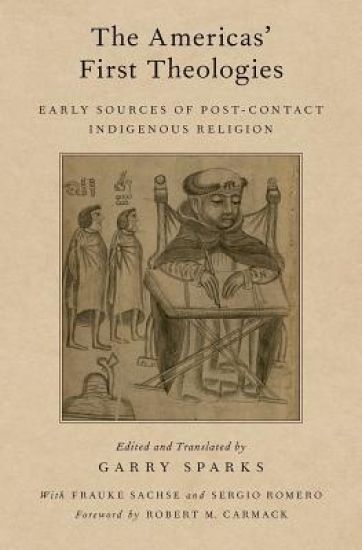
The Americas' First Theologies

The Americas' First Theologies

Robert M. Carmack

Oxford University Press Inc
2017
sidottu
The Theologia Indorum by Dominican friar Domingo de Vico was the first Christian theology written in the Americas. Made available in English translation for the first time, Americas' First Theologies presents a selection of exemplary sections from the Theologia Indorum that illustrate Friar Vico's doctrine of god, cosmogony, moral anthropology, understanding of natural law and biblical history, and constructive engagement with pre-Hispanic Maya religion. Rather than merely condemn the Maya religion, Vico appropriated local terms and images from Maya mythology and rituals that he thought could convey Christianity. His attempt at translating, if not reconfiguring, Christianity for a Maya readership required his mastery of not only numerous Mayan languages but also the highly poetic ceremonial rhetoric of many indigenous Mesoamerican peoples. This book also includes translations of two other pastoral texts and parts of a songbook and a catechism. These texts, written in Highland Mayan languages by fellow Dominicans, demonstrate the wider influence of Vico's ethnographic approach shared by a particular school of Dominicans. Altogether, The Americas' First Theologies provides a rich documentary case example of the translation, reception, and reaction to Christian thought in the indigenous Americas.
Democratic Practice

Democratic Practice

Robert M. Fishman

Oxford University Press Inc
2019
sidottu
At a time of growing concern over the fate of contemporary democracy this book shows how vast differences between countries in forms of political conduct, and taken for granted assumptions, determine what democracies actually accomplish. In Democratic Practice, Robert M. Fishman elucidates why some democracies include the economically underprivileged, and cultural others within the circles of political relevance that set policies and the political agenda, whereas others exclude them. On the basis of in-depth research on Portugal and Spain, Fishman develops a theoretically innovative explanation for the breadth of democratic inclusion and draws out large implications for democracies everywhere. Democratic Practice examines the record of two countries that began the worldwide turn to democracy in the 1970s, showing how and why basic assumptions about what democracy is, and how political actors should treat one another, diverged. The book offers detailed empirical evidence on how an inclusive approach to democratic politics provides major benefits not only for the poor and excluded but also for others, drawing large lessons for contemporary democracies.
Democratic Practice

Democratic Practice

Robert M. Fishman

Oxford University Press Inc
2019
nidottu
At a time of growing concern over the fate of contemporary democracy this book shows how vast differences between countries in forms of political conduct, and taken for granted assumptions, determine what democracies actually accomplish. In Democratic Practice, Robert M. Fishman elucidates why some democracies include the economically underprivileged, and cultural others within the circles of political relevance that set policies and the political agenda, whereas others exclude them. On the basis of in-depth research on Portugal and Spain, Fishman develops a theoretically innovative explanation for the breadth of democratic inclusion and draws out large implications for democracies everywhere. Democratic Practice examines the record of two countries that began the worldwide turn to democracy in the 1970s, showing how and why basic assumptions about what democracy is, and how political actors should treat one another, diverged. The book offers detailed empirical evidence on how an inclusive approach to democratic politics provides major benefits not only for the poor and excluded but also for others, drawing large lessons for contemporary democracies.
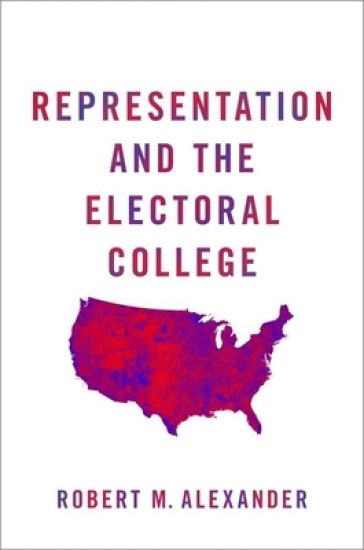
Representation and the Electoral College

Representation and the Electoral College

Robert M. Alexander

Oxford University Press Inc
2019
sidottu
Nearly 800 proposals have been made to amend or abolish the Electoral College, and its divisiveness raises many questions. What role do electors play in American democracy? How should they vote? Should the Electoral College exist at all? Much confusion surrounds this institution, in large part because of how the original Electoral College varies from its contemporary counterpart, the evolved Electoral College. This book helps readers to understand the distinction and how we got where we are today. Focusing on the controversial 2016 election, in which Trump received nearly three million fewer popular votes than Clinton, Representation and the Electoral College shows how the Electoral College acts on behalf of the American public and alters election outcomes. In exploring the origin, development, and practice of the Electoral College, this study also presents the most extensive analysis of presidential electors to date.
Representation and the Electoral College

Representation and the Electoral College

Robert M. Alexander

Oxford University Press Inc
2019
nidottu
Nearly 800 proposals have been made to amend or abolish the Electoral College, and its divisiveness raises many questions. What role do electors play in American democracy? How should they vote? Should the Electoral College exist at all? Much confusion surrounds this institution, in large part because of how the original Electoral College varies from its contemporary counterpart, the evolved Electoral College. This book helps readers to understand the distinction and how we got where we are today. Focusing on the controversial 2016 election, in which Trump received nearly three million fewer popular votes than Clinton, Representation and the Electoral College shows how the Electoral College acts on behalf of the American public and alters election outcomes. In exploring the origin, development, and practice of the Electoral College, this study also presents the most extensive analysis of presidential electors to date.
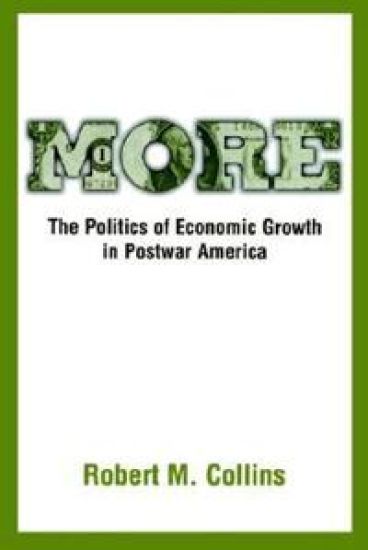
More

More

Robert M. Collins

Oxford University Press Inc
2000
sidottu
James Carville famously reminded Bill Clinton throughout 1992 that "it's the economy, stupid." Yet, for the last forty years, historians of modern America have ignored the economy to focus on cultural, social, and political themes, from the birth of modern feminism to the fall of the Berlin Wall. Now a scholar has stepped forward to place the economy back in its rightful place, at the center of his historical narrative. In More, Robert M. Collins reexamines the history of the United States from Franklin Delano Roosevelt to Bill Clinton, focusing on the federal government's determined pursuit of economic growth. After tracing the emergence of growth as a priority during FDR's presidency, Collins explores the record of successive administrations, highlighting both their success in fostering growth and its partisan uses. Collins reveals that the obsession with growth appears not only as a matter of policy, but as an expression of Cold War ideology--both a means to pay for the arms build-up and proof of the superiority of the United States' market economy. But under Johnson, this enthusiasm sparked a crisis: spending on Vietnam unleashed runaway inflation, while the nation struggled with the moral consequences of its prosperity, reflected in books such as John Kenneth Galbraith's The Affluent Society and Rachel Carson's Silent Spring. More continues up to the end of the 1990s, as Collins explains the real impact of Reagan's policies and astutely assesses Clinton's "disciplined growthmanship," which combined deficit reduction and a relaxed but watchful monetary policy by the Federal Reserve. Writing with eloquence and analytical clarity, Robert M. Collins offers a startlingly new framework for understanding the history of postwar America.
American Salons

American Salons

Robert M. Crunden

Oxford University Press Inc
1993
sidottu
A unique history of the evolution of modernism focuses on the role of American "salons"--informal gatherings of intellectuals--in disseminating new modernist ideas from Europe.
Democracy without Citizens

Democracy without Citizens

Robert M. Entman

Oxford University Press Inc
1991
nidottu
This trenchant analysis questions why the interaction between the news media and their audiences fails to create the democratic potential everyone assumes occurs with such interaction. Drawing illustrations mainly from the Carter and Reagan years, the book presents a clear statement of the dilemmas facing the news media and their audience today. The book offers a portrait of citizenship in America, defined by the public's changing levels of political knowledge and participation from 1952 to 1984. Politically unsophisticated, the mass audience prefers simple, symbolic news, which means that journalists can offer little of the detached, detailed explorations of policy issues that would provide the public with the information needed to hold government to close account.
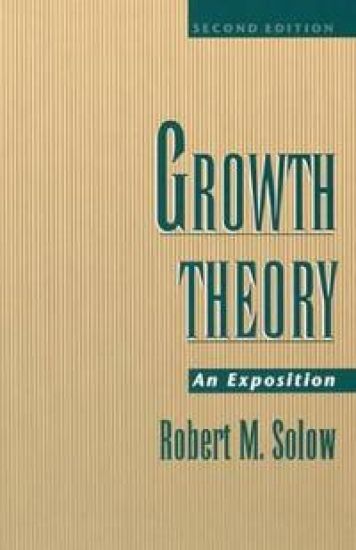
Growth Theory

Growth Theory

Robert M. Solow

Oxford University Press Inc
2000
nidottu
In the preface to the first edition of Growth Theory (copyright 1970), the author writes: "I have tried to give some feeling for the scope of aggregate theory of growth, a notion of technical details, and some idea of the directions in which future research is likely to go. About four years ago, the OUP NY economics editor suggested to Professor Solow that he bring this book up to date, because of the large amount of recent literature, often referred to as the "new growth theory," or more technically as "endogenous growth theory". This second edition of Growth Theory, which grew out of that conversation, begins with the author's Nobel Prize Lecture "Growth Theory and After" (1987) followed by the original six chapters of the first edition. The first edition appeared in 1970; the author maintains that basic growth theory is still best summarized in these chapters, using what is often classified as "exogenous growth theory." In the 70s, which happened to coincide witha worldwide productivity slowdown, very little new work occurred in growth theory. It wasn't until the 1980s that a surge of new writing appeared, with the work of Roemer, Lucas, and others, what the author refers to as "an astonishing burst of theoretical and empirical research that still continues." The author developed "a second half" of the book for this edition, six entirely new chpaters in which he discusses new growth theory (endogenous growth theory) and its relationship to exogenous theory. As a "bridge" between the two sets of chapters, he has written an essay entitled "Intermezzo" in which he discusses the relatively inactive period for growth theory in the 70s, before introducing the "new" endogenous theory of growth and contrasting it with earlier work. Solow is quick to agree that older growth theory can aptly be described as "exogenous," because the growth rate itself was left unexplained, or rather was considered a "given" (basically a result of the actual rate of labor-augmenting technology). But treating the growth rate as exogenous does not make it a permanent constant or inexplicable. Certainly things can be said about a variety of (exogenous) factors affecting the growth rate; nevertheless the "old" theory did not provide, or try to give, a systematic theory of the growth rate. To sum up, according to the author, the way to understand exogenous growth theory is to show how aggregate output adjusts to the rate of population growth and the rate of technological process, whatever they happen to be and for however long the persist (treated in Chapters 1-6 and the "Intermezzo"). By contrast, the main contribution of the (new) endogenous grotwh theory is to propose a systematic theory of technological progress, a model that actually explains the rate of growth. It is the contention of the author that no theory of innovation or growth can come up with a formulaic way to arrive at a growth rate. For that reason he believes there is something arbitrary introduced into all endogenous theories of the rate of growth. They claim to explain more than they can be expected to do. Rather than trying to pin down determinants of any "steady-state" growth rate, exogenous growth theory describes trends and policies that increase growth, including the growth rate. For reasons made explicit in the book, the author deals with "AK"theory, convergence, and international cross-section studies, with only the passing attention he believes they deserve. In the "second half of the book," starting in Chapter 7, the author recasts the older (exogenous) model (Chapters 1-6) so that it can be more easily compared with new models. Chapters 8-11 takes a close analytical look at hte key models: Lucas (8); Roemer (9); Grossman/Helpman (10); Aghion and Howitt (11). In each chapter he shows how an unwarranted assumption creeps into these models that try to determin growth rate endogenously. The final chapter looks at lessons from the new growth theory and suggests where gaps may usefully be filled in future research. Despite his criticisms of the new growth theory, the author is quik to acknowledge outstanding contributions made by the new generation of theorists. This is an important book that will be required reading in graduate programs in macroeconomics as well as specific courses on growth theory, at both the undergraduate and graduate levels. No other book provides such a broad overviwe of the whole field and its evolution to the present.
Psychophysiological Recording

Psychophysiological Recording

Robert M. Stern; William J. Ray; Karen S. Quigley

Oxford University Press Inc
2001
nidottu
This is a thorough revision of a successful introductory text on psychophysiological recording. The authors include information on the most up-to-date equipment used today to do brain scanning and discuss other equipment not available in 1980. A new chapter on signal processing and analysis has been added, and discussions cover nonlinear systems as well as cognitive psychophysiology.
Shrines of the Slave Trade

Shrines of the Slave Trade

Robert M. Baum

Oxford University Press Inc
1999
sidottu
In this groundbreaking work, Robert Baum seeks to reconstruct the religious and social history of the Diola communities in southern Senegal during the precolonial era, when the Atlantic slave trade was at its height. Baum shows that Diola community leaders used a complex of religious shrines and priesthoods to regulate and contain the influence of the slave trade. He demonstrates how this close involvement with the traders significantly changed Diola religious life.
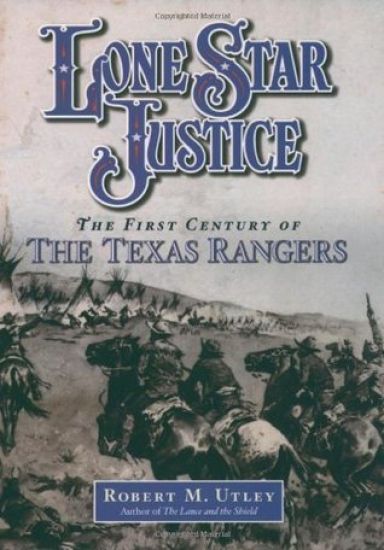
Lone Star Justice

Lone Star Justice

Robert M. Utley

Oxford University Press Inc
2002
sidottu
A lively account of the Texas Rangers illuminates their spectacular career on the Western frontier, covering more than acentury of Indian wars, labor strikes, train robbers, cattle thieves, and assorted outlaws.
More

More

Robert M. Collins

Oxford University Press Inc
2002
nidottu
James Carville famously reminded Bill Clinton throughout 1992 that "it's the economy, stupid." Yet, for the last forty years, historians of modern America have ignored the economy to focus on cultural, social, and political themes, from the birth of modern feminism to the fall of the Berlin Wall. Now a scholar has stepped forward to place the economy back in its rightful place, at the centre of his historical narrative. In More, Robert M. Collins re-examines the history of the United States from Franklin Delano Roosevelt to Bill Clinton, focusing on the federal government's determined pursuit of economic growth. After tracing the emergence of growth as a priority during FDR's presidency, Collins explores the record of successive administrations, highlighting both their success in fostering growth and its partisan uses. Collins reveals that the obsession with growth appears not only as a matter of policy, but as an expression of Cold War ideology--both a means to pay for the arms build-up and proof of the superiority of the United States' market economy. But under Johnson, this enthusiasm sparked a crisis: spending on Vietnam unleashed runaway inflation, while the nation struggled with the moral consequences of its prosperity, reflected in books such as John Kenneth Galbraith's The Affluent Society and Rachel Carson's Silent Spring. More continues up to the end of the 1990s, as Collins explains the real impact of Reagan's policies and astutely assesses Clinton's "disciplined growthmanship," which combined deficit reduction and a relaxed but watchful monetary policy by the Federal Reserve. Writing with eloquence and analytical clarity, Robert M. Collins offers a startlingly new framework for understanding the history of postwar America.
Lone Star Lawmen: The Second Century of the Texas Rangers

Lone Star Lawmen: The Second Century of the Texas Rangers

Robert M. Utley

Oxford University Press
2007
sidottu
Hailed as "a rip-snortin', six-guns-blazin' saga of good guys and bad guys who were sometimes one and the same," Robert M. Utley's Lone Star Justice captured the colorful first century of Texas Ranger history. Now, in the eagerly anticipated conclusion, Lone Star Lawmen, Utley once again chronicles the daring exploits of the Rangers, this time as they bring justice to the twentieth-century West. Based on unprecedented access to Ranger archives, this fast-paced narrative stretches from the days of the Mexican Revolution (where atrocities against Mexican Americans marked the nadir of Ranger history) to the Branch Davidian saga near Waco and the recent bloody standoff with "Republic of Texas" militia. Readers will find in these pages one hundred years of high adventure. Utley follows the Rangers as they pursue bank robbers, bootleggers, moonshiners, and "horsebackers" (smugglers who used mule trains to bring liquor across the border). We see these fearless lawmen taming oil boomtowns, springing the ambush of Bonnie and Clyde, facing down angry lynch mobs, and tracking the "Phantom Killer" of Texarkana. Utley also highlights the gradual evolution of this celebrated force, revealing that while West Texas Rangers still occasionally ride the range on horseback and crack down on smugglers and rustlers, East Texas Rangers--who work mostly in big cities--now ride in high-powered cars and contend with kidnappers, forgers, and other urban criminals. But East or West, today's Rangers have become sophisticated professionals, backed by crime labs and forensic science. Written by one of the most respected Western historians alive, here is the definitive account of the Texas Rangers, a vivid portrait of these legendary peace officers and their role in a changing West.
Disrupted Dialogue

Disrupted Dialogue

Robert M. Veatch

Oxford University Press Inc
2004
sidottu
Medical ethics changed dramatically in the past 30 years because physicians and humanists actively engaged each other in discussions that sometimes led to confrontation and controversy, but usually have improved the quality of medical decision-making. Before then medical ethics had been isolated for almost two centuries from the larger philosophical, social, and religious controversies of the time. There was, however, an earlier period where leaders in medicine and in the humanities worked closely together and both fields were richer for it. This volume begins with the 18th century Scottish Enlightenment when professors of medicine such as John Gregory, Edward Percival, and the American, Benjamin Rush, were close friends of philosophers like David Hume, Adam Smith, and Thomas Reid. They continually exchanged views on matters of ethics with each other in print, at meetings of elite intellectual groups, and at the dinner table. Then something happened, physicians and humanists quit talking with each other. In searching for the causes of the collapse, this book identifies shifts in the social class of physicians, developments in medical science, and changes in the patterns of medical education. Only in the past three decades has the dialogue resumed as physicians turned to humanists for help just when humanists wanted their work to be relevant to real-life social problems. Again, the book asks why, finding answers in the shift from acute to chronic disease as the dominant pattern of illness, the social rights revolution of the 1960's, and the increasing dissonance between physician ethics and ethics outside medicine. The book tells the critical story of how the breakdown in communication between physicians and humanists occurred and how it was repaired when new developments in medicine together with a social revolution forced the leaders of these two fields to resume their dialogue.
Ancient African Religions

Ancient African Religions

Robert M. Baum

OXFORD UNIVERSITY PRESS INC
2024
nidottu
Scholars have sometimes maintained that the study of the history of African religions is an impossible endeavor. Some have contended that African religions do not have a history unto themselves, apart from their interaction with the newer religious traditions of Islam and Christianity. Others concede that such a history exists, but believe the source materials are insufficient to reconstruct such a history. This book speaks directly to these critics. The history of African religions becomes in many ways like a pentathlon, expecting the scholar who conducts such research to work with written texts, to learn African languages, to live within a community where these religious traditions are practiced, to study material culture, both sacred and mundane, and a variety of archaeological sources from tree rings to stone circles and gravesites. By relying on the existing corpus of written texts, oral traditions, linguistic analyses, descriptions based on participant observation, and various types of archaeology, Robert M. Baum demonstrates that African religious history is nearly as old as humanity itself. Baum has spent his entire academic career focused on the historical study of African religious traditions, as far back as accessible sources will permit. This volume traces the history of African religions beginning with early hominids and their ritual and burial sites through ancient Egypt, North and Northeast Africa, and Africa south of the Sahara from the Fourth Millennium BCE to the birth of Islam in the Seventh Century.
Ancient African Religions

Ancient African Religions

Robert M. Baum

OXFORD UNIVERSITY PRESS INC
2024
sidottu
Scholars have sometimes maintained that the study of the history of African religions is an impossible endeavor. Some have contended that African religions do not have a history unto themselves, apart from their interaction with the newer religious traditions of Islam and Christianity. Others concede that such a history exists, but believe the source materials are insufficient to reconstruct such a history. This book speaks directly to these critics. The history of African religions becomes in many ways like a pentathlon, expecting the scholar who conducts such research to work with written texts, to learn African languages, to live within a community where these religious traditions are practiced, to study material culture, both sacred and mundane, and a variety of archaeological sources from tree rings to stone circles and gravesites. By relying on the existing corpus of written texts, oral traditions, linguistic analyses, descriptions based on participant observation, and various types of archaeology, Robert M. Baum demonstrates that African religious history is nearly as old as humanity itself. Baum has spent his entire academic career focused on the historical study of African religious traditions, as far back as accessible sources will permit. This volume traces the history of African religions beginning with early hominids and their ritual and burial sites through ancient Egypt, North and Northeast Africa, and Africa south of the Sahara from the Fourth Millennium BCE to the birth of Islam in the Seventh Century.
Brownian Motion

Brownian Motion

Robert M. Mazo

Clarendon Press
2002
sidottu
Brownian motion - the incessant motion of small particles suspended in a fluid - is an important topic in statistical physics and physical chemistry. This book studies its origin in molecular scale fluctuations, its description in terms of random process theory and also in terms of statistical mechanics. A number of new applications of these descriptions to physical and chemical processes, as well as statistical mechanical derivations and the mathematical background are discussed in detail. Graduate students, lecturers, and researchers in statistical physics and physical chemistry will find this an interesting and useful reference work.
Charles Darwin and the Church of Wordsworth

Charles Darwin and the Church of Wordsworth

Robert M. Ryan

Oxford University Press
2016
sidottu
Charles Darwin and the Church of William Wordsworth is a study of the cultural connections between two of the nineteenth century's most influential figures, Charles Darwin and William Wordsworth. When Darwin presented On the Origin of Species, his reading public's affective response to the natural world had already been profoundly influenced by William Wordsworth. Wordsworth presented nature as benign, harmonious, a source of moral inspiration and spiritual blessing, and a medium through which one might enter into communion with the Divine. Long after his death, he continued to be revered throughout the English-speaking world, not only as a great poet, but as a theologian with a broader following than any prelate and an appeal that transcended or ignored sectarian differences. For believers and sceptics alike, Wordsworth's poetry offered a readily accessible and intellectually respectable counterweight to Darwin's vision of a material universe evolving by fixed laws in which Divinity played no discernible role and where concepts like beauty and harmony were material conditions to be explained in scientific terms. Wordsworth's theology of nature became for many readers a more effective counterforce to Darwin's ideas than Biblical orthodoxy, but it also provided an enriching context for the reception of evolutionary theory, aiding theists in their effort to reach an accommodation with the new science. As the nineteenth century's two most prominent theoreticians of nature's life, Wordsworth and Darwin competed for attention among those seeking to understand humanity's relationship with the natural world, and their disciples engaged in a productive, mutually transformative dialogue in which the poet's cultural authority influenced the way Darwin was received, and Darwinian science adjusted interpretation and evaluation of the poetry. Charles Darwin and the Church of William Wordsworth explores the broad cultural relationship between Wordsworth, Darwin, and their disciples, contextualising them within wider discussions about the relationship between religion and science in the nineteenth century.
The Canadian North

The Canadian North

Robert M. Bone

Oxford University Press, Canada
2016
nidottu
Now in its fifth edition, The Canadian North continues to balance in-depth coverage of the history and geography of the North with current debates on the issues and challenges shaping the region today. Using a straightforward, accessible approach, Robert Bone traces the profound social, cultural, environmental, economic, and political changes occurring in northern Canada--including the effects of resource extraction, the impacts of climate change, and the advancements being made by the Aboriginal peoples who call this region home. Updated throughout to reflect recent developments, this insightful exploration of the Canadian North will help students fully appreciate the many challenges--as well as the potential opportunities--facing this fascinating region and its peoples.