
Kirjahaku
Etsi kirjoja tekijän nimen, kirjan nimen tai ISBN:n perusteella.
1000 tulosta hakusanalla Robin K. Foster

Teachers and students are frequently confused as to the relevance of abstract philosophical theorising to the reality of the classroom and this book is distinctive for the attention it devotes to philosophy and its potential contribution to practical matters, and education in particular. The author is critical of many current views of the philosophy of education and argues the validity of philosophy as an integral part of education in its own right, against the creation of a ‘new’ branch of philosophy, the ‘philosophy of education’. The book stresses that relativist ethical theories are no more ‘known’ to be valid than the absolutist theories they have replaced, and in the second section the author argues for a modified utilitarian position. The final section enables the reader to relate the general argument of the second part to several specific issues.
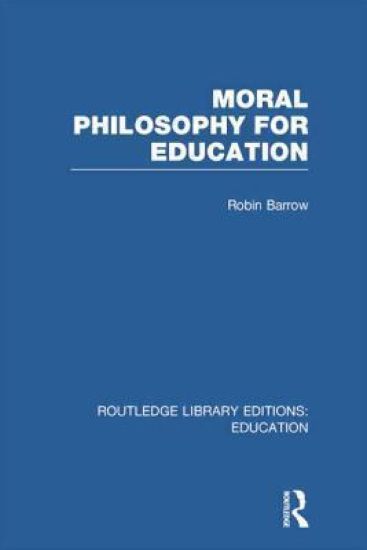
Teachers and students are frequently confused as to the relevance of abstract philosophical theorising to the reality of the classroom and this book is distinctive for the attention it devotes to philosophy and its potential contribution to practical matters, and education in particular. The author is critical of many current views of the philosophy of education and argues the validity of philosophy as an integral part of education in its own right, against the creation of a ‘new’ branch of philosophy, the ‘philosophy of education’. The book stresses that relativist ethical theories are no more ‘known’ to be valid than the absolutist theories they have replaced, and in the second section the author argues for a modified utilitarian position. The final section enables the reader to relate the general argument of the second part to several specific issues.

Ratman And Robin: The Attack of Catman and the Meows
K. a. Bolton
Independently Published
2018
nidottu
"Ratman and Robin got my 2nd grader to start reading" - Amazon Reviewer"My 9 year old son absolutely loves this book " - Amazon ReviewerSqueaker is a pet rat, and like all pet rats he HATES cats. He has hated them ever since they killed his parents and made him an orphan - but the good news is, he was taken in by 8-year-old Billy and his parents, and he loves them dearly. Squeaker thought he could put the past behind him.... but as he soon discovers, he was wrong.Now, Squeaker has a big problem - Cats are in town, and they're up to no good.To protect his new family, Squeaker and his best friend Birdie must transform into their caped-crusader alter egos: Ratman and Robin With the cats on the prowl, the fearless pair must take them on in a series of action-packed combat and daring escapades.Will Squeaker be able to stop the cats and save his family this time around, or will he lose it all?Laugh-out-loud funny, entertaining, and packed with action, Ratman and Robin is the perfect gift to get your child off screens and into books Resolve to grow a reader - give your child, grandchild, student, niece or nephew the gift of reading Grab your copy today

Using a Matrix Approach to Teaching Language Arts: Grades Pre-K Through 6
Robin Puryear
Cognella Academic Publishing
2019
sidottu
Using a Matrix Approach to Teaching Language Arts: Grades Pre-K Through 6 helps pre-service teachers bridge the gap between theory and practice by providing them with a unique matrix approach to language arts instruction. The approach integrates research- and evidence-based strategies and practices, demonstrating not only what to teach at each grade level to support students' continued development, but also how to manage the practical instruction of language arts within the classroom. The text begins by introducing readers to the theories upon which research- and evidence-based language arts instruction is founded. Then, the matrices--whole group instruction, tiered instruction, guided reading, guided writing, and product development--are introduced and detailed. Readers also learn how to incorporate language arts into content-area instruction. Using a Matrix Approach to Teaching Language Arts is ideal for courses with a focus on educational methodology. The book is also an excellent resource for new teachers, veteran teachers, reading specialists, and school administrators.Robin Puryear holds a doctoral degree in literacy leadership from Old Dominion University, an Ed.S. in administration from Virginia Polytechnic Institute and State University, and two master's degrees from Old Dominion University, one in education (with specialization in reading), and the other in education (with specialization in curriculum and instruction). She is an adjunct professor at Old Dominion University and has served as an educator since 1991. Her research interests include literacy, gifted education, curriculum development, the professional development of pre-service and in-service teachers, and mentoring.
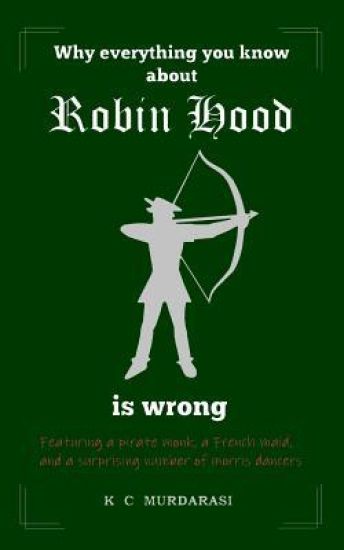
What if everything you ever knew about Robin Hood was wrong? He wasn't a nobleman. He never met Maid Marian. He didn't go on Crusade. And he absolutely did not rob from the rich to give to the poor.For the first time, the information that medieval historians have about Robin Hood is made available to a popular audience. Why Everything You Know about Robin Hood Is Wrong is an illuminating, entertaining and really quite sarcastic trip through what we actually do know about one of England's most famous heroes.Meet the many candidates to be 'the real Robin Hood' Eustace, monk-turned-pirate Hereward, landowner-turned-bandit Fulk, noble-turned-outlaw and discover why none of them actually was. Find out how Maid Marian came over from France and how she was, ahem, intimately connected with Friar Tuck. And learn out more than you ever wanted to know about medieval hoods.
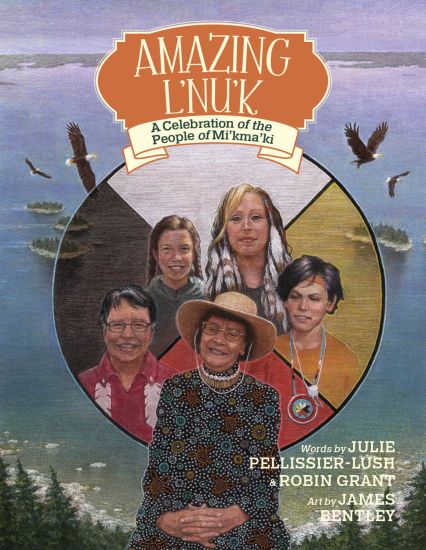
Amazing l'Nu'k: A Celebration of the People of Mi'kma'ki
Julie Pellissier-Lush; Robin Grant
Nimbus Publishing Limited
2023
nidottu
The newest installment in the celebrated illustrated series about Amazing Atlantic Canadians, featuring incredible Indigenous people. Delve into the uplifting stories of the people of Mi'kma'ki in this full-colour illustrated book. Meet a devoted water protector, learn about a teen determined to shed light on the tragic history of Residential Schools, and discover poets who use words to explore and champion the rich Mi'kmaw culture. From Grand Chief Gabriele Sylliboy and Elder Dorene Bernard to Rebecca Thomas and Landyn Toney, all of these amazing people call Mi'kma'ki (a territory that includes New Brunswick, Prince Edward Island, Nova Scotia, and parts of Newfoundland, Quebec, and Maine) home. With dozens of profiles featuring artists, athletes, entrepreneurs, scientists, and more -- both historical and present-day, from kids to Elders -- Julie Pellissier-Lush and Robin Grant celebrate the many brilliant achievements of the Mi'kmaq. Includes original colour illustrations by James Bentley, informative sidebars, a map of Mi'kmaw territories, a history of Mi'kma'ki, an index, and a glossary.

Libertarian War on Poverty: Repairing the Ladder of Upward Mobility
Daniel K. Robin
Createspace Independent Publishing Platform
2012
nidottu

The horrific 1947 Woodward tornado, the unpredictability of agriculture, and the vagaries of oil and gas--Woodward, Oklahoma, has endured its share of tragedy and triumph. Standing as tenacious as its citizens are many of the city's buildings repurposed through the decades for new generations.

A significant examination of exorcism and deliverance from a range of disciplines focuses on an important but often neglected area of the church's mission to the world. The diversity of essays makes sure that every facet is presented to encourage the reader thoroughly to consider this aspect of the church's approach to evil in our society. Since Jesus of Nazareth made exorcism a cornerstone of his own ministry, the Church has seen itself as engaged in a battle against the demonic. Exorcism has continued to play a role throughout Christian history in this conflict, although it has received different emphases in different times and places, and has been practiced in a range of different ways. Exorcism and Deliverance aims to shed new light on the phenomena of possession and exorcism by looking at them from a range of disciplinary perspectives.
Constructing a Personal Orientation to Music Teaching
Mark Robin Campbell; Linda K. Thompson; Janet Revell Barrett
Routledge
2021
sidottu
Constructing a Personal Orientation to Music Teaching: Growth, Inquiry, and Agency, (Second Edition), is a textbook for studies in music education. Expanding upon the first edition, the authors promote inquiry and reflection to facilitate teacher growth, lifelong learning, and a disposition toward educational change. The revised text responds to current calls for social change and teacher education reform by reaffirming and intensifying the need for music teachers to adopt a personal orientation toward their work. A personal orientation encourages teachers to initiate their own growth, engage in inquiry, and exercise agency in school contexts.Strongly grounded in current theories and research in teacher education, Constructing a Personal Orientation to Music Teaching: Growth, Inquiry, and Agency strives to do the following:Engage readers in analyzing their own experiences in order to conceptualize the complexity of teachingInvolve them in clarifying their reasons for seeking a career in teachingSupport their insights, questions, and reflections about their workPromote a reflective, critical attitude about schools in general as music teachers are urged to think of themselves as change agents in school settingsConstruct a moral purpose as a compass to guide their current and future endeavors in the profession.Every chapter includes a wealth of pedagogical features, including new methodologies and examples of practice to engage the readers in processes of inquiry and reflection. The second edition is organized in two parts. Part I focuses on positioning music teachers as learners in the profession, significantly expanding concepts explored in the first edition that are central to a personal orientation to professional growth. In the new edition, a reconceptualized Chapter 5 challenges teachers to cultivate their identities as change agents. The second half of the book—focusing on becoming a student of music teaching— features five new chapters. A provocative chapter on curriculum sets the stage for a set of additional chapters that invite deeper considerations of the commonplaces of teacher, learners, subject matter, and context. An epilogue speaks directly to the power of agency, imagination, and hope in teachers’ lives.
Constructing a Personal Orientation to Music Teaching
Mark Robin Campbell; Linda K. Thompson; Janet Revell Barrett
Routledge
2021
nidottu
Constructing a Personal Orientation to Music Teaching: Growth, Inquiry, and Agency, (Second Edition), is a textbook for studies in music education. Expanding upon the first edition, the authors promote inquiry and reflection to facilitate teacher growth, lifelong learning, and a disposition toward educational change. The revised text responds to current calls for social change and teacher education reform by reaffirming and intensifying the need for music teachers to adopt a personal orientation toward their work. A personal orientation encourages teachers to initiate their own growth, engage in inquiry, and exercise agency in school contexts.Strongly grounded in current theories and research in teacher education, Constructing a Personal Orientation to Music Teaching: Growth, Inquiry, and Agency strives to do the following:Engage readers in analyzing their own experiences in order to conceptualize the complexity of teachingInvolve them in clarifying their reasons for seeking a career in teachingSupport their insights, questions, and reflections about their workPromote a reflective, critical attitude about schools in general as music teachers are urged to think of themselves as change agents in school settingsConstruct a moral purpose as a compass to guide their current and future endeavors in the profession.Every chapter includes a wealth of pedagogical features, including new methodologies and examples of practice to engage the readers in processes of inquiry and reflection. The second edition is organized in two parts. Part I focuses on positioning music teachers as learners in the profession, significantly expanding concepts explored in the first edition that are central to a personal orientation to professional growth. In the new edition, a reconceptualized Chapter 5 challenges teachers to cultivate their identities as change agents. The second half of the book—focusing on becoming a student of music teaching— features five new chapters. A provocative chapter on curriculum sets the stage for a set of additional chapters that invite deeper considerations of the commonplaces of teacher, learners, subject matter, and context. An epilogue speaks directly to the power of agency, imagination, and hope in teachers’ lives.
"Some are born into greatness... Others have greatness forced upon them..."When Rakyle Stuvvart, the son of an Artezian aristocrat, defies traditional norms to begin his military career in the enlisted ranks instead of the officer corps, he has no idea just how big an impact that decision would have on his life. Or how that choice would begin a life-altering journey of personal discovery that would ultimately transcend rank, uniform, profession, and perceived social status. He unexpectedly discovers how experiencing corruptive tendencies from a victim's perspective also gives him a unique and enlightened viewpoint into how their subtle origins can evolve into such reprehensible consequences. And how their haunting legacy can continue to further taint and victimize if left unchecked. This sparks an integrity crusade that is constantly being shaped, challenged, and reinforced by internal and external events in both his personal and professional life. Along the way, he discovers new facets to a familiar mantra repeating itself throughout: "Integrity First... Service Before Self... Excellence in All We Do..."
In the 24th Century, the Artezian Realm is a major partner in the Intergalactic Trig Alliance, a coalition of planets and star systems that have become the guardians of stability and democracy in the Milky Way Galaxy. When a military threat from a non-aligned regional power threatens the ruling dynasty's survival, the Artezian Imperial Court secretly sends its last Heir (the Princess Katya Lin Chi) to the heart of Trig Alliance-protected space for her own protection. Yet, although the young princess' anonymity on the planet Earth shields her from much of the war's overt realities, her life in hiding is still complicated by inescapable clashes between her secret royal heritage and those who would covertly seek to manipulate the circumstances for their own purposes. It's through her experiences at one of Earth's military service academies that she learns how to effectively transcend such adversaries; and embrace the deeper meanings of the concepts: duty, leadership, and conviction of character essential for her future role as Artezia's next Empress.
In Ecocinema in the City, Murray and Heumann argue that urban ecocinema both reveals and critiques visions of urban environmentalism. The book emphasizes the increasingly transformative power of nature in urban settings, explored in both documentaries and fictional films such as Children Underground, White Dog, Hatari! and Lives Worth Living. The first two sections—"Evolutionary Myths Under the City" and "Urban Eco-trauma"—take more traditional ecocinema approaches and emphasize the city as a dangerous constructed space. The last two sections—"Urban Nature and Interdependence" and "The Sustainable City"—however, bring to life the vibrant relationships between human and nonhuman nature. Ecocinema in the City provides a space to explore these relationships, revealing how ecocinema shows that both human and nonhuman nature can interact sustainably and thrive.
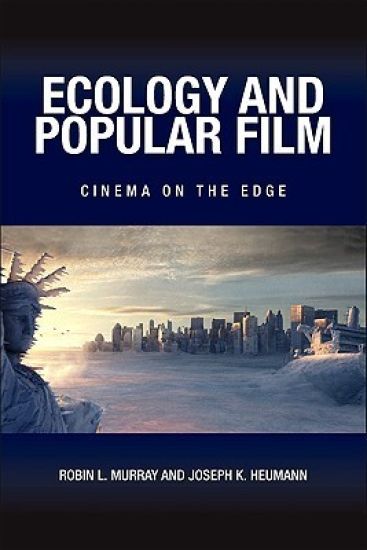
Ecology and Popular Film
Robin L. Murray; Joseph K. Heumann
State University of New York Press
2009
pokkari
Ecocritical takes on popular film. Ecology and Popular Film examines representations of nature in mainstream film while also looking at film itself as a form of nature writing. Considering a selection of mainstream movies that embrace a wide variety of environmental themes, from the Lumières' Oil Wells of Baku (1896) to Al Gore's An Inconvenient Truth (2006), Murray and Heumann explore such themes as environmental politics, eco-terrorism, ecology and home, tragic and comic eco-heroes, the spectacular, and evolutionary narrative, in a manner that is both accessible and fun. Other films discussed include The River (1937), Soylent Green (1971), Pale Rider (1985), 28 Days Later (2002), and The Day After Tomorrow (2004). The book also includes a comprehensive filmography of films that deal with environmental themes and issues.
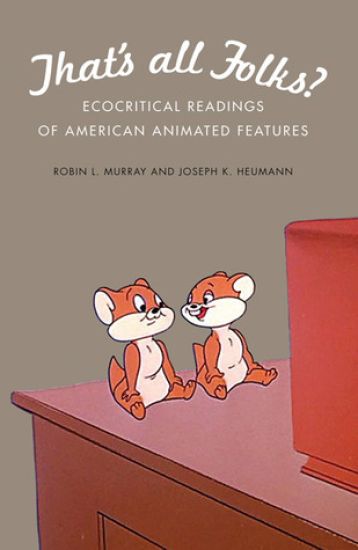
Although some credit the environmental movement of the 1970s, with its profound impact on children's television programs and movies, for paving the way for later eco-films, the history of environmental expression in animated film reaches much further back in American history, as That's All Folks? makes clear. Countering the view that the contemporary environmental movement—and the cartoons it influenced—came to life in the 1960s, Robin L. Murray and Joseph K. Heumann reveal how environmentalism was already a growing concern in animated films of the 1930s, 1940s, and 1950s. From Felix the Cat cartoons to Disney's beloved Bambi to Pixar's Wall-E and James Cameron's Avatar, this volume shows how animated features with environmental themes are moneymakers on multiple levels—particularly as broad-based family entertainment and conveyors of consumer products. Only Ralph Bakshi's X-rated Fritz the Cat and R-rated Heavy Traffic and Coonskin, with their violent, dystopic representation of urban environments, avoid this total immersion in an anti-environmental consumer market. Showing us enviro-toons in their cultural and historical contexts, this book offers fresh insights into the changing perceptions of the relationship between humans and the environment and a new understanding of environmental and animated cinema.