Kirjojen hintavertailu. Mukana 11 244 527 kirjaa ja 12 kauppaa.

Kirjahaku

Etsi kirjoja tekijän nimen, kirjan nimen tai ISBN:n perusteella.

1000 tulosta hakusanalla Rodolfo Marcone Lo Presti

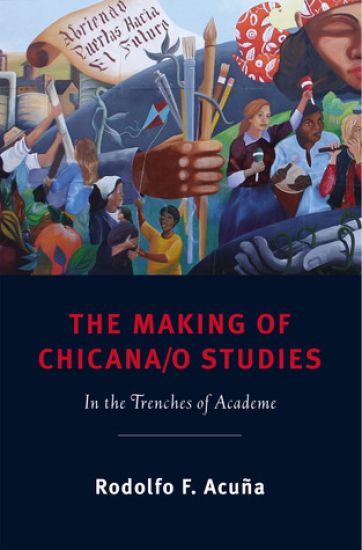
The Making of Chicana/o Studies

The Making of Chicana/o Studies

Rodolfo F. Acuña

Rutgers University Press
2011
nidottu
The Making of Chicana/o Studies traces the philosophy and historical development of the field of Chicana/o studies from precursor movements to the Civil Rights era to today, focusing its lens on the political machinations in higher education that sought to destroy the discipline. As a renowned leader, activist, scholar, and founding member of the movement to establish this curriculum in the California State University system, which serves as a model for the rest of the country, Rodolfo F. Acuña has, for more than forty years, battled the trend in academia to deprive this group of its academic presence.The book assesses the development of Chicana/o studies (an area of studies that has even more value today than at its inception)--myths about its epistemological foundations have remained uncontested. Acuña sets the record straight, challenging those in the academy who would fold the discipline into Latino studies, shadow it under the dubious umbrella of ethnic studies, or eliminate it altogether.Building the largest Chicana/o studies program in the nation was no easy feat, especially in an atmosphere of academic contention. In this remarkable account, Acuña reveals how California State University, Northridge, was instrumental in developing an area of study that offers more than 166 sections per semester, taught by 26 tenured and 45 part-time instructors. He provides vignettes of successful programs across the country and offers contemporary educators and students a game plan--the mechanics for creating a successful Chicana/o studies discipline--and a comprehensive index of current Chicana/o studies programs nationwide.Latinas/os, of which Mexican Americans are nearly seventy percent, comprise a complex sector of society projected to be just shy of thirty percent of the nation's population by 2050. The Making of Chicana/o Studies identifies what went wrong in the history of Chicana/o studies and offers tangible solutions for the future.
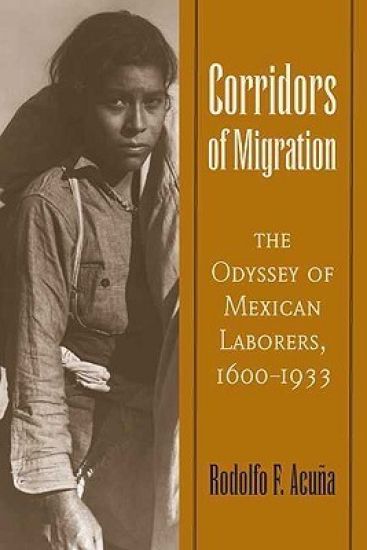
Corridors of Migration

Corridors of Migration

Rodolfo F. Acuna

University of Arizona Press
2007
sidottu
In the San Joaquin Valley Cotton Strike of 1933, frenzied cotton farmers murdered three strikers, intentionally starved at least nine infants, wounded dozens of people, and arrested more. While the story of this incident has been recounted from the perspective of both the farmers and, more recently, the Mexican workers, this is the first book to trace the origins of the Mexican workers activism through their common experience of migrating to the United States. Rodolfo F. Acuna documents the history of Mexican workers and their families from seventeenth-century Chihuahua to twentieth-century California, following their patterns of migration and describing the establishment of communities in mining and agricultural regions. He shows the combined influences of racism, transborder dynamics, and events such as the industrialization of the Southwest, the Mexican Revolution, and World War I in shaping the collective experience of these people as they helped to form the economic, political, and social landscapes of the American Southwest in their interactions with agribusiness and absentee copper barons.Acuna follows the steps of one of the murdered strikers, Pedro Subia, reconstructing the times and places in which his wave of migrants lived. By balancing the social and geographic trends in the Mexican population with the story of individual protest participants, Acuna shows how the strikes were in fact driven by choices beyond the Mexican workers? control. Their struggle to form communities graphically retells how these workers were continuously uprooted and their organizations destroyed by capital. Corridors of Migration thus documents twentieth-century Mexican American labor activism from its earliest roots through the mines of Arizona and the Great San Joaquin Valley cotton strike. From a founding scholar of Chicano studies and the author of fifteen books comes the culmination of three decades of dedicated research into the causes and effects of migration and labor activism. The narrative documents how Mexican workers formed communities against all odds.
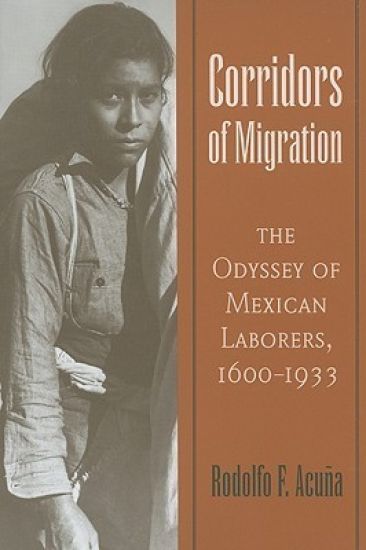
Corridors of Migration

Corridors of Migration

Rodolfo F. Acuna

University of Arizona Press
2008
nidottu
In the San Joaquin Valley Cotton Strike of 1933, frenzied cotton farmers murdered three strikers, intentionally starved at least nine infants, wounded dozens of people, and arrested more. While the story of this incident has been recounted from the perspective of both the farmers and, more recently, the Mexican workers, this is the first book to trace the origins of the Mexican workers activism through their common experience of migrating to the United States. Rodolfo F. Acuna documents the history of Mexican workers and their families from seventeenth-century Chihuahua to twentieth-century California, following their patterns of migration and describing the establishment of communities in mining and agricultural regions. He shows the combined influences of racism, transborder dynamics, and events such as the industrialization of the Southwest, the Mexican Revolution, and World War I in shaping the collective experience of these people as they helped to form the economic, political, and social landscapes of the American Southwest in their interactions with agribusiness and absentee copper barons. Acuna follows the steps of one of the murdered strikers, Pedro Subia, reconstructing the times and places in which his wave of migrants lived. By balancing the social and geographic trends in the Mexican population with the story of individual protest participants, Acuna shows how the strikes were in fact driven by choices beyond the Mexican workers? control. Their struggle to form communities graphically retells how these workers were continuously uprooted and their organizations destroyed by capital. Corridors of Migration thus documents twentieth-century Mexican American labor activism from its earliest roots through the mines of Arizona and the Great San Joaquin Valley cotton strike. From a founding scholar of Chicano studies and the author of fifteen books comes the culmination of three decades of dedicated research into the causes and effects of migration and labor activism. The narrative documents how Mexican workers formed communities against all odds.
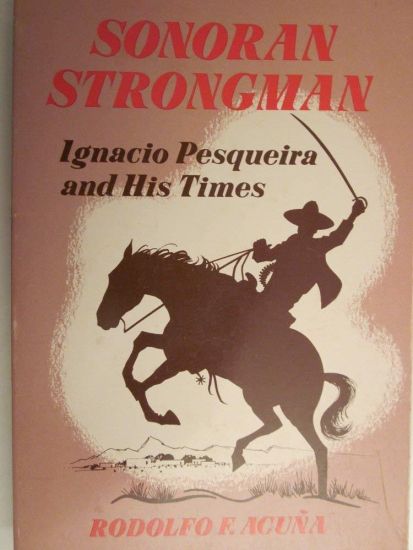
Sonoran Strongman

Sonoran Strongman

Rodolfo F. Acuña

University of Arizona Press
2016
nidottu
Sonoran Strongman provides an in-depth look at a turbulent period in Mexico's history. During this era, Sonora was plagued with domestic unrest and threatened by foreign invasion. The state's citizens, hoping Ignacio Pesqueira would be the "man of action" capable of restoring order, elected him governor by an overwhelming vote. He became a virtual dictator and ruled Sonora from 1856–1876. Pesqueira was the product of troubled times, and the times shaped his destiny. Author Acuña presents an authoritative account of the "Strongman's" rise to power and vividly portrays the suffering of northern Mexico's people.
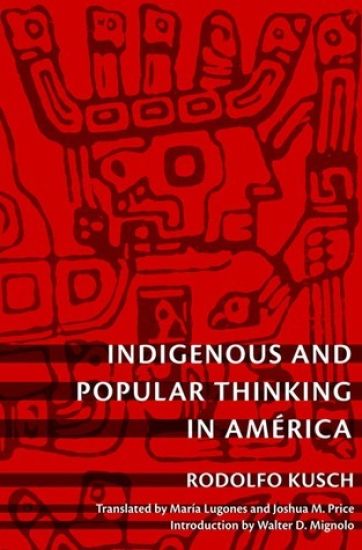
Indigenous and Popular Thinking in América

Indigenous and Popular Thinking in América

Rodolfo Kusch

Duke University Press
2010
sidottu
Originally published in Mexico in 1970, Indigenous and Popular Thinking in América is the first book by the Argentine philosopher Rodolfo Kusch (1922–79) to be translated into English. At its core is a binary created by colonization and the devaluation of indigenous practices and cosmologies: an opposition between the technologies and rationalities of European modernity and the popular mode of thinking, which is deeply tied to Indian ways of knowing and being. Arguing that this binary cuts through América, Kusch seeks to identify and recover the indigenous and popular way of thinking, which he contends is dismissed or misunderstood by many urban Argentines, including leftist intellectuals.Indigenous and Popular Thinking in América is a record of Kusch's attempt to immerse himself in the indigenous ways of knowing and being. At first glance, his methodology resembles ethnography. He speaks with and observes indigenous people and mestizos in Peru, Bolivia, and Argentina. He questions them about their agricultural practices and economic decisions; he observes rituals; he asks women in the market the meaning of indigenous talismans; he interviews shamans; he describes the spatial arrangement and the contents of shrines, altars, and temples; and he reproduces diagrams of archaeological sites, which he then interprets at length. Yet he does not present a "them" to a putative "us." Instead, he offers an inroad to a way of thinking and being that does not follow the logic or fit into the categories of Western social science and philosophy. In his introduction, Walter D. Mignolo discusses Kusch's work and its relation to that of other twentieth-century intellectuals, Argentine history, and contemporary scholarship on the subaltern and decoloniality.
Indigenous and Popular Thinking in América

Indigenous and Popular Thinking in América

Rodolfo Kusch

Duke University Press
2010
pokkari
Originally published in Mexico in 1970, Indigenous and Popular Thinking in América is the first book by the Argentine philosopher Rodolfo Kusch (1922–79) to be translated into English. At its core is a binary created by colonization and the devaluation of indigenous practices and cosmologies: an opposition between the technologies and rationalities of European modernity and the popular mode of thinking, which is deeply tied to Indian ways of knowing and being. Arguing that this binary cuts through América, Kusch seeks to identify and recover the indigenous and popular way of thinking, which he contends is dismissed or misunderstood by many urban Argentines, including leftist intellectuals.Indigenous and Popular Thinking in América is a record of Kusch's attempt to immerse himself in the indigenous ways of knowing and being. At first glance, his methodology resembles ethnography. He speaks with and observes indigenous people and mestizos in Peru, Bolivia, and Argentina. He questions them about their agricultural practices and economic decisions; he observes rituals; he asks women in the market the meaning of indigenous talismans; he interviews shamans; he describes the spatial arrangement and the contents of shrines, altars, and temples; and he reproduces diagrams of archaeological sites, which he then interprets at length. Yet he does not present a "them" to a putative "us." Instead, he offers an inroad to a way of thinking and being that does not follow the logic or fit into the categories of Western social science and philosophy. In his introduction, Walter D. Mignolo discusses Kusch's work and its relation to that of other twentieth-century intellectuals, Argentine history, and contemporary scholarship on the subaltern and decoloniality.
The Navier-Stokes Equations

The Navier-Stokes Equations

Rodolfo Salvi

CRC Press Inc
2001
nidottu
"Contains proceedings of Varenna 2000, the international conference on theory and numerical methods of the navier-Stokes equations, held in Villa Monastero in Varenna, Lecco, Italy, surveying a wide range of topics in fluid mechanics, including compressible, incompressible, and non-newtonian fluids, the free boundary problem, and hydrodynamic potential theory."
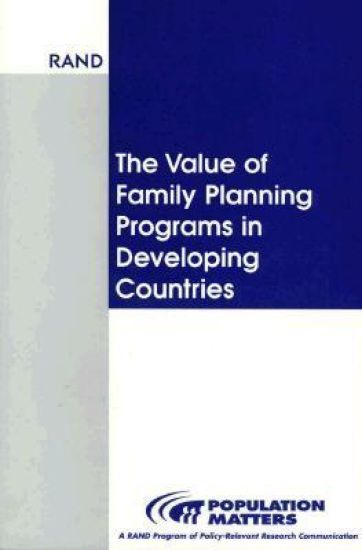
The Value of Family Planning Programs in Developing Countries
Family planning programs have been highly successful over the past 30 years in providing women in developing countries with desired access to contraceptive services and helping to reduce fertility rates. Notwithstanding this success, there is still an urgent need for these programs. The world's population is increasing, with annual population growth still approximately 80 million people. Nearly all of this growth is occurring in developing nations, where fertility rates remain relatively high. This high fertility runs counter to the preferences expressed by millions of women, who actually want to have smaller families. Family planning programs are also desirable because they are associated with a range of other benefits, most notably improvements in women's and children's health. Host countries provide about 60 to 75 percent of funding for family planning. However, funding and technical assistance from donor nations, especially the United States, have been crucial to the past success of family planning programs and are equally important for strengthening and expanding program efforts to meet future challenges.
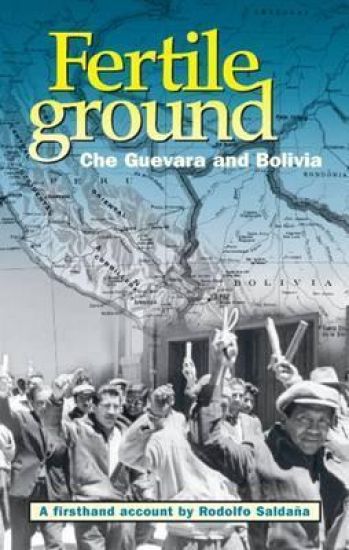
Fertile Ground

Fertile Ground

Rodolfo Saldana

Pathfinder Books Ltd
2001
nidottu
"The triumph of the Cuban Revolution in 1959 was part of a rising wave of anti-imperialist struggle throughout Latin America. Proving "that revolution is possible," the Cuban people and their leadership set an example that accelerated already unfolding battles for land, labor, and national sovereignty across the continent." "Rodolfo Saldana was one of the Bolivians who joined ranks in 1966-77 with Ernesto Che Guevara to forge a revolutionary movement of workers, peasants, and young people to overturn the military dictatorship in Bolivia and open the road to socialist revolution in South America. Here, Saldana talks about the unresolved battles of the tin miners, peasants, and indigenous peoples of his country that created "fertile ground" for Guevara's revolutionary course and marked out the future of Bolivia and the Americas."--BOOK JACKET.
Instrucciones prácticas para nuevos creyentes
Lecciones básicas dirigidas a orientar a futuros miembros de la iglesia.Este libro pequeño, pero importante contiene lecciones básicas e indispensables, dirigidas a orientar al nuevo creyente en el significado del paso que acaba de dar el aceptar a Jesucristo como Señor y Salvador. Escrito por Rodolfo Aceituno Cruz, un veterano pastor y evangelista experimentado, Instrucciones prácticas para nuevos creyentes se ha convertido en el manual por excelencia en las iglesias que ofrecen clases a sus futuros miembros. Elaborado con los temas más relevantes para un nuevo creyente, este pequeño libro es la herramienta de partida para el caminar de la fe en temas como;¿Quién es Dios?El origen del hombre¿Qué es la iglesia y quienes la conforman?La confesión del pecadoEl bautismoInstrucciones prácticas para nuevos creyentes está escrito especialmente para ayudar a los nuevos cristianos a profundizar su fe a través de la lectura y el entendimiento de pasajes claves de la Palabra de Dios para su pueblo.
Remedies & Tragedies

Remedies & Tragedies

Rodolfo Eduardo

Mesa Publishing
2017
nidottu
Remedies & Tragedies is the first poetry collection by Rodolfo Eduardo. Whether you're dealing with heartbreak or want to feel inspired, inside there's a poem for the mood you're in. Philosophical musings abound in this work, along with haikus, rhymes, and other poetic forms that meditate on love and loss. Remedies & Tragedies is also about the pursuit of personal success, exemplified in the author's own life after he quit his corporate career to chase his dream of becoming a writer.
Loops, Knots, Gauge Theories and Quantum Gravity

Loops, Knots, Gauge Theories and Quantum Gravity

Rodolfo Gambini; Jorge Pullin; Abhay Ashtekar

Cambridge University Press
2023
pokkari
This volume provides a self-contained introduction to applications of loop representations, and the related topic of knot theory, in particle physics and quantum gravity. These topics are of considerable interest because they provide a unified arena for the study of the gauge invariant quantization of Yang-Mills theories and gravity, and suggest a promising approach to the eventual unification of the four fundamental forces. The book begins with a detailed review of loop representation theory and then describes loop representations in Maxwell theory, Yang-Mills theories as well as lattice techniques. Applications in quantum gravity are then discussed, with the following chapters considering knot theories, braid theories and extended loop representations in quantum gravity. A final chapter assesses the current status of the theory and points out possible directions for future research. First published in 1996, this title has been reissued as an Open Access publication on Cambridge Core.
Loops, Knots, Gauge Theories and Quantum Gravity

Loops, Knots, Gauge Theories and Quantum Gravity

Rodolfo Gambini; Jorge Pullin; Abhay Ashtekar

Cambridge University Press
2023
sidottu
This volume provides a self-contained introduction to applications of loop representations, and the related topic of knot theory, in particle physics and quantum gravity. These topics are of considerable interest because they provide a unified arena for the study of the gauge invariant quantization of Yang-Mills theories and gravity, and suggest a promising approach to the eventual unification of the four fundamental forces. The book begins with a detailed review of loop representation theory and then describes loop representations in Maxwell theory, Yang-Mills theories as well as lattice techniques. Applications in quantum gravity are then discussed, with the following chapters considering knot theories, braid theories and extended loop representations in quantum gravity. A final chapter assesses the current status of the theory and points out possible directions for future research. First published in 1996, this title has been reissued as an Open Access publication on Cambridge Core.