Kirjojen hintavertailu. Mukana 11 627 495 kirjaa ja 12 kauppaa.

Kirjahaku

Etsi kirjoja tekijän nimen, kirjan nimen tai ISBN:n perusteella.

1000 tulosta hakusanalla Roman Cholij

Roman Reflections

Roman Reflections

Oxford University Press Inc
2015
sidottu
When the Romans adopted Greek literary genres, artistic techniques, and iconographies, they did not slavishly imitate their models. Rather, the Romans created vibrant and original literature and art. The same is true for philosophy, though the rich Roman philosophical tradition is still too often treated as a mere footnote to the history of Greek philosophy. This volume aims to reassert the significance of Roman philosophy and to explore the "Romanness" of philosophical writings and practices in the Roman world. The contributors reveal that the Romans, in their creative adaptation of Greek modes of thought, developed sophisticated forms of philosophical discourse shaped by their own history and institutions, concepts and values-and last, but not least, by the Latin language, which nearly all Roman philosophers used to express their ideas. The thirteen chapters-which are authored by an international group of specialists in ancient philosophy, Latin literature, and Roman social and intellectual history-move from Roman attitudes to and practices of philosophy to the great late Republican writers Cicero and Lucretius, then onwards to the early Empire and the work of Seneca the Younger, and finally to Epictetus, Apuleius, and Augustine. Using a variety of approaches, the essays do not combine into one grand narrative but instead demonstrate the diversity and originality of the Roman philosophical discourse over the centuries.
Roman Art

Roman Art

Nancy H. Ramage

Pearson
2013
nidottu
An absorbing introduction to Roman art and architecture Roman Art, 6/e helps students gain an understanding of the development of Roman art and architecture across the entire Roman empire. This title deals comprehensively with the architecture, sculpture, painting, mosaics, and the decorative arts of the Romans placing them in their proper historical context. Readers will examine these artworks in the context of the history, religion, and politics of each era, building a fuller picture of how the arts relate to what else is going on in the Roman Republic and Empire. This title is ideal for readers who are studying Roman art for the first time. It assumes no prior acquaintance with the classical world, and explains the necessary linguistic, historical, religious, social, and political background needed to fully understand Roman art. MySearchLab is a part of the Ramage / Ramage program. Research and writing tools, including access to academic journals, help students explore Roman Art in even greater depth. To provide students with flexibility, students can download the eText to a tablet using the free Pearson eText app. 0205998380 / 9780205998388 Roman Art Plus MySearchLab with Pearson eText -- Access Card Package Package consists of: 0205239927 / 9780205239924 MySearchLab with Pearson eText -- Valuepack Access Card 0205988954 / 9780205988952 Roman Art
Roman and European Mythologies

Roman and European Mythologies

University of Chicago Press
1992
nidottu
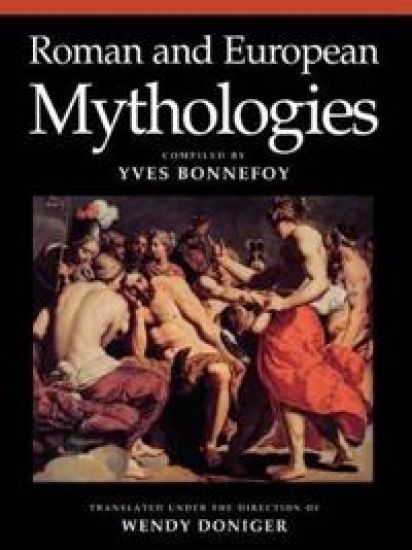
This volume begins with Roman myths and traces their influence in early Christian and later European literature. Ninety-five entries by leading scholars cover subjects such as sacrificial cults and rites in pre-Roman Italy, Roman religion and its origins, the mythologies of paganism, the survival of the ancient gods in the Middle Ages and the Renaissance, gypsy myths and rituals, romanticism and myth in Blake, Nerval, and Balzac, and myth in twentieth-century English literature. Mythologies offers illuminating examples of the workings of myth in the structure of societies past and present--how we create, use, and are guided by systems of myth to answer fundamental questions about ourselves and our world. Many of the sections in Mythologies, originally published as a two-volume cloth set, will soon be available in four paperback volumes (two are announced here; two more are scheduled for 1993). These volumes will reproduce the articles, introductory essays, and illustrations as they appeared in the full Mythologies set.
Roman Women

Roman Women

University of Chicago Press
1999
sidottu
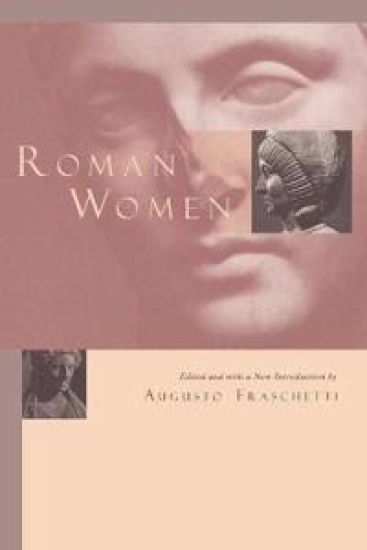
This collection of essays features important Roman women who were active in politics, theatre, cultural life and religion from the 1st through the 4th centuries. The contributors draw on rare documents in an attempt to reconstruct the lives and accomplishments of these exceptional women, a difficult task considering that the Romans recorded very little about women. They thought it improper for a woman's virtues to be praised outside the home. Moreover, they believed that a feeble intellect, a weakness in character and a general incompetence prevented a woman from participating in public life. This investigation encounters a number of idiosyncratic personalities. They include the vestal virgin Claudia; Cornelia, a matron; the passionate Fulvia; a mime known as "Lycoris"; the politician Livia; the martyr and writer Vibia Perpetua; a hostess named Helena Augusta; the intellectual Hypatia; and the saint Melania the Younger. Unlike their silent female counterparts, these women stood out in a culture where it was terribly difficult and odd to do so.
Roman Women

Roman Women

University of Chicago Press
1999
nidottu
This collection of essays features important Roman women who were active in politics, theatre, cultural life and religion from the 1st through the 4th centuries. The contributors draw on rare documents in an attempt to reconstruct the lives and accomplishments of these exceptional women, a difficult task considering that the Romans recorded very little about women. They thought it improper for a woman's virtues to be praised outside the home. Moreover, they believed that a feeble intellect, a weakness in character and a general incompetence prevented a woman from participating in public life. This investigation encounters a number of idiosyncratic personalities. They include the vestal virgin Claudia; Cornelia, a matron; the passionate Fulvia; a mime known as "Lycoris"; the politician Livia; the martyr and writer Vibia Perpetua; a hostess named Helena Augusta; the intellectual Hypatia; and the saint Melania the Younger. Unlike their silent female counterparts, these women stood out in a culture where it was terribly difficult and odd to do so.
Roman Civilization: Selected Readings

Roman Civilization: Selected Readings

Naphtali Lewis; Meyer Reinhold

Columbia University Press
1990
pokkari
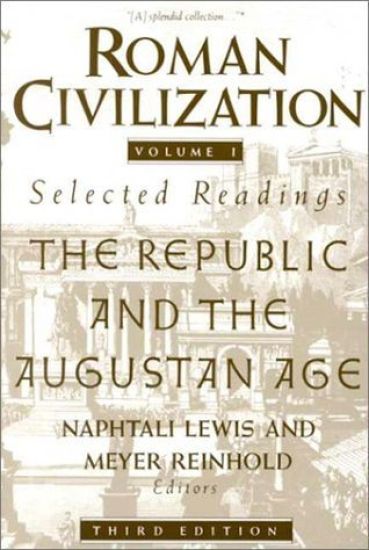
Naphtali Lewis and Meyer Reinhold's Roman Civilization is a classic. Originally published by Columbia University Press in 1955, the authors have undertaken another revision which takes into account recent work in the field. These volumes consist of selected primary documents from ancient Rome, covering a range of over 1,000 years of Roman culture, from the foundation of the city to its sacking by the Goths. The selections cover a broad spectrum of Roman civilization, including literature, philosophy, religion, education, politics, military affairs, and economics. These English translations of literary, inscriptional, and papyrological sources, many of which are available nowhere else, create a mosaic of the brilliance, the beauty, and the power of Rome.
Roman Civilization: Selected Readings

Roman Civilization: Selected Readings

Naphtali Lewis

Columbia University Press
1990
sidottu
Naphtali Lewis and Meyer Reinhold's Roman Civilization is a classic. Originally published by Columbia University Press in 1955, the authors have undertaken another revision which takes into account recent work in the field. These volumes consist of selected primary documents from ancient Rome, covering a range of over 1,000 years of Roman culture, from the foundation of the city to its sacking by the Goths. The selections cover a broad spectrum of Roman civilization, including literature, philosophy, religion, education, politics, military affairs, and economics. These English translations of literary, inscriptional, and papyrological sources, many of which are available nowhere else, create a mosaic of the brilliance, the beauty, and the power of Rome.
Roman Civilization: Selected Readings

Roman Civilization: Selected Readings

Naphtali Lewis

Columbia University Press
1990
pokkari
Naphtali Lewis and Meyer Reinhold's Roman Civilization is a classic. Originally published by Columbia University Press in 1955, the authors have undertaken another revision which takes into account recent work in the field. These volumes consist of selected primary documents from ancient Rome, covering a range f over 1,000 years of Roman culture, from the foundation of the city to its sacking by the Goths. The selections cover a broad spectrum of Roman civilization, including literature, philosophy, religion, education, politics, military affairs, and economics. These English translations of literary, inscriptional, and papyrological sources, many of which are available nowhere else, create a mosaic of the brilliance, the beauty, and the power of Rome.
Roman Catholicism in America

Roman Catholicism in America

Chester Gillis

Columbia University Press
2020
sidottu
Who are American Catholics and what do they believe and practice? How has American Catholicism influenced and been influenced by American culture and society? This book examines the history of American Catholics from the colonial era to the present, with an emphasis on changes and challenges in the contemporary church.Chester Gillis chronicles America Catholics: where they have come from, how they have integrated into American society, and how the church has influenced their lives. He highlights key events and people, examines data on Catholics and their relationship to the church, and considers the church’s positions and actions on politics, education, and gender and sexuality in the context of its history and doctrines.This second edition of Roman Catholicism in America pays particular attention to the tumultuous past twenty years and points toward the future of the religion in the United States. It examines the unprecedented crisis of sexual abuse by priests—the legal, moral, financial, and institutional repercussions of which continue to this day—and the bishops’ role in it. Gillis also discusses the election of Pope Francis and the controversial role Catholic leadership has played in American politics.
Roman Catholicism in America

Roman Catholicism in America

Chester Gillis

Columbia University Press
2020
pokkari
Who are American Catholics and what do they believe and practice? How has American Catholicism influenced and been influenced by American culture and society? This book examines the history of American Catholics from the colonial era to the present, with an emphasis on changes and challenges in the contemporary church.Chester Gillis chronicles America Catholics: where they have come from, how they have integrated into American society, and how the church has influenced their lives. He highlights key events and people, examines data on Catholics and their relationship to the church, and considers the church’s positions and actions on politics, education, and gender and sexuality in the context of its history and doctrines.This second edition of Roman Catholicism in America pays particular attention to the tumultuous past twenty years and points toward the future of the religion in the United States. It examines the unprecedented crisis of sexual abuse by priests—the legal, moral, financial, and institutional repercussions of which continue to this day—and the bishops’ role in it. Gillis also discusses the election of Pope Francis and the controversial role Catholic leadership has played in American politics.
Roman Polanski

Roman Polanski

James Morrison

University of Illinois Press
2007
nidottu
A new take on an eclectic and controversial director James Morrison's critical study offers a comprehensive and critically engaged treatment on Roman Polanski's immense body of work. Tracing the filmmaker's remarkably diverse career from its beginnings to 2007, the book provides commentary on all of Polanski's major films in their historical, cultural, social, and artistic contexts. Morrison locates Polanski's work within the genres of comedy and melodrama, arguing that he is not merely obsessed with the theme of repression, but that his true interest is in the concrete—what is out in the open—and why we so rarely see it. The range of Polanski's filmmaking challenges traditional divisions between high and low culture. For example, The Ninth Gate is a brash pastiche of the horror genre, while The Pianist is an Academy Award-winner about the Holocaust. Dubbing Polanski a relentless critic of modernity, Morrison concludes that his career is representative of the fissures, victories, and rehabilitations of the last fifty years of international cinema. A volume in the series Contemporary Film Directors, edited by James Naremore
Roman Sources for the History of American Catholicism, 1763–1939

Roman Sources for the History of American Catholicism, 1763–1939

Matteo Binasco

University of Notre Dame Press
2018
sidottu
Roman Sources for the History of American Catholicism, 1763–1939 is a comprehensive reference volume, researched and compiled by Matteo Binasco, that introduces readers to the rich content of Roman archives and their vast potential for U.S. Catholic history in particular. In 2014, the University of Notre Dame's Cushwa Center for the Study of American Catholicism hosted a seminar in Rome that examined transatlantic approaches to U.S. Catholic history and encouraged the use of the Vatican Secret Archives and other Roman repositories by today's historians. Participants recognized the need for an English-language guide to archival sources throughout Rome that would enrich individual research projects and the field at large. This volume responds to that need. Binasco offers a groundbreaking description of materials relevant to U.S. Catholic history in fifty-nine archives and libraries of Rome. Detailed profiles describe each repository and its holdings relevant to American Catholic studies. A historical introduction by Luca Codignola and Matteo Sanfilippo reviews the intricate web of relations linking the Holy See and the American Catholic Church since the Treaty of Paris of 1763. Roman sources have become crucial in understanding the formation and development of the Catholic Church in America, and their importance will continue to grow. This timely source will meet the needs of a ready and receptive audience, which will include scholars of U.S. religious history and American Catholicism as well as Americanist scholars conducting research in Roman archives.
Roman Tragedy

Roman Tragedy

Mario Erasmo

University of Texas Press
2004
pokkari
Roman tragedies were written for over three hundred years, but only fragments remain of plays that predate the works of Seneca in the mid-first century C.E., making it difficult to define the role of tragedy in ancient Roman culture. Nevertheless, in this pioneering book, Mario Erasmo draws on all the available evidence to trace the evolution of Roman tragedy from the earliest tragedians to the dramatist Seneca and to explore the role played by Roman culture in shaping the perception of theatricality on and off the stage. Performing a philological analysis of texts informed by semiotic theory and audience reception, Erasmo pursues two main questions in this study: how does Roman tragedy become metatragedy, and how did off-stage theatricality come to compete with the theatre? Working chronologically, he looks at how plays began to incorporate a rhetoricized reality on stage, thus pointing to their own theatricality. And he shows how this theatricality, in turn, came to permeate society, so that real events such as the assassination of Julius Caesar took on theatrical overtones, while Pompey's theatre opening and the lavish spectacles of the emperor Nero deliberately blurred the lines between reality and theatre. Tragedy eventually declined as a force in Roman culture, Erasmo suggests, because off-stage reality became so theatrical that on-stage tragedy could no longer compete.
Roman Aristocrats in Barbarian Gaul

Roman Aristocrats in Barbarian Gaul

Ralph Whitney Mathisen

University of Texas Press
1993
pokkari
Skin-clad barbarians ransacking Rome remains a popular image of the "decline and fall" of the Roman Empire, but why, when, and how the Empire actually fell are still matters of debate among students of classical history. In this pioneering study, Ralph W. Mathisen examines the "fall" in one part of the western Empire, Gaul, to better understand the shift from Roman to Germanic power that occurred in the region during the fifth century AD.Mathisen uncovers two apparently contradictory trends. First, he finds that barbarian settlement did provoke significant changes in Gaul, including the disappearance of most secular offices under the Roman imperial administration, the appropriation of land and social influence by the barbarians, and a rise in the overall level of violence. Yet he also shows that the Roman aristocrats proved remarkably adept at retaining their rank and status. How did the aristocracy hold on?Mathisen rejects traditional explanations and demonstrates that rather than simply opposing the barbarians, or passively accepting them, the Roman aristocrats directly responded to them in various ways. Some left Gaul. Others tried to ignore the changes wrought by the newcomers. Still others directly collaborated with the barbarians, looking to them as patrons and holding office in barbarian governments. Most significantly, however, many were willing to change the criteria that determined membership in the aristocracy. Two new characteristics of the Roman aristocracy in fifth-century Gaul were careers in the church and greater emphasis on classical literary culture.These findings shed new light on an age in transition. Mathisen's theory that barbarian integration into Roman society was a collaborative process rather than a conquest is sure to provoke much thought and debate. All historians who study the process of power transfer from native to alien elites will want to consult this work.
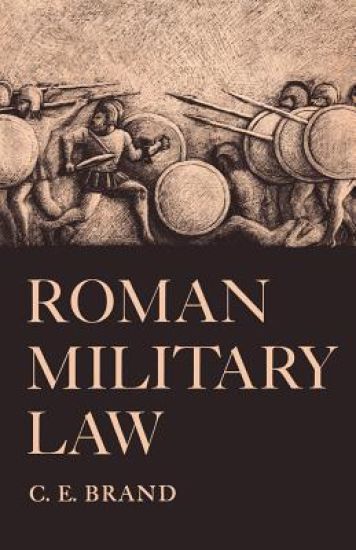
Roman Military Law

Roman Military Law

C. E. Brand

University of Texas Press
1968
pokkari
Rome was the law-giver for much of the modern world. She was also the greatest military power of antiquity, operating her military organization with remarkable efficiency and effectiveness throughout most of the then-known world. In view of the importance of both the legal and military aspects of the Roman Empire, an account of their combination in a system of disciplinary control for the Roman armies is of considerable significance to historians in both fields-and, in fact, to scholars in general. In Roman Military Law, C. E. Brand describes this system of control. Since a characterization of such a system can be made most meaningful only against a background of Roman constitutional government and in the light of ideologies current at the time, Brand follows his initial “Note on Sources” with a sketch of the contemporary Roman scene. This first section includes a discussion of the Roman constitution and an examination of Roman criminal law. The history of Rome, as a republic, principate, and empire, extended over a period of a thousand years, so any attempt to represent a generalized picture must be essentially a matter of extraction and condensation from the voluminous literature of the whole era. Nevertheless, from the fantastic evolution that is the history of Rome, Brand has been able to construct a more or less static historical mosaic that may be considered typically “Roman.” This comes into sharpest focus during the period of the Punic Wars, when the city and its people were most intensely Roman. The picture of the Roman armies is set into this basic framework, in chapters dealing with military organization, disciplinary organization, religion and discipline, and offenses and punishments. The final section of the book considers briefly the vast changes in Roman institutions that came about under the armies of the Empire, and then concludes with the Latin text and an English translation of the only known code of Roman military justice, promulgated sometime during the later Empire, preserved in Byzantine literature, and handed down to medieval times in Latin translations of Byzantine Greek law, which it has heretofore been confused.
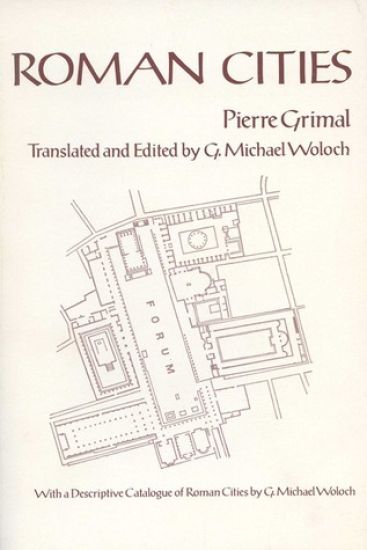
Roman Cities

Roman Cities

Pierre Grimal

University of Wisconsin Press
1984
nidottu
Roman Cities combines G. Michael Woloch’s translation of Les villes romaines, Pierre Grimal’s noted French work on Roman city planning, archeology, and urban history, with Woloch’s additional notes and descriptions of the cities mentioned by Grimal, as well as other important Roman cities. The book provides a brief history and description of more than a hundred Roman cities, an extensive master bibliography, and a comprehensive glossary. Roman Cities will interest both scholars and students of Roman history and archeology, city planning, urban geography, and the social sciences. The glossary and bibliography make the book of value to specialists pursuing a particular topic and to students, history buffs, and amateur archaeologists seeking to broaden their understanding of the Roman city planning methods that are such an integral part of our modern urban heritage.Roman Cities provides the first comprehensive study in English of major Roman cities, including an excellent coverage of the Roman legacy which was transmitted to medieval and modern trends in architecture and urban planning.
Roman Social Relations, 50 B.C. to A.D. 284

Roman Social Relations, 50 B.C. to A.D. 284

Ramsay MacMullen

Yale University Press
1981
pokkari
“In this interesting and suggestive book, Professor MacMullen views anew an important and rather neglected aspect of Roman social relations. A perceptive and sensitive interpreter, he has drawn widely upon the scattered and unorganized evidence about the poorer classes, rural and urban, in much of the Roman Empire, and presents a fresh picture of their conditions, attitudes and aims.”—T. Robert S. Broughton“Ramsay MacMullen’s work is always provocative and illuminating. This book is no exception…Through good writing, clear presentation, and outstanding common-sense judgment the author has given us chapters to be read with pleasure by a large audience. Specialist or not…This fine book represents for us what we may legitimately know of ancient society.”—American Historical Review“Much of the evidence which MacMullen uses in his narrative is illuminating, much of the analysis and argument lucid and compelling….Roman Social Relations is an interesting and lively book [that] should certainly be read by anyone interested in the social history of the ancient world.”—Journal of Social HistoryRamsay MacMullen is the author of Paganism in the Roman Empire and Roman Government’s Response to Crisis, A.D. 235-337, among other works. He is Dunham Professor of History and Classics at Yale University and is currently president of the Association of Ancient Historians.
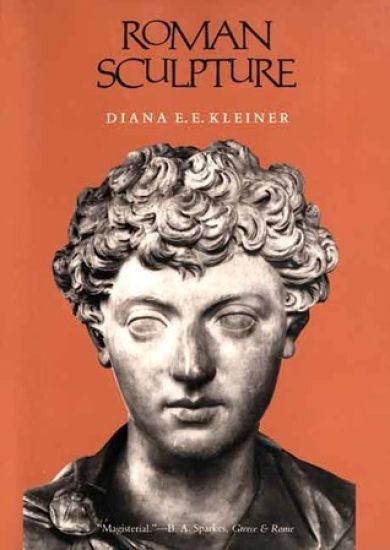
Roman Sculpture

Roman Sculpture

Diana E. E. Kleiner

Yale University Press
1994
pokkari
Roman sculpture was an integral part of Roman life, and the Romans placed statues and reliefs in their fora, basilicas, temples, and public baths, as well as in their houses, villas, gardens, and tombs. In this beautifully illustrated book—the first in almost a century devoted solely to Roman sculpture—Diana E. E. Kleiner discusses all the major public and private monuments in Rome, as well as many less well known monuments in the capital and elsewhere in the empire. She examines art commissioned by the imperial elite and by private patrons, including freedmen and slaves, and she also highlights monuments honoring women and children. Kleiner demonstrates that the social, ethnic, and geographical diversity of Roman patronage led to an art that was eclectic and characterized by varying styles, often tied to the social status of the patron. She also examines the interrelations between works produced for different kinds of patrons.Kleiner begins with a long thematic introduction that describes Rome and its empire, characterizes patrons from the capital and the provinces, discusses the position of the artist in Roman society and the materials he used, and presents a history of the study of Roman art. The remaining chapters constitute a chronological examination of Roman sculpture from the foundation of Rome in 753 B.C. to the transfer of the capital to Constantinople in A.D. 330. In each period the monuments are divided by type, for example, portraiture, state relief sculpture, the art of freedmen, and provincial art. Throughout, Kleiner treats Roman sculpture in its cultural, political, and social contexts and, wherever possible, as an element of the architectural complex in which it was set.Published with the assistance of the Getty Grant Program
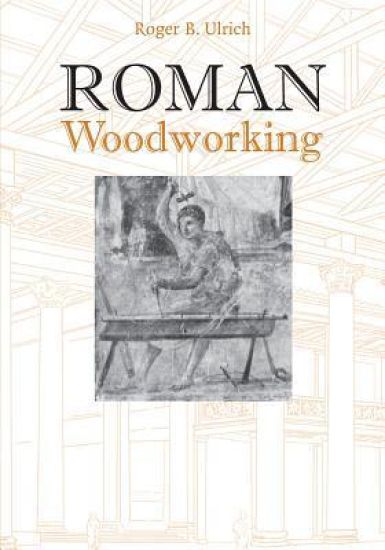
Roman Woodworking

Roman Woodworking

Roger B. Ulrich

Yale University Press
2013
pokkari
A comprehensive exploration of woodworking in the ancient Roman world “A valuable overview in English of how the Romans used wood in objects great and small, humble and grand.”—Richard F. Liebhart, American Journal of Archaeology This book presents an authoritative and detailed survey of the art of woodworking in the ancient Roman world. Illustrated with over 200 line drawings and photographs, Roman Woodworking covers topics such as the training and guild memberships of Roman carpenters, woodworking tools and techniques, the role of timber in construction and the availability of trees, and interior woodwork and furniture making. It also includes an extensive glossary of fully defined terms. This comprehensive book displays the accomplishment of the Roman woodworkers and their high skill and knowledge of materials and tools. Ulrich helps bring to light the importance of wooden projects and structures in Roman daily life and provides a wealth of information not only for classicists but also for those interested in the history of technology and the history of woodworking.