

Kirjahaku
Etsi kirjoja tekijän nimen, kirjan nimen tai ISBN:n perusteella.
1000 tulosta hakusanalla Russel Moldovan








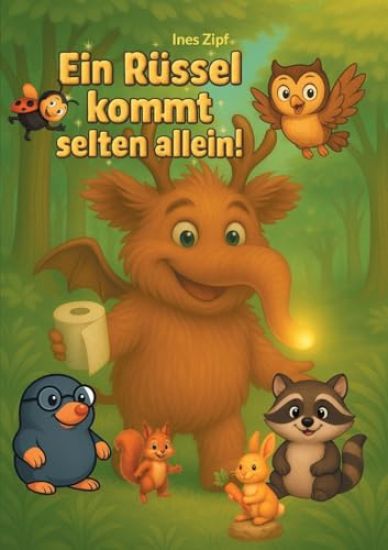
Willkommen im Schnorzelpurzelwald Hier wohnt Snorki - ein zotteliges Etwas mit R ssel, Gl hf hler und jeder Menge Chaos im Gep ck. Gemeinsam mit seinen Freunden stolpert er durch lustige Abenteuer, rettet verlorene P nktchen, bastelt Vorratspl ne mit Geheimnissen und zeigt, dass Freundschaft, Mut und ein bisschen Glitzer alles ver ndern k nnen. Ein warmherziges Vorlesebuch f r kleine Entdecker und gro e Tr umer - voller Witz, Gef hl und zauberhafter Ideen.
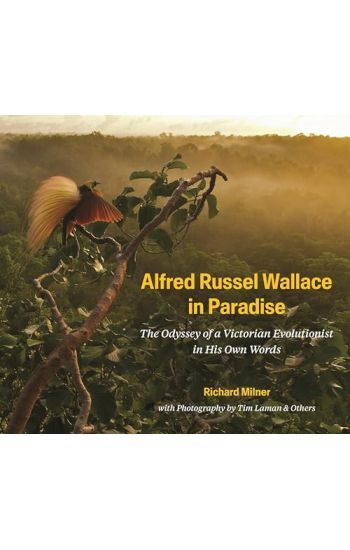
A breathtaking visual narrative of the legendary naturalist’s adventures and pioneering contributions to the life sciences In old age, Alfred Russel Wallace (1823–1913) became arguably the most famous scientist of his day. He and his senior colleague, Charles Darwin, had independently discovered the theory of evolution by natural selection, which they jointly published in 1858. Yet this genius’s legacy was overshadowed by Darwin’s for more than a century. Alfred Russel Wallace in Paradise paints an unprecedented portrait of the indefatigable explorer and hero of science whose self-effacing modesty contributed to his long obscurity. Wallace pioneered our understanding of the mechanisms of evolution, humanity’s place in nature, the worldwide distribution of plants and animals, and tribal cultures. Anthropologist Richard Milner scoured Wallace’s journals and papers to recount the naturalist’s voyages to the Amazon and Malay Archipelago and his return to England—entirely in Wallace’s own words—while tracing the origins of his ideas on evolution, biogeography, animal coloration, and sexual selection. Newly illustrated maps, personal letters, and recent photographs of wildlife and tropical ecosystems bring his travels and theories vividly to life. With sumptuous images by award-winning National Geographic photographer Tim Laman and other artists, Alfred Russel Wallace in Paradise is a visually spectacular account of Wallace’s journeys and his enduring insights into biodiversity and evolution.

Build your child’s reading confidence at home with books at the right level Collins Big Cat is a guided reading series for ages 4–11 edited by Cliff Moon. Top children's authors and illustrators have created fiction and non-fiction books that your children will love to read, banded to help you choose the right book for every child. Practical ideas for guided reading are included at the back of each book. Pearl/Band 18 books offer fluent readers a complex, substantial text with challenging themes to facilitate sustained comprehension, bridging the gap between a reading programme and longer chapter books.Text type:Curriculum links:
An Alfred Russel Wallace Companion
University of Chicago Press
2019
sidottu
Although Alfred Russel Wallace (1823-1913) was one of the most famous scientists in the world at the time of his death at the age of ninety, today he is known to many as a kind of "almost-Darwin," a secondary figure relegated to the footnotes of Darwin's prodigious insights. But this diminution could hardly be less justified. Research into the life of this brilliant naturalist and social critic continues to produce new insights into his significance to history and his role in helping to shape modern thought. Wallace declared his eight years of exploration in southeast Asia to be "the central and controlling incident" of his life. As 2019 marks one hundred and fifty years since the publication of The Malay Archipelago, Wallace's canonical work chronicling his epic voyage, this collaborative book gathers an interdisciplinary array of writers to celebrate Wallace's remarkable life and diverse scholarly accomplishments. Wallace left school at the age of fourteen and was largely self-taught, a voracious curiosity and appetite for learning sustaining him throughout his long life. After years as a surveyor and builder, in 1848 he left Britain to become a professional natural history collector in the Amazon, where he spent four years. Then, in 1854, he departed for the Malay Archipelago. It was on this voyage that he constructed a theory of natural selection similar to the one Charles Darwin was developing, and the two copublished papers on the subject in 1858, some sixteen months before the release of Darwin's On the Origin of Species. But as the contributors to the Companion show, this much-discussed parallel evolution in thought was only one epoch in an extraordinary intellectual life. When Wallace returned to Britain in 1862, he commenced a career of writing on a huge range of subjects extending from evolutionary studies and biogeography to spiritualism and socialism. An Alfred Russel Wallace Companion provides something of a necessary reexamination of the full breadth of Wallace's thought--an attempt to describe not only the history and present state of our understanding of his work, but also its implications for the future.

Letter Of Lord William Russel To His Friend Lord Cavendish, Supposed To Be Written The Night Previous To His Execution
Palala Press
2018
pokkari
This work has been selected by scholars as being culturally important, and is part of the knowledge base of civilization as we know it. This work was reproduced from the original artifact, and remains as true to the original work as possible. Therefore, you will see the original copyright references, library stamps (as most of these works have been housed in our most important libraries around the world), and other notations in the work.This work is in the public domain in the United States of America, and possibly other nations. Within the United States, you may freely copy and distribute this work, as no entity (individual or corporate) has a copyright on the body of the work.As a reproduction of a historical artifact, this work may contain missing or blurred pages, poor pictures, errant marks, etc. Scholars believe, and we concur, that this work is important enough to be preserved, reproduced, and made generally available to the public. We appreciate your support of the preservation process, and thank you for being an important part of keeping this knowledge alive and relevant.
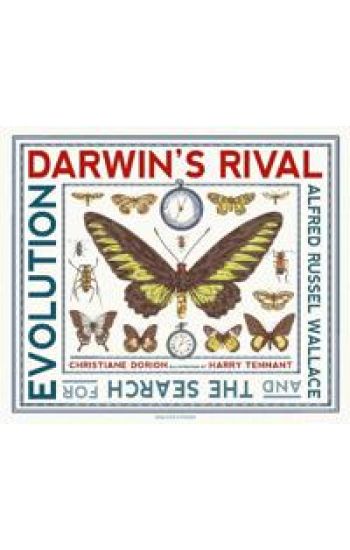
Darwin's Rival: Alfred Russel Wallace and the Search for Evolution
Christiane Dorion
Walker Studio
2020
sidottu
Follow Victorian naturalist and explorer Alfred Russel Wallace on his intrepid journeys across the globe and find out how he developed his own theory of evolution in this beautiful illustrated gift hardback.In 1858, Alfred Russel Wallace’s travels in the Amazon Basin and Malay Archipelago led him to discover natural selection independently of Charles Darwin. Darwin's Rival traces Wallace’s life from his childhood in the Welsh countryside to his rise to prominence among the scientific community, via dense tropical jungles and perilous journeys – and shines a light on one of the most important contributors to the theory of evolution. With evocative illustrations by Harry Tennant, this stunning gift book will appeal to children and adults alike, and is the perfect introduction to the man so often eclipsed by his contemporary and friend Charles Darwin.
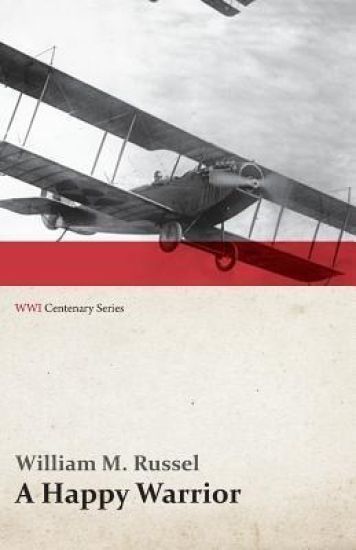
A Happy Warrior - Letters of William Muir Russel, an American Aviator in the Great War 1917-1918 (WWI Centenary Series)
William M Russel
Last Post Press
2014
pokkari
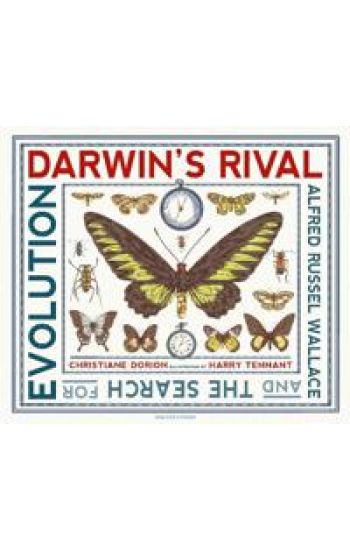
Darwin's Rival: Alfred Russel Wallace and the Search for Evolution
Christiane Dorion
WALKER BOOKS LTD
2025
nidottu
Follow Victorian naturalist and explorer Alfred Russel Wallace on his intrepid journeys across the globe and find out how he developed his own theory of evolution in this beautiful illustrated gift hardback. In 1858, Alfred Russel Wallace’s travels in the Amazon Basin and Malay Archipelago led him to discover natural selection independently of Charles Darwin. Darwin's Rival traces Wallace’s life from his childhood in the Welsh countryside to his rise to prominence among the scientific community, via dense tropical jungles and perilous journeys – and shines a light on one of the most important contributors to the theory of evolution. With evocative illustrations by Harry Tennant, this stunning gift book will appeal to children and adults alike, and is the perfect introduction to the man so often eclipsed by his contemporary and friend Charles Darwin.
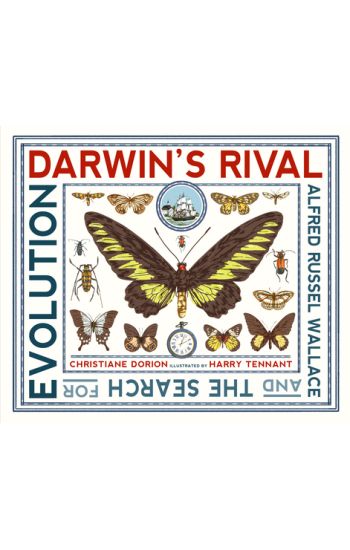
Darwin's Rival: Alfred Russel Wallace and the Search for Evolution
Christiane Dorion
Candlewick Studio
2020
sidottu
A beautifully illustrated volume follows a lesser-known Victorian naturalist and explorer on his global journeys -- and reveals how he developed his own theory of evolution. Everyone knows Charles Darwin, the famous naturalist who proposed a theory of evolution. But not everyone knows the story of Alfred Russel Wallace, Darwin's friend and rival who simultaneously discovered the process of natural selection. This sumptuously illustrated book tells Wallace's story, from his humble beginnings to his adventures in the Amazon rain forest and Malay Archipelago, and demonstrates the great contribution he made to one of the most important scientific discoveries of all time.

Glorious Trees: Alfred Russel Wallace in California
Salvatore John Manna
Createspace Independent Publishing Platform
2017
nidottu
In 1887, one of the most famous men of science in the world visited California. Englishman Alfred Russel Wallace had conceptualized around the same time as Darwin the "survival of the fittest" cornerstone of natural selection, the lynchpin for the theory of evolution. "Glorious Trees: Alfred Russel Wallace in California" chronicles for the first time his nearly two-month sojourn, from his visits to the natural wonders of Yosemite and the Calaveras Big Trees to his meetings with the state's most eminent scientists and pivotal figures such as conservationist John Muir and politician and businessman Leland Stanford; from a highly publicized s ance and his determined support of Spiritualism to his lectures on Darwinism. What Wallace did and said in California, where he was and who he met, connected him to a bewildering and sometimes bemusing range of people and subjects, from environmentalism to the beginnings of Stanford University; from the Calaveras Skull and one of the greatest hoaxes in natural history to Spiritualism and its colorful frauds; from the mechanized revolution in agriculture to, unbeknownst to him, perhaps the most famous poem in American history, "Casey at the Bat." Significantly, his 1886-1887 American journey was the first and only speaking tour of his lifetime and his lecture on Spiritualism in San Francisco his first public speech anywhere on that subject. Nowhere in America did Wallace immerse himself in nature as completely and nowhere were there cathedrals of nature he wanted most to worship at than those in California. Nowhere in America was his personal connection stronger than in California as well and the story of his '49er brother John is integral to understanding Wallace's time in California. As attested by the journal he kept along the way and the letters he wrote during his travels, which form the basis of "Glorious Trees," nowhere in America was Wallace more himself than when he was in California. The branches of "Glorious Trees: Alfred Russel Wallace in California" extend as far and as wide as those of the Sequoias Wallace so admired. "Glorious Trees" contributes an until-now unexamined portion of his life to the biography of one of the most fascinating men in the history of science.