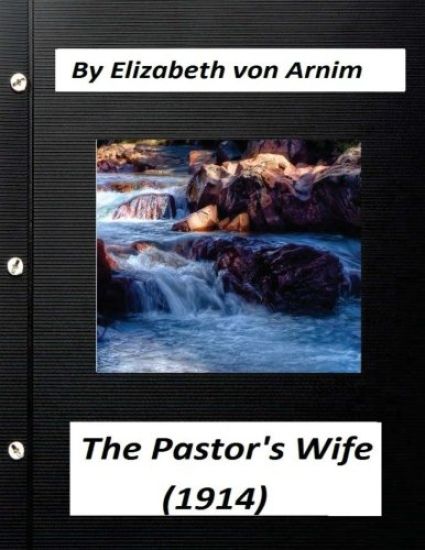
Princess Priscilla's Fortnight is a 1905 comedy-drama novel by the British writer Elizabeth von Arnim, known at the time as Elizabeth Russell. It was turned into a play The Cottage in the Air in 1909.Film adaptation In 1929 the novel was turned into a film The Runaway Princess directed by Anthony Asquith and Fritz Wendhausen and starring Mady Christians, Norah Baring and Paul Cavanagh. It was a co-production between the Britain and Germany, and a separate German language version Priscillas Fahrt ins Gl ck was made........... Elizabeth von Arnim (31 August 1866 - 9 February 1941), born Mary Annette Beauchamp, was an Australian-born British novelist. By marriage she became Gr fin (Countess) von Arnim-Schlagenthin, and by a second marriage, Countess Russell. Although known in her early life as Mary, after the publication of her first book, she was known to her readers, eventually to her friends, and finally even to her family as Elizabeth and she is now invariably referred to as Elizabeth von Arnim. She also wrote under the pen name Alice Cholmondeley.She was born at her family's holiday home in Kirribilli Point, Australia. When she was three years old, the family returned to England where she was raised. Her parents were Henry Herron Beauchamp (1825-1907), merchant, and Elizabeth (Louey) Weiss Lassetter (1836-1919). Arnim had four brothers, a sister, and a cousin from New Zealand, Kathleen Beauchamp, who later married John Middleton Murry and wrote under the pen name, Katherine Mansfield. In 1891, Elizabeth married Count Henning August von Arnim-Schlagenthin, a Prussian aristocrat, whom she had met during an Italian tour with her father. They lived in Berlin and eventually moved to the countryside where, in Nassenheide, Pomerania, the Arnims had their family estate. The couple had five children, four daughters and a son. The children's tutors at Nassenheide included E. M. Forster and Hugh Walpole. In 1908, Arnim left Nassenheide to return to London.Count von Arnim died in 1910, and later that year she moved to Randogne, Switzerland, where she built the Chalet Soleil and entertained literary and society friends.From 1910 until 1913, she was a mistress of the novelist H.G. Wells. In 1916, she married John Francis Stanley Russell, 2nd Earl Russell, elder brother of Bertrand Russell. The marriage ended in acrimony, with Elizabeth fleeing to the United States and the couple separating in 1919, although they never divorced. In 1920, she embarked on an affair with Alexander Stuart Frere Reeves (1892-1984), a British publisher nearly 30 years her junior; he later married and named his only daughter Elizabeth in her honour. After leaving Germany, she lived, variously, in London, France and Switzerland. In 1939, on the outbreak of the Second World War, she returned to the United States, where she died of influenza at the Riverside Infirmary, Charleston, South Carolina, on 9 February 1941, aged 74. She was cremated at Fort Lincoln cemetery, Maryland and in 1947 her ashes were mingled with her brother Sydney's in the churchyard of St Margaret's, Tylers Green, Penn, Buckinghamshire.The Latin inscription on her tombstone reads, parva sed apta (small but apt), alluding to her short stature.
The novel begins in the 1790s in the coastal town of Monkshaven (modeled on Whitby, England) against the background of the practice of impressment during the early phases of the Napoleonic Wars. Sylvia Robson lives happily with her parents on a farm, and is passionately loved by her rather dull Quaker cousin Philip. She, however, meets and falls in love with Charlie Kinraid, a dashing sailor on a whaling vessel, and they become secretly engaged. When Kinraid goes back to his ship, he is forcibly enlisted in the Royal Navy by a press gang, a scene witnessed by Philip. Philip does not tell Sylvia of the incident nor relay to her Charlie's parting message and, believing her lover is dead, Sylvia eventually marries her cousin. This act is primarily prompted out of gratefulness for Philip's assistance during a difficult time following her father's imprisonment and subsequent execution for leading a revengeful raid on press-gang collaborators. They have a daughter. Inevitably, Kinraid returns to claim Sylvia and she discovers that Philip knew all the time that he was still alive. Philip leaves her in despair at her subsequent rage and rejection, but she refuses to live with Kinraid because of her child.
Uncle Tom's Cabin; or, Life Among the Lowly is an anti-slavery novel by American author Harriet Beecher Stowe. Published in 1852, the novel had a profound effect on attitudes toward African Americans and slavery in the United States, so much so in the latter case that the novel intensified the sectional conflict leading to the American Civil War.
A Dark Night's Work by Elizabeth Gaskell. A Dark Night's Work is an 1863 novel by Elizabeth Gaskell. It was first published serially in Charles Dickens's magazine All the Year Round. The word "dark" was added to the original title by Dickens against Gaskell's wishes. Dickens felt that the altered title would be more striking. The story centers on a country lawyer, Edward Wilkins, and his daughter Ellinor. Edward has an artistic and literary personality, unsuited to his social position as the son of a successful lawyer who takes over his father's practice in the provincial town of Hamley. His legal representation of the local gentry and nobility leads him to try fitting into their social circles, only to be mocked and treated with derision. He develops a drinking problem and spends more money than he can afford to in his attempts to be an equal to his clients. His bad habits lead to problems in his business, and Edward is forced to take on a junior partner named Mr. Dunster. At the same time, Ellinor becomes engaged to a young upcoming country gentleman named Ralph Corbet. Corbet initiates the engagement partly through love of Ellinor and partly because of a promise of money from Edward. Edward continues to drink and overspend, leading to a confrontation with Mr. Dunster. In the heat of the argument, Edward strikes Mr. Dunster, killing him. Ellinor and a family servant named Dixon help Edward to bury the body in their flower garden.
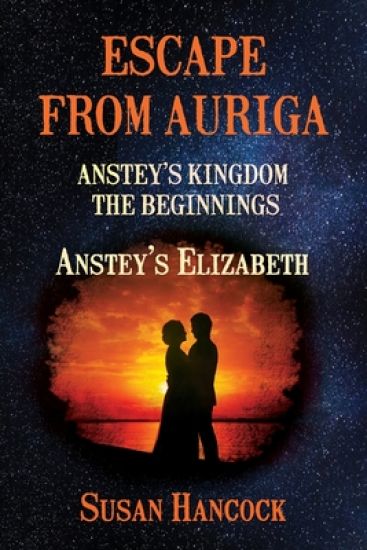
Humans are an inferior species, but if it means escaping civil war, is it worth traveling the Universe to hide on Earth? And can Elizabeth join her life to the man her parents hate in order to save them? Elizabeth (formerly Octavia) has decisions to make and bridges to burn if she has any hope of surviving the turmoil on her dystopian home planet, Domum-Orbis. Perhaps sixteenth-century humans are not as primitive as her studies have indicated. Perhaps one of them, one human male, may be just what she needs to complete her bid for freedom. Richard Anstey has already betrayed one elite rift-opening woman. Will Elizabeth fare any better? Can such an arrogant male Aurigan be trusted, and what is he hiding behind his sophisticated and sensual fa ade? William Wrenn hates his father and step-mother. They want him to travel to London, study law, and perhaps even gain a post of influence in the court of Queen Elizabeth I. He loves the wild seashore and the natural world and would rather stay home and run their estate. But when William sees travelers from beyond the stars, will he find a way to protect the woman he loves and defeat her enemies? The events of this book pre-date Surviving Anstey by some twenty years. It's Elizabeth's tale, but it's Richard Anstey's beginnings and William Wrenn's love story too...
Elizabeth's Birthday Coloring Book Kids Personalized Books A Coloring Book Personalized for Elizabeth that includes Children's Cut Out Happy Birthday Posters
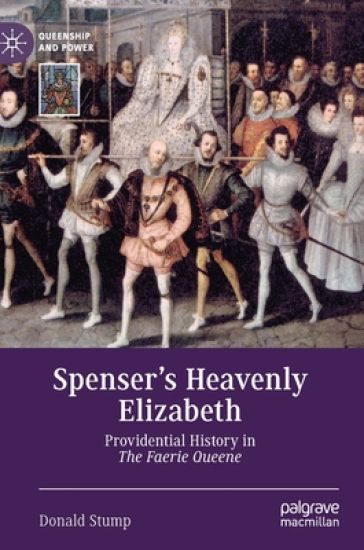
This book reveals the queen behind Edmund Spenser’s The Faerie Queene. Placing Spenser’s epic poem in the context of the tumultuous sixteenth century, Donald Stump offers a groundbreaking reading of the poem as an allegory of Elizabeth I’s life. By narrating the loves and wars of an Arthurian realm that mirrors Elizabethan England, Spenser explores the crises that shaped Elizabeth’s reign: her break with the pope to create a reformed English Church, her standoff with Mary, Queen of Scots, offensives against Irish rebels and Spanish troops, confrontations with assassins and foreign invaders, and the apocalyptic expectations of the English people in a time of national transformation. Brilliantly reconciling moral and historicist readings, this volume offers a major new interpretation of The Faerie Queene.
This book reveals the queen behind Edmund Spenser’s The Faerie Queene. Placing Spenser’s epic poem in the context of the tumultuous sixteenth century, Donald Stump offers a groundbreaking reading of the poem as an allegory of Elizabeth I’s life. By narrating the loves and wars of an Arthurian realm that mirrors Elizabethan England, Spenser explores the crises that shaped Elizabeth’s reign: her break with the pope to create a reformed English Church, her standoff with Mary, Queen of Scots, offensives against Irish rebels and Spanish troops, confrontations with assassins and foreign invaders, and the apocalyptic expectations of the English people in a time of national transformation. Brilliantly reconciling moral and historicist readings, this volume offers a major new interpretation of The Faerie Queene.