

Kirjahaku
Etsi kirjoja tekijän nimen, kirjan nimen tai ISBN:n perusteella.
1000 tulosta hakusanalla Samir Master

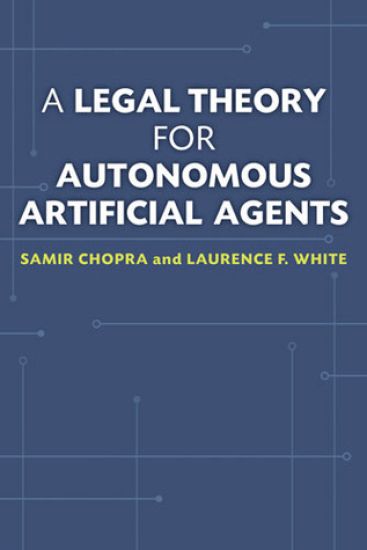
A Legal Theory for Autonomous Artificial Agents
Samir Chopra; Laurence F. White
The University of Michigan Press
2011
nidottu
“An extraordinarily good synthesis from an amazing range of philosophical, legal, and technological sources . . . the book will appeal to legal academics and students, lawyers involved in e-commerce and cyberspace legal issues, technologists, moral philosophers, and intelligent lay readers interested in high tech issues, privacy, [and] robotics.” —Kevin Ashley, University of Pittsburgh School of LawAs corporations and government agencies replace human employees with online customer service and automated phone systems, we become accustomed to doing business with nonhuman agents. If artificial intelligence (AI) technology advances as today’s leading researchers predict, these agents may soon function with such limited human input that they appear to act independently. When they achieve that level of autonomy, what legal status should they have?Samir Chopra and Laurence F. White present a carefully reasoned discussion of how existing philosophy and legal theory can accommodate increasingly sophisticated AI technology. Arguing for the legal personhood of an artificial agent, the authors discuss what it means to say it has “knowledge” and the ability to make a decision. They consider key questions such as who must take responsibility for an agent’s actions, whom the agent serves, and whether it could face a conflict of interest.

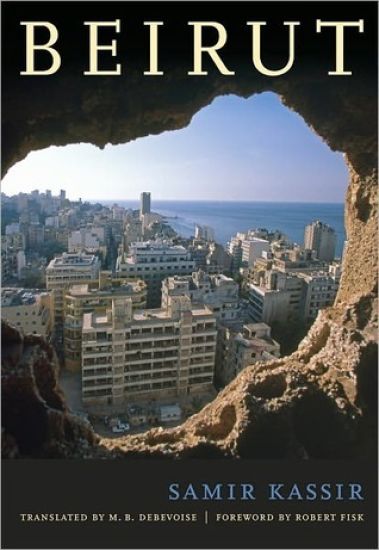
Widely praised as the definitive history of Beirut, this is the story of a city that has stood at the crossroads of Mediterranean civilization for more than four thousand years. The last major work completed by Samir Kassir before his tragic death in 2005, "Beirut" is a tour de force that takes the reader from the ancient to the modern world, offering a dazzling panorama of the city's Seleucid, Roman, Arab, Ottoman, and French incarnations. Kassir vividly describes Beirut's spectacular growth in the nineteenth and twentieth centuries, concentrating on its emergence after the Second World War as a cosmopolitan capital until its near destruction during the devastating Lebanese civil war of 1975-1990. Generously illustrated and eloquently written, "Beirut" illuminates contemporary issues of modernity and democracy while at the same time memorably recreating the atmosphere of one of the world's most picturesque, dynamic, and resilient cities.
Widely praised as the definitive history of Beirut, this is the story of a city that has stood at the crossroads of Mediterranean civilization for more than four thousand years. The last major work completed by Samir Kassir before his tragic death in 2005, "Beirut" is a tour de force that takes the reader from the ancient to the modern world, offering a dazzling panorama of the city's Seleucid, Roman, Arab, Ottoman, and French incarnations. Kassir vividly describes Beirut's spectacular growth in the nineteenth and twentieth centuries, concentrating on its emergence after the Second World War as a cosmopolitan capital until its near destruction during the devastating Lebanese civil war of 1975-1990. Generously illustrated and eloquently written, "Beirut" illuminates contemporary issues of modernity and democracy while at the same time memorably recreating the atmosphere of one of the world's most picturesque, dynamic, and resilient cities.

Jordan was the most deeply affected of all the Arab nations by Israel’s victory in the 1967 war, in which huge tracts of Arab land, including the West Bank, Jerusalem, the Gaza Strip and the Golan Heights, came under Israel’s control. Yet this is the first study to consider the war from the Jordanian perspective. It analyses the reasons for Jordan’s unreserved and, to many, unexpected participation and provides a detailed description of the dramatic three days of war, including an analysis of the effects of Egyptian control of the Jordanian-Israeli border. Samir Mutawi’s use of interviews with surviving Jordanian participants - politicians, military commanders, intelligence personnel and, most importantly, King Hussein - as well as Jordanian army records and books and memoirs in Arabic provides a new perspective on the war and on Jordan’s position in the immediate post-war period.

How philosophy can teach us to be less anxious about being anxious by understanding that it’s an essential part of being humanToday, anxiety is usually thought of as a pathology, the most diagnosed and medicated of all psychological disorders. But anxiety isn’t always or only a medical condition. Indeed, many philosophers argue that anxiety is a normal, even essential, part of being human, and that coming to terms with this fact is potentially transformative, allowing us to live more meaningful lives by giving us a richer understanding of ourselves. In Anxiety, Samir Chopra explores valuable insights about anxiety offered by ancient and modern philosophies—Buddhism, existentialism, psychoanalysis, and critical theory. Blending memoir and philosophy, he also tells how serious anxiety has affected his own life—and how philosophy has helped him cope with it.Chopra shows that many philosophers—including the Buddha, Kierkegaard, Nietzsche, Freud, and Heidegger—have viewed anxiety as an inevitable human response to existence: to be is to be anxious. Drawing on Karl Marx and Herbert Marcuse, Chopra examines how poverty and other material conditions can make anxiety worse, but he emphasizes that not even the rich can escape it. Nor can the medicated. Inseparable from the human condition, anxiety is indispensable for grasping it. Philosophy may not be able to cure anxiety but, by leading us to greater self-knowledge and self-acceptance, it may be able to make us less anxious about being anxious.Personal, poignant, and hopeful, Anxiety is a book for anyone who is curious about rethinking anxiety and learning why it might be a source not only of suffering but of insight.

How philosophy can teach us to be less anxious about being anxious by understanding that it’s an essential part of being humanToday, anxiety is usually thought of as a pathology, the most diagnosed and medicated of all psychological disorders. But anxiety isn’t always or only a medical condition. Indeed, many philosophers argue that anxiety is a normal, even essential, part of being human, and that coming to terms with this fact is potentially transformative, allowing us to live more meaningful lives by giving us a richer understanding of ourselves. In Anxiety, Samir Chopra explores valuable insights about anxiety offered by ancient and modern philosophies—Buddhism, existentialism, psychoanalysis, and critical theory. Blending memoir and philosophy, he also tells how serious anxiety has affected his own life—and how philosophy has helped him cope with it.Chopra shows that many philosophers—including the Buddha, Kierkegaard, Nietzsche, Freud, and Heidegger—have viewed anxiety as an inevitable human response to existence: to be is to be anxious. Drawing on Karl Marx and Herbert Marcuse, Chopra examines how poverty and other material conditions can make anxiety worse, but he emphasizes that not even the rich can escape it. Nor can the medicated. Inseparable from the human condition, anxiety is indispensable for grasping it. Philosophy may not be able to cure anxiety but, by leading us to greater self-knowledge and self-acceptance, it may be able to make us less anxious about being anxious.Personal, poignant, and hopeful, Anxiety is a book for anyone who is curious about rethinking anxiety and learning why it might be a source not only of suffering but of insight.

EKG Primer: Your Companion On the Cardiology Rotation
Samir Saba; Mian Bilal Alam
Mian Bilal Alam
2015
nidottu
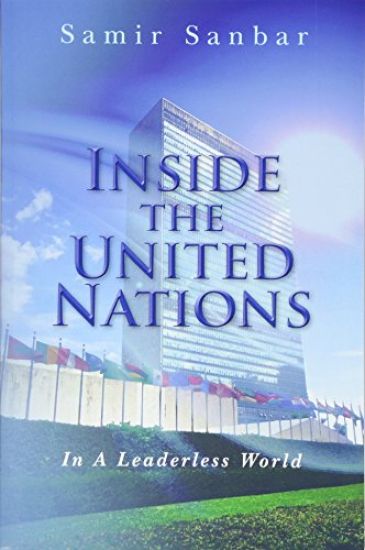
When Samir Sanbar, a journalist and graduate of the American University of Beirut, left his native Lebanon in the 1960's for a job at United Nations Headquarters in New York, he could hardly have imagined the rich opportunity and adventure it was to offer him over the coming 33 years. His latest book "Inside The United Nations" is a memoir of his life at the UN. On his retirement, Sanbar had risen to the rank of Assistant Secretary-General, the UN Secretariat's highest-ranking civil servant from the Arab world. Much loved and respected by his staff and members of the diplomatic community alike, he had worked with five UN Secretaries-General, and developed working and personal relationships with many world leaders. As Head of the UN Department of Public Information, he amassed an encyclopedic knowledge not just of the structure and workings of the United Nations, but also of its people - the staff, diplomats and heads of state he dealt with in the UN offices next to the East River. As an expert Arabist, Samir Sanbar was at times assigned to nation-building missions or cloak-and-dagger operations in the Middle East, sometimes so secretive that the payroll unit, unaware that he still existed, stopped paying his salary. The book reads at times like a spy thriller, at times like a history book, at times like a satirical magazine. With his Ustinov-like anecdotes, and impish yet discerning sense of humor, Sanbar casts a critical eye on the UN system and the diplomatic and political intrigue that goes on next to New York's East River. He provides fresh insight into historical events that didn't quite seem to hang together at the time. Was there ever an minence grise at UN HQ, and if so, who was it? Not afraid to name names and cite real-life examples, Sanbar decries the lack of leadership in UN diplomacy, which he attributes to cronyism, abandonment of its institutional memory, disloyalty to the UN 'Oath of Office' and lack of the sort of leadership shown by its founding fathers, such as Dag Hammarskjold. We also see the human side of Samir Sanbar. He speaks movingly of his own family, but it is obvious that he sees the UN as a family too. He was exasperated by a suggestion to save money at UN HQ by replacing the tour guides with talking machines and so lose their 'human warmth'. He points out that some famous people started their careers as UN tour guides. When Luciano Pavarotti was appointed the first UN Messenger of Peace, Sanbar struck up an immediate friendship and arranged a meeting with him for which even the Secretary General cancelled all previous appointments. Students of politics, history and diplomacy, will find this book essential to their understanding of the UN system and its place in history, and those who simply enjoy a good read will appreciate its insightful and witty observation of life in that extra-territorial enclave across First Avenue, which has never yet been so thoroughly depicted.

milk and twitter is a selection of some of the most iconic tweets in the history of twitter. including iconic tweets by twitter greats like @jonnysun, @leyawn, @sortabad and more Note: I asked every twitter user I included in this book for permission before publishing and only included those who agreed.

America's ongoing project to dominate the world through military force has its roots in European liberalism, but has developed certain features of liberal ideology in a new and uniquely dangerous way. Where European political culture since the French Revolution has given a central place to values of equality, the American state has developed to serve the interests of capital alone, and is now exporting this model throughout the world. American Imperialism, Amin argues, will be far more barbaric than earlier forms of imperialism, pillaging natural resources and destroying the lives of the poor. In a panoramic overview, Amin examines the objectives and outcomes of American policy in the different regions of the world. He concludes by outlining the challenges faced by those resisting the American project today: redefining European liberalism on the basis of a new compromise between capital and labour, re-establishing solidarity among the people of the South, and reconstructing an internationalism that serves the interests of regions that are currently divided against each other.
In The Implosion of Capitalism world-renowned political economist Samir Amin connects the key events of our times - financial crisis, Eurozone implosion, the emerging BRIC nations and the rise of political Islam - identifying them as symptoms of a profound systemic crisis. In light of these major crises and tensions, Amin updates and modifies the classical definitions of social classes, political parties, social movements and ideology. In doing so he exposes the reality of monopoly capitalism in its contemporary global form. In a bravura conclusion, Amin argues that the current capitalist system is not viable and that implosion is unavoidable. The Implosion of Capitalism makes clear the stark choices facing humanity - and the urgent need for a more humane global order.

In The Implosion of Capitalism world-renowned political economist Samir Amin connects the key events of our times - financial crisis, Eurozone implosion, the emerging BRIC nations and the rise of political Islam - identifying them as symptoms of a profound systemic crisis.In light of these major crises and tensions, Amin updates and modifies the classical definitions of social classes, political parties, social movements and ideology. In doing so he exposes the reality of monopoly capitalism in its contemporary global form. In a bravura conclusion, Amin argues that the current capitalist system is not viable and that implosion is unavoidable. The Implosion of Capitalism makes clear the stark choices facing humanity - and the urgent need for a more humane global order.

Supply chains, including logistics, are the functional elements of an organisation's operations. To formulate a strategy for this operation to work seamlessly the organisation needs to align these operations with the corporate and business strategy. Strategic Supply Chain Management provides a discussion on effective supply chain strategic leadership for managerial teams who have previously been operating on a tactical or operational level, as well as students who need to learn about applying the theories of strategic supply chain management in practice. Strategic Supply Chain Management introduces concepts and tools which will enable successful buyer-supplier relationships and effective organizational leadership and talent management. Samir Dani provides a concise but important outlook on the connection between business strategy and supply chain strategy. The book delves into topical issues of risk, resilience, and sustainability and how these influence both business and supply chain strategy. The book also considers strategies for procurement, buyer supplier relationships, and sales & operations planning. An important aspect of this book is to consider the leadership and talent aspects of the humans in the supply chain and how this influences strategy and creates competitive advantage.

Culture, Conflict and Children examines various world cultures and their tolerance for violence. Focusing upon how attitudes affect the behavior of children, Basta also looks at neurobiological factors in the development of perception. Historical trends in the violence of different societies are explored, always with an understanding of the complexity of its sources. The disciplines of the humanities and the social sciences meet in this work, with the result that the reader is challenged to grapple with this relevant and distressing topic.
Although Arab contribution to the sciences is generally well known in the Western world, Arab contributions to the study of gemology are less recognized because of the lack of English-language translations of notable Arab texts. Scarecrow Press is pleased to present Samar Najm Abul Huda's translation of Ahmad ibn Yusuf al Tifaschi's study of gems. Born in 1184, Al Tifaschi first learned about gems from his father, and augmented his knowledge through readings of Aristotle, Theophrastus, and Pliny, as well as through extensive travels to mines and trading centers. In 1253, he wrote what later became known as the most "methodical and complete" work on precious stones. Gemologists of today are still astounded by the advanced observations that Al Tifaschi made in this work. The book covers 25 different stones, giving the crystallographic forms and physical properties such as hardness, lustre, and dispersion. The book also describes causes of the formation of gemstones within their mother rocks as well as the characteristics of the mine concerned. Abul Huda's translation of the work includes notations on the translations of Al Tifaschi's work into other languages, as well as background information on Al Tifaschi's world, the well-known gemstones of the 13th century, the gemological terminology used by the medieval Arabs, and notations on other gemstones not mentioned by Al Tifaschi. Includes index, a general bibliography, and illustrations of two precious gemstones in their settings.

Anaerobic Biotechnology for Bioenergy Production
Samir Kumar Khanal
Iowa State University Press
2008
sidottu
Anaerobic biotechnology is a cost-effective and sustainable means of treating waste and wastewaters that couples treatment processes with the reclamation of useful by-products and renewable biofuels. This means of treating municipal, agricultural, and industrial wastes allows waste products to be converted to value-added products such as biofuels, biofertilizers, and other chemicals. Anaerobic Biotechnology for Bioenergy Production: Principles and Applications provides the reader with basic principles of anaerobic processes alongside practical uses of anaerobic biotechnology options. This book will be a valuable reference to any professional currently considering or working with anaerobic biotechnology options.

Samir Naqqash's stirring novel Tenants and Cobweb nostalgically commemorates the lost culture of an ancient Iraqi Jewish minority living amidst a majority Muslim population in 1940s Baghdad. The plot unfolds during a time of great turmoil: the rise of Iraqi nationalism and anti-Jewish sentiment fueled by Nazi propaganda; the Farûd, a bloody pogrom carried out against Jewish residents of Baghdad in 1941; and the founding of Israel in 1948. These pivotal events profoundly affected Muslim-Jewish relationships, forever changing the nature of the Jewish experience in Iraq and eventually leading to a mass exodus of Iraqi Jews to Israel in 1951.Tenants and Cobwebs deftly narrates the lives of Jewish characters who refuse to leave Baghdad despite these tumultuous times as well as those who are compelled to leave but nonetheless cling to the life they know. While the Jewish residents appear to live peacefully and harmoniously in the same Baghdad apartment complex as their Muslim neighbors, Naqqash gives voice to their conflicting thoughts and feelings, revealing the deepening tensions between the two groups. His innovative use of Baghdadi Jewish and Muslim dialects captures the complex and nuanced emotions of his characters. Masliyah's skillful translation gives English-language readers access to one of the most imaginativeand ambitious Middle Eastern authors of the twentieth century.