

Kirjahaku
Etsi kirjoja tekijän nimen, kirjan nimen tai ISBN:n perusteella.
1000 tulosta hakusanalla Samuel Butler; Samuel Johnson

The Genuine Remains, in Verse and Prose, of Mr. Samuel Butler
Samuel Butler; R. (EDT) Thyer
Kessinger Pub
2007
pokkari

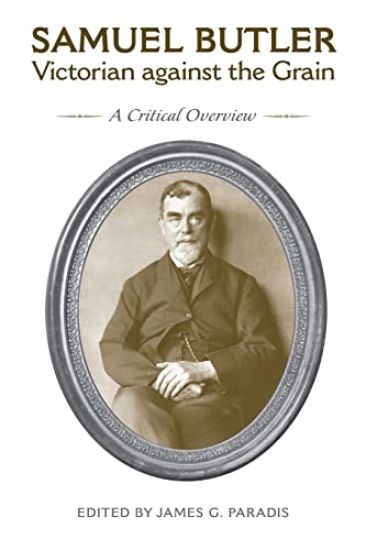
Samuel Butler (1835-1902), Victorian satirist, critic, and visual artist, possessed one of the most original and inquiring imaginations of his age. The author of two satires, Erewhon (1872) and The Way of All Flesh (1903), Butler's intellectually adventurous explorations along the cultural frontiers of his time appeared in volume after eccentric volume. Author of four works on evolution, he was one of the most prolific evolutionary speculators of his time. He was an innovative travel writer and art historian who used the creative insights of his own painting, photography, and local knowledge to invent, in works like Alps and Sanctuaries (1881), a vibrant Italian culture that contrasted with the spiritually frigid experience of his High Church upbringing.Despite his range and achievement, there remains surprisingly little contemporary analytical commentary on Butler's work. Samuel Butler, Victorian against the Grain is an interdisciplinary collection of essays that provides a critical overview of Butler's career, one which places his multifaceted body of work within the cultural framework of the Victorian age. The essays, taken together, discuss the formation of Victorian England's ultimate polymath, an artistic and intellectual ventriloquist who assumed an extraordinary range of roles - as satirist, novelist, evolutionist, natural theologian, travel writer, art historian, biographer, classicist, painter, and photographer.



Samuel Butler, Author of Erewhon: The Man and His Work
John F. Harris
Literary Licensing, LLC
2014
nidottu



Samuel Butler's Cambridge Pieces
Samuel Butler
Createspace Independent Publishing Platform
2015
nidottu
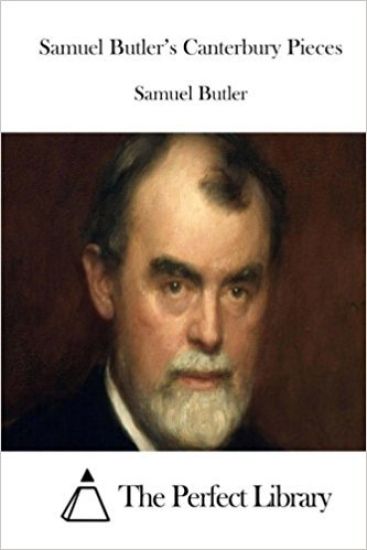
Samuel Butler's Canterbury Pieces
Samuel Butler
Createspace Independent Publishing Platform
2015
nidottu

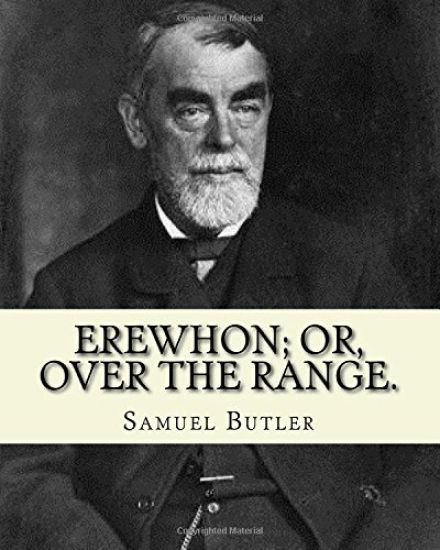
Erewhon; or, Over the range. By: Samuel Butler (4 December 1835 - 18 June 1902): Novel (World's classic's)
Samuel Butler
Createspace Independent Publishing Platform
2016
nidottu
Erewhon: or, Over the Range ( is a novel by Samuel Butler which was first published anonymously in 1872.The title is also the name of a country, supposedly discovered by the protagonist. In the novel, it is not revealed where Erewhon is, but it is clear that it is a fictional country. Butler meant the title to be read as "nowhere" backwards even though the letters "h" and "w" are transposed, as it would have been pronounced in his day (and still is in some dialects of English). The book is a satire on Victorian society. The first few chapters of the novel dealing with the discovery of Erewhon are in fact based on Butler's own experiences in New Zealand where, as a young man, he worked as a sheep farmer on Mesopotamia Station for about four years (1860-64), and explored parts of the interior of the South Island and which he wrote about in his A First Year in Canterbury Settlement (1863).The greater part of the book consists of a description of Erewhon. The nature of this nation is intended to be ambiguous. At first glance, Erewhon appears to be a Utopia, yet it soon becomes clear that this is far from the case. Yet for all the failings of Erewhon, it is also clearly not a dystopia, such as that depicted in George Orwell's Nineteen Eighty-Four. As a satirical utopia, Erewhon has sometimes been compared to Gulliver's Travels (1726), a classic novel by Jonathan Swift; the image of Utopia in this latter case also bears strong parallels with the self-view of the British Empire at the time. It can also be compared to the William Morris novel, News from Nowhere. Erewhon satirises various aspects of Victorian society, including criminal punishment, religion and anthropocentrism. For example, according to Erewhonian law, offenders are treated as if they were ill, whereas ill people are looked upon as criminals. Another feature of Erewhon is the absence of machines; this is due to the widely shared perception by the Erewhonians that they are potentially dangerous. This last aspect of Erewhon reveals the influence of Charles Darwin's evolution theory; Butler had read On the Origin of Species soon after it was published in 1859..... Samuel Butler (4 December 1835 - 18 June 1902) was an iconoclastic Victorian-era English author who published a variety of works. Two of his most famous pieces are the Utopian satire Erewhon and a semi-autobiographical novel published posthumously, The Way of All Flesh. He is also known for examining Christian orthodoxy, substantive studies of evolutionary thought, studies of Italian art, and works of literary history and criticism. Butler made prose translations of the Iliad and Odyssey, which remain in use to this day.Butler was born on 4 December 1835 at the rectory in the village of Langar, near Bingham, Nottinghamshire, England, to the Rev. Thomas Butler, son of Dr. Samuel Butler, then headmaster of Shrewsbury School and later Bishop of Lichfield. Dr Butler was the son of a tradesman and descended from a line of yeomen, but his scholarly aptitude being recognised at young age, was sent to Rugby and Cambridge, where he distinguished himself and launched his successful career. His only son Thomas wished to go into the Navy, but succumbed to paternal pressure and entered the Church, in which he led a wholly undistinguished career, all the more so in contrast with his father's. It has been suggested that this family dynamic had some impact on Samuel, insofar as it created the oppressive home environment (chronicled in The Way of All Flesh) which formed his approach to the world. Thomas Butler, states one critic, "to make up for having been a servile son, became a bullying father."..............

Selections from previous works, with remarks on G. J. Romanes' "Mentl evolution in animals", and A psalm of Montreal (1890). By: Samuel Butler
Samuel Butler
Createspace Independent Publishing Platform
2016
nidottu
Erewhon revisited twenty years later both by the original discoverer of the country and by his son. By: Samuel Butler(4 December 1835 - 18 June 1902)
Samuel Butler
Createspace Independent Publishing Platform
2016
nidottu
Erewhon Revisited Twenty Years Later, Both by the Original Discoverer of the Country and by His Son (1901) is a satirical novel by Samuel Butler, forming a belated sequel to his Erewhon (1872).The Cambridge History of English and American Literature judges that it "has less of the free imaginative play of its predecessor...but, in sharp brilliance of wit and criticism, in intellectual unity and coherence, it surpasses Erewhon". Erewhon, set in a thinly disguised New Zealand, ended with the escape of its unnamed protagonist from the native Erewhonians by balloon. In the sequel, narrated by his son John, we are told that our hero's name is Higgs. Higgs returns to Erewhon and meets his former lover Yram, who is now the mother of his son George. He discovers that he is now worshipped as "the Sunchild", his escape having been interpreted as an ascension into heaven, and that a church of Sunchildism has sprung up. He finds himself in danger from the villainous Professors Hanky and Panky, who are determined to protect Sunchildism from him. With George's help Higgs escapes from their clutches and returns to England. The Swiftian device of setting his satire in a fictional culture enabled Butler, as the critic Elinor Shaffer has written, "to analyse the phenomena of religion from their point of genesis, while disclaiming all responsibility for their uncanny parallels to certain known religions." It did not however make the road to publication any easier. When Butler submitted the manuscript to the respectable and long-established house of Longman, who had in recent years become his regular publishers, they rejected it for fear of offending their High Church clientele, even when Butler offered to pay the costs himself. On March 24, 1901 he wrote to George Bernard Shaw, conceding that the book was "far more wicked than Erewhon", and asking for his advice.Shaw replied recommending his own publisher, Grant Richards, and lost no time introducing Butler to him. The book duly came out under the Grant Richards imprint................ Samuel Butler (4 December 1835 - 18 June 1902) was an iconoclastic Victorian-era English author who published a variety of works. Two of his most famous pieces are the Utopian satire Erewhon and a semi-autobiographical novel published posthumously, The Way of All Flesh. He is also known for examining Christian orthodoxy, substantive studies of evolutionary thought, studies of Italian art, and works of literary history and criticism. Butler made prose translations of the Iliad and Odyssey, which remain in use to this day.Butler was born on 4 December 1835 at the rectory in the village of Langar, near Bingham, Nottinghamshire, England, to the Rev. Thomas Butler, son of Dr. Samuel Butler, then headmaster of Shrewsbury School and later Bishop of Lichfield. Dr Butler was the son of a tradesman and descended from a line of yeomen, but his scholarly aptitude being recognised at young age, was sent to Rugby and Cambridge, where he distinguished himself and launched his successful career. His only son Thomas wished to go into the Navy, but succumbed to paternal pressure and entered the Church, in which he led a wholly undistinguished career, all the more so in contrast with his father's. It has been suggested that this family dynamic had some impact on Samuel, insofar as it created the oppressive home environment (chronicled in The Way of All Flesh) which formed his approach to the world. Thomas Butler, states one critic, "to make up for having been a servile son, became a bullying father." In any event, Samuel Butler's relationship with his parents, and especially with his father, was largely antagonistic. His education began at home and included frequent beatings, as was not uncommon at the time. Samuel, however, found his parents particularly "brutal and stupid by nature,"and their relationship to him never progressed beyond the adversarial...............

Darwin's theory of evolution was received with great interest all across Europe. The theory of evolution generated numerous debate among scientists, philosophers and the general public. Questions concerning the evolution of animals and humans, the existence of any blueprint or design in biology, and the relationship between Darwinism and Lamarckism rapidly became key topics of many scientific and philosophical texts, but also of novels and periodical articles. In Victorian England, Samuel Butler (1835-1902) critically discussed evolution in both novels and popular essays. Butler's idea of evolution rejected Darwin's theory of natural selection proposing instead a neo-Lamarckian philosophy of evolution called 'unconscious memory'.Analysing Butler's writings, Cristiano Turbil guides the reader through the complexity of the continental evolutionary debate, presenting a new and original interpretation of Butler's scientific and literary work.Cristiano Turbil is currently teaching history of medicine and science at University College London. His research encompasses the history of medicine and science in the late nineteenth and early twentieth century across Europe, literature and science and, more broadly, history of ideas.

Darwin's theory of evolution was received with great interest all across Europe. The theory of evolution generated numerous debate among scientists, philosophers and the general public. Questions concerning the evolution of animals and humans, the existence of any blueprint or design in biology, and the relationship between Darwinism and Lamarckism rapidly became key topics of many scientific and philosophical texts, but also of novels and periodical articles. In Victorian England, Samuel Butler (1835-1902) critically discussed evolution in both novels and popular essays. Butler's idea of evolution rejected Darwin's theory of natural selection proposing instead a neo-Lamarckian philosophy of evolution called 'unconscious memory'.Analysing Butler's writings, Cristiano Turbil guides the reader through the complexity of the continental evolutionary debate, presenting a new and original interpretation of Butler's scientific and literary work.Cristiano Turbil is currently teaching history of medicine and science at University College London. His research encompasses the history of medicine and science in the late nineteenth and early twentieth century across Europe, literature and science and, more broadly, history of ideas.

This book provides new insight into a fascinating but often misunderstood writer, Samuel Butler. It offers a much-needed reappraisal of Butler's work and shows how Lamarckian ideas pervaded the whole of Butler's wide-ranging ouevre, and not merely his evolutionary theory.

The Riviera of the Corniche Road, a classical and rare book that has been considered essential throughout human history, so that this work is never forgotten, we at Alpha Editions have made efforts in its preservation by republishing this book in a modern format for present and future generations. This whole book has been reformatted, retyped and designed. These books are not made of scanned copies of their original work and hence the text is clear and readable.