Kirjojen hintavertailu. Mukana 11 244 527 kirjaa ja 12 kauppaa.

Kirjahaku

Etsi kirjoja tekijän nimen, kirjan nimen tai ISBN:n perusteella.

1000 tulosta hakusanalla Samuel Forster

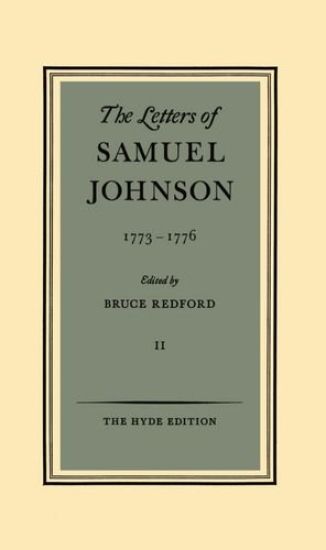
The Letters of Samuel Johnson: Volume II: 1773-1776
"The Letters of Samuel Johnson" contains 52 previously unknown letters or parts of letters which have come to light since R.W. Chapman's work on the subject, published in 1952. For the first time, substantive deletions are recorded, yielding intimate knowledge of Johnson's stylistic procedures, mental habits and chains of association. Furthermore, detailed ownership credits document the current disposition of the manuscripts, hundreds of which have changed hands during the last four decades. Finally, the annotation of the letters incorporates the many significant discoveries of post-war Johnsonian scholarship, as well as decoding references that had resisted explanation before.
The Letters of Samuel Johnson: Volume III: 1777-1781
"The Letters of Samuel Johnson" contains 52 previously unknown letters or parts of letters which have come to light since R.W. Chapman's work on the subject, published in 1952. For the first time, substantive deletions are recorded, yielding intimate knowledge of Johnson's stylistic procedures, mental habits and chains of association. Furthermore, detailed ownership credits document the current disposition of the manuscripts, hundreds of which have changed hands during the last four decades. Finally, the annotation of the letters incorporates the many significant discoveries of post-war Johnsonian scholarship, as well as decoding references that had resisted explanation before.
The Letters of Samuel Johnson: Volume IV: 1782-1784
The Letters of Samuel Johnson, known as the Hyde Edition, is the most complete scholarly edition of Johnsons's letters ever to appear. In editing these five volumes, Bruce Redford has included fifty-two newly discovered letters or parts of letters, and he has supplied more accurate versions of many others. Redford also has decoded numerous references that previously had resisted explanation, and his annotations integrate the vital discoveries of recent scholarship. The overall result is a far richer understanding of Samuel Johnson's life, work, and milieu. The Hyde Edition offers major professional advances over all previous publication of these materials. It transcribes scores of texts from the original documents for the first time - a feature of special importance in the case of Johnson's revealing letters to Hester Thrale, a number of which have been available only in expurgated form. It is the first edition systematically to record substantive deletions in a way that will allow readers a more intimate knowledge of stylistic procedures, mental habits, and chains of association. The Hyde Edition also documents the current disposition of the manuscripts, hundreds of which have changed hands in recent decades. Volume IV chronicles the last three years of Johnson's life, a period of protracted struggle against a variety of ailments and of heroic commitment to preserving a sound mind in a radically unsound body. This epistolary endgame includes the breakup of the friendship with Hester Thrale, medical dramas of every description, and a poignant reaching out to new friends and new experiences. The letters of 1782-84 exemplify in abundance what Johnson himself praises and provides, 'the interchange of that social officiousness by which we are habitually endeared to one another."
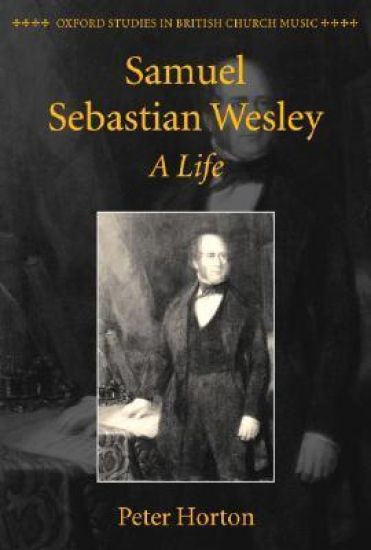
Samuel Sebastian Wesley: A Life

Samuel Sebastian Wesley: A Life

Horton Peter

Oxford University Press
2004
sidottu
Samuel Sebastian Wesley (1810-76) was the foremost organist and church music composer of his generation. Peter Horton paints a picture of the life and career of this remarkable man whose output includes such favourites as "Blessed be the God and Father" and "The Wilderness".
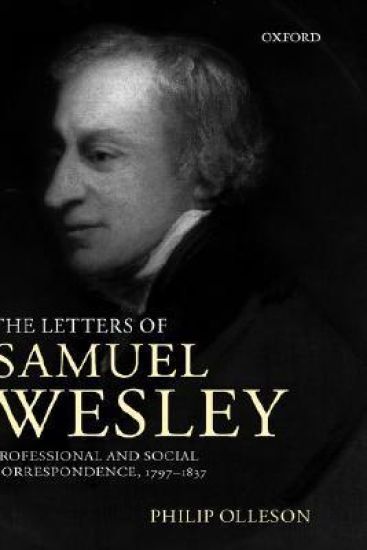
The Letters of Samuel Wesley

The Letters of Samuel Wesley

Samuel Wesley

Oxford University Press
2001
sidottu
Samuel Wesley (1766-1837) was the son of the hymn-writer Charles Wesley and the nephew of John Wesley, the founder of Methodism. He was one of the leading composers in late eighteenth- and early nineteenth-century England, and the finest organist of his day. He was also a misfit and a rebel, renowned for his outspoken views, his frequently wild behaviour, and his irregular personal life. He converted from Methodism to Roman Catholicism, and his controversial views on marriage led to the desertion of his wife and a long-term relationship with a woman 28 years his junior. His music has become increasingly well known in recent years, and these letters to his friends and fellow musicians, over 400 of which are gathered together here for the first time, present both a witty, perceptive, and unparalleled portrait of Wesley the man, and an insider's view of life in the music profession in London in the early nineteenth century.
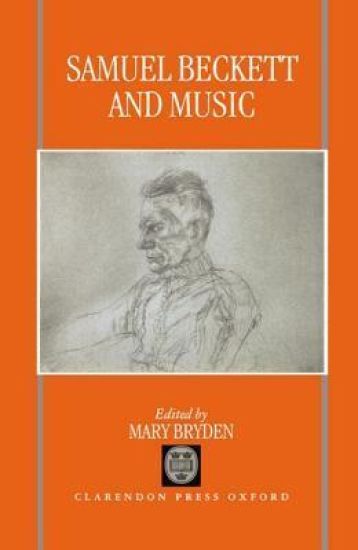
Samuel Beckett and Music
The importance of the viewing eye in Samuel Beckett's writing has been noted. Less attention has been paid to the place of sound and musicality. This collection of essays consists of two main sections, which analyze musical settings, and consider sound and music in the author's work.
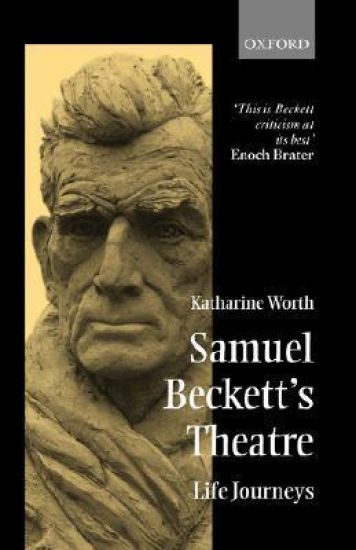
Samuel Beckett's Theatre

Samuel Beckett's Theatre

Katharine Worth

Oxford University Press
2001
nidottu
In this uniquely personal account of Samuel Beckett's theatre, Katharine Worth draws on a wealth of remarkable material - her own work producing and directing productions of Beckett's plays, often with leading actors such as Patrick Magee, but also with students; the experience of watching other productions; her successful adaptation of Beckett's novella, Company, for the stage; and conversations and correspondence with Beckett himself. The book focuses on the power that Beckett's theatre has to fascinate us with the ordinary small experiences of life as well as its great mysteries. The strange life-journeys taken on his stage are seen to be the universal journey; the endless story-telling about it a process we all engage in. The critical discussion highlights the unique fusion on Beckett's stage of cosmic scenery and humorous individualism. It takes in at one end influential forerunners such as Maeterlinck, Yeats, and Dickens and at the other the lively contemporary performances, sometimes controversial, that testify to the enduring human appeal and magnetism of Beckett's plays and stage fiction.
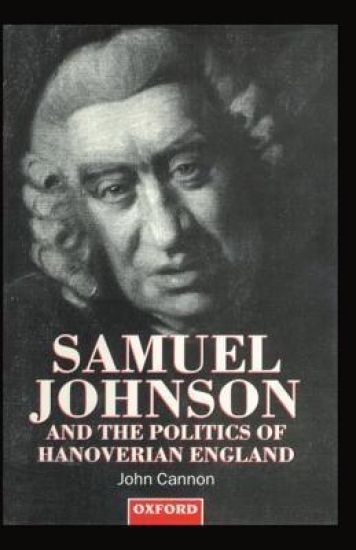
Samuel Johnson and the Politics of Hanoverian England
This is a lively and readable reinterpretation of the Georgian political order. Samuel Johnson's life (1709-1784) spans most of the eighteenth cetnury. His contacts in the literary and cultural, scholarly, and political worlds were wide, including Gibbon, Goldsmith, Fox, Burke, Reynolds, Adam Smith, and many others. This book uses Johnson's remarkable career as a point of entry into Hanoverian England. John Cannon explores major contemporary issues, such as education, the poor, capital punishment, the colonies, and Toryism. He challenges many assumptions about Johnson's own attitudes, and offers a substantial modification to the traditional picture of Johnson and the political world of the eighteenth century.
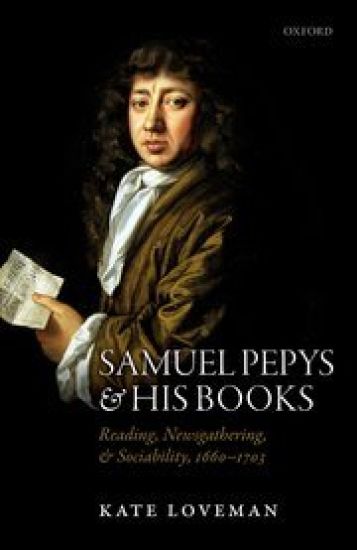
Samuel Pepys and his Books

Samuel Pepys and his Books

Kate Loveman

Oxford University Press
2015
sidottu
Samuel Pepys was a great collector of books, news, and gossip. This study uses his surviving papers to examine reading practices, collecting, and the exchange of information in the late seventeenth century. Offering the first extensive history of reading during the Restoration, it traces developments in the book trade and news transmission at a time when England was the scene of dramatic political and religious upheavals. The investigation goes beyond Pepys's famous diary of the 1660s, employing a variety of sources to explore the role that reading played in Pepys's life and in the lives of his contemporaries. It begins by examining what it meant to be a reader in Restoration London: the skills, the people, and the places involved. Pepys's wide-ranging interests serve as starting points for considering news exchange and the reception of major literary genres in the Restoration. Particular attention is given to conduct books, histories, religious works, and recreational reading (romances, drama, and novels). The appeal that these works held for readers was not always what we might expect -or, indeed, what the authors and publishers had expected. Additional chapters explore the social interactions surrounding information gathering: the ways people acquired oral and written news in London; the experience of book-buying; and the acquisition of manuscript and print through social networks. Analysed alongside other records, Pepys's papers provide unrivalled insights into literary and cultural developments in the second half of the seventeenth century.
Samuel Beckett's 'Philosophy Notes'
The Irish writer and Nobel Prize winner, Samuel Beckett, assembled for himself a history of western philosophy during the 1930s, just at the point at which his first novel, Murphy, was coming together. The 'Philosophy Notes', together with related notes taken at that time about St. Augustine, thereafter provided Beckett with a store of knowledge, but also with phrases and images, which he took up in the major work that won him international and enduring fame, from the dramas Waiting for Godot and Endgame, through to the late prose works Worstward Ho and Stirrings Still. This edition presents, for the first time, Beckett's full 'Philosophy Notes', which constitute his most extensive unpublished text. The Notes display Beckett's own interests and emphases within the history of western philosophy, from the pre-Socratic Greeks onwards, together with more familiar figures in the study of his work, such as Descartes, Leibnitz, and Geulincx. Here we see Beckett's original thoughts on all of these figures for the first time. The Notes also, tellingly and often comically, display Beckett's impatience with many aspects of philosophy, such as its anthropological or anthropomorphic bias, or the idealism of the Enlightenment and Kant. The Edition contains an extensive Introduction, outlining the origin of Beckett's Notes, his major sources and approach to them, the historical context for his view of philosophy, and the significance of Beckett's 'Philosophy Notes' within his mature writings. The many footnotes then suggest ways in which particular aspects of the philosophy narrated here by Beckett suggest fresh insights into those later writings--the images, but also the creative impulses, behind some of his most famous texts. This Edition, further, raises larger questions about, and perspectives upon, the relation between philosophy and literature in the twentieth century and beyond.
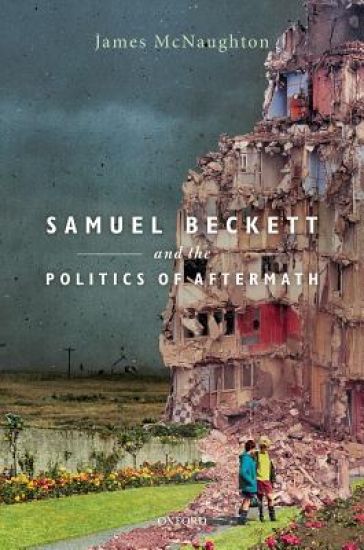
Samuel Beckett and the Politics of Aftermath

Samuel Beckett and the Politics of Aftermath

James McNaughton

Oxford University Press
2018
sidottu
Samuel Beckett and the Politics of Aftermath explores Beckett's literary responses to the political maelstroms of his formative and middle years: the Irish civil war and the crisis of commitment in 1930s Europe, the rise of fascism and the atrocities of World War II. Archive yields a Beckett who monitored propaganda in speeches and newspapers, and whose creative work engages with specific political strategies, rhetoric, and events. Finally, Beckett's political aesthetic sharpens into focus. Deep within form, Beckett models ominous historical developments as surely as he satirizes artistic and philosophical interpretations that overlook them. He burdens aesthetic production with guilt: imagination and language, theater and narrative, all parallel political techniques. Beckett comically embodies conservative religious and political doctrines; he plays Irish colonial history against contemporary European horrors; he examines aesthetic complicity in effecting atrocity and covering it up. This book offers insightful, original, and vivid readings of Beckett's work up to Three Novels and Endgame.
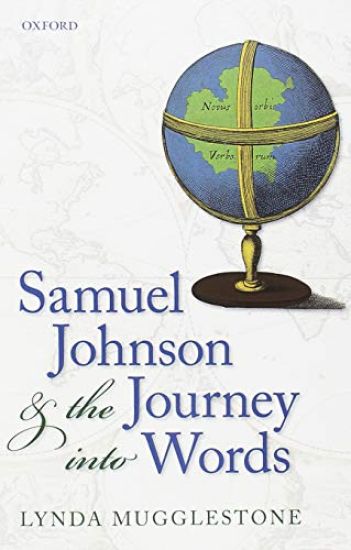
Samuel Johnson and the Journey into Words

Samuel Johnson and the Journey into Words

Lynda Mugglestone

Oxford University Press
2018
nidottu
Popular readings of Johnson as a dictionary-maker often see him as a writer who both laments and attempts to control the state of the language. Lynda Mugglestone looks at the range of Johnson's writings on, and the complexity of his thinking about, language and lexicography. She shows how these reveal him probing problems not just of meaning and use but what he considered the related issues of control, obedience, and justice, as well as the difficulties of power when exerted over the 'sea of words'. She examines his attitudes to language change, loan words, spelling, history, and authority, describing, too, the evolution of his ideas about the nature, purpose, and methods of lexicography, and shows how these reflect his own wider thinking about politics, culture, and society. The book offers a careful reassessment of Johnson's lexicographical practice, examining in detail his commitment to evidence, and the uses to which this might be put. Dictionary-making, for Johnson, came to be seen as a long and difficult voyage round the world of the English language. While such images play their own role in lexicographical tradition, Johnson would, as this volume explores, also make them very much his own in a range of distinctive, and illuminating, ways. Johnson's metaphors invite us to consider-and reconsider-the processes by which a dictionary might be made and the kind of destination it might seek, as well as the state of language that might be reached by such endeavours. For Johnson, where the dictionary-maker might go, and what should be accomplished along the way, can often seem to raise pertinent and perhaps troubling questions. Lynda Mugglestone's generous, wide-ranging account casts new light on Johnson's life in language and provides an engaging reassessment of his impact on English culture, the making of dictionaries, and their role in a nation's identity.
Samuel Johnson

Samuel Johnson

Oxford University Press
2020
nidottu
This volume in the 21st-Century Oxford Authors series offers students an authoritative, comprehensive selection of the work of Samuel Johnson (1709-1784). Accompanied by full scholarly apparatus, the edition enables students to study Johnson's work in the order in which it was written, and, wherever possible, using the text of the first published version. The volume presents a selection of Johnson's most important writings, drawn from all periods of his life. It reflects almost completely the range of literary forms in which Johnson wrote, including poetic translation, biographical sketches, literary criticism, and letters. It includes a broad selection from The Rambler (17501752) and The Idler (17581760), along with the travel narrative A Journey to the Western Islands of Scotland (1775), and a selection from The Lives of the Poets (1781). David Womersleys introduction explores how Johnsons mastery of style enabled him to adopt various personae, sometimes simultaneously, in order to communicate through many different genres and registers. Johnson is shown to be an active participant in the philosophical and social currents of his time. This selection reveals an author driven by deeply-held principles, concerned with how the ethical, political, and affective dimensions of language go beyond vocabulary and reach into the lives of its users. Explanatory notes and commentary are included to enhance the study, understanding, and enjoyment of these works, and the edition includes an Introduction to the life of Johnson, and a Chronology.
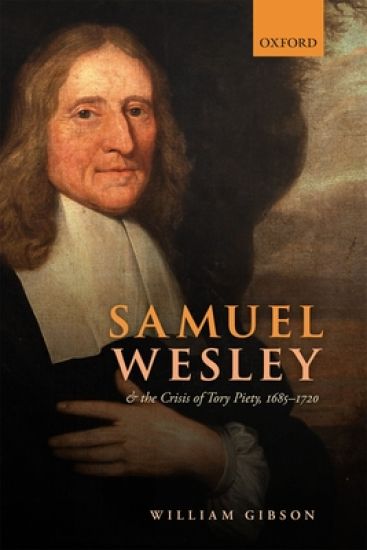
Samuel Wesley and the Crisis of Tory Piety, 1685-1720

Samuel Wesley and the Crisis of Tory Piety, 1685-1720

William Gibson

Oxford University Press
2021
sidottu
Samuel Wesley and the Crisis of Tory Piety, 1685-1720 uses the experiences of Samuel Wesley (1662-1735) to examine what life was like in the Church of England for Tory High Church clergy. These clergy felt alienated from the religious and political settlement of 1689 and found themselves facing the growth of religious toleration. They often linked this to a rise in immorality and a sense of the decline in religious values. Samuel Wesley's life saw a series of crises including his decision to leave Dissent and conform to the Church of England, his imprisonment for debt in 1705, his shortcomings as a priest, disagreements with his bishop, his marriage breakdown and the haunting of his rectory by a ghost or poltergeist. Wesley was also a leading member of the Convocation of the Church during the crisis years of 1710-14. In each of these episodes, Wesley's Toryism and High Church principles played a key role in his actions. They also show that the years between 1685 and 1720 were part of a 'long Glorious Revolution' which was not confined to 1688-9. This 'long Revolution' was experienced by Tory High Church clergy as a series of turning points in which the Whig forces strengthened their control of politics and the Church. Using newly discovered sources, and providing fresh insights into the life and work of Samuel Wesley, William Gibson explores the world of the Tory High Church clergy in the period 1685-1720.
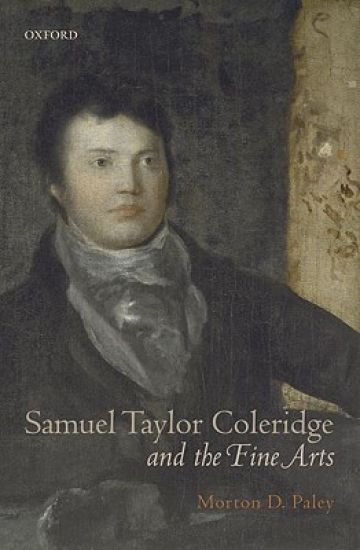
Samuel Taylor Coleridge and the Fine Arts

Samuel Taylor Coleridge and the Fine Arts

Morton D. Paley

Oxford University Press
2008
sidottu
Although Coleridge's thinking and writing about the fine arts was both considerable and interesting, this has not been the subject of a book before. Coleridge owed his initiation into art to Sir George Beaumont. In 1803-4 he had frequent opportunities to learn from Beaumont, to study Beaumont's small but elegant collection and to visit private collections. Before leaving for Malta in April 1804, Coleridge wrote 'I have learnt as much fr[om] Sir George Beaumont respecting Pictures & Painting and Paint[ers as] I ever learnt on any subject from any man in the same Space of Time.' In Italy in 1806, Coleridge's experience of art deepened, thanks to the American artist Washington Allston, who taught him to see the artistic sights of Rome with a painter's eye. Coleridge also visited Florence and Pisa, and later said of the frescoes in Pisa's Camp Santo: 'The impression was greater, I may say, than that any poem ever made upon me.' Back in England, Coleridge visited London exhibitions, country house collections, and even artists' studios. In 1814, both Coleridge and Allston were in Bristol - Coleridge lecturing, Allston exhibiting. Coleridge's 'On the Principles of Genial Criticism' began as a defense of Allston's paintings but became a statement about all the arts. This book, an important contribution to Coleridge's intellectual biography, will make readers aware of a dimension of his thinking that has been largely ignored until now.
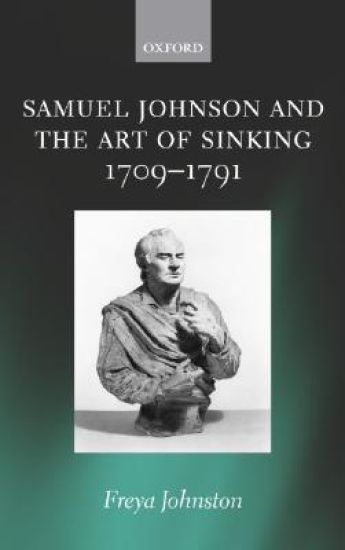
Samuel Johnson and the Art of Sinking 1709-1791

Samuel Johnson and the Art of Sinking 1709-1791

Freya Johnston

Oxford University Press
2005
sidottu
The traditional view of Samuel Johnson as hostile to particulars, trifles, and aesthetic mediocrity only half-explains his authorial character. Samuel Johnson and the Art of Sinking 1709-1791 argues that, in a period dominated by social and literary hierarchies, Johnson's works reveal a defining interest in 'little', 'mean', or 'low' topics and people. Freya Johnston moves away from a critical emphasis on what literature of this period excludes, to consider its modes of including recalcitrant material. Of necessity finite, any piece of writing is informed by the subject matter it omits or to which it indirectly alludes. How can we identify the peripheral topics or characters purportedly 'excluded' from a text, unless it provides compelling inferences that oblige us to supply the omission? In which case, something subtler is at work than barefaced proscription. Rehearsing the comparative merits of great and little things, Johnson and his contemporaries tested the opposing claims of pagan and Christian authority. Ancient criticism, and its eighteenth-century adherents, held that each subject required an appropriate style: little matters call for the low, lofty ones for the high. Yet Gospel writers stressed Christ's incarnation as a praiseworthy and imitable descent to the humanly little -- one that is compatible with the most sublime style. Through a series of close readings, this book examines how Johnson conceived of his relationships to and with the margins of writing and of society. It proposes that his literary and critical practice is neither inclusive nor exclusive in its attitudes towards peripheral things.