Kirjojen hintavertailu. Mukana 11 244 527 kirjaa ja 12 kauppaa.

Kirjahaku

Etsi kirjoja tekijän nimen, kirjan nimen tai ISBN:n perusteella.

1000 tulosta hakusanalla Samuel Partridge

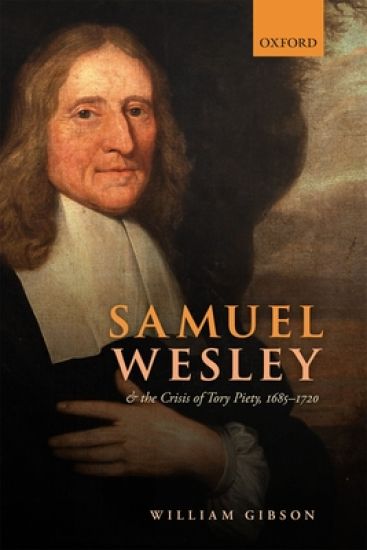
Samuel Wesley and the Crisis of Tory Piety, 1685-1720

Samuel Wesley and the Crisis of Tory Piety, 1685-1720

William Gibson

Oxford University Press
2021
sidottu
Samuel Wesley and the Crisis of Tory Piety, 1685-1720 uses the experiences of Samuel Wesley (1662-1735) to examine what life was like in the Church of England for Tory High Church clergy. These clergy felt alienated from the religious and political settlement of 1689 and found themselves facing the growth of religious toleration. They often linked this to a rise in immorality and a sense of the decline in religious values. Samuel Wesley's life saw a series of crises including his decision to leave Dissent and conform to the Church of England, his imprisonment for debt in 1705, his shortcomings as a priest, disagreements with his bishop, his marriage breakdown and the haunting of his rectory by a ghost or poltergeist. Wesley was also a leading member of the Convocation of the Church during the crisis years of 1710-14. In each of these episodes, Wesley's Toryism and High Church principles played a key role in his actions. They also show that the years between 1685 and 1720 were part of a 'long Glorious Revolution' which was not confined to 1688-9. This 'long Revolution' was experienced by Tory High Church clergy as a series of turning points in which the Whig forces strengthened their control of politics and the Church. Using newly discovered sources, and providing fresh insights into the life and work of Samuel Wesley, William Gibson explores the world of the Tory High Church clergy in the period 1685-1720.
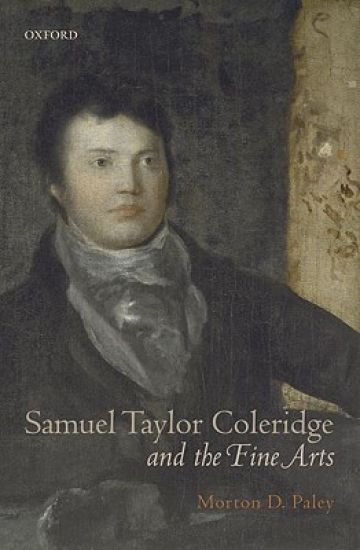
Samuel Taylor Coleridge and the Fine Arts

Samuel Taylor Coleridge and the Fine Arts

Morton D. Paley

Oxford University Press
2008
sidottu
Although Coleridge's thinking and writing about the fine arts was both considerable and interesting, this has not been the subject of a book before. Coleridge owed his initiation into art to Sir George Beaumont. In 1803-4 he had frequent opportunities to learn from Beaumont, to study Beaumont's small but elegant collection and to visit private collections. Before leaving for Malta in April 1804, Coleridge wrote 'I have learnt as much fr[om] Sir George Beaumont respecting Pictures & Painting and Paint[ers as] I ever learnt on any subject from any man in the same Space of Time.' In Italy in 1806, Coleridge's experience of art deepened, thanks to the American artist Washington Allston, who taught him to see the artistic sights of Rome with a painter's eye. Coleridge also visited Florence and Pisa, and later said of the frescoes in Pisa's Camp Santo: 'The impression was greater, I may say, than that any poem ever made upon me.' Back in England, Coleridge visited London exhibitions, country house collections, and even artists' studios. In 1814, both Coleridge and Allston were in Bristol - Coleridge lecturing, Allston exhibiting. Coleridge's 'On the Principles of Genial Criticism' began as a defense of Allston's paintings but became a statement about all the arts. This book, an important contribution to Coleridge's intellectual biography, will make readers aware of a dimension of his thinking that has been largely ignored until now.
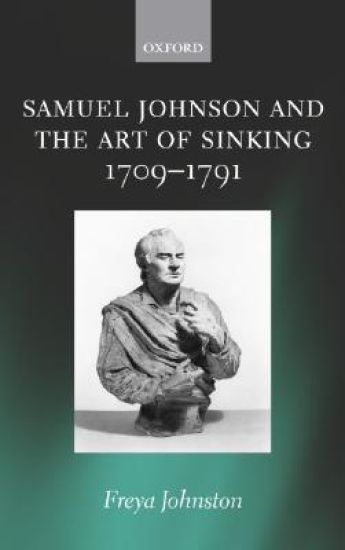
Samuel Johnson and the Art of Sinking 1709-1791

Samuel Johnson and the Art of Sinking 1709-1791

Freya Johnston

Oxford University Press
2005
sidottu
The traditional view of Samuel Johnson as hostile to particulars, trifles, and aesthetic mediocrity only half-explains his authorial character. Samuel Johnson and the Art of Sinking 1709-1791 argues that, in a period dominated by social and literary hierarchies, Johnson's works reveal a defining interest in 'little', 'mean', or 'low' topics and people. Freya Johnston moves away from a critical emphasis on what literature of this period excludes, to consider its modes of including recalcitrant material. Of necessity finite, any piece of writing is informed by the subject matter it omits or to which it indirectly alludes. How can we identify the peripheral topics or characters purportedly 'excluded' from a text, unless it provides compelling inferences that oblige us to supply the omission? In which case, something subtler is at work than barefaced proscription. Rehearsing the comparative merits of great and little things, Johnson and his contemporaries tested the opposing claims of pagan and Christian authority. Ancient criticism, and its eighteenth-century adherents, held that each subject required an appropriate style: little matters call for the low, lofty ones for the high. Yet Gospel writers stressed Christ's incarnation as a praiseworthy and imitable descent to the humanly little -- one that is compatible with the most sublime style. Through a series of close readings, this book examines how Johnson conceived of his relationships to and with the margins of writing and of society. It proposes that his literary and critical practice is neither inclusive nor exclusive in its attitudes towards peripheral things.
Samuel Johnson's Lives of the Poets
Johnson himself wrote in 1782: 'I know not that I have written any thing more generally commended than the Lives of the Poets'. Always recognized as a major biographical and critical achievement, Samuel Johnson's last literary project is also one of his most readable and entertaining, written with characteristic eloquence and conviction, and at times with combative trenchancy. Johnson's fifty-two biographies constitute a detailed survey of English poetry from the early seventeenth century down to his own time, with extended discussions of Cowley, Milton, Waller, Dryden, Addison, Prior, Swift, Pope, and Gray. The Lives also include Johnson's memorable biography of the enigmatic Richard Savage (1744), the friend of his own early years in London. Roger Lonsdale's Introduction describes the origins, composition, and textual history of the Lives, and assesses Johnson's assumptions and aims as biographer and critic. The commentary provides a detailed literary and historical context, investigating Johnson's sources, relating the Lives to his own earlier writings and conversation, and to the critical opinions of his contemporaries, as well as illustrating their early reception. This is the first scholarly edition since George Birkbeck Hill's three-volume Oxford edition (1905). This is volume one of four.
Samuel Johnson's Lives of the Poets
Johnson himself wrote in 1782: 'I know not that I have written any thing more generally commended than the Lives of the Poets'. Always recognized as a major biographical and critical achievement, Samuel Johnson's last literary project is also one of his most readable and entertaining, written with characteristic eloquence and conviction, and at times with combative trenchancy. Johnson's fifty-two biographies constitute a detailed survey of English poetry from the early seventeenth century down to his own time, with extended discussions of Cowley, Milton, Waller, Dryden, Addison, Prior, Swift, Pope, and Gray. The Lives also include Johnson's memorable biography of the enigmatic Richard Savage (1744), the friend of his own early years in London. Roger Lonsdale's Introduction describes the origins, composition, and textual history of the Lives, and assesses Johnson's assumptions and aims as biographer and critic. The commentary provides a detailed literary and historical context, investigating Johnson's sources, relating the Lives to his own earlier writings and conversation, and to the critical opinions of his contemporaries, as well as illustrating their early reception. This is the first scholarly edition since George Birkbeck Hill's three-volume Oxford edition (1905). This is volume two of four.
Samuel Johnson's Lives of the Poets
Johnson himself wrote in 1782: 'I know not that I have written any thing more generally commended than the Lives of the Poets'. Always recognized as a major biographical and critical achievement, Samuel Johnson's last literary project is also one of his most readable and entertaining, written with characteristic eloquence and conviction, and at times with combative trenchancy. Johnson's fifty-two biographies constitute a detailed survey of English poetry from the early seventeenth century down to his own time, with extended discussions of Cowley, Milton, Waller, Dryden, Addison, Prior, Swift, Pope, and Gray. The Lives also include Johnson's memorable biography of the enigmatic Richard Savage (1744), the friend of his own early years in London. Roger Lonsdale's Introduction describes the origins, composition, and textual history of the Lives, and assesses Johnson's assumptions and aims as biographer and critic. The commentary provides a detailed literary and historical context, investigating Johnson's sources, relating the Lives to his own earlier writings and conversation, and to the critical opinions of his contemporaries, as well as illustrating their early reception. This is the first scholarly edition since George Birkbeck Hill's three-volume Oxford edition (1905). This is volume three of four.
Samuel Johnson's Lives of the Poets
Johnson himself wrote in 1782: 'I know not that I have written any thing more generally commended than the Lives of the Poets'. Always recognized as a major biographical and critical achievement, Samuel Johnson's last literary project is also one of his most readable and entertaining, written with characteristic eloquence and conviction, and at times with combative trenchancy. Johnson's fifty-two biographies constitute a detailed survey of English poetry from the early seventeenth century down to his own time, with extended discussions of Cowley, Milton, Waller, Dryden, Addison, Prior, Swift, Pope, and Gray. The Lives also include Johnson's memorable biography of the enigmatic Richard Savage (1744), the friend of his own early years in London. Roger Lonsdale's Introduction describes the origins, composition, and textual history of the Lives, and assesses Johnson's assumptions and aims as biographer and critic. The commentary provides a detailed literary and historical context, investigating Johnson's sources, relating the Lives to his own earlier writings and conversation, and to the critical opinions of his contemporaries, as well as illustrating their early reception. This is the first scholarly edition since George Birkbeck Hill's three-volume Oxford edition (1905). This is volume four of four.
Samuel Taylor Coleridge - The Major Works

Samuel Taylor Coleridge - The Major Works

Samuel Taylor Coleridge

Oxford University Press
2008
nidottu
This authoritative edition was originally published in the acclaimed Oxford Authors series under the general editorship of Frank Kermode. It brings together a unique combination of Coleridge's poetry and prose - all the major poems, complemented by important criticism, letters, and marginalia - to give the essence of his work and thinking. Samuel Taylor Coleridge, poet, critic, and radical thinker, exerted an enormous influence over contemporaries as different as Wordsworth, Southey and Lamb. He was also a dedicated reformer, and set out to use his reputation as a public speaker and literary philosopher to change the course of English thought. This collection represents the best of Coleridge's poetry from every period of his life, particularly his prolific early years, which produced The Rime of the Ancient Mariner, Christabel, and Kubla Khan. The central section of the book is devoted to his most significant critical work, Biographia Literaria, and reproduces it in full. It provides a vital background for both the poetry section which precedes it and for the shorter prose works which follow. There is also a generous sample of his letters, notebooks, and marginalia, some recently discovered, which show a different, more spontaneous side to his fascinating and complex personality. ABOUT THE SERIES: For over 100 years Oxford World's Classics has made available the widest range of literature from around the globe. Each affordable volume reflects Oxford's commitment to scholarship, providing the most accurate text plus a wealth of other valuable features, including expert introductions by leading authorities, helpful notes to clarify the text, up-to-date bibliographies for further study, and much more.
Samuel Sebastian Wesley: A Life

Samuel Sebastian Wesley: A Life

Peter Horton

Oxford University Press
2010
nidottu
Peter Horton paints a detailed picture of the life and career of this remarkable man whose output includes such favourites as 'Blessed be the God and Father' and 'The wilderness'.Born into one of England's best-known families, Samuel Sebastian Wesley (1810-76) was not only the foremost organist and church musician of his generation, but a vigorous campaigner for higher standards in cathedral music. He was also a troubled, difficult character, and accounts of his abrasive personality or anecdotes about his fishing exploits have tended to obscure his very real achievements as a composer. Peter Horton has drawn on a wide range of source material to produce a detailed account of Wesley's life and career as he moved from cathedral to cathedral in search of an unattainable ideal, his youthful idealism gradually giving way to the cynicism and disillusion familiar to those who encountered him late in life. He also examines his development as a composer and presents a study of his complete output (including the many non-church works) against the background of his restless career andin a wider European context. The book is illustrated by a generous selection of musical examples and plates, and includes the most detailed list of works to appear in print.
Samuel Johnson

Samuel Johnson

Oxford University Press
2018
sidottu
The Samuel Johnson volume in the 21st-Century Oxford Authors series offers a generous selection of Johnson's most important writings, drawn from all periods of his life. It reflects almost completely the range of literary forms in which Johnson wrote. In keeping with the the approach of the series, the texts are presented in chronological order and the text chosen is, wherever possible, the text of the first published version. As well as an expansive introduction and a detailed chronology of Johnson's life, David Womersley provides helpful annotation to guide and orient the reader.
Samuel Johnson

Samuel Johnson

Oxford University Press
2012
sidottu
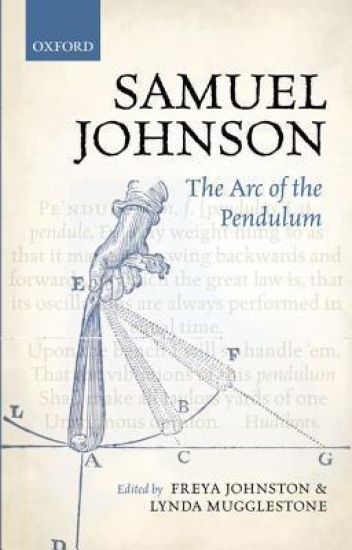
Samuel Johnson: The Arc of the Pendulum offers unique insight into the works of Samuel Johnson by re-considering William Hazlitt's oft-cited comparison between Johnson's prose and a pendulum. In 1819, William Hazlitt condemned Samuel Johnson's prose style as 'a species of rhyming' in which 'the close of the period follows as mechanically as the oscillation of a pendulum, the sense is balanced with the sound'. Predictable, formulaic, and unresponsive, Hazlitt's Johnson was 'incapable of latitude and compromise, a mere automaton who rebounded from one position to its opposite extreme'. This collection of essays focuses on Johnson's works, rather than perceptions of his personality, and argues that Johnson's perceived erratic opinions reflect an understanding of the complexity, instability, and contradictions of the world in which he lived. The volume challenges Hazlitt's influential reading of the Johnsonian pendulum, focusing on the uses and enjoyments of inconsistency, and the varieties of instability, irresolution, and active change which are revealed by and within Johnson. Chapters from a strong team of contributors present new perspectives on Johnson's work, life, and reception. The chapters address questions of style, authority, language, lexicography, and biography across a range of Johnson's writings from the early poetry to the late prose. Johnson emerges from these chapters not as a writer trapped within a set of oppositions, but as one who engages imaginatively and vigorously with flux, dynamism, and inconclusiveness. From the late eighteenth century onwards, to be 'Johnsonian' has typically been made synonymous with firm resolution and trenchant opinion, with polysyllabic excess and a style removed from the exigencies and accidents of ordinary existence. And yet, as this volume suggests, Johnson's life and writings embody the critical and creative play of ideas, a form of interaction with the world which is shaped by instability, contradiction, and combat.
Samuel and the Shaping of Tradition

Samuel and the Shaping of Tradition

Mark Leuchter

Oxford University Press
2013
nidottu
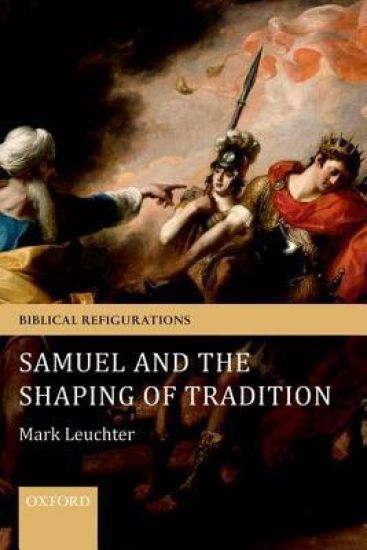
Samuel stands out in many important biblical texts as the figure who facilitated ancient Israel's transition from a tribal league to a monarchic state. On the surface of the text, this transition appears clear and linear, as does Samuel's role in bringing Israel together as a nation and selecting its first kings. Beneath this surface, however, is a far more complicated network of memories, sources and agendas, each presenting a very different picture of Samuel and his social, religious and ideological function. In some sources, Samuel serves as a symbol of Israel's developing priesthood and its system of social ethics, demonstrating the tensions within the priestly ranks. In others, Samuel's prophetic status is utilized to periodize Israel's history into distinct categories, positioning prophets over monarchs as national authorities. Elsewhere, Samuel is recruited to qualify - and disqualify - different forms of political organization in pre-monarchic Israel and systems of social hierarchy. Finally, the Jewish and Christian exegetical traditions return to the figure of Samuel and mine the texts in which he appears to re-structure Israel's national identity and the later communities that claimed descent from it. Mark Leuchter explores how the Samuel of these sources differs from the Samuel of the final form of the text, how the different writers used him to shape their ideas and transmit their messages, and how Samuel functions as a vehicle for the creation of a more elaborate literary superstructure drawn from discreet sources.
Samuel and the Shaping of Tradition

Samuel and the Shaping of Tradition

Mark Leuchter

Oxford University Press
2013
sidottu
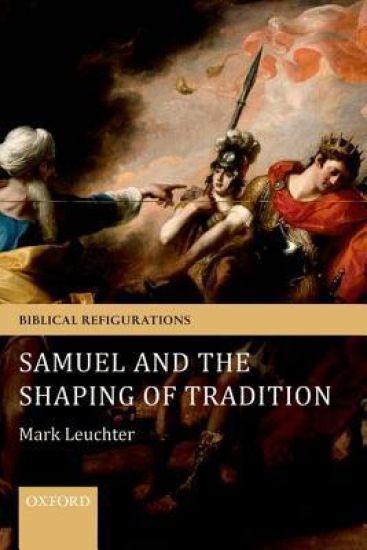
Samuel stands out in many important biblical texts as the figure who facilitated ancient Israel's transition from a tribal league to a monarchic state. On the surface of the text, this transition appears clear and linear, as does Samuel's role in bringing Israel together as a nation and selecting its first kings. Beneath this surface, however, is a far more complicated network of memories, sources and agendas, each presenting a very different picture of Samuel and his social, religious and ideological function. In some sources, Samuel serves as a symbol of Israel's developing priesthood and its system of social ethics, demonstrating the tensions within the priestly ranks. In others, Samuel's prophetic status is utilized to periodize Israel's history into distinct categories, positioning prophets over monarchs as national authorities. Elsewhere, Samuel is recruited to qualify - and disqualify - different forms of political organization in pre-monarchic Israel and systems of social hierarchy. Finally, the Jewish and Christian exegetical traditions return to the figure of Samuel and mine the texts in which he appears to re-structure Israel's national identity and the later communities that claimed descent from it. Mark Leuchter explores how the Samuel of these sources differs from the Samuel of the final form of the text, how the different writers used him to shape their ideas and transmit their messages, and how Samuel functions as a vehicle for the creation of a more elaborate literary superstructure drawn from discreet sources.
Samuel Johnson and the Journey into Words

Samuel Johnson and the Journey into Words

Lynda Mugglestone

Oxford University Press
2015
sidottu
Popular readings of Johnson as a dictionary-maker often see him as a writer who both laments and attempts to control the state of the language. Lynda Mugglestone looks at the range of Johnson's writings on, and the complexity of his thinking about, language and lexicography. She shows how these reveal him probing problems not just of meaning and use but what he considered the related issues of control, obedience, and justice, as well as the difficulties of power when exerted over the 'sea of words'. She examines his attitudes to language change, loan words, spelling, history, and authority, describing, too, the evolution of his ideas about the nature, purpose, and methods of lexicography, and shows how these reflect his own and others' thinking about politics, culture, and society. The book offers a careful reassessment of Johnson's prescriptive practice, examining in detail his commitment to evidence, and the uses to which this might be put. Dictionary-making, for Johnson, came to be seen as a long and difficult voyage round the world of the English language. While such images play their own role in lexicographical tradition, Johnson would, as this volume explores, also make them very much his own in a range of distinctive, and illuminating, ways. Johnson's metaphors invite us to consider-and reconsider-the processes by which a dictionary might be made and the kind of destination it might seek, as well as the state of language that might be reached by such endeavours. For Johnson, where the dictionary-maker might go, and what should be accomplished along the way, can often seem to raise pertinent and perhaps troubling questions. Lynda Mugglestone's generous, wide-ranging account casts new light on Johnson's life in language and provides a convincing reassessment of his impact on English culture, the making of dictionaries, and their role in a nation's identity. She ends by considering the power of Johnson's legacy and the degree to which his work continues to guide our attitudes to language and what we variously expect dictionaries to be and do.
The Lost Autobiography of Samuel Steward

The Lost Autobiography of Samuel Steward

Samuel Steward; Scott Herring

University of Chicago Press
2018
sidottu
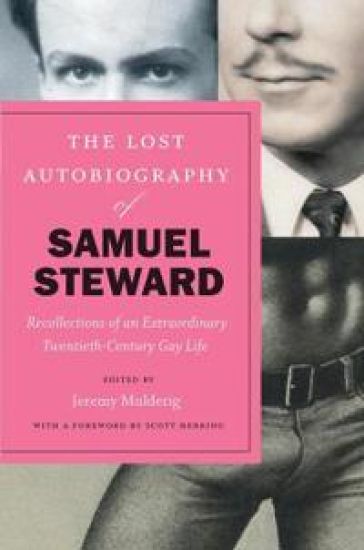
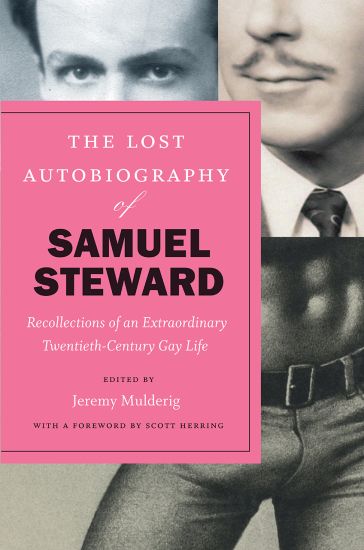
On August 21, 1978, a year before his seventieth birthday, Samuel Steward (1909–93) sat down at his typewriter in Berkeley, California, and began to compose a remarkable autobiography. No one but his closest friends knew the many different identities he had performed during his life: as Samuel Steward, he had been a popular university professor of English; as Phil Sparrow, an accomplished tattoo artist; as Ward Stames, John McAndrews, and Donald Bishop, a prolific essayist in the first European gay magazines; as Phil Andros, the author of a series of popular pornographic gay novels during the 1960s and 1970s. Steward had also moved in the circles of Gertrude Stein, Thornton Wilder, and Alfred Kinsey, among many other notable figures of the twentieth century. And, as a compulsive record keeper, he had maintained a meticulous card-file index throughout his life that documented his 4,500 sexual encounters with more than 800 men. The story of this life would undoubtedly have been a sensation if it had reached publication. But after finishing a 110,000-word draft in 1979, Steward lost interest in the project and subsequently published only a slim volume of selections from his manuscript. In The Lost Autobiography of Samuel Steward, Jeremy Mulderig has integrated Steward’s truncated published text with the text of the original manuscript to create the first extended version of Steward’s autobiography to appear in print—the first sensational, fascinating, and ultimately enlightening story of his many lives told in his own words. The product of a rigorous line-by-line comparison of these two sources and a thoughtful editing of their contents, Mulderig’s thoroughly annotated text is more complete and coherent than either source alone while also remaining faithful to Steward’s style and voice, to his engaging self-deprecation and his droll sense of humor. Compellingly readable and often unexpectedly funny, this newly discovered story of a gay life full of wildly improbable—but nonetheless true—events is destined to become a landmark queer autobiography from the twentieth century.
The Lost Autobiography of Samuel Steward

The Lost Autobiography of Samuel Steward

Samuel Steward; Scott Herring

University of Chicago Press
2018
pokkari
On August 21, 1978, a year before his seventieth birthday, Samuel Steward (1909-93) sat down at his typewriter in Berkeley, California, and began to compose a remarkable autobiography. No one but his closest friends knew the many different identities he had performed during his life: as Samuel Steward, he had been a popular university professor of English; as Phil Sparrow, an accomplished tattoo artist; as Ward Stames, John McAndrews, and Donald Bishop, a prolific essayist in the first European gay magazines; as Phil Andros, the author of a series of popular pornographic gay novels during the 1960s and 1970s. Steward had also moved in the circles of Gertrude Stein, Thornton Wilder, and Alfred Kinsey, among many other notable figures of the twentieth century. And, as a compulsive record keeper, he had maintained a meticulous card-file index throughout his life that documented his 4,500 sexual encounters with more than 800 men. The story of this life would undoubtedly have been a sensation if it had reached publication. But after finishing a 110,000-word draft in 1979, Steward lost interest in the project and subsequently published only a slim volume of selections from his manuscript. In The Lost Autobiography of Samuel Steward, Jeremy Mulderig has integrated Steward's truncated published text with the text of the original manuscript to create the first extended version of Steward's autobiography to appear in print--the first sensational, fascinating, and ultimately enlightening story of his many lives told in his own words. The product of a rigorous line-by-line comparison of these two sources and a thoughtful editing of their contents, Mulderig's thoroughly annotated text is more complete and coherent than either source alone while also remaining faithful to Steward's style and voice, to his engaging self-deprecation and his droll sense of humor. Compellingly readable and often unexpectedly funny, this newly discovered story of a gay life full of wildly improbable--but nonetheless true--events is destined to become a landmark queer autobiography from the twentieth century.
Samuel Beckett and the Prosthetic Body

Samuel Beckett and the Prosthetic Body

Y. Tajiri

Palgrave Macmillan
2006
sidottu
This book studies the representation of the body in Beckett's work, focusing on the 'prosthetic' aspect of the organs and senses. While making use of the theoretical potential of the concept of 'prosthesis', it aims to resituate Beckett in the broad cultural context of modernism in which the impact of new media and technologies was registered.
Samuel Beckett and the Problem of Irishness

Samuel Beckett and the Problem of Irishness

Emilie Morin

Palgrave Macmillan
2009
sidottu
Beckett's bilingual oeuvre has been approached from many angles, most of which stress its autonomy from understandings of Irishness emerging from the Irish Literary Revival. Emilie Morin shows that such autonomy is only apparent, and that Beckett's avant-garde practices remain bound to the exigencies that govern their very development.
Samuel Beckett and Testimony

Samuel Beckett and Testimony

D. Jones

Palgrave Macmillan
2011
sidottu
This is the first sustained study of Samuel Beckett and testimony. It offers new readings of the problem of unspeakability in Beckett in relation to testimonial expression and the problems of knowledge which arise in recent theoretical conceptions of testimony and the archive.