Kirjojen hintavertailu. Mukana 11 392 922 kirjaa ja 12 kauppaa.

Kirjahaku

Etsi kirjoja tekijän nimen, kirjan nimen tai ISBN:n perusteella.

1000 tulosta hakusanalla Samuel Peguero Colon

Samuel and the Shaping of Tradition

Samuel and the Shaping of Tradition

Mark Leuchter

Oxford University Press
2013
nidottu
Samuel stands out in many important biblical texts as the figure who facilitated ancient Israel's transition from a tribal league to a monarchic state. On the surface of the text, this transition appears clear and linear, as does Samuel's role in bringing Israel together as a nation and selecting its first kings. Beneath this surface, however, is a far more complicated network of memories, sources and agendas, each presenting a very different picture of Samuel and his social, religious and ideological function. In some sources, Samuel serves as a symbol of Israel's developing priesthood and its system of social ethics, demonstrating the tensions within the priestly ranks. In others, Samuel's prophetic status is utilized to periodize Israel's history into distinct categories, positioning prophets over monarchs as national authorities. Elsewhere, Samuel is recruited to qualify - and disqualify - different forms of political organization in pre-monarchic Israel and systems of social hierarchy. Finally, the Jewish and Christian exegetical traditions return to the figure of Samuel and mine the texts in which he appears to re-structure Israel's national identity and the later communities that claimed descent from it. Mark Leuchter explores how the Samuel of these sources differs from the Samuel of the final form of the text, how the different writers used him to shape their ideas and transmit their messages, and how Samuel functions as a vehicle for the creation of a more elaborate literary superstructure drawn from discreet sources.
Samuel and the Shaping of Tradition

Samuel and the Shaping of Tradition

Mark Leuchter

Oxford University Press
2013
sidottu
Samuel stands out in many important biblical texts as the figure who facilitated ancient Israel's transition from a tribal league to a monarchic state. On the surface of the text, this transition appears clear and linear, as does Samuel's role in bringing Israel together as a nation and selecting its first kings. Beneath this surface, however, is a far more complicated network of memories, sources and agendas, each presenting a very different picture of Samuel and his social, religious and ideological function. In some sources, Samuel serves as a symbol of Israel's developing priesthood and its system of social ethics, demonstrating the tensions within the priestly ranks. In others, Samuel's prophetic status is utilized to periodize Israel's history into distinct categories, positioning prophets over monarchs as national authorities. Elsewhere, Samuel is recruited to qualify - and disqualify - different forms of political organization in pre-monarchic Israel and systems of social hierarchy. Finally, the Jewish and Christian exegetical traditions return to the figure of Samuel and mine the texts in which he appears to re-structure Israel's national identity and the later communities that claimed descent from it. Mark Leuchter explores how the Samuel of these sources differs from the Samuel of the final form of the text, how the different writers used him to shape their ideas and transmit their messages, and how Samuel functions as a vehicle for the creation of a more elaborate literary superstructure drawn from discreet sources.
Samuel Johnson and the Journey into Words

Samuel Johnson and the Journey into Words

Lynda Mugglestone

Oxford University Press
2015
sidottu
Popular readings of Johnson as a dictionary-maker often see him as a writer who both laments and attempts to control the state of the language. Lynda Mugglestone looks at the range of Johnson's writings on, and the complexity of his thinking about, language and lexicography. She shows how these reveal him probing problems not just of meaning and use but what he considered the related issues of control, obedience, and justice, as well as the difficulties of power when exerted over the 'sea of words'. She examines his attitudes to language change, loan words, spelling, history, and authority, describing, too, the evolution of his ideas about the nature, purpose, and methods of lexicography, and shows how these reflect his own and others' thinking about politics, culture, and society. The book offers a careful reassessment of Johnson's prescriptive practice, examining in detail his commitment to evidence, and the uses to which this might be put. Dictionary-making, for Johnson, came to be seen as a long and difficult voyage round the world of the English language. While such images play their own role in lexicographical tradition, Johnson would, as this volume explores, also make them very much his own in a range of distinctive, and illuminating, ways. Johnson's metaphors invite us to consider-and reconsider-the processes by which a dictionary might be made and the kind of destination it might seek, as well as the state of language that might be reached by such endeavours. For Johnson, where the dictionary-maker might go, and what should be accomplished along the way, can often seem to raise pertinent and perhaps troubling questions. Lynda Mugglestone's generous, wide-ranging account casts new light on Johnson's life in language and provides a convincing reassessment of his impact on English culture, the making of dictionaries, and their role in a nation's identity. She ends by considering the power of Johnson's legacy and the degree to which his work continues to guide our attitudes to language and what we variously expect dictionaries to be and do.
The Lost Autobiography of Samuel Steward

The Lost Autobiography of Samuel Steward

Samuel Steward; Scott Herring

University of Chicago Press
2018
sidottu
On August 21, 1978, a year before his seventieth birthday, Samuel Steward (1909–93) sat down at his typewriter in Berkeley, California, and began to compose a remarkable autobiography. No one but his closest friends knew the many different identities he had performed during his life: as Samuel Steward, he had been a popular university professor of English; as Phil Sparrow, an accomplished tattoo artist; as Ward Stames, John McAndrews, and Donald Bishop, a prolific essayist in the first European gay magazines; as Phil Andros, the author of a series of popular pornographic gay novels during the 1960s and 1970s. Steward had also moved in the circles of Gertrude Stein, Thornton Wilder, and Alfred Kinsey, among many other notable figures of the twentieth century. And, as a compulsive record keeper, he had maintained a meticulous card-file index throughout his life that documented his 4,500 sexual encounters with more than 800 men. The story of this life would undoubtedly have been a sensation if it had reached publication. But after finishing a 110,000-word draft in 1979, Steward lost interest in the project and subsequently published only a slim volume of selections from his manuscript. In The Lost Autobiography of Samuel Steward, Jeremy Mulderig has integrated Steward’s truncated published text with the text of the original manuscript to create the first extended version of Steward’s autobiography to appear in print—the first sensational, fascinating, and ultimately enlightening story of his many lives told in his own words. The product of a rigorous line-by-line comparison of these two sources and a thoughtful editing of their contents, Mulderig’s thoroughly annotated text is more complete and coherent than either source alone while also remaining faithful to Steward’s style and voice, to his engaging self-deprecation and his droll sense of humor. Compellingly readable and often unexpectedly funny, this newly discovered story of a gay life full of wildly improbable—but nonetheless true—events is destined to become a landmark queer autobiography from the twentieth century.
The Lost Autobiography of Samuel Steward

The Lost Autobiography of Samuel Steward

Samuel Steward; Scott Herring

University of Chicago Press
2018
pokkari
On August 21, 1978, a year before his seventieth birthday, Samuel Steward (1909-93) sat down at his typewriter in Berkeley, California, and began to compose a remarkable autobiography. No one but his closest friends knew the many different identities he had performed during his life: as Samuel Steward, he had been a popular university professor of English; as Phil Sparrow, an accomplished tattoo artist; as Ward Stames, John McAndrews, and Donald Bishop, a prolific essayist in the first European gay magazines; as Phil Andros, the author of a series of popular pornographic gay novels during the 1960s and 1970s. Steward had also moved in the circles of Gertrude Stein, Thornton Wilder, and Alfred Kinsey, among many other notable figures of the twentieth century. And, as a compulsive record keeper, he had maintained a meticulous card-file index throughout his life that documented his 4,500 sexual encounters with more than 800 men. The story of this life would undoubtedly have been a sensation if it had reached publication. But after finishing a 110,000-word draft in 1979, Steward lost interest in the project and subsequently published only a slim volume of selections from his manuscript. In The Lost Autobiography of Samuel Steward, Jeremy Mulderig has integrated Steward's truncated published text with the text of the original manuscript to create the first extended version of Steward's autobiography to appear in print--the first sensational, fascinating, and ultimately enlightening story of his many lives told in his own words. The product of a rigorous line-by-line comparison of these two sources and a thoughtful editing of their contents, Mulderig's thoroughly annotated text is more complete and coherent than either source alone while also remaining faithful to Steward's style and voice, to his engaging self-deprecation and his droll sense of humor. Compellingly readable and often unexpectedly funny, this newly discovered story of a gay life full of wildly improbable--but nonetheless true--events is destined to become a landmark queer autobiography from the twentieth century.
Samuel Beckett and the Prosthetic Body

Samuel Beckett and the Prosthetic Body

Y. Tajiri

Palgrave Macmillan
2006
sidottu
This book studies the representation of the body in Beckett's work, focusing on the 'prosthetic' aspect of the organs and senses. While making use of the theoretical potential of the concept of 'prosthesis', it aims to resituate Beckett in the broad cultural context of modernism in which the impact of new media and technologies was registered.
Samuel Beckett and the Problem of Irishness

Samuel Beckett and the Problem of Irishness

Emilie Morin

Palgrave Macmillan
2009
sidottu
Beckett's bilingual oeuvre has been approached from many angles, most of which stress its autonomy from understandings of Irishness emerging from the Irish Literary Revival. Emilie Morin shows that such autonomy is only apparent, and that Beckett's avant-garde practices remain bound to the exigencies that govern their very development.
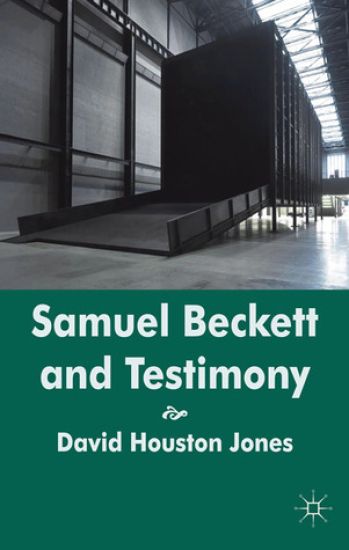
Samuel Beckett and Testimony

Samuel Beckett and Testimony

D. Jones

Palgrave Macmillan
2011
sidottu
This is the first sustained study of Samuel Beckett and testimony. It offers new readings of the problem of unspeakability in Beckett in relation to testimonial expression and the problems of knowledge which arise in recent theoretical conceptions of testimony and the archive.
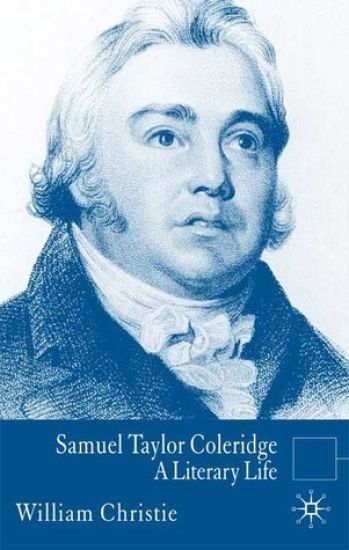
Samuel Taylor Coleridge

Samuel Taylor Coleridge

W. Christie

Palgrave Macmillan
2006
nidottu
The most sustained criticism and ambitious theory that had ever been attempted in English, the Biographia was Coleridge's major statement to a literary culture in which he sought to define and defend all imaginative life. This book offers a reading of Coleridge in the context of that culture and the institutions that comprised it.
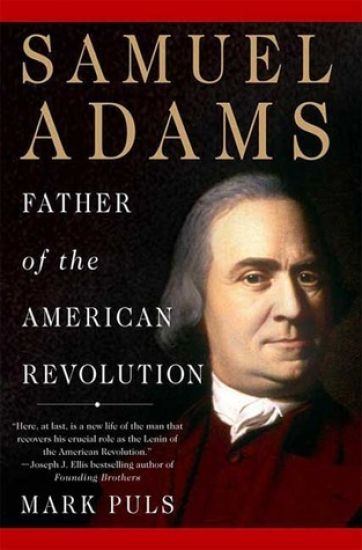
Samuel Adams

Samuel Adams

Mark Puls

Palgrave Macmillan
2009
nidottu
Winner of the 2007 Fraunces Tavern Museum Book Award! Samuel Adams is perhaps the most unheralded and overshadowed of the founding fathers, yet without him there would have been no American Revolution. A genius at devising civil protests and political maneuvers that became a trademark of American politics, Adams astutely forced Britain into coercive military measures that ultimately led to the irreversible split in the empire. His remarkable political career addresses all the major issues concerning America's decision to become a nation - from the notion of taxation without representation to the Declaration of Independence. George Washington, Thomas Jefferson and John Adams all acknowledged that they built our nation on Samuel Adams' foundations. Now, in this riveting biography, his story is finally told and his crucial place in American history is fully recognized.
Samuel Johnson

Samuel Johnson

Christopher Hibbert; Henry Hitchings

Palgrave Macmillan
2009
nidottu
Christopher Hibbert draws on every known contemporary source to provide a minutely detailed look of the fascinating writer Samuel Johnson. Using facts and anecdotes, Hibbert delivers intimate glimpses into Johnson's time as a schoolboy, his eccentricities as an undergraduate at Oxford, his struggle as a poor writer in London, and his slow rise to the legendary figure with a court of admirers and a steady stream of visitors. Hibbert combines personal stories with an examination Johnson's writing, offering a compelling and readable account.
Samuel Beckett

Samuel Beckett

Palgrave Macmillan
2010
sidottu
This volume comprises ten essays challenging the dominant account of Samuel Beckett as a figure that cannot be read historically by drawing on new archival materials and situating his finished works in their historical context.
Samuel Pepys' Penny Merriments

Samuel Pepys' Penny Merriments

Samuel Pepys

Columbia University Press
1977
sidottu
Though collections of Chinese fiction, poetry, and drama abound, there have been no English-language anthologies of Chinese essays on the market. Now, veteran sinologist David Pollard has selected and translated the best and most representative examples of Chinese prose writing from the third century to the contemporary period. Succinctly tracing the history of the genre in China in his introduction, Pollard then wittily and informatively introduces each writer chosen. The selections themselves include Ye Shengtao's ruminations of making a boat trip to visit his ancestors' graves, Fan Bao on life in prison, Gui Yougang's reminiscence of his mother, Yuan Mei's essay on borrowing books, and more. These writings not only give us marvelous little sketches of everyday life, lifting the curtain to a past world, they reveal still more about the minds of the writers and how they saw the world they lived in. Though the compositions span the past 1,800 years, the bulk of the selections are from the twentieth century and range from early masters of the form, such as Lu Xun and Zhou Zuoren, to the major writers of the middle generation, such as Ye Chengtao, Zhu Ziqing, Feng Zikai, Liang Shiqiu, and Liang Yuchun, and conclude with living writers who publish in both Taiwan and the mainland.Pollard's aim has been to translate examples that are both good in and of themselves and also contribute something to the essay form. The classical selections represent the native tradition that the modern essayists either imitated or reacted against. Taken together, these writings illuminate Chinese attitudes and reactions to the world they inhabit and provide a vast amount of information about the details of everyday life, social intercourse, and man's reaction to his environment.
Samuel Pepys' Penny Merriments

Samuel Pepys' Penny Merriments

Samuel Pepys

Columbia University Press
1977
pokkari
Though collections of Chinese fiction, poetry, and drama abound, there have been no English-language anthologies of Chinese essays on the market. Now, veteran sinologist David Pollard has selected and translated the best and most representative examples of Chinese prose writing from the third century to the contemporary period. Succinctly tracing the history of the genre in China in his introduction, Pollard then wittily and informatively introduces each writer chosen. The selections themselves include Ye Shengtao's ruminations of making a boat trip to visit his ancestors' graves, Fan Bao on life in prison, Gui Yougang's reminiscence of his mother, Yuan Mei's essay on borrowing books, and more. These writings not only give us marvelous little sketches of everyday life, lifting the curtain to a past world, they reveal still more about the minds of the writers and how they saw the world they lived in. Though the compositions span the past 1,800 years, the bulk of the selections are from the twentieth century and range from early masters of the form, such as Lu Xun and Zhou Zuoren, to the major writers of the middle generation, such as Ye Chengtao, Zhu Ziqing, Feng Zikai, Liang Shiqiu, and Liang Yuchun, and conclude with living writers who publish in both Taiwan and the mainland.Pollard's aim has been to translate examples that are both good in and of themselves and also contribute something to the essay form. The classical selections represent the native tradition that the modern essayists either imitated or reacted against. Taken together, these writings illuminate Chinese attitudes and reactions to the world they inhabit and provide a vast amount of information about the details of everyday life, social intercourse, and man's reaction to his environment.
Samuel Pepys

Samuel Pepys

Claire Tomalin

Penguin Books Ltd
2012
pokkari
From the acclaimed author of Charles Dickens: A Life comes a celebrated biography that casts new light on the remarkable diaries of Samuel Pepys.Samuel Pepys achieved fame as a naval administrator, a friend and colleague of the powerful and learned, a figure of substance. But for nearly ten years he kept a diary which recorded, with unparalleled openness and sensitivity, exactly what it was like to be a young man in Restoration London.Within and beyond the narrative of his extraordinary career, Claire Tomalin explores Pepys' inner life - his relations with women, his fears and ambitions, his political shifts, his agonies and his delights.'A rich, thoughtful and deeply satisfying account' Evening Standard'Sex, drink, plague, fire, music, marital conflict, the fall of kings, corruption and courage in public life, wars, navies, public execution, incarceration in the Tower: Samuel Pepys's life is full of irresistible material' Guardian'In Claire Tomalin, Pepys has found the biographer he deserves. Her perceptive, level-headed book finally restores to the life of the diarist its weight and dignity' New Statesman