In this third edition of The Sex Lives of College Students results are presented of more than a 100-question human sexuality survey administered over the past three decades (from 1990 to 2020) to thousands of college students ages 18-22. The goal is to better understand their sexual attitudes and behaviors, as well as trends. The findings raise awareness and provide perspective about students' understanding of sex matters and related difficult issues, and tell us we still have a long way to go before people own their sexuality. The survey reinforces the fact that young adults are generally comfortable pursuing sexual relationships, but often fail to openly discuss sexual issues. Some of the results suggest that the double standard is alive and well, as when more college women than men say that love is important in sex. The Sex Lives of College Students provides a springboard for honest dialogue about the role of sexuality in people's lives and a forum for more public discussion of private parts.
From award-winning author Sandra L Rostirolla comes the second installment of The Cecilia Series.In the wake of her victory over the evil goddess Eifa and the Senators of Vitus, Cecilia is ready to focus on rebuilding, but where there should be peace and light, she finds uncertainty and dread. The Prophecy is incomplete. With dark forces growing in the south, the war to rid the world of evil has only just begun.Cecilia and Amalardh are forced onto separate journeys. While Amalardh travels to faraway lands in search of answers, Cecilia must discern who to trust and how to keep the world safe from a threat beyond anything she has faced before.The Cecilia Series is an epic love story between a headstrong young woman who refuses to accept the status quo of her fractured world and an emotionally bankrupt assassin struggling to find his humanity.
Worlds collide, loyalties falter, and the Prophecy meets its end in this riveting final chapter.Where Cecilia was once the Light Guide, her new role as the Caladium-the Poison Flower-is far more dangerous. While she possesses the power to kill the Dark Goddess, Eifa, she will likely die in the process.With the final battle imminent, Vitus must find a way to protect themselves from Eifa's beastly Army. Based on technology discovered, Saffron and Rabbie race to build a new weapon capable of annihilating indestructible warriors.Across the ocean, Cecilia and Amalardh follow clues to the Forbidden Pool in search of answers. The clock is ticking. With every soul Eifa consumes, her powers grow. If Cecilia doesn't make it back to Vitus to fulfill her destiny, the city will fall.... and darkness will consume the world.
CECILIA is a Literary Classics & Author Academy Award Winning Book. Insightfully penned, with a plot that sizzles.Set in a post-apocalyptic future, Vitus, the last surviving city, maintains dominance by exterminating surrounding villages and enslaving the young men. Because of Vitus's oppression, the Goddess of Light is dying. The last bastion of goodness keeping her alive is the village of Plockton, nestled deep within the Plockton Forest. When this village falls victim to a raid, the Goddess pours her remaining light into the lone survivor, eighteen-year-old Cecilia.Unaware of the precious light that she is carrying inside, Cecilia makes the bold decision to rescue her brothers. What starts out as a desire to save loved ones, becomes an epic quest, thrusting Cecilia front and center in the ultimate battle between good and evil.The Cecilia Series is an epic love story between a headstrong young woman who refuses to accept the status quo of her fractured world and an emotionally bankrupt assassin struggling to find his humanity.Previously published as Cecilia ISBN 978-0-9991891-0-8
"An urgent, unflinching YA novel about the "monsters" of depression and family dysfunction." -Booklife, Editor's Pick Why does everything have to be so complicated? Why? Monsters That's why They stick their scungy little noses into everything.Twelve-year-old Sam learns this lesson the hard way. His fact-finding mission about Monsters starts off with the best of intensions. He just wants to help his older brother, Ben. After a terrible accident awakens his own Monster, Sam's behaviour starts causing problems with everyone, including the girl he loves. He discovers the family secret that caused Ben's downward spiral and realizes that someone else also has a Monster. And the hideous beast did something really bad.If Sam is to get through this mess, he needs to find a way to make friends with his Monster before the ravenous beast turns around and swallows him whole.Themes include: Mental health, suicide, and family dysfunction.
"An urgent, unflinching YA novel about the "monsters" of depression and family dysfunction." -Booklife, Editor's Pick Why does everything have to be so complicated?Why? Monsters That's why They stick their scungy little noses into everything.Twelve-year-old Sam feels like his life is spiraling out of control. Ever since learning a secret, his once loving older brother has become angry and withdrawn, causing extreme tension at home. Through a series of tragedies, his family descends further into chaos. Sam knows that the monsters that live inside people are to blame, and he sets out to discover how to tame them before they swallow him too.Themes include: Mental health, suicide, and family dysfunction.
What meanings do your students have for key mathematics concepts? What meanings do you wish them to have? Creating a Language-Rich Math Class offers practical approaches for developing conceptual understandings by connecting concrete, pictorial, verbal, and symbolic representations. The focus is on making mathematics memorable instead of on memorizing.You’ll learn strategies for introducing students to math language that gives meaning to the terms and symbols they use every day; for building flexibility and precision in students’ use of math language; and for structuring activities to make them more language-rich. This second edition also provides strategies for helping students to at times be quiet and listen to their peers; for purposefully using language to introduce students to more complex mathematical symbolism and algebraic properties; and for using writing prompts to zoom in on the meanings that individual students have given to the language-rich experiences.Appropriate for elementary teachers and instructional coaches, the book also includes features such as Investigations to Try and Questions for Reflection to help you incorporate these ideas into your practice. In addition, there are Blackline masters of game cards and puzzles, which can also be found on our website for free download at http://www.routledge.com/9780367759957.
This is a study of the Royal Bank of Canada’s Monthly Letter, which was initially created in 1920 as a traditional economic newsletter and later evolved quite serendipitously into a publication marvel when, in 1943, it came under the influence of John Heron, journalist and publicist, gaining mass appeal both domestically and abroad.This concise history documents the inception, development and rise to popularity of the Monthly Letter, telling the untold story of how a corporate newsletter became a tool of international public diplomacy. The purpose of this writing is to demonstrate the entanglement of the fields of public diplomacy and public relations and to offer a more palatable conceptualization of them as two discrete, but necessary, parts of a whole. It acknowledges the varied soup of contested terminology which surrounds the field of public diplomacy (e.g. corporate diplomacy, cultural diplomacy and economic diplomacy). This work conceptualizes public diplomacy and public relations as two parts of a whole in which the sum is greater than its individual parts, juxtaposing the two fields in relation to one another, diminishing neither.The contents of this work provide a broad overview of the fields of public diplomacy and public relations that could serve as an introduction and discussion point for students and scholars in both fields and offers a specific case study around which lively discussion and additional study can ensue.
Teaching Mathematics Using Interactive Mapping offers novel ways to learn basic math topics such as simple relational measures or measuring hierarchies through customized interactive mapping activities. These activities focus on interactive web-based Geographic Information System (GIS) and are relevant to today’s problems and challenges. Written in a guided, hands-on, understandable manner, all activities are designed to build practical and problem-solving skills that rest on mathematical principles and move students from thinking about maps as references that focus solely on "where is" something, to analytical tools, focusing primarily on the "whys of where." Success with this transition through interaction permits most readers to master mathematical concepts and GIS tools.FEATURESOffers custom-designed geographical activities to fit with specific mathematical topicsHelps students become comfortable using mathematics in a variety of professionsProvides an innovative, engaging, and practical set of activities to ease readers through typically difficult, often elementary, mathematical topics: fractions, the distributive law, and much moreUses web-based GIS maps, apps, and other tools and data that can be accessed on any device, anywhere, at any time, requiring no prior GIS backgroundWritten by experienced teachers and researchers with lifelong experience in teaching mathematics, geography, and spatial analysisFeatures an accompanying Solution Guide, available on the book's product page, that is beneficial for instructors, students, and other readers as an aid to gauging progress.This textbook applies to undergraduate and graduate students in universities and community colleges including those in basic mathematics courses, as well as upper-level undergraduate and graduate students taking courses in geographic information systems, remote sensing, photogrammetry, geography, geodesy, information science, engineering, and geology. Professionals interested in learning techniques and technologies for collecting, analyzing, managing, processing, and visualizing geospatial datasets will also benefit from this book as they refresh their knowledge in mathematics.
A first of its kind, this annotated bibliography provides an overview of the development of public relations research in the Canadian context. A valuable resource for researchers, students or practitioners, this bibliography surveys the landscape of public relations research in Canada. It orientates readers to this unique history, identifies gaps in research, suggests topics of future research, and offers critical historiography.This reference work will be of interest to scholars, students and practitioners in the fields of strategic communications, marketing or communications, providing a greater understanding of communications research in various Canadian contexts such as government, industry, corporate and nonprofit.
A first of its kind, this annotated bibliography provides an overview of the development of public relations research in the Canadian context. A valuable resource for researchers, students or practitioners, this bibliography surveys the landscape of public relations research in Canada. It orientates readers to this unique history, identifies gaps in research, suggests topics of future research, and offers critical historiography. This reference work will be of interest to scholars, students and practitioners in the fields of strategic communications, marketing or communications, providing a greater understanding of communications research in various Canadian contexts such as government, industry, corporate and nonprofit.
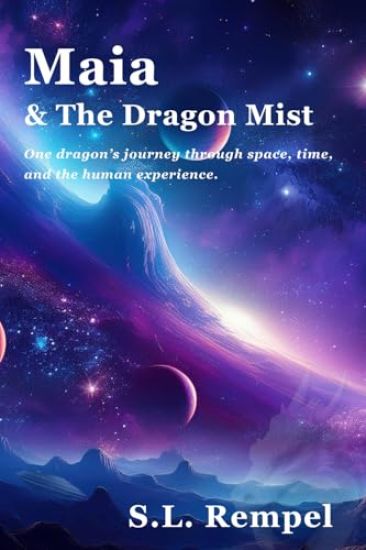
Wisdom takes time to achieve. The more we experience life, the more vibrant our tapestry. Many threads intertwine with faith and fate to weave our life's tapestry kaleidoscope of colors. This story begins with seven dragon families living on the planet Mabon, who are slowly rebuilding their population after losing so many when evil visited their original home planet of Ostara. Dragon Guardians speak of a prophecy-one day the evil will find them again. This prophecy also speaks of a savior who will defeat evil when it returns. The Guardians believe the Aunia dragon named Maia is this savior. Told from autobiographical perspectives of the primary characters, learn how the prophecy comes true in ways feared yet unimagined. After barely escaping the battles of Mabon, Maia aimlessly floats through space before crashing to earth during a time when life on the planet was still young. Maia and her companion watch as life on earth grows, especially that of humanity. Missing Mabon and all the special friendships she knew, Maia is Guardian to seven dragon eggs: each representing the last remaining dragon families. Executing a plan to deliver an egg to each of the seven continents, Maia's companion weaves a spell that will allow each dragon hatchling to live amongst the humans in human form. They thought all the variables had been considered. But as many humans know, life has its own ideas. And when life twists and turns unfold, sometimes all we have is faith in ourselves to meet the challenges as they inevitably come. Throughout the unfolding story is the weaving of love, loss and betrayal, fulfilling duty while mired in anger and sadness, forging new friendships, and ultimately learning how to live again.
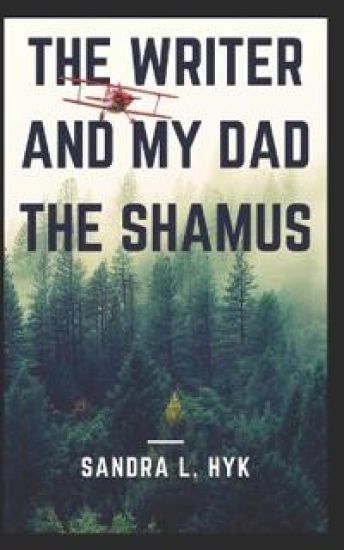
My Dearest Child, I wish it were possible for me to be there with you; becoming your father meant everything to me. But this is not going to happen. Your mother does promise that you will get this letter when she feels you are old enough to read and understand it. I don't have the words to express how much I will miss not being a part of your life. I know with your mother's guiding hand, you will grow into the adult any parent will be proud of. I am taking the only way I know how at this time to try and give you some explanation. If you ever get in a jam or your back is against the wall, and I don't know if this will help or hurt, but if you ever do, look for Jenny. She might have the answer. I love you.Dad
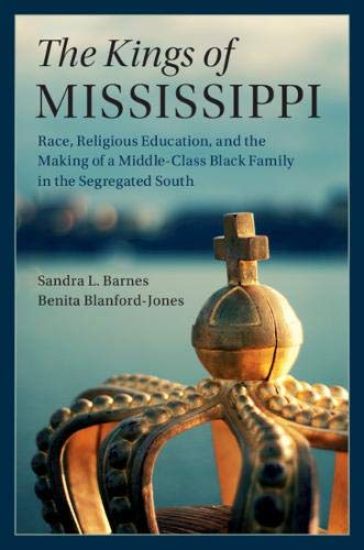
Kings of Mississippi examines how a twentieth-century black middle-class family navigated life in rural Mississippi. The book introduces seven generations of a farming family and provides an organic examination of how the family experienced life and economic challenges as one of few middle-class black families living and working alongside the many struggling black and white sharecroppers and farmers in Gallman, Mississippi. Family narratives and census data across time and a socio-ecological lens help assess how race, religion, education, and key employment options influenced economic and non-economic outcomes. Family voices explain how intangible beliefs fueled socioeconomic outcomes despite racial, gender, and economic stratification. The book also examines the effects of stratification changes across time, including: post-migration; inter- and intra-racial conflicts and compromises; and, strategic decisions and outcomes. The book provides an unexpected glimpse at how a family's ethos can foster upward mobility into the middle-class.
Service-learning and social entrepreneurship connect students to communities through courses and campus-based opportunities. Each offers students active learning opportunities tied to community engagement and problem solving. Enos presents strategies for creating campus-based programs that educate students for twenty-first century citizenship.
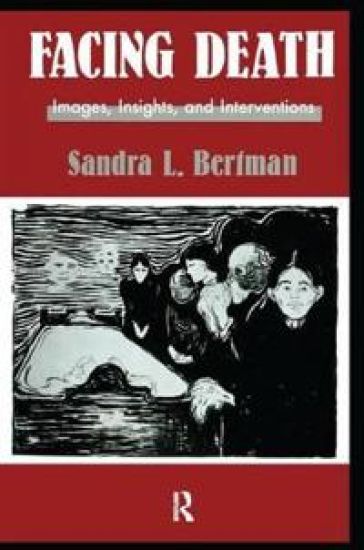
Facing Death is a unique handbook for educators, healthcare professionals and counselors. It uses materials from the visual arts, excerpts from poetry, fiction, drama, and examples from popular culture to sensitize the reader to important, universal issues confronting the dying, and those responsible for their care.
Poetic Inquiry: Craft, Method and Practice examines the use of poetry as a form of qualitative research, representation, and method used by researchers, practitioners, and students from across the social sciences and humanities. It serves as a practical manual for using poetry in qualitative research through the presentation of varied examples of Poetic Inquiry. It provides how-to exercises for developing and using poetry as a qualitative research method.The book begins by mapping out what doing and critiquing Poetic Inquiry entails via a discussion of the power of poetry, poets’, and researchers’ goals for the use of poetry, and the kinds of projects that are best suited for Poetic Inquiry. It also provides descriptions of the process and craft of creating Poetic Inquiry, and suggestions for how to evaluate and engage with Poetic Inquiry. The book further contends with questions of method, process, and craft from poets’ and researchers’ perspectives. It shows the implications for the aesthetic and epistemic concerns in poetry, and furthers transdisciplinary dialogues between the humanities and social sciences.Faulkner shows the importance of considering the form and function of Poetic Inquiry in qualitative research through discussions of poetry as research method, poetry as qualitative analysis and representation, and Poetic Inquiry as a powerful research tool.