Il libro intitolato "Socio-Cultural Landscapes in the Novels of V.S. Naipaul: Navigating Identity and Heritage" si propone di esplorare le basi culturali della narrativa di Naipaul. Esamina i temi ricorrenti dell'esilio, dello spostamento e dell'identit che permeano i suoi romanzi, che attraversano diversi continenti e generazioni. Attraverso lo studio dello sfondo socio-culturale della sua opera, i lettori possono comprendere meglio l'intricata interazione di razza, classe, storia e geografia che Naipaul incorpora abilmente nella sua narrazione.
From the Sabarimala temple case (he argued against the right of women to worship there) to Cyrus Mistry against Tata Sons, the cases in this book touch on issues of free speech, custodial torture, the right to fly the Indian flag, animal rights and state elections. Simply written for the general reader and full of insights, From the Trenches is a book by a legendary lawyer that will both entertain and teach you about law and the judiciary.
This book discusses the instrumentation of supercapacitors, various measurement procedures and the techniques used for the performance evaluation, to help determine the appropriate methodology for the evaluation of a supercapacitor device and also to identify the inconsistencies between the device performance and electrode material properties. As a promising energy storage option, supercapacitors need to be readied for commercialization rather than confined within the niche of academic research. This book also assists in the formulation of strict performance guidelines aided by realistic evaluation techniques, so that these devices can be made available to society through industrial production. As such it is an important read not only for academicians and researchers, but also for industry and policymakers.
We all see life through our lens; make sure you have the right one. Life, as we all know, throws us curveballs every now and then. While our adversities are not unique, how we respond to them shapes our individual stories. The Right Lens explores nine life themes that offer fresh perspectives, empowering you to navigate personal transformation when life takes an unexpected turn. These life themes challenge some of our existing perspectives, such as our views on success, setbacks, identity, our role in society, decision-making, hobbies, seeking help and true freedom. Through each of these nine essential themes, you will discover insights that will reshape your outlook, attitude and behaviour, helping you navigate life with purpose and authenticity. These themes helped me on my personal transformation journey, and I believe this book can make a difference in your lives too, fostering a deeper sense of clarity and purpose.
Steroid dimers are an important group of compounds produced by various marine organisms, and also synthesized in the laboratories. This group of compounds possesses various pharmacological and biological properties, and can also be used to create “molecular umbrellas” for drug delivery. Steroid Dimers: Chemistry and Applications in Drug Design and Delivery provides an up-to-date overview on the chemistry and applications of steroid dimers of natural and synthetic origins. The book includes easy-to-follow synthetic protocols for various classes of important dimeric steroids, source details, valuable spectroscopic data and depiction of unique structural features of natural steroidal dimers, and the Structure-Activity-Relationships (SARs) of some pharmacologically active dimeric steroids. Topics covered include: introduction to steroid dimerssynthesis and chemistry of noncyclic and cyclic steroid dimersnaturally occurring steroid dimers – cephalostatins, ritterazines and crellastatinsbiological and pharmacological functions of steroid dimers and their application in drug design and discoverysteroid dimers as “molecular umbrellas” for drug delivery Steroid Dimers: Chemistry and Applications in Drug Design and Delivery is an essential guide to this important class of natural and synthetic compounds for researchers and students of natural products chemistry and biochemistry, synthetic organic and medicinal chemistry, and drug design, discovery and delivery.
Surface Engineering of Graphene for Electrocatalysis: A Unique Process of Graphene Surface Functionalization for Sustainability provides a detailed knowledge-base on the historical evolution of graphene, its inherent physicochemical properties, various state-of-the-art synthetic protocols and subsequent surface engineering (functionalization and composite formation with different nanostructured materials) through feasible physico-chemical processes. Keeping in mind the urgency of electrocatalysis for sustainable energy, the book fundamentally discusses electrocatalysis, including electrochemical measurement techniques, reaction mechanisms, technical parameters for catalyst performance evaluation and the reported electrocatalysts.In addition, the book presents the impact of surface engineering of graphene on electrocatalytic systems and includes theoretical calculations/discussions in support of experimental findings that will improve understanding.
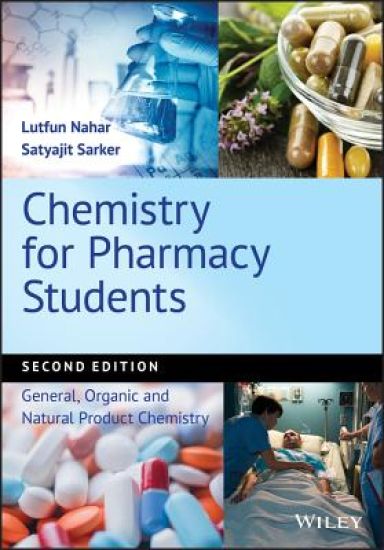
Introduces the key areas of chemistry required for all pharmacy degree courses and focuses on the properties and actions of drug molecules This new edition provides a clear and comprehensive overview of the various areas of general, organic, and natural products chemistry (in relation to drug molecules). Structured to enhance student understanding, it places great emphasis on the applications of key theoretical aspects of chemistry required by all pharmacy and pharmaceutical science students. This second edition particularly caters for the chemistry requirements in any ‘Integrated Pharmacy Curricula’, where science in general is meant to be taught ‘not in isolation’, but together with, and as a part of, other practice and clinical elements of the course. Chemistry for Pharmacy Students: General, Organic and Natural Product Chemistry, 2nd Edition is divided into eight chapters. It opens with an overview of the general aspects of chemistry and their importance to modern life, with emphasis on medicinal applications. The text then moves on to discuss the concepts of atomic structure and bonding and the fundamentals of stereochemistry and their significance to pharmacy in relation to drug action and toxicity. Various aspects of organic functional groups, organic reactions, heterocyclic chemistry, nucleic acids and their pharmaceutical importance are then covered in subsequent chapters, with the final chapter dealing with drug discovery and development, and natural product chemistry. Provides a student-friendly introduction to the main areas of chemistry required by pharmacy degree coursesWritten at a level suitable for non-chemistry students in pharmacy, but also relevant to those in life sciences, food science, and the health sciencesIncludes learning objectives at the beginning of each chapterFocuses on the physical properties and actions of drug molecules Chemistry for Pharmacy Students: General, Organic and Natural Product Chemistry, 2nd Edition is an essential book for pharmacy undergraduate students, and a helpful resource for those studying other subject areas within pharmaceutical sciences, biomedical sciences, cosmetic science, food sciences, and health and life sciences.
This book covers the recent development of metal oxides, hydroxides and their carbon composites for electrochemical oxidation of water in the production of hydrogen and oxygen as fuels. It includes a detailed discussion on synthesis methodologies for the metal oxides/hydroxides, structural/morphological characterizations, and the key parameters (Tafel plot, Turnover frequency, Faradic efficiency, overpotential, long cycle life etc.) needed to evaluate the electrocatalytic activity of the materials. Additionally, the mechanism behind the electro oxidation process is presented. Readers will find a comprehensive source on the close correlation between metal oxides, hydroxides, composites, and their properties and importance in the generation of hydrogen and oxygen from water.The depletion of fossil fuels from the earth’s crust, and related environmental issues such as climate change, demand that we search for alternative energy resources to achieve some formof sustainable future. In this regard, much scientific research has been devoted to technologies such as solar cells, wind turbines, fuel cells etc. Among them fuel cells attract much attention because of their versatility and efficiency. In fuel cells, different fuels such as hydrogen, CO2, alcohols, acids, methane, oxygen/air, etc. are used as the fuel, and catalysts are employed to produce a chemical reaction for generating electricity. Hence, it is very important to produce these fuels in an efficient, eco-friendly, and cost effective manner. The electrochemical splitting of water is an environmentally friendly process to produce hydrogen (the greener fuel used in fuel cells), but the efficiencies of these hydrogen evolution reactions (cathodic half reaction) are strongly dependent on the anodic half reaction (oxygen evolution reaction), i.e., the better the anodic half, the better will be the cathodic reaction. Further, this oxygen evolution reaction depends on the types of activeelectrocatalysts used. Though many more synthetic approaches have been explored and different electrocatalysts developed, oxide and hydroxide-based nanomaterials and composites (with graphene, carbon nanotubes etc.) show better performance. This may be due to the availability of more catalytic surface area and electro active centers to carry out the catalysis process.
Rapid growth in the research and development of clean energy storage techniques has yielded a significant number of electrochemically active compounds/materials possessing enormous potential to facilitate the fabrication of next generation devices such as the supercapacitor. This Brief describes recent progress in the field of metal-ion based hybrid electrical energy storage devices, with emphasis on the effect of different metal ions and other constituent components on the overall electrochemical performance of battery-supercapacitor hybrids (BSHs). Although significant efforts have been made to create an effective electrical energy storage system that would have the energy density of a battery and the power density of a supercapacitor, persistent challenges still lie in combining these two altogether different systems to form a cost-effective and safe storage device. Detailed comparisons of output performance and longevity (in terms of cyclic stability) are provided, including device fabrication cost and safety.Of the several proposed schematics/prototypes, hybrid supercapacitors, with both carbon-based EDLC electrode and pure faradic (battery type) electrode can work in tandem to yield high energy densities with little degradation in specific power. As a promising electric energy storage device, supercapacitors address several critical issues in various fields of applications from miniaturized electronic devices and wearable electronics to power hungry heavy automobiles. Depending on the electrode configuration and other controlling parameters, these BSHs can have contrasting performance statistics. Metal ion BSHs such as Li+, Na+, Mg+2, Zn+2 etc., acid-alkaline BSHs, and redox electrolyte based BSHs all represent recent approaches, with BSHs based on metal ions, particularly Lithium, of particular interest because of the extreme popularity of Li-ion based batteries. This book is writtenfor a broad readership of graduate students and academic and industrial researchers who are concerned with the growth and development of sustainable energy systems where efficient and cost-effective storage is key.